Category Archives: History

Modern Heritage: Jawahar Kala Kendra, Jaipur

CHARLES CORREA

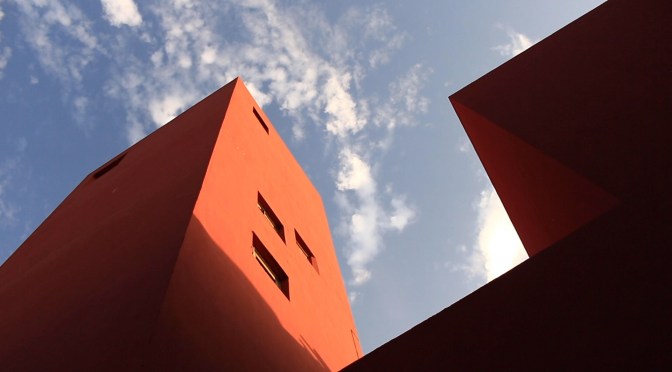
Designed in 1986 by Charles Correa, the Jawahar Kala Kendra in Jaipur is of critical significance for the Post-Independence architecture of India. Imagined as a metaphysical echo of the city of Jaipur itself, the building represents Correa’s interest in the abstract, mythical dimensions of architecture and the power of their manifestation in a civic building.


Film and Text: Aman Amin
Analytical Drawings : Studio Matter; Plan of JKK traced over original.


A Point in the Universe

Programmed and built as a National Cultural Institution, the Jawahar Kala Kendra is a testament of the everyday in the City of Jaipur. Reinterpreted from Jai Singh’s plan for the Jaipur City, Correa’s manifestation allows for interpretation of the form and programme – inviting the people and the city to a familial occurring. 

Continue reading Modern Heritage: Jawahar Kala Kendra, Jaipur

Charles Correa: Trajectories and Contexts

Ranjit Hoskote

A Recorded Lecture from FRAME Conclave 2019: Modern Heritage


In this lecture, Ranjit Hoskote postulates a portrait of Charles Correa as a curator. He speaks about Correa’s contribution to culture at large and his preoccupation with societal institutions albeit being an architect.


Edited Transcript

Good Morning.

Since I have 35 minutes, I am not really going to try and engage with absolutely everything that Charles Correa built in the course of a magnificent career. I am going to try and focus on a very particular strand in his work, his preoccupation with cultural institutions, and through what I have to say, I am going to try and develop provisionally a portrait of the architect as not only a member of a particular profession but as a contributor to ‘culture’ at large.

Charles Correa’s architecture was really part of my growing up in Bombay. Whether it was the Salvacao Church or Kanchenjunga, these were part of the urban fabric, part of the way in which one experience the city and part of what one identified with one’s home city. But also in the course of my professional life, there are Correa buildings to which I have often returned, where I have sometimes done things and which again have been part of my consciousness in my being. I am thinking particularly here of the Crafts Museum in Delhi, indeed the Kala Academy, the Jawahar Kala Kendra in Jaipur, the British Council building in Delhi and Bharat Bhavan in Bhopal. Also, on a far more personal note, my wife and I spent for many years our New Year holidays in a Charles Correa house, a spare elegant home that Charles designed for his and our friend, the artist Mehlli Gobhai in a chikoo orchard in Gholvad. To be there around Christmas and the turn of the year, every year, was very special. It is still a visceral experience that remains with me. Last year as part of an exhibition called ‘The Sacred Everyday‘, which I curated for the Serendipity Arts Festival here at the Adil Shah Palace, I thought that it might not be out of place to have, so to speak, a shrine that honoured the way in which Correa dealt with these questions of the ‘Circulation of the Sacred in the Everyday’ and how one might by means, both mythic and material, invoke these larger contexts of being so. But I am not going to talk about this today, I am actually going to move on.

Continue reading Charles Correa: Trajectories and Contexts

MODERN HERITAGE: IIM, Bangalore

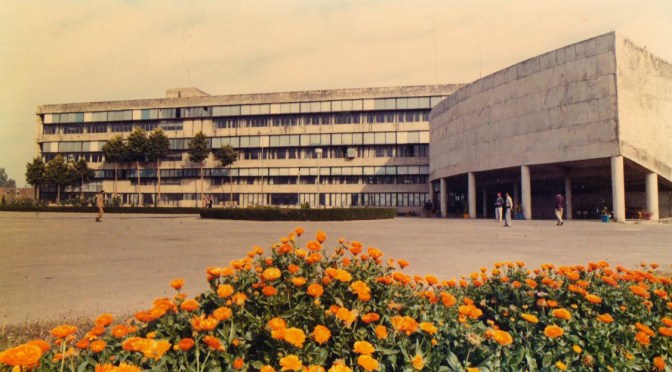
Designed by Balkrishna Doshi / Vāstu Shilpā Consultants, the Indian Institute of Management in Bangalore is an important site for the heritage of modern architecture in India – a study in the possibility for architecture to assimilate time and human presence in a composition of the built, open and in-between spaces.


Photos and Film: Ruturaj Parikh; Edited by Isha Raut ©Studio Matter
Drawings: Vāstu Shilpā Consultants; Courtesy Khushnu Panthaky Hoof


The Plan as a Generator

The Indian Institute of Management campus in Bangalore occupies about 54,000 square meters within a 100-acre site. Designed as a poly-nuclear plan, the overall spatial arrangement relies on a series of intersecting corridors that form the basic skeletal structure.

Continue reading MODERN HERITAGE: IIM, Bangalore

MODERN HERITAGE: In Retrospection: Shivdatt Sharma

CURATED BY SANGEET SHARMA

The Capital Project of Chandigarh is among the most widely discussed and debated projects in the history of Modern Architecture in India. Under the trusteeship of Prime Minister Nehru, several young Indian architects joined hands to contribute to the mammoth task of nation-building, working across diverse sectors such as buildings for Space Research & Technology, Administrative Infrastructure, Cultural & Educational Institutions and Housing. At the forefront alongside his better-known contemporaries, was Architect Shivdatt Sharma [SD Sharma], a silent but powerful contributor to the ‘modernist’ landscape of a young India. In this piece, curated and assimilated by his son and architect Sangeet Sharma, SD Sharma writes about his time working alongside Le Corbusier and as an apprentice under Pierre Jeanneret

In an intimate note that follows, Sangeet Sharma shares instances of growing up in the newly built city of Chandigarh and working under Shivdatt Sharma as an apprentice for almost two decades. He reflects on the many relationships that he has nurtured with his father, over the years – one of a friend, philosopher and guide.


LEARNING FROM LEGENDS
Authored by Shivdatt Sharma

Le Corbusier and his associates, all being the members of CIAM, processed the pure architecture that was to be followed in the making of Chandigarh. They believed that geometry was a timeless factor in the whole universe, and was, therefore, to be followed to create purity. Continue reading MODERN HERITAGE: In Retrospection: Shivdatt Sharma

IMPACT: DESIGN THINKING AND THE VISUAL ARTS IN YOUNG INDIA

CURATED BY CHATTERJEE & LAL

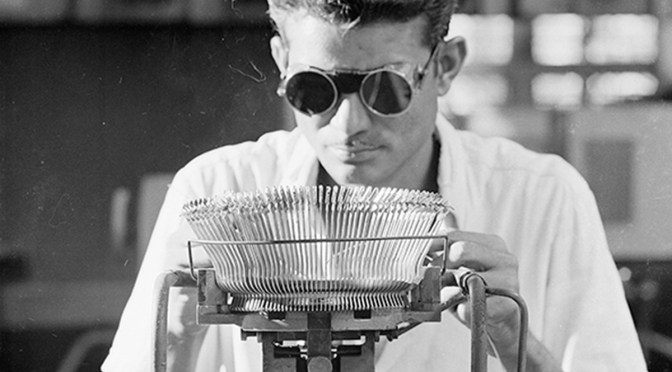
The post-independence period in India witnessed the beginning of a new design culture with the founding of quality institutions and initiatives in arts, crafts and cultural projects across India. In the quest for a unique modern identity, the architecture and design trajectory of an independent India aspired to establish a significant voice in the making of a new kind of society. In this context, the exhibition: IMPACT: Design Thinking and the Visual Arts in Young India attempts to foreground the radical design discourse in India in the 20th century, featuring select works of individuals, groups and organisations at the intersection of art, craft and design.   

Mitter Bedi (1926-1985) | Godrej Chairs c.1970 | Image Courtesy: Mitter Bedi Collection, Godrej Archives

Continue reading IMPACT: DESIGN THINKING AND THE VISUAL ARTS IN YOUNG INDIA