In a curated series on archival texts, views, discussions and comments on the state of architecture and design education in India, Sen Kapadia contributes the first to provoke further thought as he reminisces about the importance of a diverse learning environment against the restrictive curriculum-based thinking.
Originally featured in [IN]SIDE, Volume 02, Issue 02.
Hiren Patel, Principal and Director, Hiren Patel Architects writes about an approach to architecture where the question of thinking in detail is central to the idea of a project and the work reaffirms this belief when it endures inhabitation over a large span of time.
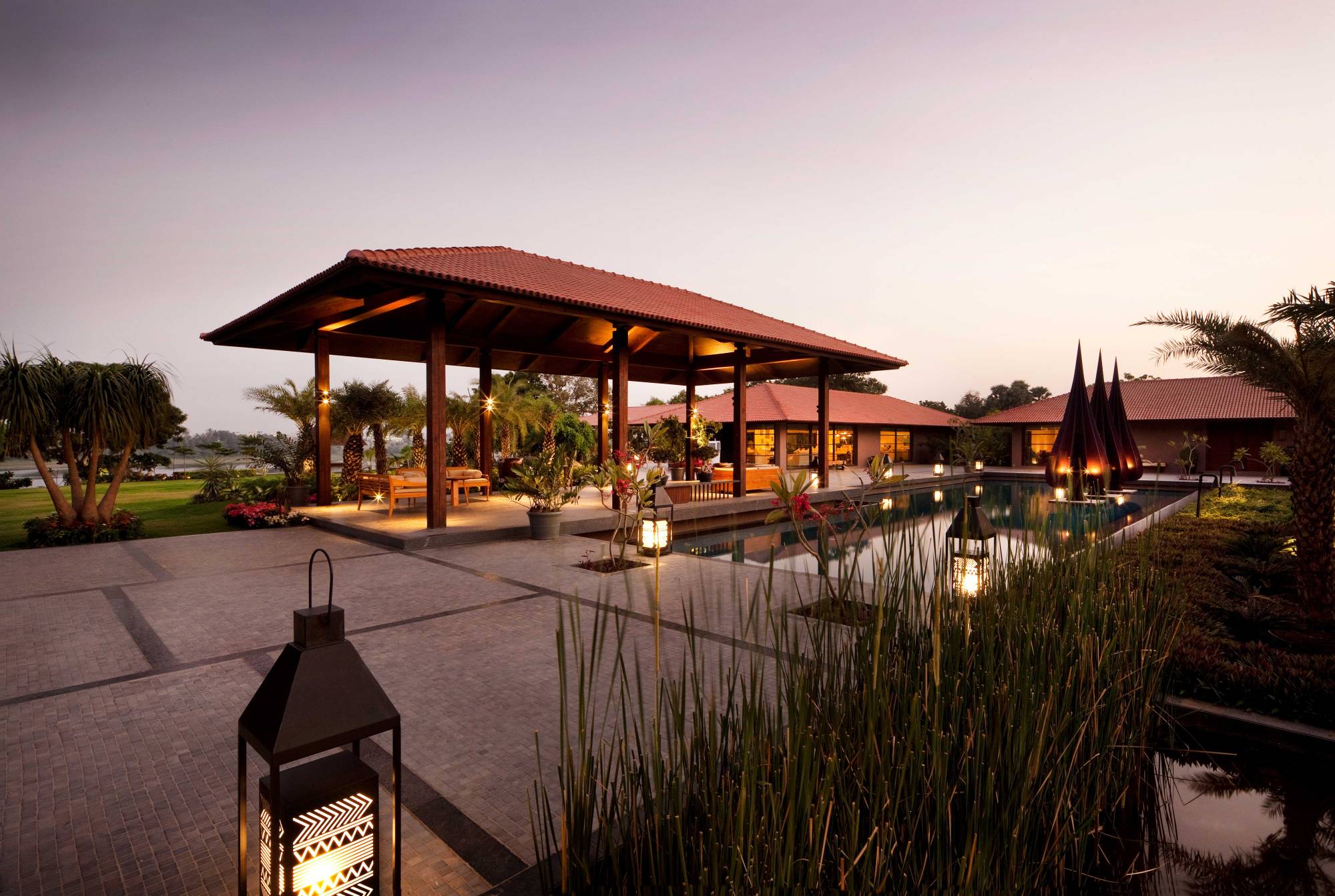
The semi-covered veranda: pavilion in the middle of the site for a Village house project: structures that promote outdoor living and bear a better relationship with the natural context.
DESIGN
For me, designing a building is like creating a painting on a canvas. Growing up, I always had an inclination for the arts. As a student, architecture opened up a whole new way of looking at art and design. This, I think, in some way influenced my approach towards architecture.
In conversation with Prem Nath of Mumbai-based Architect Prem Nath and Associates, we discuss the numerous obstacles traversed in his architectural journey, as well as some of the landmark projects that brought him to the forefront of contemporary architecture in India.
The following text is the edited transcript of the interview conducted with Prem Nath at his Mumbai office, on the 14th of October, 2021
I. Origins
Everybody always asks me this question – “Mister Prem Nath, how did you become an architect?” It seems almost like a miracle, that I became an architect.
Back in my time, in the 1950s, pre-independence – people did not know what an ‘architect’ was. Engineers, overseers and mistris (labourers), were common terms known to people, but they had never heard of the term, ‘architect’. I myself had no idea what architecture was. I became an architect by fluke, you may call it. Maybe fate had determined I was to become an architect through a series of random events, and I had no idea at the time.
Dean D’Cruz, co-Founder and Principal Architect of Mozaic writes about his learnings from a three-decade long tryst with the landscape of Goa, and the way in which its biodiverse terrain became the foreground of a practice in environmentally responsible architecture.
It has been 32 years since I came to Goa. In the beginning, I worked for Gerard D’Cunha and in time entered into a partnership with him which was then called Natural Architecture. This was interesting and a change for me; since my college days, I was intrigued by technology, which I loved. Earlier, as a student of architecture, I was inspired by Mies, and Corbusier for their mastery of forms. But then slowly, I began to appreciate the level of detailing in the work of architects like Gaudi. Gerard had worked closely with Laurie Baker who was always very hands-on, maintained a down-to earth approach to architecture where one actually builds oneself! So, it was a very interesting learning – this integration of technology and the Baker-approach to architecture. As I grew, I was influenced more by the humanistic approach to architecture rather than the final sculptural form.
The Takshila Lecture on Architecture and Society is delivered by an eminent professional / academician that addresses growing disparity between the practice and pedagogy of Architecture in India, and the realities of our social, cultural and economic contexts. The lecture and the following dialogue aim to challenge the status-quo with a conviction that an open and honest conversation on the state of practice will instigate positive change.