Category Archives: Contemporary Practice

Building as an Agent of Change

The recently concluded conference : Z-Axis, curated by the Charles Correa Foundation [Goa], ‘Buildings as Ideas’ witnessed a meaningful shift in the discourse of architectural paradigm. The conference, presented in diverse contexts, was collectively driven by a strong intention of ‘influencing a positive change’ with the physical manifestation of a ‘building as an idea’.

As designers and visionaries of the built environment, we are in a weighty profession that has the potential to condition the societies we live in. In this, it assumes a tremendous responsibility to the many unseen layers of complexities and concerns which rattle our inner subconscious each time we alter that which is naturally on this earth to accommodate that which we ideate. As individuals, each of us contributes to the shaping of the built environment in our own way, but as architects, we tend to disconnect ourselves from this reality more often than we should. Continue reading Building as an Agent of Change

In Conversation with Shilo Shiv Suleman & Heather Stewart

By Anusha Narayanan

A visual artist and designer who has transcended into art for social good and tech-based installations, from illustrations for children’s books, Shilo Shiv Suleman is an experimental feminist and an independent voice, representing not only herself, but other innovators and women around the globe. In an afternoon at Leopold, Anusha Narayanan got the chance to catch up with her and talk about biofeed installations.

Shilo Feature image

Art is an external expression of internal discoveries: thoughts, dreams, advocacies and emotions of artists. Art in the ‘truly public’ domain is a rarity in India, but with the street art movement catalysed by the St+ART India, and independent artists such as Shilo Shiv Suleman, Anpu, Harshavardhan Kadam and more, art seems to be getting democratised. Yet as the quality of public artistic interventions at open festivals such as the Kala Ghoda Festival consistently and drastically drops, there is no room for quiet contemplation. In this quicksand, last year, I found Shilo’s work on bio-feed installations, an oasis in a desert. Continue reading In Conversation with Shilo Shiv Suleman & Heather Stewart

Mahaprasthanam, a Crematorium: D A Studios

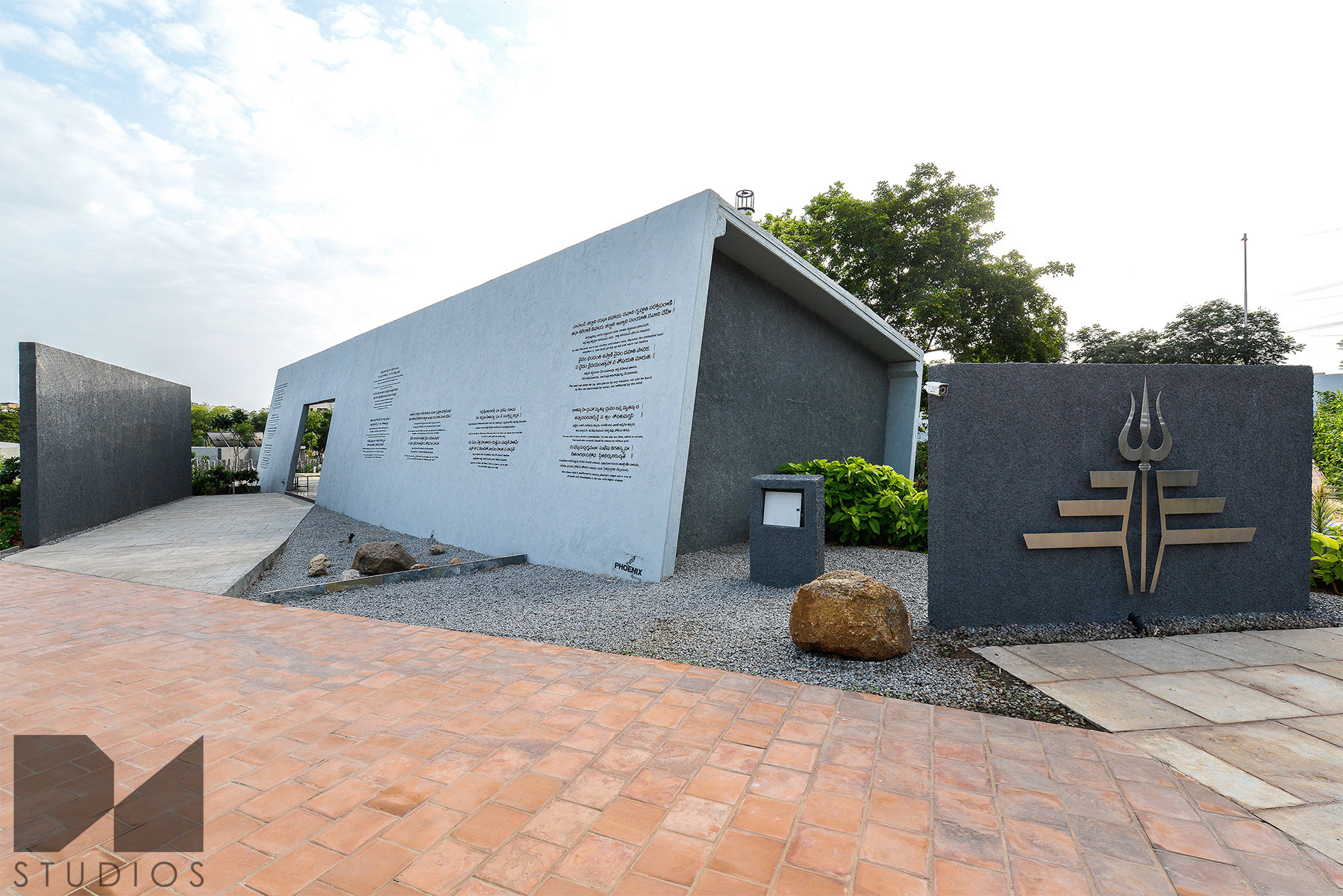
D A Studios designs a crematorium that intuitively concentrates on the encounter of ritualistic orders of funeral obsequies for Hindus, appropriating individual and collective spatial layers, a subdued palette and a silent language of architectural gestures.

Mahaprasthanam, Crematorium, D A Studios
Electrical Crematorium with its characteristic bow.

The architectural genre belonging to utilitarian buildings such as crematoria in India remains conventionally non-descript. It forms an invisible part of the built fabric, one that is not stitched into the aesthetic explorations of a city’s transforming viscidity. It may be read as a singularity in this space. The notion is perhaps of the bare and essential that need not be formally inscribed with ideas but which can be waylaid with smaller, agile solutions – neither necessarily artful nor thoughtful. In rare instances such as this, designers do get involved in the process. Continue reading Mahaprasthanam, a Crematorium: D A Studios

Studio 877: Khushru Irani Design Studio

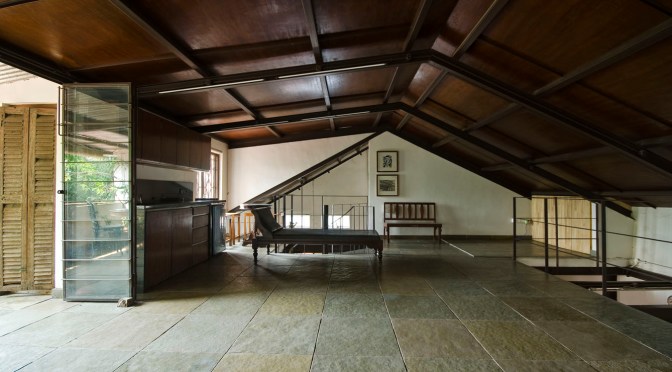
Working with an intuitive palette of materials and minimal interventions, Pune-based Khushru Irani Design Studio (KIDS) artfully restore an old structure combining contemporary detailing with much of its original splendour, partly to be used as their studio and a space for events open to the community.   

Khushru Irani Design Studio, Architecture, Pune, India, Adaptive Reuse, Restoration

Occupying an idyllic corner of a busy thoroughfare within the Pune Cantonment area is a 100 year old building. An unassuming verandah peeps down on to the street midway from its three-storeyed façade – the entrance to the studio of Pune-based architectural practice Khushru Irani Design Studio (KIDS). With its sloping roofs, a verandah with wooden railings, seasoned doors & windows, a stone staircase and plastered brick walls, the building bears a distinct characteristic. It may feel akin to chancing upon on a long-forgotten secret. Continue reading Studio 877: Khushru Irani Design Studio

Architecture in India – The Bridge Generation

By Ar. Brinda Somaya

Brinda Somaya explains a critical period of architecture practice in India that connects the ‘masters’ to the contemporary practices outlining the nature of work in an era that helped India come to terms with its modernity by minting the term ‘The Bridge Generation’.


I believe I belong to the first generation of practising Architects to be born after India got her freedom.  For ease of reference and to give us a sense of identity I have coined the term “Architecture in IndiaThe Bridge Generation” after a great deal of reflection and thought.  The term evolved in my mind as I believe we ‘bridged’ the architectural space between the Great Masters and the current generation that continues to enter the global architectural space. Continue reading Architecture in India – The Bridge Generation