Tag Archives: architecture

Modern Heritage: Jawahar Kala Kendra, Jaipur

CHARLES CORREA

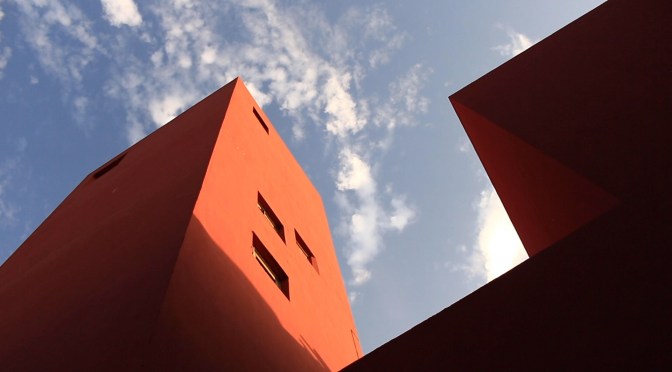
Designed in 1986 by Charles Correa, the Jawahar Kala Kendra in Jaipur is of critical significance for the Post-Independence architecture of India. Imagined as a metaphysical echo of the city of Jaipur itself, the building represents Correa’s interest in the abstract, mythical dimensions of architecture and the power of their manifestation in a civic building.


Film and Text: Aman Amin
Analytical Drawings : Studio Matter; Plan of JKK traced over original.


A Point in the Universe

Programmed and built as a National Cultural Institution, the Jawahar Kala Kendra is a testament of the everyday in the City of Jaipur. Reinterpreted from Jai Singh’s plan for the Jaipur City, Correa’s manifestation allows for interpretation of the form and programme – inviting the people and the city to a familial occurring. 

Continue reading Modern Heritage: Jawahar Kala Kendra, Jaipur →

Models & PROCESSES BY NURU KARIM (NUDES)

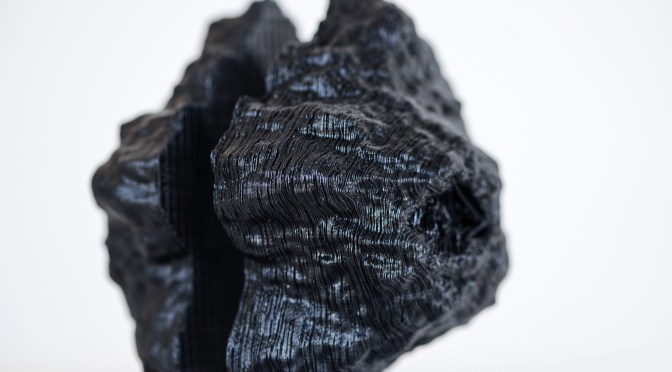
‘NUDE MODELS’ by Nuru Karim explores the structure within
natural systems using technology and processes.

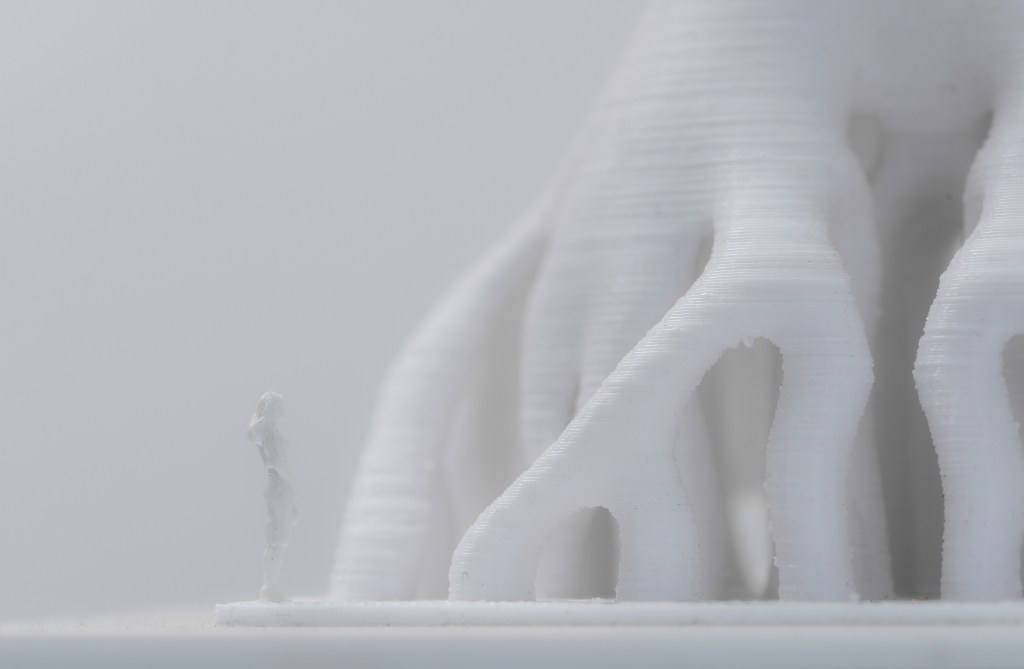
Evolutionary tools in model-making have enabled the translation of concepts of abstraction and coexistence from nature to built environments. NUDES, a Mumbai-based contemporary practice thrives on this process of model-making, while acknowledging the extent of design articulation that is possible with the implementation of these tools.

Architectural models, historically, are approached as tools that guide design thinking. Apart from their role in the essential act of communicating design, they have evolved over time to represent conceptual underlays in the design process. The fascination of Nuru Karim, Founder and Principal, NUDES, with model-making processes goes back to his undergraduate years. The practice of creating three-dimensional objects at NUDES is intrinsically connected to the design processes that generate buildings and ideas. The studio, that spans their practice across diverse spectrum of architecture, urbanism and public art, employs the idea of evaluating design through perceptions and imaginations at the human scale through these models.

Continue reading Models & PROCESSES BY NURU KARIM (NUDES) →

THE MERIT LIST 2019: PANEL DISCUSSION

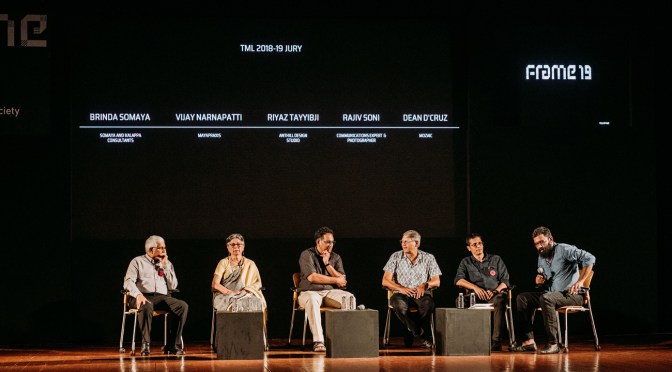
A Recorded Discussion with The Merit List 2018-19 Jury Panel at Goa.


The jury for The Merit List 2018-19 cycle in a conversation moderated by Mahesh Radhakrishnan of MOAD, discusses projects in the context of issues that concern practice, pedagogy and built environment that emerged in the evaluation process.

The Jury (2018-19 Cycle)
Brinda Somaya, Somaya and Kalappa Consultants, Mumbai.
Dean D’Cruz, Mozaic, Goa.
Riyaz Tayyibji, Anthill Design Studio, Ahmedabad.
Rajiv Soni, Communications Expert and Photographer, Kolkata.
Vijay Narnapatti, mayaPRAXIS, Bengaluru.


The following text is an edited transcript from the panel discussion recorded on August 18th, 2019.  Continue reading THE MERIT LIST 2019: PANEL DISCUSSION →

An Ephemeral Lab in a City of Fixity

In a series on archival texts, views, discussions and comments on the state of architecture and design education in India,  Architect and Academic Krishnapriya Rajshekar shares from her experience as Assistant Professor at Wadiyar Centre for Architecture (WCFA), the significance of context in a studio culture, ‘making’ of a campus experience, and the intrinsic pedagogical framework embedded in an architectural education. For the curated short series, a prologue by Suprio Bhattacharjee.


PROLOGUE

BY SUPRIO BHATTACHARJEE

When I had set out to write the first essay that in many ways I had thought of as an ‘anchor’ to this series – though not a definitive, dogmatic or instructive one – as points of view, definitions, what can be determined as radical or not, etc. – all of this tends to alter and transform over time – I had never thought it could be seen as a set of ‘implied’ questions or loosely framed inquiries to which one can directly respond.

In many ways, I am indebted to Krishnapriya Rajshekar, Assistant Professor at the Wadiyar Centre for Architecture [WCFA], Mysore, for breaking this aforementioned perception I have had of my one piece of text. Continue reading An Ephemeral Lab in a City of Fixity →

Charles Correa: Trajectories and Contexts

Ranjit Hoskote

A Recorded Lecture from FRAME Conclave 2019: Modern Heritage


In this lecture, Ranjit Hoskote postulates a portrait of Charles Correa as a curator. He speaks about Correa’s contribution to culture at large and his preoccupation with societal institutions albeit being an architect.


Edited Transcript

Good Morning.

Since I have 35 minutes, I am not really going to try and engage with absolutely everything that Charles Correa built in the course of a magnificent career. I am going to try and focus on a very particular strand in his work, his preoccupation with cultural institutions, and through what I have to say, I am going to try and develop provisionally a portrait of the architect as not only a member of a particular profession but as a contributor to ‘culture’ at large.

Charles Correa’s architecture was really part of my growing up in Bombay. Whether it was the Salvacao Church or Kanchenjunga, these were part of the urban fabric, part of the way in which one experience the city and part of what one identified with one’s home city. But also in the course of my professional life, there are Correa buildings to which I have often returned, where I have sometimes done things and which again have been part of my consciousness in my being. I am thinking particularly here of the Crafts Museum in Delhi, indeed the Kala Academy, the Jawahar Kala Kendra in Jaipur, the British Council building in Delhi and Bharat Bhavan in Bhopal. Also, on a far more personal note, my wife and I spent for many years our New Year holidays in a Charles Correa house, a spare elegant home that Charles designed for his and our friend, the artist Mehlli Gobhai in a chikoo orchard in Gholvad. To be there around Christmas and the turn of the year, every year, was very special. It is still a visceral experience that remains with me. Last year as part of an exhibition called ‘The Sacred Everyday‘, which I curated for the Serendipity Arts Festival here at the Adil Shah Palace, I thought that it might not be out of place to have, so to speak, a shrine that honoured the way in which Correa dealt with these questions of the ‘Circulation of the Sacred in the Everyday’ and how one might by means, both mythic and material, invoke these larger contexts of being so. But I am not going to talk about this today, I am actually going to move on.

Continue reading Charles Correa: Trajectories and Contexts →