
Category Archives: Modern Heritage

MODERN HERITAGE is a research, listing and documentation initiative that attempts to chronicle the rich history of modern architecture in India with a view that irrespective of the legal and conventional understanding of ‘Heritage’, these buildings must be protected, and this history must be recognised in academic and professional discourses. With many works of significance already altered or even demolished, the need for a Modern Heritage list is all the more urgent.

‘India: Modern Architectures in History’

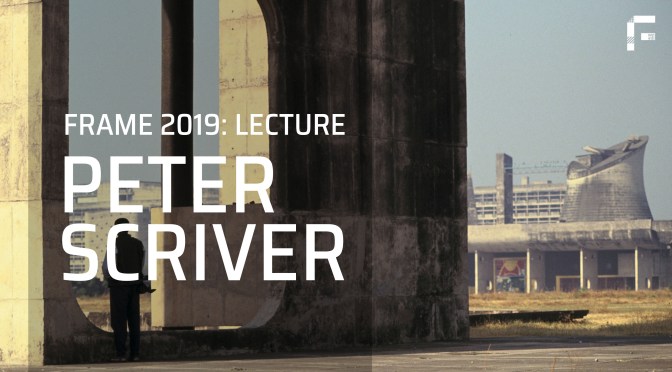
Peter Scriver

A Recorded Lecture from FRAME Conclave 2019: Modern Heritage


In this lecture, Prof Peter Scriver articulates a historical perspective on the changes and challenges of Modern Architecture in India since Independence. The talk also dwells on the Nation-building efforts, the nation-builders and the significance of this body of work in contemporary India.


Edited Transcript

Welcome, everybody. Just before I proceed, I just want to show due credit to my colleague, Prem Chandavarkar for a profoundly significant opening thought-piece for us to all think about in the days ahead.

I think FRAME Conclave’s expectation of what I might do was to also help set up some ideas, but they will be far more humble, and they are more prosaically engaged with the stuff of the architecture around us and the careers of many of the people in the room, and some of the backgrounds that I have had the opportunity to observe over a number of years. This talk will open up some of that perspective for you and hopefully also be of some use.

But I guess I just wanted to note particularly how a term that Prem, someone among many in the room that I have known for some years, this architecture, the background, your final point, which you published about and talked about in the past. I think I have a much deeper understanding now of what you really mean by that. So thank you for putting those thoughts together. Continue reading ‘India: Modern Architectures in History’

MODERN HERITAGE: IIM, Bangalore

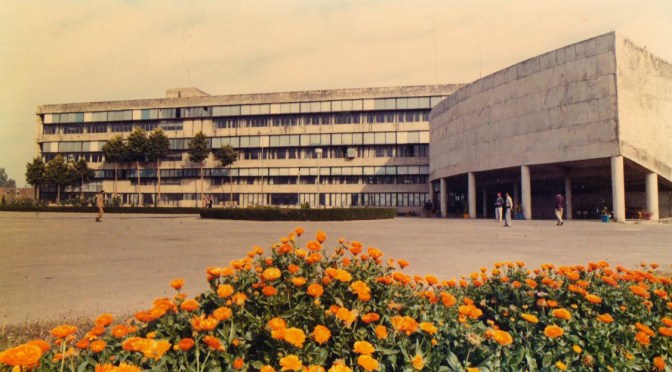
Designed by Balkrishna Doshi / Vāstu Shilpā Consultants, the Indian Institute of Management in Bangalore is an important site for the heritage of modern architecture in India – a study in the possibility for architecture to assimilate time and human presence in a composition of the built, open and in-between spaces.


Photos and Film: Ruturaj Parikh; Edited by Isha Raut ©Studio Matter
Drawings: Vāstu Shilpā Consultants; Courtesy Khushnu Panthaky Hoof


The Plan as a Generator

The Indian Institute of Management campus in Bangalore occupies about 54,000 square meters within a 100-acre site. Designed as a poly-nuclear plan, the overall spatial arrangement relies on a series of intersecting corridors that form the basic skeletal structure.

Continue reading MODERN HERITAGE: IIM, Bangalore

MODERN HERITAGE: In Retrospection: Shivdatt Sharma

CURATED BY SANGEET SHARMA

The Capital Project of Chandigarh is among the most widely discussed and debated projects in the history of Modern Architecture in India. Under the trusteeship of Prime Minister Nehru, several young Indian architects joined hands to contribute to the mammoth task of nation-building, working across diverse sectors such as buildings for Space Research & Technology, Administrative Infrastructure, Cultural & Educational Institutions and Housing. At the forefront alongside his better-known contemporaries, was Architect Shivdatt Sharma [SD Sharma], a silent but powerful contributor to the ‘modernist’ landscape of a young India. In this piece, curated and assimilated by his son and architect Sangeet Sharma, SD Sharma writes about his time working alongside Le Corbusier and as an apprentice under Pierre Jeanneret

In an intimate note that follows, Sangeet Sharma shares instances of growing up in the newly built city of Chandigarh and working under Shivdatt Sharma as an apprentice for almost two decades. He reflects on the many relationships that he has nurtured with his father, over the years – one of a friend, philosopher and guide.


LEARNING FROM LEGENDS
Authored by Shivdatt Sharma

Le Corbusier and his associates, all being the members of CIAM, processed the pure architecture that was to be followed in the making of Chandigarh. They believed that geometry was a timeless factor in the whole universe, and was, therefore, to be followed to create purity. Continue reading MODERN HERITAGE: In Retrospection: Shivdatt Sharma

MODERN HERITAGE: Listing

The contribution of the history of modern architecture in India is unparalleled in terms of the many experiments that were embarked upon in search of spatial and social innovations that were responsive to the cultural, social, political and economic landscape of India. At a time when architecture in India needs a critical review, it is this history that serves as a reference and a foundation.

Mapping Modern History


1930 – 1949 

Continue reading MODERN HERITAGE: Listing

Photography and Modern Indian Architecture

By Ram Rahman

Through a visual journey, acclaimed photographer Ram Rahman talks about a critical time for architecture in India – from Independence to Economic Liberalization – as we observe the anxiety of architectural positions in times of uncertainty and struggle for identity.

In India, masters are revered and apprentices forgotten. But it is the apprentices who religiously took the message, the art and the knowledge across India from the first generation of experimenters till the generation of architects and designers who work in an economically liberal India.

This video [with Ram in the background narrative] takes one through an incredibly rich history of the architecture of post-independence India when the socialist ideology worked through democracy creating a fertile ground for experiments in housing and civic architecture. This time stands in stark contrast to the present as the patterns of patronage change and the state becomes increasingly impervious to the core issues.

Profile:

Ram Rahman is a photographer, designer, curator and activist based in Delhi. He has been an observer of modern movement in architecture in post-colonial India. Using photography as a window to history and the present, he observes the changing landscape of architecture, design and art in India.

He is one of the founding members of the Safdar Hashmi Memorial Trust. Ram Rahman has studied Physics from MIT followed by Graphic Design from Yale.

Credit:

This presentation is excerpted from a closed-door session with MoMA‘s C-MAP Asia Group in June 2015.