Category Archives: Architecture

Martand Khosla: Experiments of Urban Enquiry

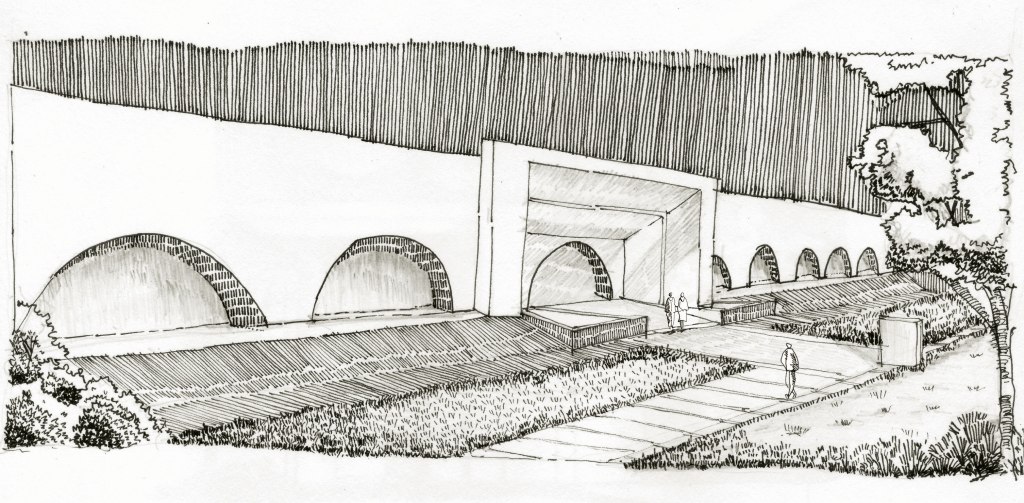
Through his art and architecture, Martand Khosla has created a niche that lies at the intersection of the two fields. His installations embody philosophies from this undefinable space, as he extracts questions using art as a voice, and architecture as principles, to raise concerns about humanitarian aspects of societal and political systems.


The practice of Martand Khosla inhabits a transitional space between art and architecture, which enables him a platform to address concerns that transgress architecture as independent habitable spaces. He co-founded, and is a partner of the architectural practice RKDS (Romi Khosla Design Associates), which has obtained both national and international recognition through its award-winning designs.

Continue reading Martand Khosla: Experiments of Urban Enquiry
Prem Nath: The Architect’s Performance

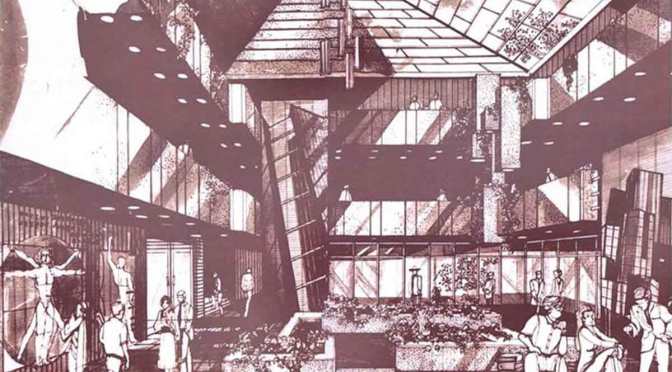
In conversation with Prem Nath of Mumbai-based Architect Prem Nath and Associates, we discuss the numerous obstacles traversed in his architectural journey, as well as some of the landmark projects that brought him to the forefront of contemporary architecture in India.


The following text is the edited transcript of the interview conducted with Prem Nath at his Mumbai office, on the 14th of October, 2021


I. Origins

Everybody always asks me this question – “Mister Prem Nath, how did you become an architect?” It seems almost like a miracle, that I became an architect.

Back in my time, in the 1950s, pre-independence – people did not know what an ‘architect’ was. Engineers, overseers and mistris (labourers), were common terms known to people, but they had never heard of the term, ‘architect’. I myself had no idea what architecture was. I became an architect by fluke, you may call it. Maybe fate had determined I was to become an architect through a series of random events, and I had no idea at the time.

Continue reading Prem Nath: The Architect’s Performance

Dean D’Cruz: On Sustainability, Architecture and Practice

Dean D’Cruz, co-Founder and Principal Architect of Mozaic writes about his learnings from a three-decade long tryst with the landscape of Goa, and the way in which its biodiverse terrain became the foreground of a practice in environmentally responsible architecture.


It has been 32 years since I came to Goa. In the beginning, I worked for Gerard D’Cunha and in time entered into a partnership with him which was then called Natural Architecture. This was interesting and a change for me; since my college days, I was intrigued by technology, which I loved. Earlier, as a student of architecture, I was inspired by Mies, and Corbusier for their mastery of forms. But then slowly, I began to appreciate the level of detailing in the work of architects like Gaudi. Gerard had worked closely with Laurie Baker who was always very hands-on, maintained a down-to earth approach to architecture where one actually builds oneself! So, it was a very interesting learning – this integration of technology and the Baker-approach to architecture. As I grew, I was influenced more by the humanistic approach to architecture rather than the final sculptural form.

Continue reading Dean D’Cruz: On Sustainability, Architecture and Practice

CMR University Admin and Academic Block : M9 Design Studio

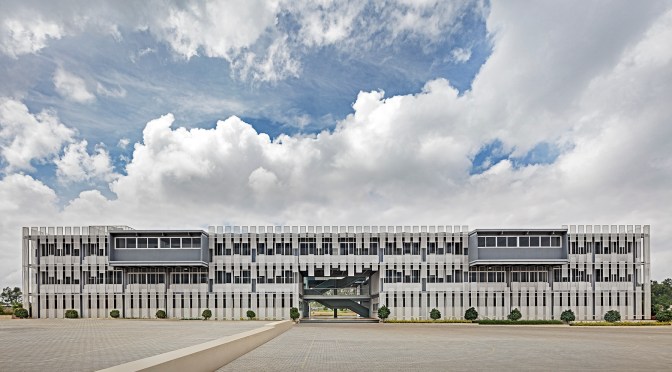
Bengaluru-based firm M9 Design Studio led by Nischal Abhaykumar and Jesal Pathak, explored the concepts of modularity, temporality and versatility of steel in the Admin and Academic block of the renowned CMR University’s new campus. Adapting to the challenges of time, efficiency and extensibility, M9 outline a possible precedent for the future blocks in the campus with a comprehensive design approach.


Nischal Abhaykumar discusses the processes, interests and ethos of the practice. The conversation dwells on the design and making of the project – CMR University Admin & Academic Block.

Within the hilly context of peri-urban Bengaluru, is located CMR University‘s newly developed 60-acre campus. In 2015, M9 Design Studio was approached to design the first building, initially to be purposed as an administration and academic block. The proposed block was programmed to be an ever-evolving space, and to be completed within a short timeline without compromising the quality of construction. This challenge prompted the architects to employ a design partly focusing on efficiency and flexibility to delineate the various learning spaces. A modular system derived from prefabricated steel emerged which follows a grid to achieve an idea of dismantling or expansion and speed of construction that was essential.

Continue reading CMR University Admin and Academic Block : M9 Design Studio

Shanti-Krishna Museum of Money & History: CAUSE – AN INITIATIVE

By Rama Raghavan

In a dialogue with Nashik-based architects, CAUSE – an initiative, author Rama Raghavan poses questions and explores themes on practice, conservation, publicness, ambition of a programme, perceptions of constraints and challenges through the lens of their project – Shanti-Krishna Museum of Money & History.


A conversation with the architects on the nuances of their practice and the project.


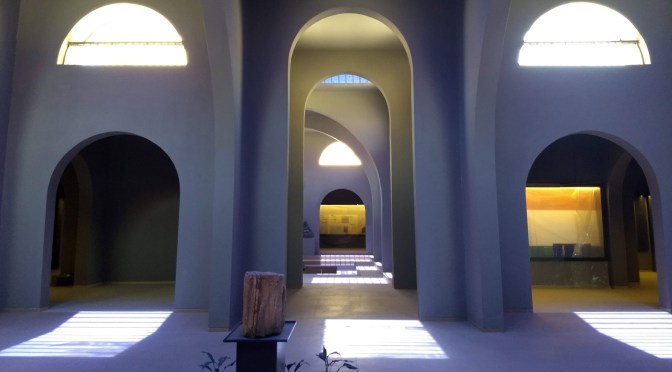
The Coin Museum and Numismatic Centre in Anjaneri is a building that has been an integral part of the city of Nashik. The institute founded in 1980 by the Indian Numismatic, Historical and Cultural Research Foundation has been a landmark of the city. Earlier constituting a research centre and a library relating to numismatic studies, it was also home to an impressive privately owned collection of coins and artefacts. The museum known locally as ‘Nane Sangrahalaya’ (Coin Museum) flourished for a while but gradually began losing ties with the community over a period of time.

Recognising this fading dialogue, the trustees, with the support of the Ministry of Culture, the Government of India, decided to establish a renewed identity for the museum. The new extension spanning nearly 9000sqft was thus conceived and rechristened the ‘Shanti-Krishna Museum of Money & History’. A product of thoughtful, responsive processes emerging from context, the extension to the coin museum was conceptualised and completed in 2018 by a Nashik-based architectural firm, ‘CAUSE – an initiative’ co-founded by architects, Ali Kaderi, Purva Shah, Nandan Malani and Amol Suryawanshi.

Continue reading Shanti-Krishna Museum of Money & History: CAUSE – AN INITIATIVE