In this edition of ‘Architects on Architecture’ series, we speak with Bijoy Ramachandran of Hundredhands about practice, the books he likes and the works and thoughts that he admires and that influence him.
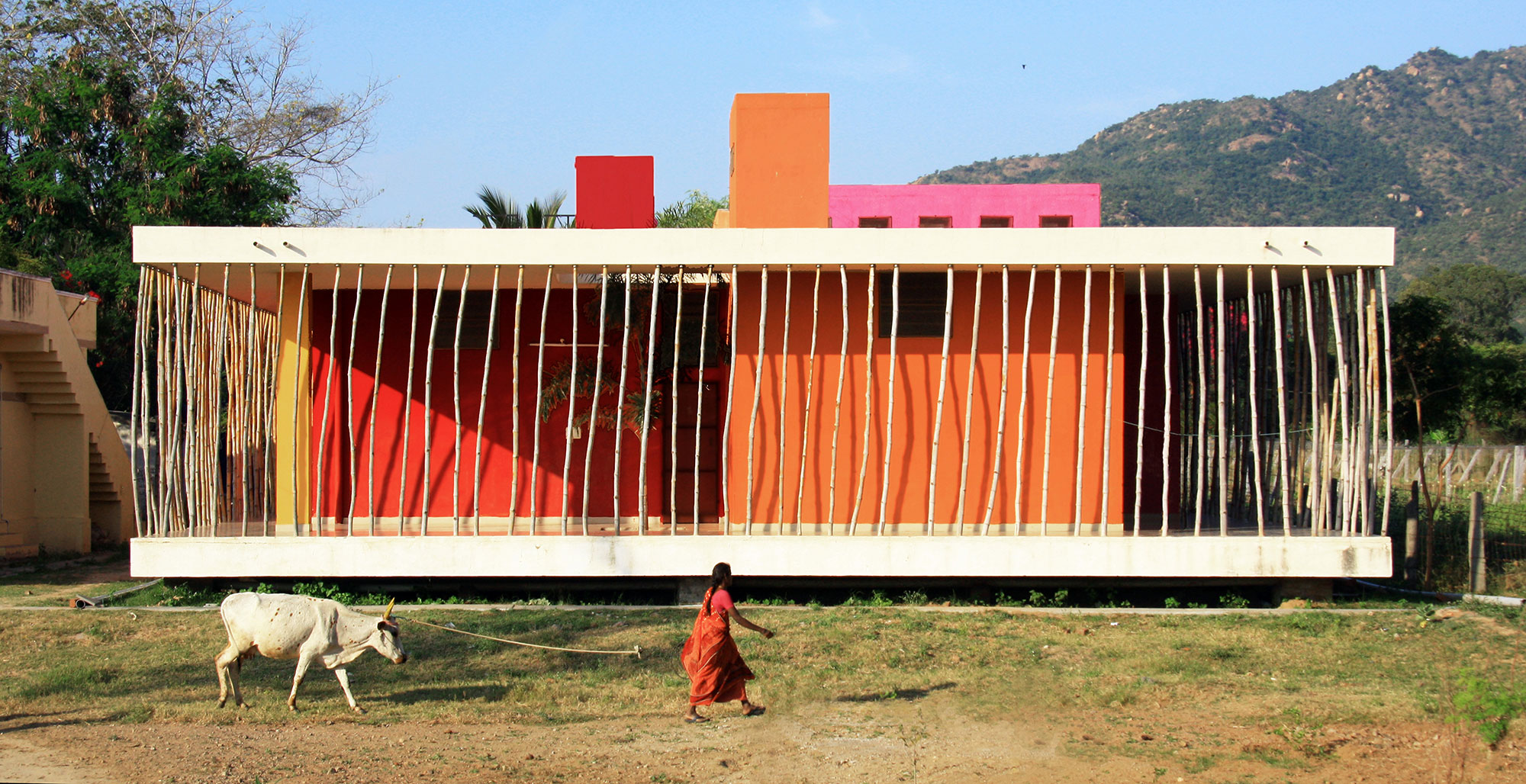
A unity of unassuming mediations, forms and experiences, Casa Rana is a foster home for HIV-positive children in Tiruvannamalai, Tamil Nadu – an expression of the purposeful and paracentric intentions of Italy-based Made in Earth ONLUS.
The form sits low; an intriguing image occupied by several fleeting instances: colourful volumes interrupted by intricate textural pattern of bamboo inset within speciously unmoored solid planes anchored readily amidst patches of shrubs. An assembly of these fragmented scales, the structure is raw, compact and porous acknowledging the light, its users’ desires and the site. Continue reading Casa Rana: Made in Earth ONLUS→
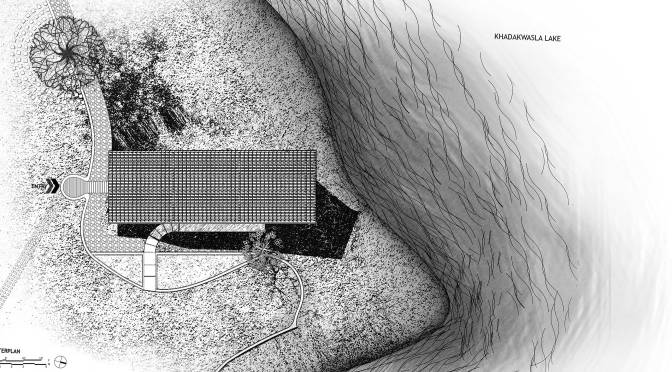
Eye on the Lake, a weekend retreat in Khadakwasla, principled by Lonavala-based Shabbir Unwala’s critical understanding of architecture, is a veritable effort to intervene responsibly in a natural landscape.
How not to build on mountain slopes and how I learnt to design ‘Diet’ buildings.
Having relocated to Lonavala in 1988 to get away from the architectural madness called Mumbai, I started my practice in 1989 in Lonavala and began immediately to unlearn all the lessons learnt of how to build in an urbanscape that the college and offices I had worked had taught me.Continue reading Eye on the Lake: Shabbir Unwala, Design Workshop→
The book assembles influences, details and observations on and by Laurie Baker to treat one to an explicit and fitting record to his willingness to accommodate and experiment with architecture of frugality and his continuing capacity to inspire people in re-evaluating excess.
Cover
Reprinted in 2014, this book authored by Gautam Bhatia makes an invaluable contribution by documenting the intent and ideas attached to the prolific legacy of Laurie Baker that secedes from the conventional notion of architectural practice. In his preceding author’s note, Gautam Bhatia writes, “The book was originally intended to be a guide to his method of building, but over the many meetings in the verandah of his home, the Hamlet, and the numerous visits to the sites (occasionally carrying a client’s door on the roof of his car) and watching him communicate with the Malyalee masons with vigorous gestures, I came to realise that Baker’s architecture is a by-product of a larger picture – a picture that recognises the importance of people’s aspirations for a better life. I began to see that his buildings were merely a direct and honest response to this spirit, this idea. It was after having realised this that the book took a different turn.” Issued in paperback, the book is eponymously grouped in three distinct parts with brisk chapters – Life, Work & Writings. Continue reading Book: Laurie Baker: Life, Works & Writings – Gautam Bhatia→
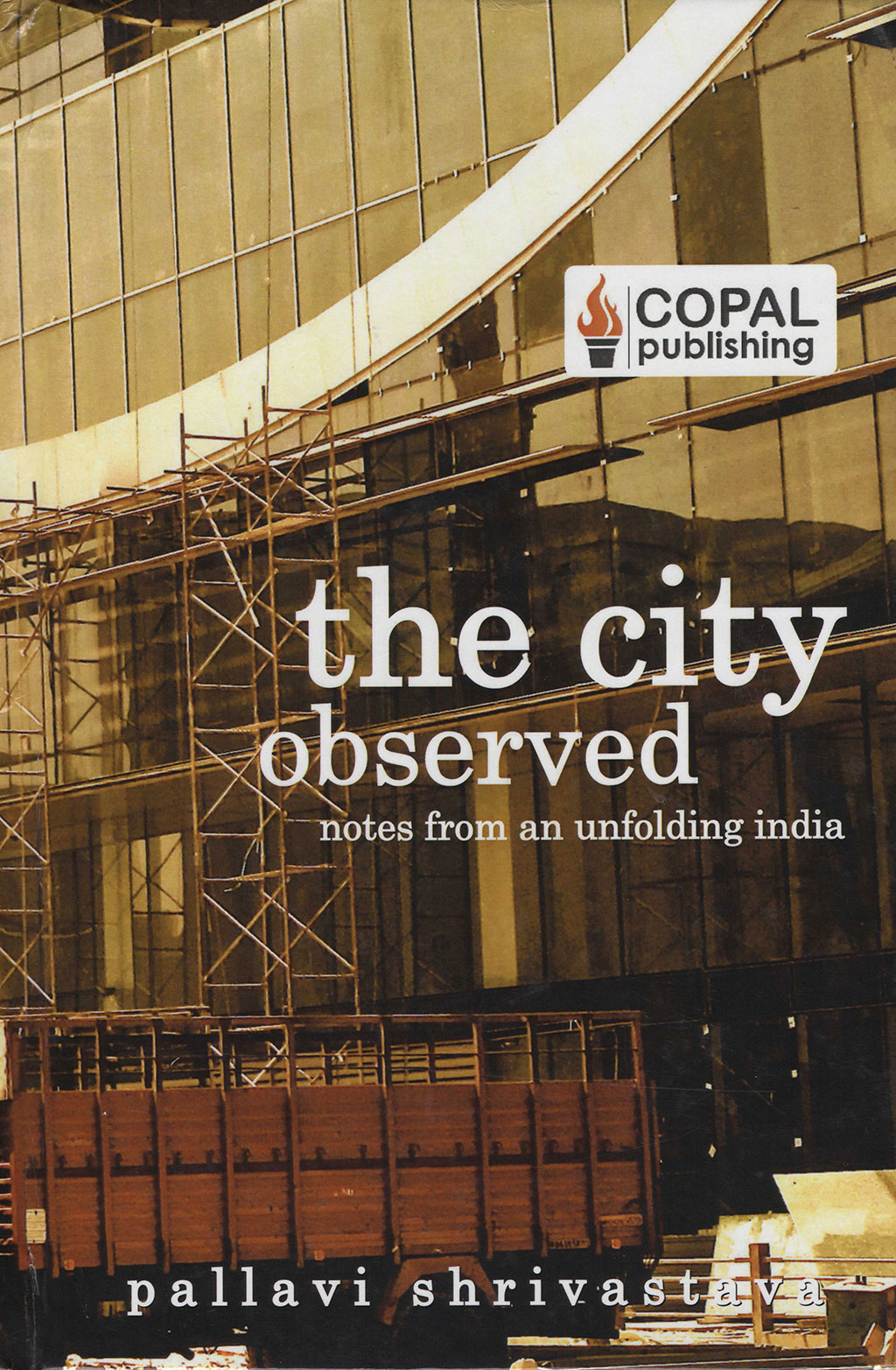
The City Observed by Pallavi Shrivastava reads like dispatches from a battlefront by a seasoned war correspondent. Each chapter is a stimulating vignette of some memorable place, or recently contrived artifact, through which Pallavi unravels counter intuitive conclusions. Pallavi has two eyes and many voices. Those two eyes see things often unnoticed, bringing into focus a collage of real life issues and human circumstances. She has an uncanny ability to conceive of the metropolis as an everyday person would, yet to catalyze unique understandings and conclusions from her choreographies! She navigates the metropolis building narratives out of keen insights, speaking for those without voices; giving eyes to people who have eyes, but no vision. Pallavi’s most provocative ability is to reveal contradictions between the emerging urban form and the critical needs of the everyday Mumbaikar, who emerges forgotten in the unfolding scenario. Her written landscapes reveal disturbing images of the bad within the good, and of poverty within plenty. From bright images emerge a sense of charm, tinged by nostalgia for the city’s past, yet a warning of pathos in times to come.





 thinkMATTER