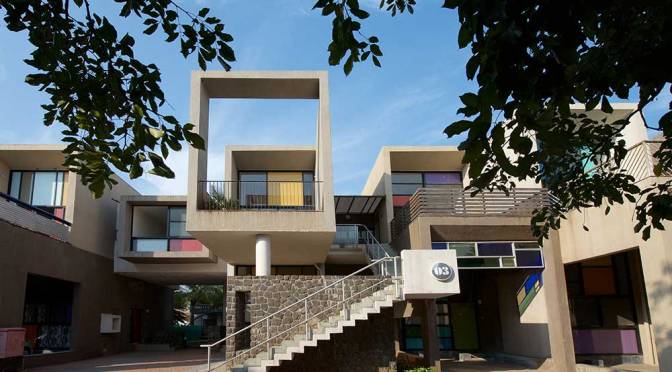
The Design.I.Y HOUSING project offers a refreshing perspective to the monotony that otherwise defines contemporary commercial housing. In the context of Lonavala, this project by S+PS Architects proposes an alternative approach wherein the preferences of the inhabitants become integral to the development of architecture and essential to the richness of design. Continue reading Design.I.Y HOUSING: S+PS Architects
All posts by Matter
Drawing to Find Out [03]: Ajit Rao
In conversation with Ajit Rao on his work and insights on drawings, skill and education.
Architect, Animator and Artist, Ajit Rao started his career working with the renowned Indian architect B V Doshi. Ajit’s added passion for the art of cartooning soon developed into a journey exploring diverse skills in varied mediums of expression and communication. An intuitive teacher, he has headed training programs at leading animation studios and has been a visiting faculty at premier design and architecture institutes in India. Presently Ajit has set up a studio in Lonavala, endeavouring to bring these diverse resources to the service of various aspects of Indian cultural expressions. Continue reading Drawing to Find Out [03]: Ajit Rao
In Conversation with Shilo Shiv Suleman & Heather Stewart
By Anusha Narayanan
A visual artist and designer who has transcended into art for social good and tech-based installations, from illustrations for children’s books, Shilo Shiv Suleman is an experimental feminist and an independent voice, representing not only herself, but other innovators and women around the globe. In an afternoon at Leopold, Anusha Narayanan got the chance to catch up with her and talk about biofeed installations.

Art is an external expression of internal discoveries: thoughts, dreams, advocacies and emotions of artists. Art in the ‘truly public’ domain is a rarity in India, but with the street art movement catalysed by the St+ART India, and independent artists such as Shilo Shiv Suleman, Anpu, Harshavardhan Kadam and more, art seems to be getting democratised. Yet as the quality of public artistic interventions at open festivals such as the Kala Ghoda Festival consistently and drastically drops, there is no room for quiet contemplation. In this quicksand, last year, I found Shilo’s work on bio-feed installations, an oasis in a desert. Continue reading In Conversation with Shilo Shiv Suleman & Heather Stewart
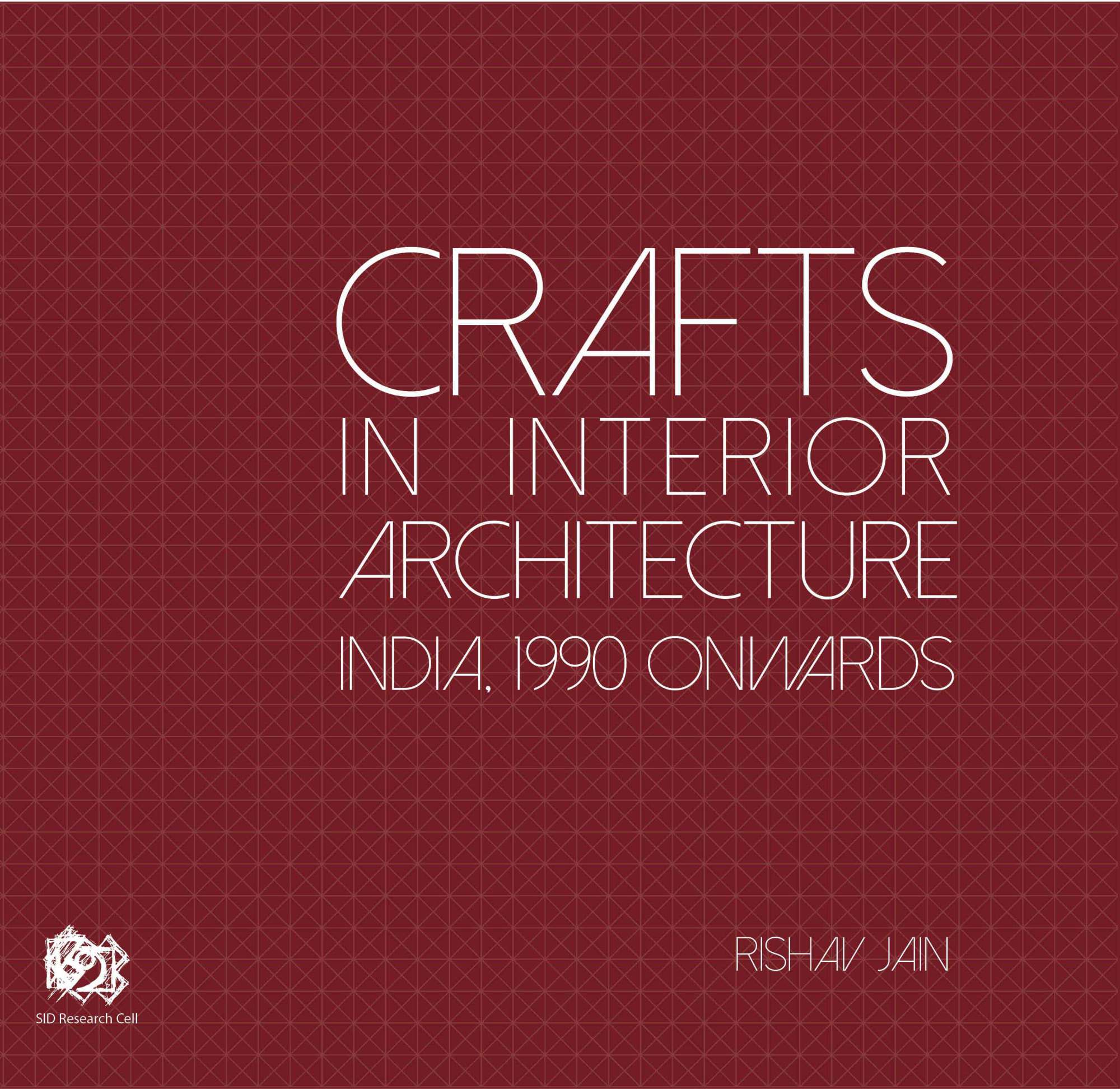
Book: Crafts in Interior Architecture: India. 1990 Onwards.
Book by Rishav Jain
Published by SID Research Cell at the CEPT University, Rishav Jain’s book on ‘Crafts in Interior Architecture’ takes a critical view of the history of building crafts in the context of space-making while analysing recent attitudes towards their integration in contemporary work.

Historically, building crafts have been an intrinsic part of making architecture in India. We have all known and been intimate with the practice. In the Indian context, the idea of ‘kala’ is rooted in many ways of working with materials and mediums. There is a great significance to the relationship of the artisan with the architecture of our subcontinent. There are, of course, many and complex layers of this relationship. That is where this book dwells. Continue reading Book: Crafts in Interior Architecture: India. 1990 Onwards.
Photography and Modern Indian Architecture
By Ram Rahman
Through a visual journey, acclaimed photographer Ram Rahman talks about a critical time for architecture in India – from Independence to Economic Liberalization – as we observe the anxiety of architectural positions in times of uncertainty and struggle for identity.
In India, masters are revered and apprentices forgotten. But it is the apprentices who religiously took the message, the art and the knowledge across India from the first generation of experimenters till the generation of architects and designers who work in an economically liberal India.
This video [with Ram in the background narrative] takes one through an incredibly rich history of the architecture of post-independence India when the socialist ideology worked through democracy creating a fertile ground for experiments in housing and civic architecture. This time stands in stark contrast to the present as the patterns of patronage change and the state becomes increasingly impervious to the core issues.
Profile:
Ram Rahman is a photographer, designer, curator and activist based in Delhi. He has been an observer of modern movement in architecture in post-colonial India. Using photography as a window to history and the present, he observes the changing landscape of architecture, design and art in India.
He is one of the founding members of the Safdar Hashmi Memorial Trust. Ram Rahman has studied Physics from MIT followed by Graphic Design from Yale.
Credit:
This presentation is excerpted from a closed-door session with MoMA‘s C-MAP Asia Group in June 2015.