A Recorded Lecture from FRAME Conclave 2019: Modern Heritage
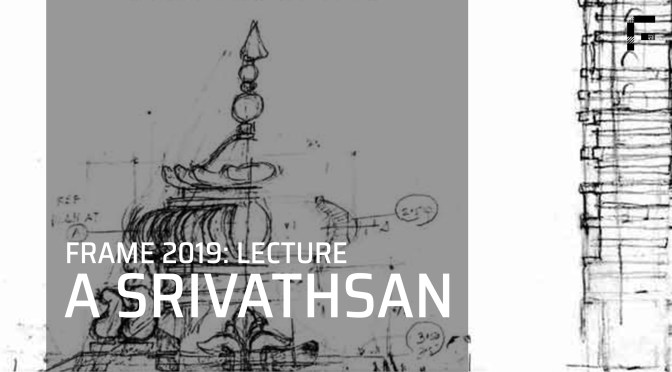
In this lecture, A Srivathsan presents his view on the construction of Hindu Temples, and raises pertinent questions about the orientation of contemporary and modern architecture within this discourse. Using examples of temples built by young practitioners as a prism, he draws distinctions and similarities between what the sacred is and what is modern.
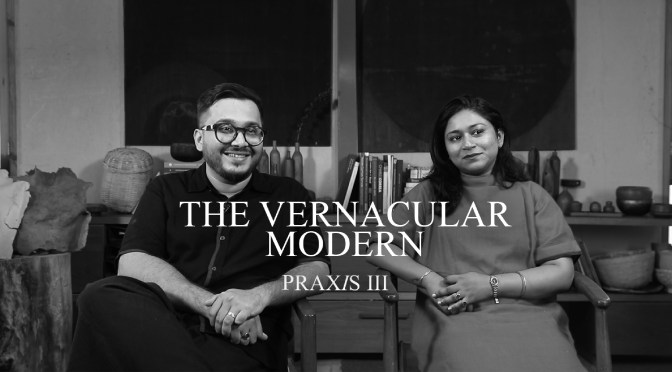
An editorial project by Matter in partnership with Şişecam Flat Glass, PRAXIS investigates the work and positions of diverse contemporary architecture practices in India.In the episode, Abhirup Duttaand Deeptashree Sahareflect on the intellectual roots of their work asThe Vernacular Modern. While anchored in their emphatic thematics of material cultures, and engineering, the imagery of the vernacular and the modern eponymously makes for their repertoire of furniture, art, architecture and objects. The formidably functional range is deeply researched, as evidenced by the studio’s process that is simultaneously organic and directional, embedded in the idea of ‘slowness’ and ‘an artisan-led’ approach. The Vernacular Modern’s work places these objects as signifiers in a complicated context and legacy of craft heritage in India. Working consciously with old demolition timber and towards contemporary narratives born of relearning and exploring, it asks a more nuanced question of itself – about true sense of collaborations, and developing products with a purpose.
In conversation with Niveditaa Gupta, we discuss the various narratives that drive a contemporary photograph, along with the values and potential of architecture photography in India.
The following text is the edited transcript from the conversation with Niveditaa Gupta, conducted on December 13th, 2021
CHAPTER 01: ORIGINS [00:25]
Part I – The Theory of Photography [00:39]
I never anticipated that I would get into photography. I was not interested in photography as an amateur passion that you pick up while you are in architecture or design school, because we had a lot of photography exercises, but I never felt that I could use the camera to photograph things which I might be architecturally interested in. As part of my dissertation, I wrote a paper on architecture photography. In the fourth year of architecture school, everybody had to write a research paper, and so I went through the archives of architecture photography all over the world, to study just how the evolution of photography happened over the years.
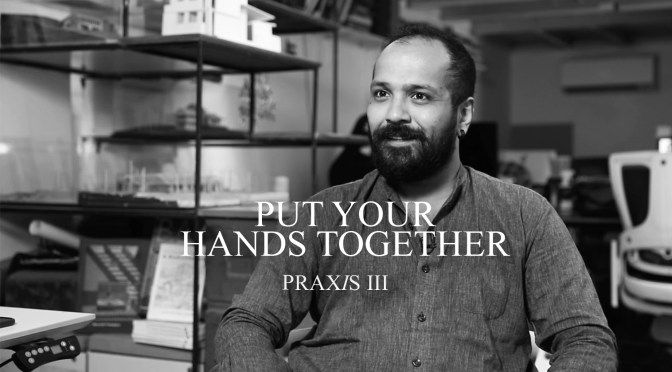
An editorial project by Matter in partnership with Şişecam Flat Glass, PRAXIS investigates the work and positions of diverse contemporary architecture practices in India.In this episode, Areen Attari of Put Your Hands Together introduces the idea of owning ‘bio-architects’ as the appropriate preface to the work they are pursuing. He cites collaborative influences, former partners, friends, and colleagues, underscored by their shared interests as a means of exploring and drawing attention to an architecture that finds a tacit relationship with natural materials. Through the discussion, Areen portrays the multi-modal approach of documentation, and teaching engagements to embrace the kind of imaginative play and intimacy that is essential to this practice and developing its details and systems. He believes he wants to create spaces that heal, spaces that make one slow down, and feel at peace with themselves.
Originally featured in [IN]SIDE, Volume 02, Issue 02.
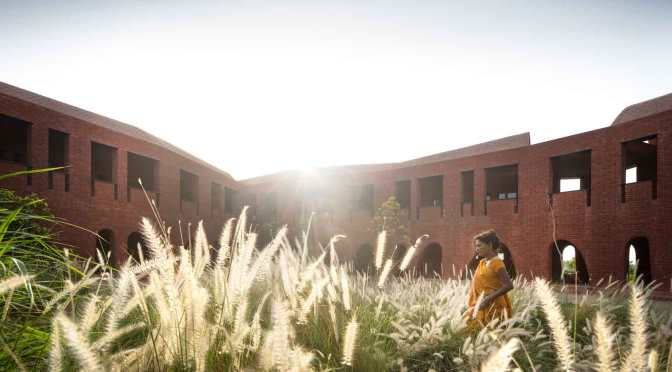
Hiren Patel, Principal and Director, Hiren Patel Architects writes about an approach to architecture where the question of thinking in detail is central to the idea of a project and the work reaffirms this belief when it endures inhabitation over a large span of time.
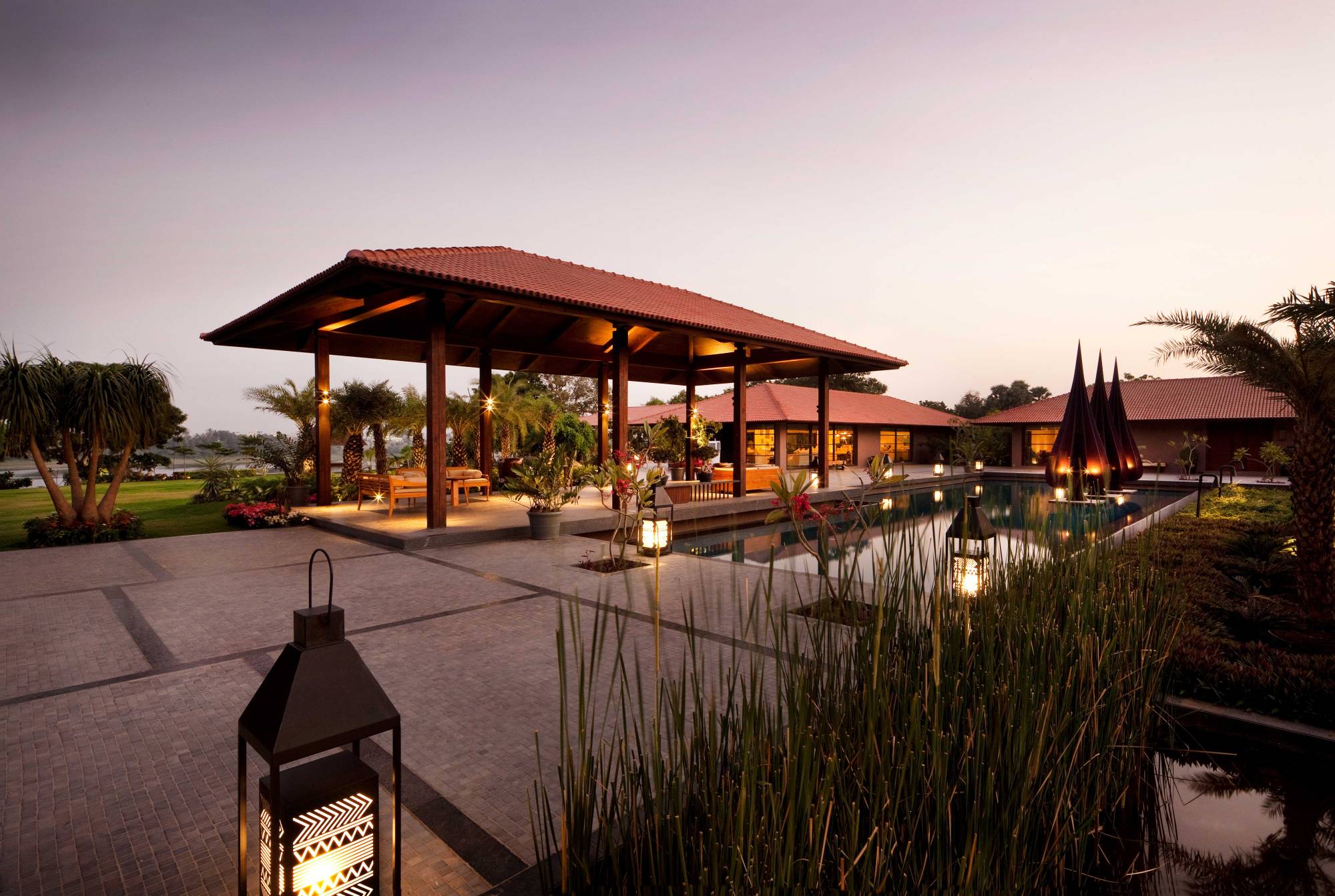
The semi-covered veranda: pavilion in the middle of the site for a Village house project: structures that promote outdoor living and bear a better relationship with the natural context.
DESIGN
For me, designing a building is like creating a painting on a canvas. Growing up, I always had an inclination for the arts. As a student, architecture opened up a whole new way of looking at art and design. This, I think, in some way influenced my approach towards architecture.


 thinkMATTER