Tag Archives: Design Thinking

The Architecture of Golconde

Pankaj Vir Gupta

A Recorded Lecture from FRAME Conclave 2019: Modern Heritage


In this lecture, Pankaj Vir Gupta discusses the conception of Sri Aurobindo Ashram in Pondicherry. Gupta delves into the architectural history of this structure, highlighting its pioneering use of concrete in India. He recounts his personal experiences at Golconde, sharing vivid details about the architecture and its unique features.

Edited Transcript

It is a particular privilege to be presenting a project with which we started our practice in 2003 and in the office archives, this is project 001 (referring to image 01). So, this morning to wake everyone up, I think it is important to understand why we are here to talk about this building and I will try and make it as energizing for you as possible.

My name is Pankaj Vir Gupta, and with my partner, Christine Mueller, I run a practice in New Delhi called Vir-Mueller Architects. I am also a professor of architecture at the University of Virginia, where I run what is called the Yamuna River Project, a multi-disciplinary research project, looking at ecology and urbanity in the megacities of the world. But to go back to how we started our practice, I was leading a study abroad program with some students from the University of Texas and we happened to be visiting Pondicherry, to look at the urban fabric of the city (referring to image 02), and we came across this extraordinary building (referring to image 02) and it was a surprise to me personally, because in several years of architectural education and research, I had never come across this building in any writing or any publication, at least not in the curricular work that we had been exposed to in our education.

Continue reading The Architecture of Golconde

PRAXIS 25 | SOCIAL DESIGN COLLABORATIVE

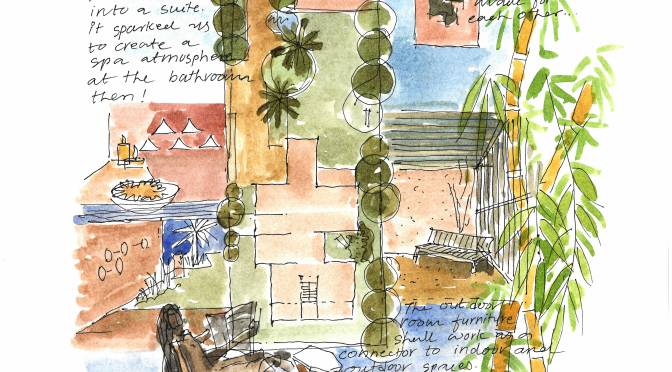
An editorial project by Matter in partnership with Şişecam Flat Glass, PRAXIS investigates the work and positions of diverse contemporary architecture practices in India. In this episode, Swati Janu of Delhi-based Social Design Collaborative emphasises on their idea of design and collectives as prisms to multiply opportunities to make architecture and its responsibilities accessible as a conversation to all; especially to those outside the purview of planning processes. The practice engages with an integrated approach to arrive at meaningful enquiries and possible opportunities at a more localised level, in tandem with the governance and power structures, community networks and the city. Architecture is conceived as a sort of node in the broader system. Swati, and her colleagues, Shreya Rajmane and Anushritha Sunil reflect on their processes and values that guide and conciliate technical and narrative tools to translate ‘projects’ across spatial, planning, advocacy, academia, art, writing, research and other diverse forms.


Continue reading PRAXIS 25 | SOCIAL DESIGN COLLABORATIVE

HIREN PATEL ON ‘MAKING’

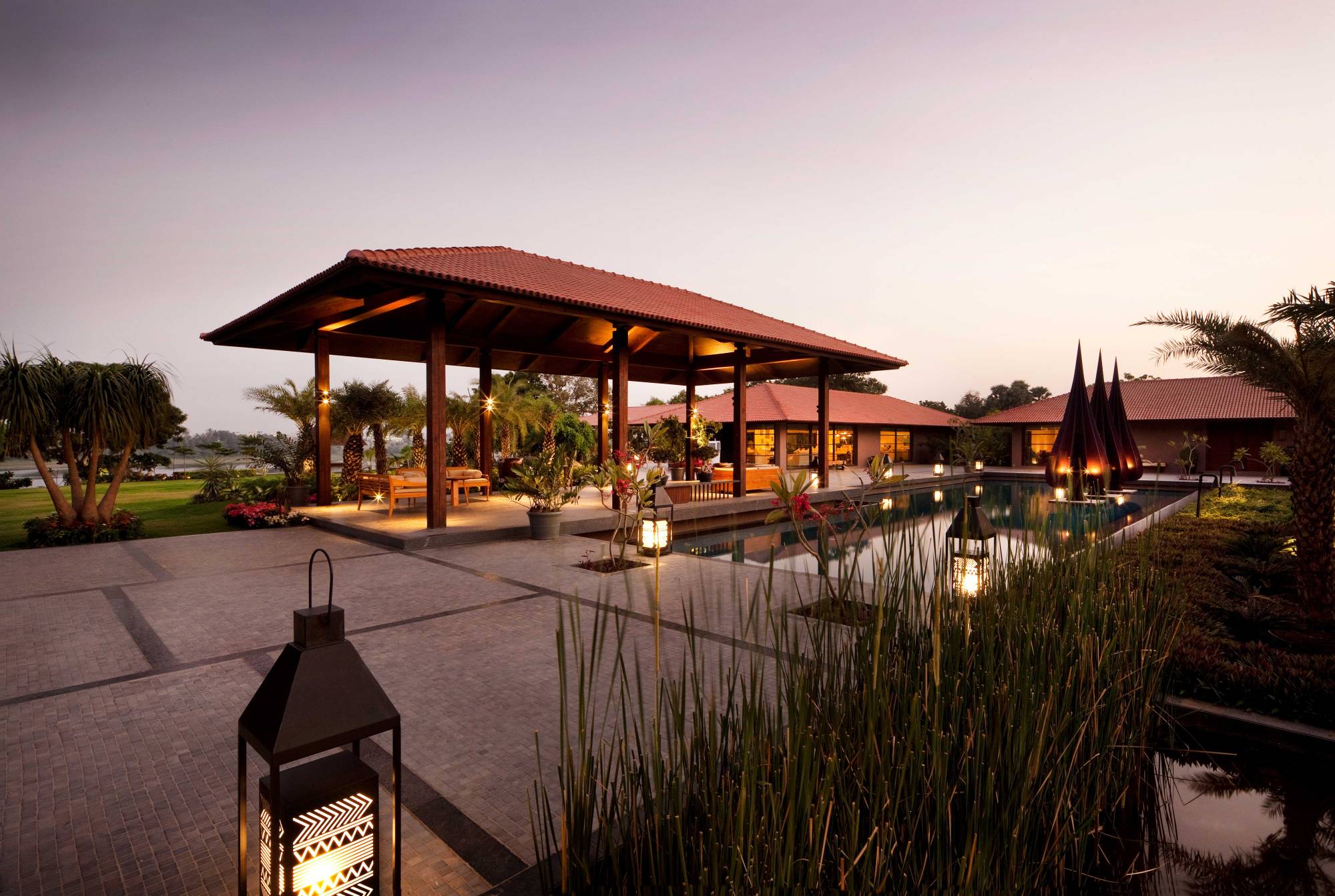
Hiren Patel, Principal and Director, Hiren Patel Architects writes about an approach to architecture where the question of thinking in detail is central to the idea of a project and the work reaffirms this belief when it endures inhabitation over a large span of time.


DESIGN

For me, designing a building is like creating a painting on a canvas. Growing up, I always had an inclination for the arts. As a student, architecture opened up a whole new way of looking at art and design. This, I think, in some way influenced my approach towards architecture. Continue reading HIREN PATEL ON ‘MAKING’

HINDSIGHT: Suprio Bhattacharjee

Hindsight
Personal Traverses Through the Pedagogical Terrain
by Suprio Bhattacharjee

Architect, researcher and writer Suprio Bhattacharjee looks back at his own education and critically evaluates the paradoxes of the prevalent pedagogical systems in order to create a framework to analyse new, emergent and experimental models in the subsequent chapters of this series he is set to curate.

When I first began teaching in 2002, I was just a year out of the same architecture school – the hallowed Sir JJCollege of Architecture in Mumbai. It was a place that inspite of its terrible flaws and apparent parochial constitution, was able to leave me to my own devices – I dare say ‘aided and abetted’ by less-than-a-handful of teachers who dared to be off the mainstream. The school was surprisingly absorptive of ‘strangeness’ though, if one was strong-headed and persistent. Perhaps, the very ‘otherness’ of these ‘strange presences’ meant that most would not bother – thus as a student one was able to nurture one’s self if one wished to do so and was sufficiently self-driven or self-initiated. This also was the school at its weakest: that as an institution, it lacked a set of ‘values’ or ‘principles’ by which it defined itself and its coursework and output – other than the misplaced mundanity of the ‘practical’ (or whatever was implied by this). Although if one could prove that if one’s ‘strangeness’ would ‘fit in’, one could survive the gladiator bloodbath. Thus, one could sense a surprising paradox – the very systems that seemed to be restrictive and closed gave one enough freedom and space to be one’s own – just as those few teachers taught us to be – within a space of constant negotiation.

Were these loopholes in the system, or was the system robust enough that it did not mind the ‘intrusion’ of a few? One can only speculate. But what it did leave many of us with was the sense of being intrepid and exploratory – to prod along paths that were off the main course.

Continue reading HINDSIGHT: Suprio Bhattacharjee

RANDHIR SINGH: ON PHOTOGRAPHY

In conversation with photographer Randhir Singh, we discuss the critical aspects behind the cognisance of capturing a pertinent architectural photograph, as well as the methods which assist the process.


The following text is the edited transcript from the conversation with Randhir Singh, conducted on February 10th, 2021


Chapter 01: ORIGINS [00:20]

Part I – Education [00:27]

I studied architecture – in the US – and I worked as an architect for fifteen years, in New York. While I was working there, I started photographing the projects that our office was doing, (and) I photographed projects that my friends were doing, and it built that way. In college, I did a semester abroad in Italy, and that was actually the first time I really made pictures with any sort of seriousness. I had a little Cannon film camera, and we traveled all over the country and spent a lot of time in Rome.

Continue reading RANDHIR SINGH: ON PHOTOGRAPHY