
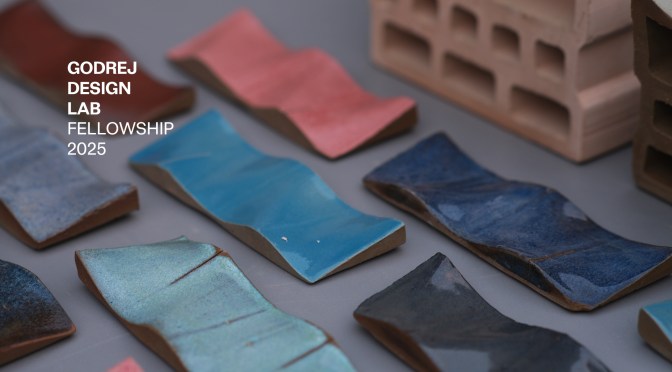
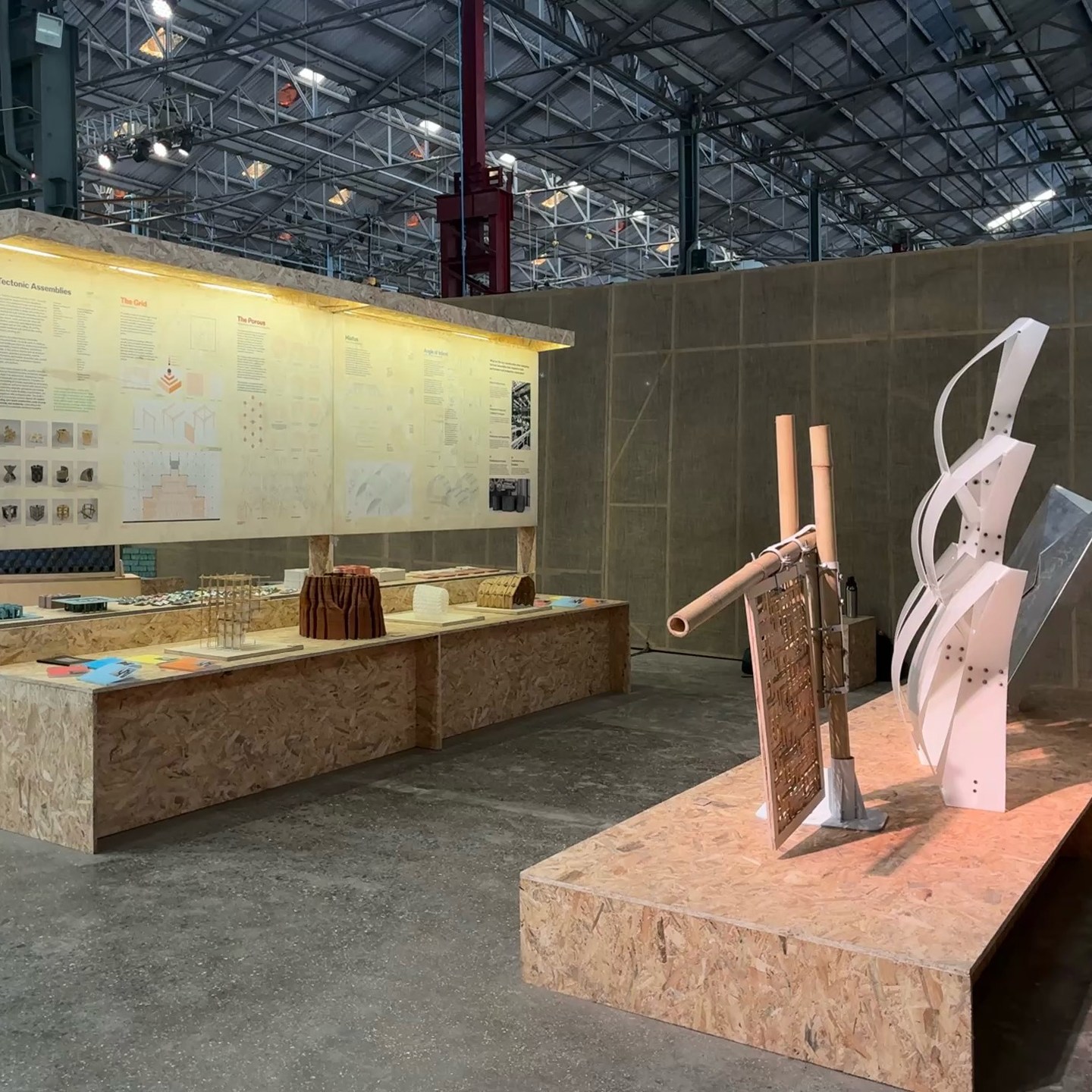
TERRA-X by TECTONIC ASSEMBLIES is one of six projects that emerged from the mentorship of the Godrej Design Lab Fellowship in 2025. The fellows exhibited their projects and processes at the Concious Collective in December 2025.
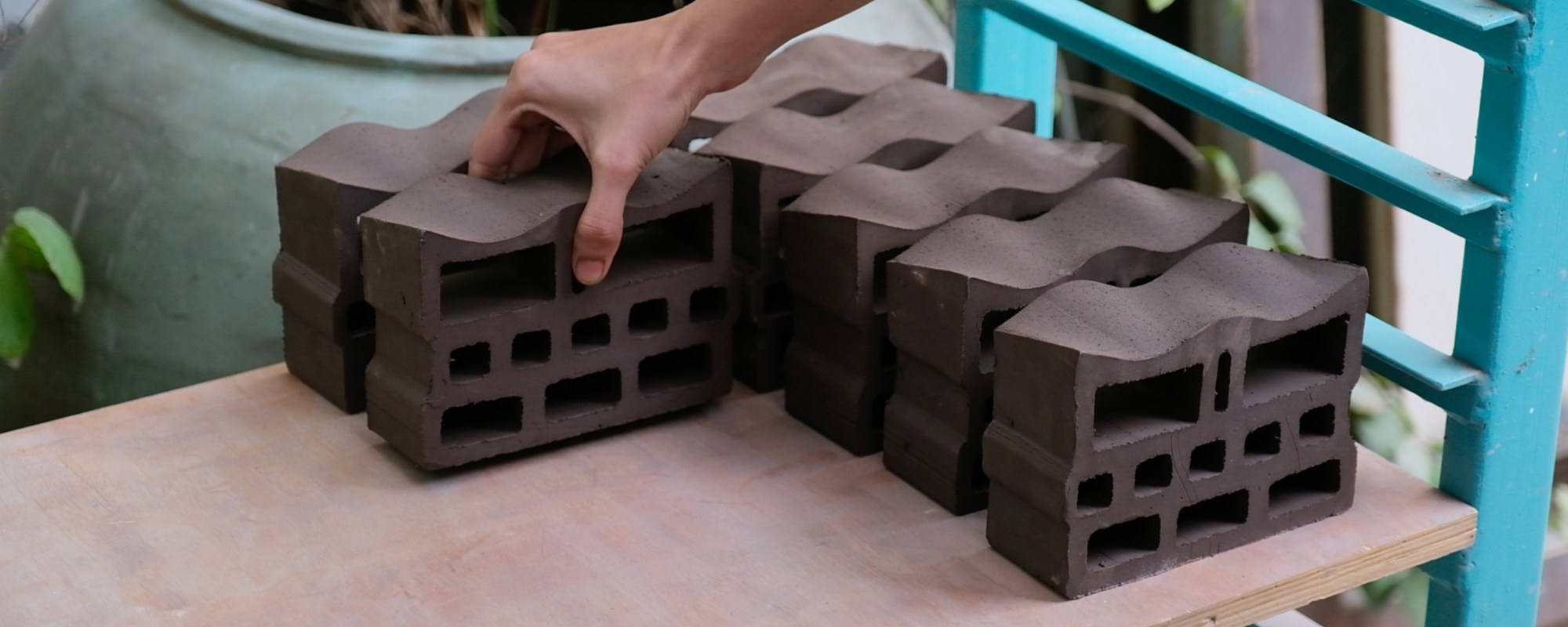
As a unique wall system, TERRA-X, developed by four designers, articulates a performative block system atomised to enhance passive cooling in region-specific construction. Through iterative prototyping, the team examined existing precedents, tested fabrication methods, and assessed scalability and costs. By wire-cutting blocks into varied geometries, TERRA-X enables breathable wall assemblies while offering distinct, customisable visual expressions.
In its making, TERRA-X is an object of cultivated experimentation whose origins lie in a studio-led research framework – Tectonic Assemblies at CEPT University undertaken in Spring 2025. The collaborators worked intensively with students over an initial four-month period generating twenty-eight investigations, from which one was selected for deeper development. This trajectory centred on thermal comfort, foregrounding whether a single repeatable block could replace or integrate into conventional masonry systems while performing as a passive cooling device.

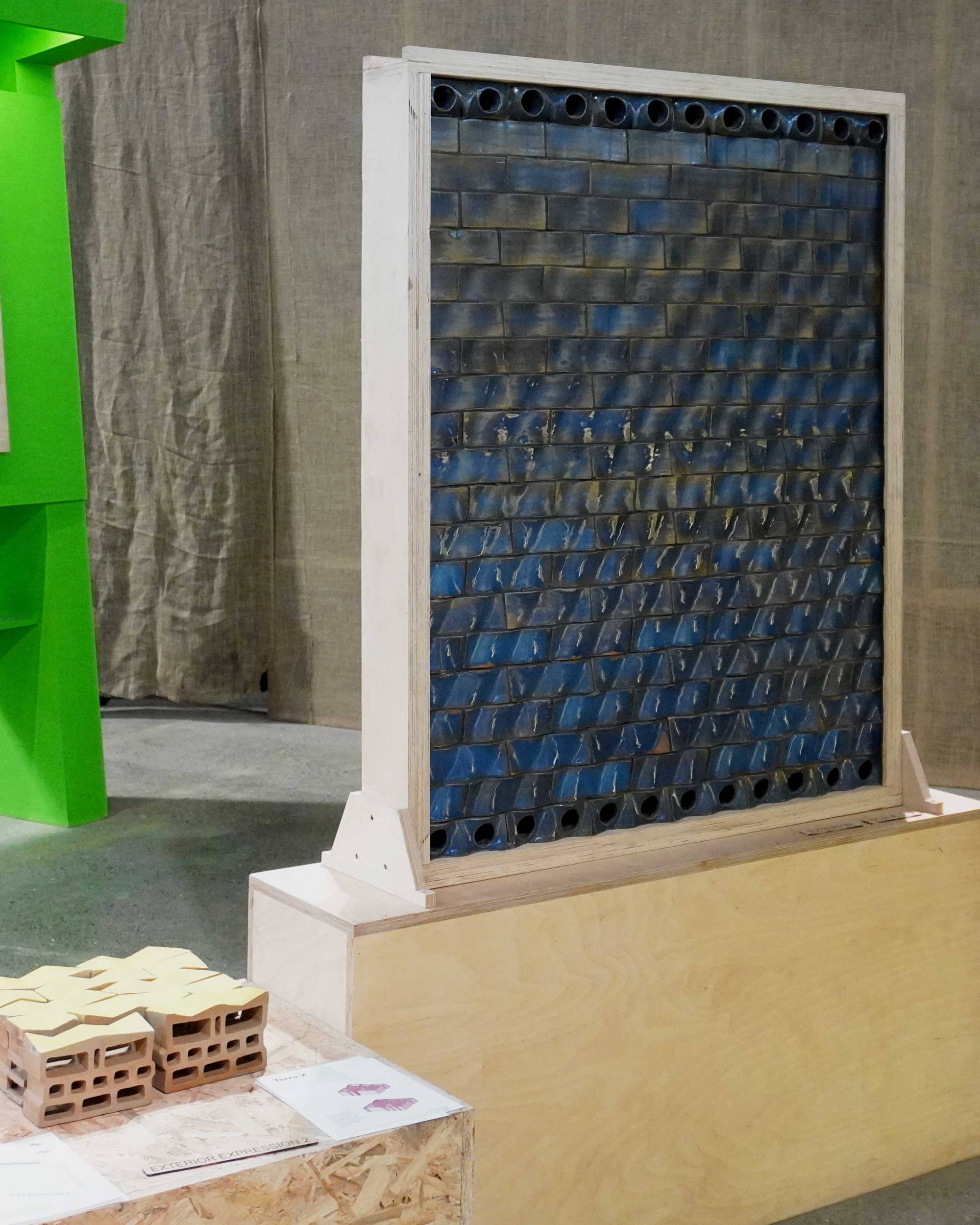
TERRA-X casts the work across material science, architectural tectonics, and environmental performance. As a means of systematising responses to the urgency of passive thermal regulation in hot climates, TERRA-X advances a material logic for cooler, self-regulating building envelopes.
Its ambition is to transform elemental forces into agents of environmental moderation, enabling a surface that ‘breathes,’ delays heat ingress, and reduces reliance on mechanical cooling.
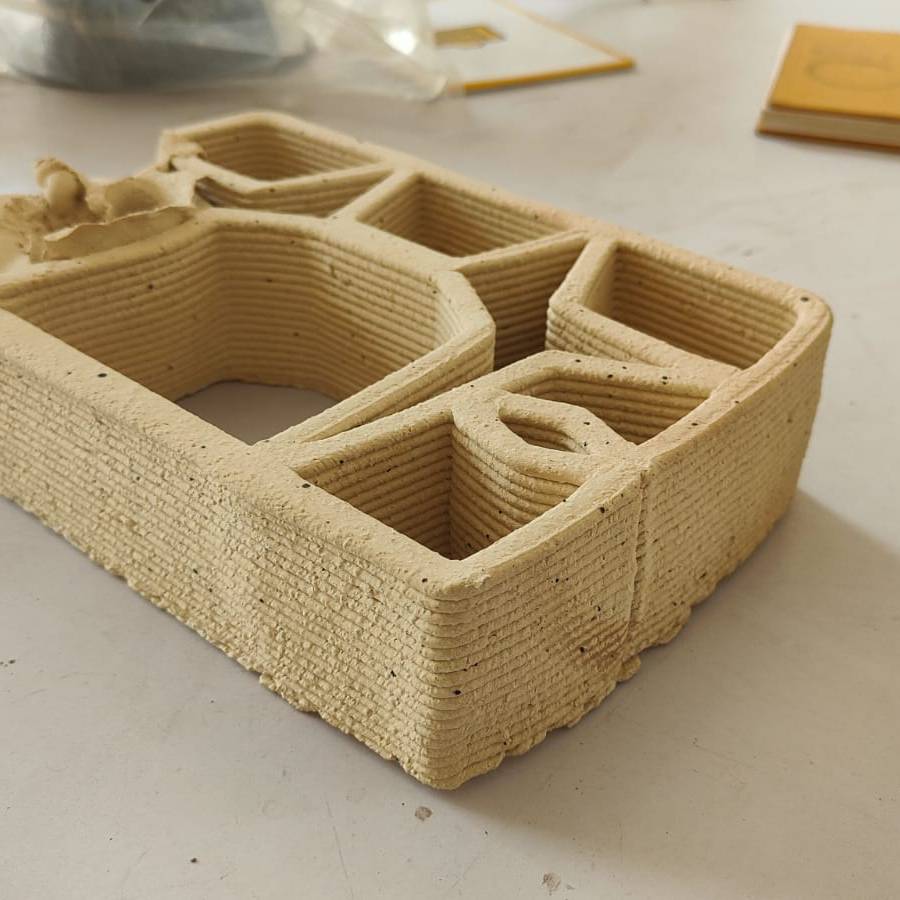
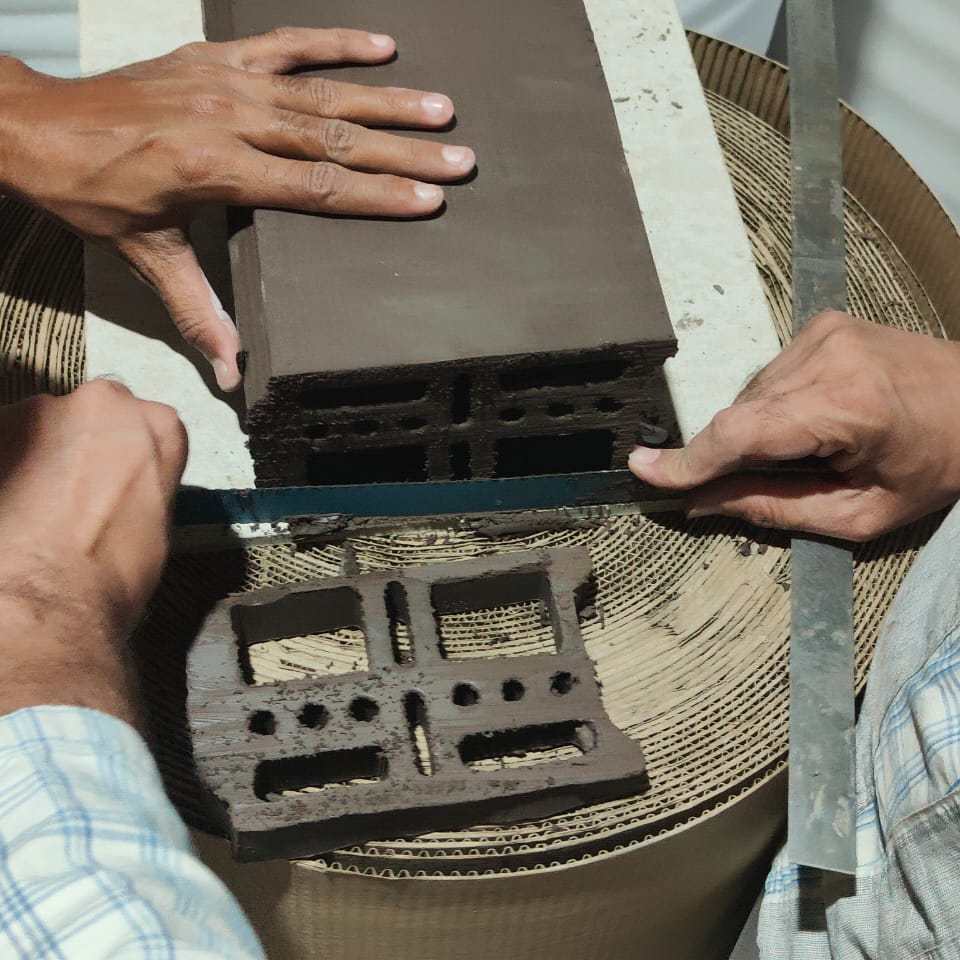
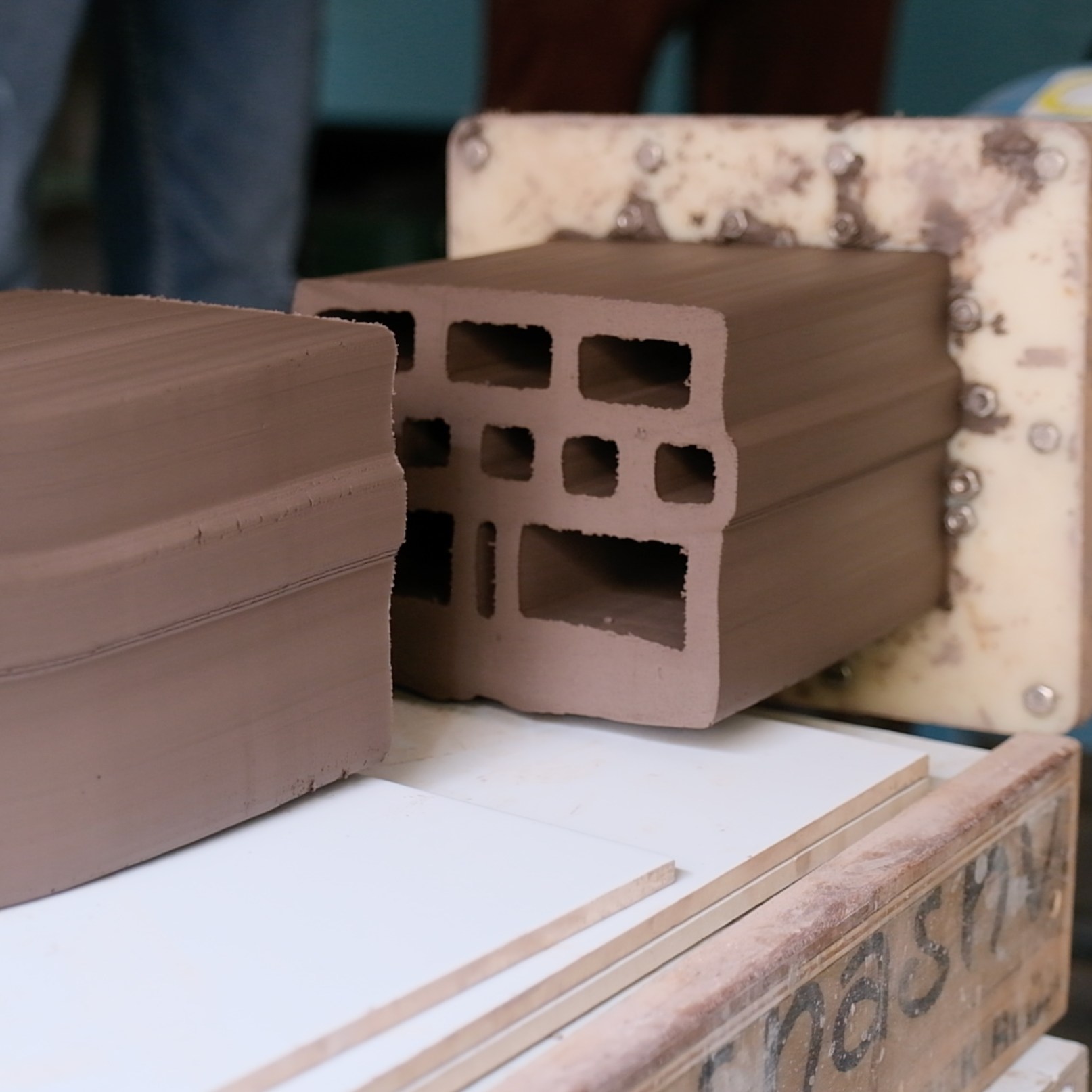
The objective was to consolidate three or four passive cooling orders familiar in the region – ventilation channels, evaporative cooling, thermal mass modulation, and surface shading – into a singular unit measuring approximately 8 x 16 x 4 inches. Post aggregation, this module creates a façade system adept at channeling air across a storey- height cavity, functioning analogously to a solar chimney. The hollowed geometry enables air to drift through the block, dissipating heat before it penetrates the interior.
The arc of development engaged engineering across material behaviour, airflow mechanics, and structural performance. Each experiment outlines the approaching of narrowing focus on the material ecologies.
To build on terracotta and stoneware clay, sawdust and paper pulp additives are introduced into the clay body as they burn off in the kiln, creating microporosity and enhancing insulation by slowing heat transfer. Sampling at varying ratios allowed the designers to refine porosity at material and formal levels. Simultaneously, airflow studies informed internal networked structures that maintain strength while orchestrating air movement. They tested various proportions and developed two materials.

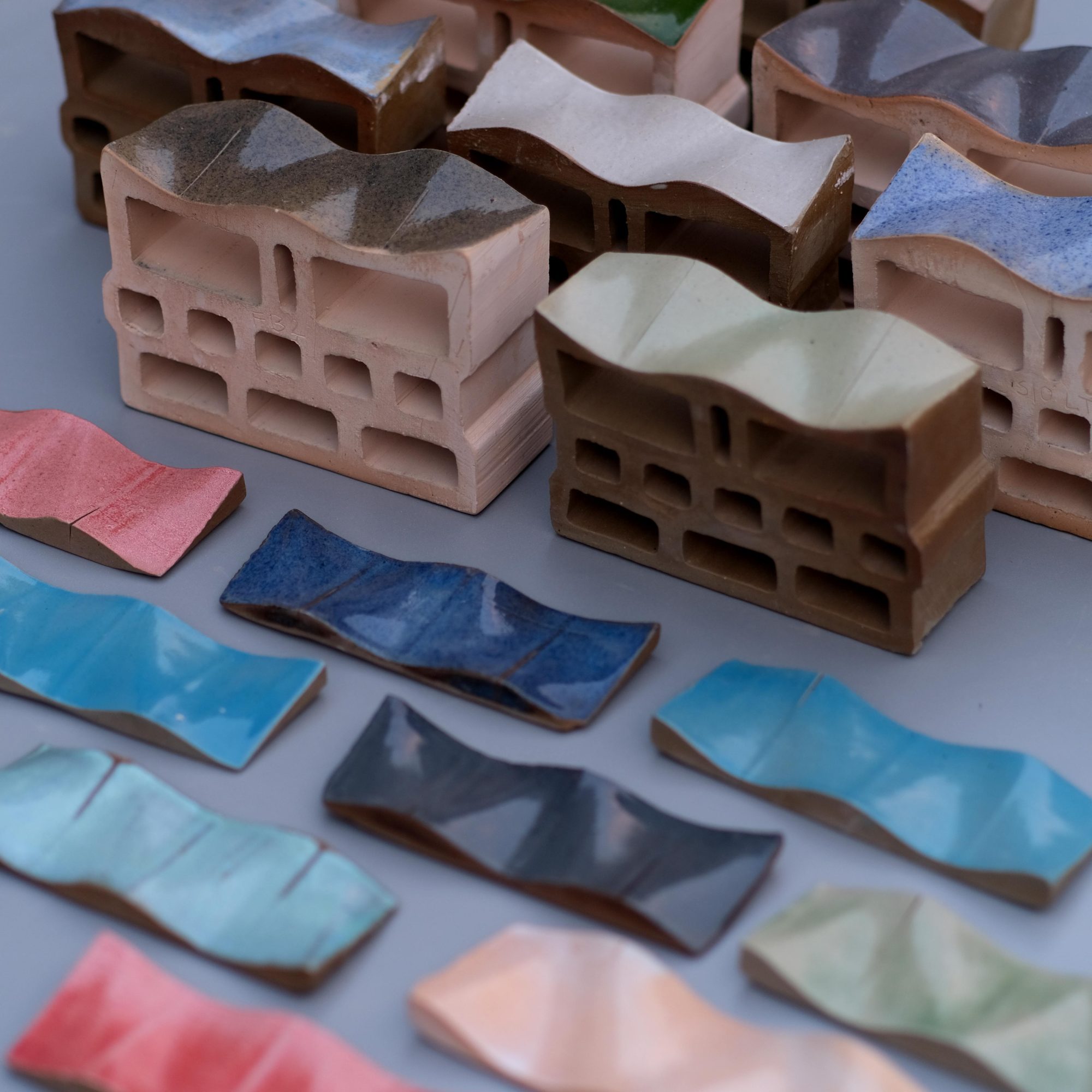
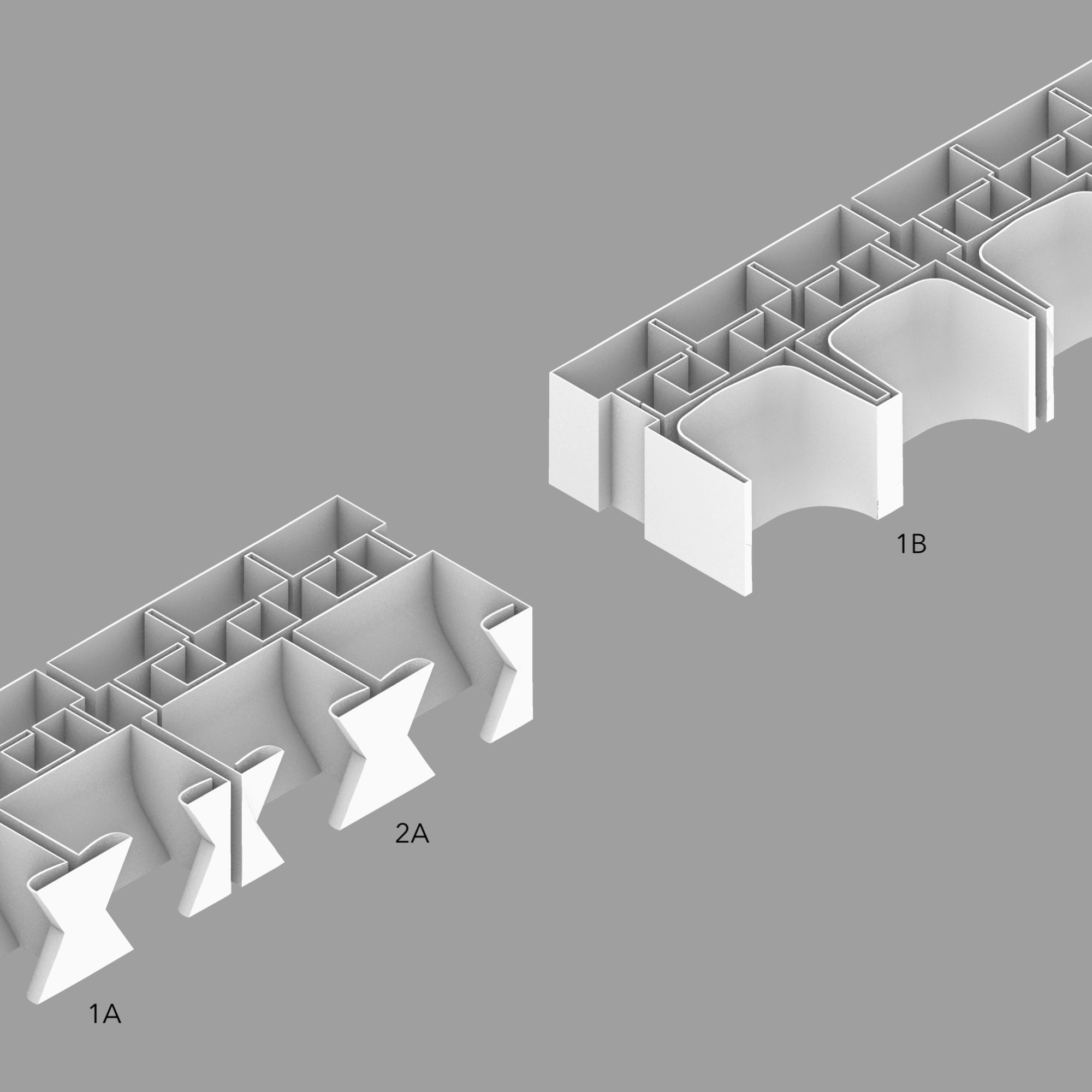
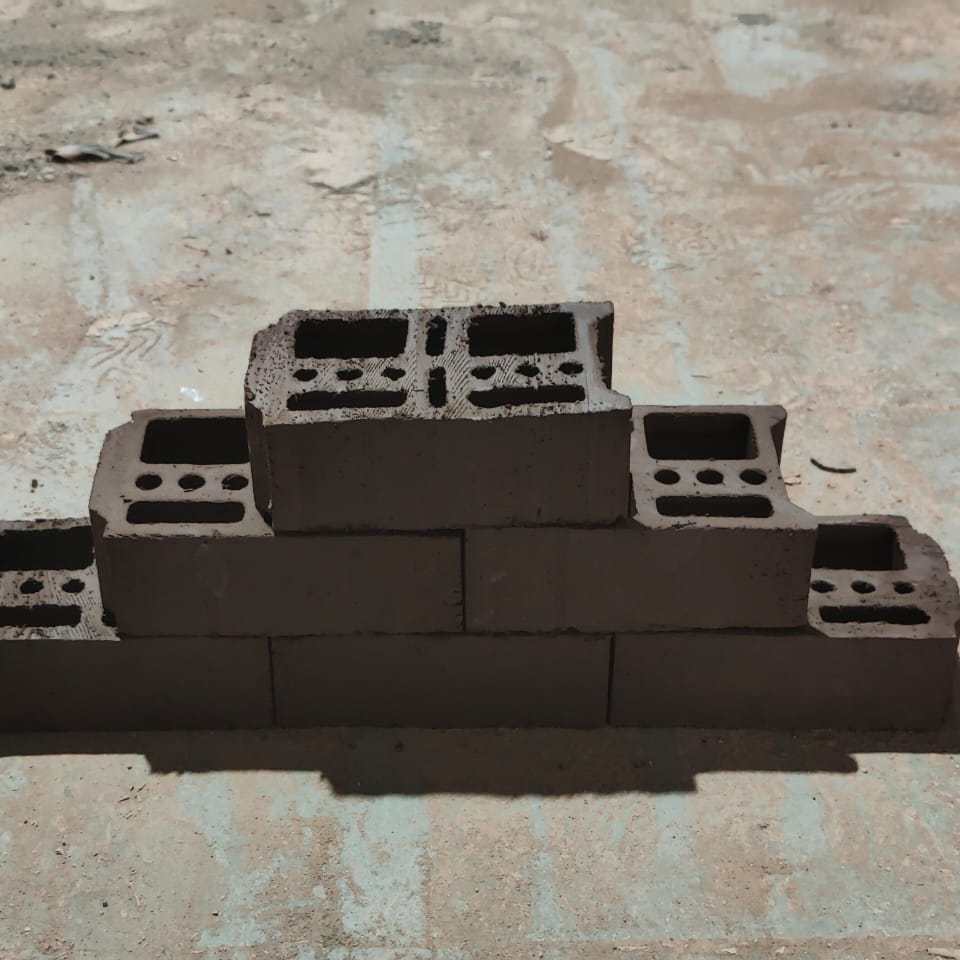

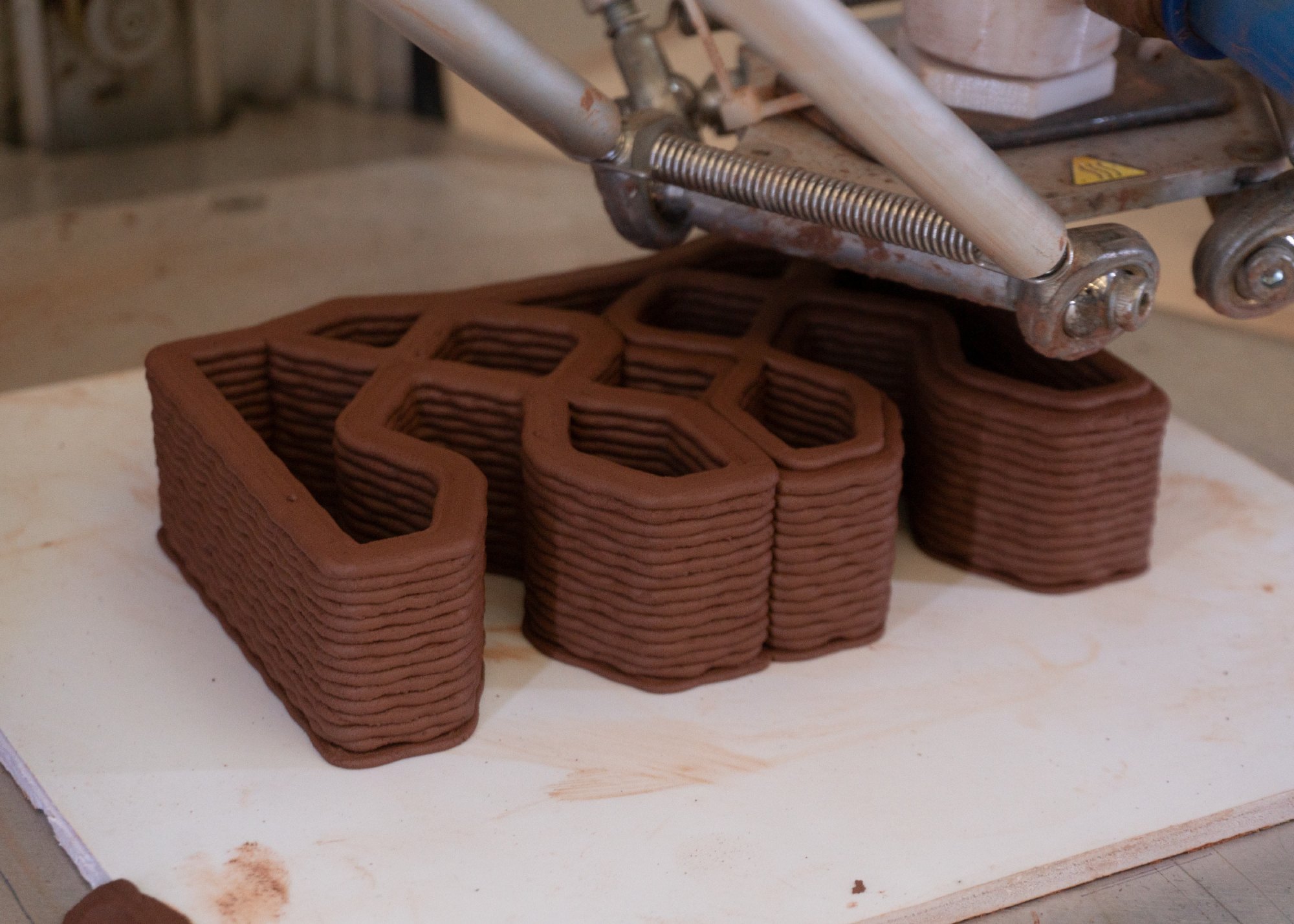
Production methods were explored through two complementary techniques: ceramic 3D printing and extrusion. The range shows extraordinary variation. While extrusion offers affordability and scalability, it leads to linear, visually uniform elements. The process was enhanced by introducing extrudates with surplus material that could be wire-cut into custom surface expressions. Conversely, 3D printing enabled highly articulated parametric geometries with integrated performance-driven infills, though currently at higher cost.
Collectively, these methods allow TERRA-X to be accessible across economic segments while regulating environmental performance.
TERRA-X frames impact architecturally at the level of a unit through the creation of an open, adaptable system. In presenting an efficient and inexpensive solution, it posits another way of understanding masonry or wall systems. As a process born in collaboration, its complexity and projection become central. By enabling other architects and designers to customise and deploy these passive blocks, the project aspires to extend its influence beyond singular authorship toward collective regulatory systems for environmental
responsiveness ♦
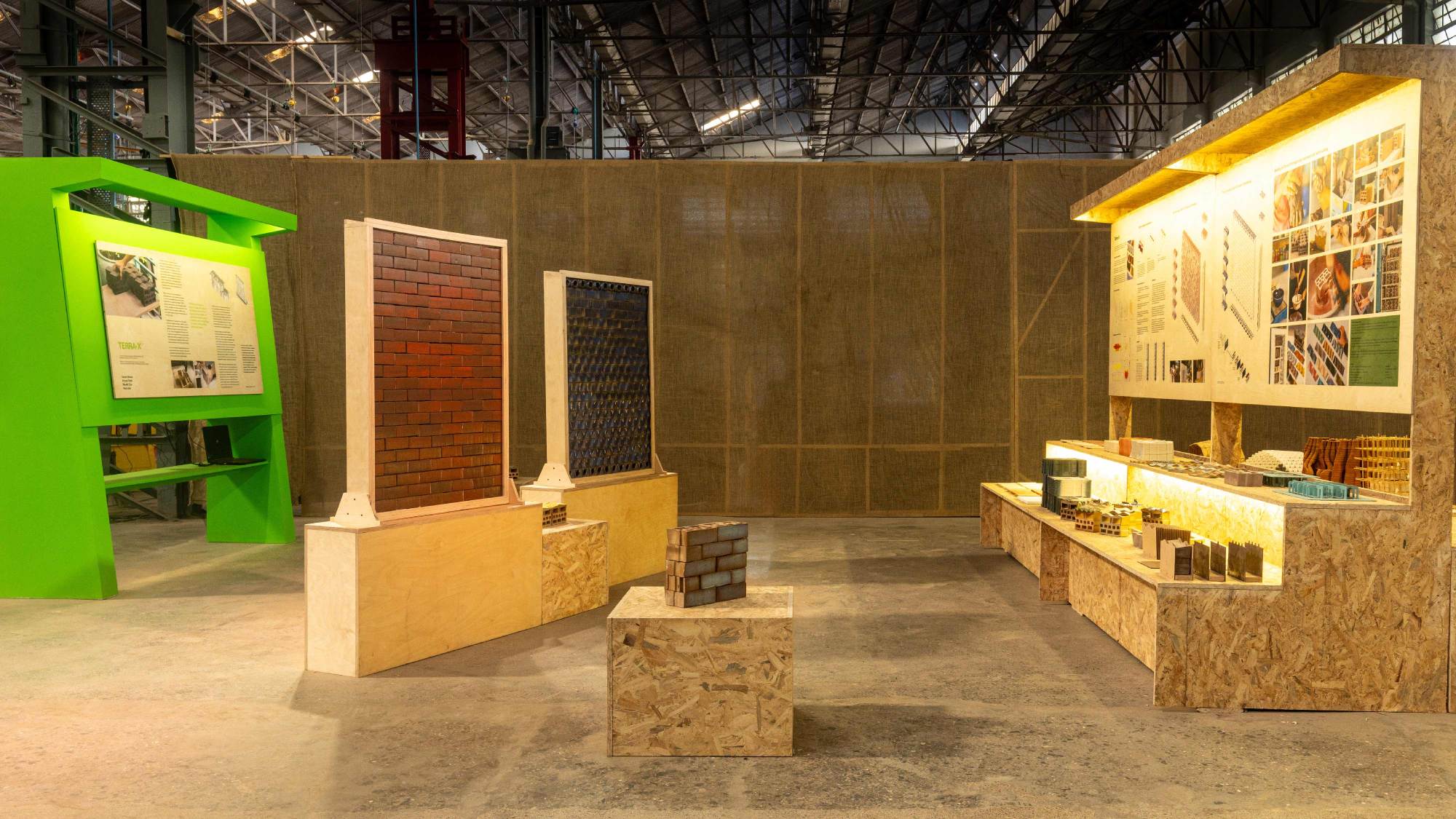
TECTONIC ASSEMBLIES
Tectonic Assemblies was a joint collaborative design studio between two programs at CEPT University: Master’s in Architectural Tectonics, Faculty of Architecture Master’s in Computational Design and Fabrication, Faculty of Design
Team: Karan Verma (a.Quest), Krunal Patel (Episteme), Maulik Oza (MO Ceramics and Design), Neel Jain (andlabs)
Collaborators: Chetsa Senjalia, CEPT University
a.Quest is a design-led collaborative architecture and planning studio in Anand, Gujarat, and Nanded, Maharashtra. We view architecture as a tool for collective good, where thoughtful design serves as a quiet yet powerful agent of change.
Email: reach.aquest@gmail.com
Instagram: @a.quest_
Episteme is a quest to find meaning within today’s expansive knowledge landscape. We anchor our practice in placemaking and the curation of experiences, spanning design, education, critical thinking, and creative expression.
Website: www.episteme.co.in
Email: write@episteme.co.in
Instagram: @studioepisteme
MO Ceramics and Design was founded by Maulik Oza with a clear goal – to make specialised ceramic supplies and equipment for small and large studios in India. Rooted in real experience, their machines embody detail and a passion for craft.
Website: www.moceramic.in
Email: oza@moceramic.in
Instagram: @moceramic
andlabs, a collaborative architecture and computational design practice, operates across research, prototyping and built work. Collaboration is the foundation for new possibilities, not a method. andlabs advances digital research into tangible architectural production.
Website: andlabs.in
Email: mail@andlabs.in
Instagram: @andlabs.in
A structured, one-year, non-residential initiative, the Godrej Design Lab Fellowship Program supports emerging design talent through grants and mentorship. It provides a platform for creative practitioners to develop projects that demonstrate technical proficiency, innovation, and societal impact, contributing to the evolving discourse on design in India. The program encourages experimentation across different design fields and supports practitioners working with interdisciplinary thinking, sustainable approaches, and new methods.
Website: designlab.godrejenterprises.com/fellowship
Matter curated and designed the Godrej Design Lab Fellowship exhibition at Conscious Collective 2025.
Film by Matter. Shot and edited by Gasper D’souza, White Brick Post Studio.
Images: © and courtesy Tectonic Assemblies, & Rishul Bangar
Drawings: © and courtesy Tectonic Assemblies


