
Category Archives: Frame Conclave

Claiming Space/Designing Space: Women Architects in Modern India

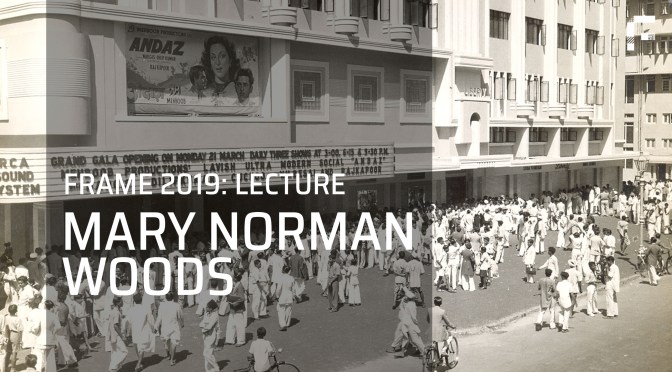
Mary Norman Woods

A Recorded Lecture from FRAME Conclave 2019: Modern Heritage

In this lecture, Mary Norman Woods talks about women architects in post-independent India, and their role in Indian society. She also speaks at length about two prominent women architects from two different generations, and their illustrated body of work.

Edited Transcript

Exploring the different forms that architectural practice might take beyond the usual metrics of originality and innovation can complicate our understanding of modern heritage and its implications for contemporary practice. 

Peggy Deamer, US architect, educator, and activist has argued that how architects practice is as important as what they design and build. Writing in 2018, Deamer put forth the proposition that “architecture cannot produce spaces of freedom — public spaces, healthy spaces, accessible spaces, affordable spaces, sensually liberating spaces — for the society architects presume to serve if they are produced in unfree circumstances such as unpaid labour, gender inequality, generational hegemony, unsustainable work hours, non-existence work-life balance, lack of collegiality or discipline, [and] crippling competition.” Her words remind me of a question that Ellen Perry Berkeley, another American architectural critic, writer, and educator, posed exactly four decades ago. Then, Berkeley wrote: “the real problem for a thoughtful woman is not whether she is accepted into the profession, but whether she wants to be accepted into the profession as it is now.”  

Continue reading Claiming Space/Designing Space: Women Architects in Modern India →
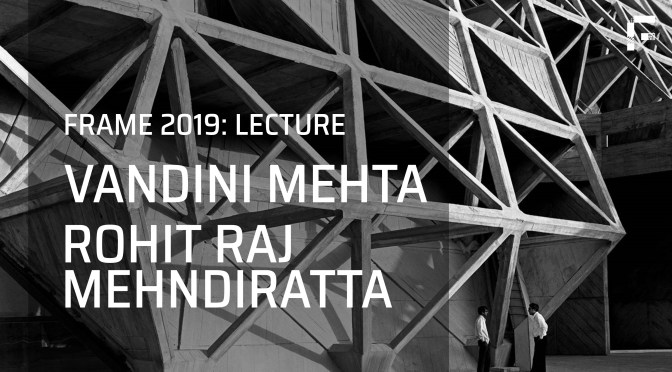
Structural narrative of Indian Modernity as an oeuvre of Mahendra Raj

Rohit Raj Mehndiratta and Vandini Mehta

A Recorded Lecture from FRAME Conclave 2019: Modern Heritage

In this lecture, Rohit and Vandini talk about Mahendra Raj’s journey as a Structural Designer. They also provide an in-depth insight into the structural expressiveness, innovations and elements that allowed for new spatial possibilities in his illustrious body of work.


Edited Transcript

To talk about the works of Mahendra Raj, we have titled the work, “Structural narrative of Indian Modernity as an oeuvre of Mahendra Raj” as you will see, inflects and contributes, and helped create many artefacts that pioneer the narrative of Indian Architectural Modernism post-independence.

In this presentation, we will discuss only a few of Raj’s most important projects from over 250 projects that he has realised in the last six decades. Each project that we have chosen shows a visionary and pioneering engineering solution, exemplifying the bold and adventurous innovations his practice engaged in. As we discuss these works, the underlying story that emerges is of transnational exposures and exchanges of brilliant architectural and engineering minds, Le Corbusier and Louis Khan experimenting in India, Indian architects and engineers travelling West and coming back to engage with each other and local systems, we feel, created a fertile environment and incubator of sorts for new ideas that defined Indian Modernism.

Raj’s interest in structure started in 1951 when he was appointed as the Assistant Design Engineer for the construction of Chandigarh’s High Court. The geometric parasol roof consisting of shells presented the engineers with bold structural and functional hurdles. Working with other engineers, he, with his senior Gulzar Singh proposed modifications, that of a balanced cantilever, that supported on two columns, the fins that we now see which made the construction possible. This is what Corbusier wanted, and this is what finally came about from there.

More

‘India: Modern Architectures in History’

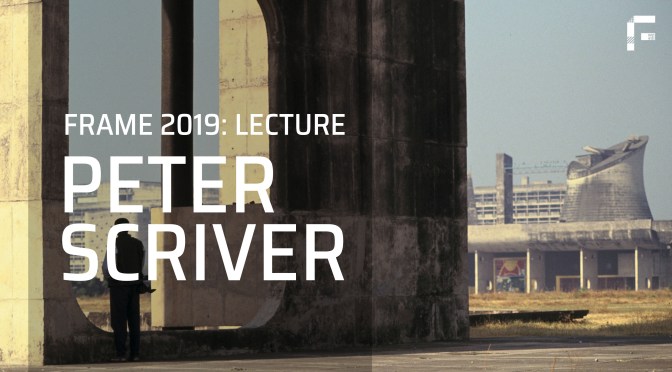
Peter Scriver

A Recorded Lecture from FRAME Conclave 2019: Modern Heritage


In this lecture, Prof Peter Scriver articulates a historical perspective on the changes and challenges of Modern Architecture in India since Independence. The talk also dwells on the Nation-building efforts, the nation-builders and the significance of this body of work in contemporary India.


Edited Transcript

Welcome, everybody. Just before I proceed, I just want to show due credit to my colleague, Prem Chandavarkar for a profoundly significant opening thought-piece for us to all think about in the days ahead.

I think FRAME Conclave’s expectation of what I might do was to also help set up some ideas, but they will be far more humble, and they are more prosaically engaged with the stuff of the architecture around us and the careers of many of the people in the room, and some of the backgrounds that I have had the opportunity to observe over a number of years. This talk will open up some of that perspective for you and hopefully also be of some use.

But I guess I just wanted to note particularly how a term that Prem, someone among many in the room that I have known for some years, this architecture, the background, your final point, which you published about and talked about in the past. I think I have a much deeper understanding now of what you really mean by that. So thank you for putting those thoughts together. Continue reading ‘India: Modern Architectures in History’ →