An editorial project by Matter in partnership with Şişecam Flat Glass, PRAXIS investigates the work and positions of diverse contemporary architecture practices in India.In this episode, Swati Janu of Delhi-based Social Design Collaborative emphasises on their idea of design and collectives as prisms to multiply opportunities to make architecture and its responsibilities accessible as a conversation to all; especially to those outside the purview of planning processes. The practice engages with an integrated approach to arrive at meaningful enquiries and possible opportunities at a more localised level, in tandem with the governance and power structures, community networks and the city. Architecture is conceived as a sort of node in the broader system. Swati, and her colleagues, Shreya Rajmane and Anushritha Sunil reflect on their processes and values that guide and conciliate technical and narrative tools to translate ‘projects’ across spatial, planning, advocacy, academia, art, writing, research and other diverse forms.
SJ: I think when it comes to architectural education in the country, there is a certain idea of what a successful architect is. It is inspired a lot by Howard Roark from Ayn Rand‘s ‘The Fountainhead‘; I would like to refer to it as the infamous ‘Fountainhead’. It is mostly a heroic male figure, wearing black usually; we are really fed this idea in college, whichever university we go to, some more some less. When it comes to women, the only role model you get to look up to is Zaha Hadid and there is this idea of iconic buildings that we are fed throughout our education system and I think there are certain moments when we are studying, when we start practising, there appear chinks in this certain narrative and that is what happened in my life. Sometimes it is just an elective; just one inspired, motivated professor. In my case, it was architect, Romi Khosla. He had taken an elective, what he called ‘The Middle City’, which was the informal city, what he described as a city existing between a micro and a macro city but it can be really anything, any source of inspiration which makes you want to look outside your own bubble – a bubble created by privilege, bubble created by caste and class and over time I started realising through my practice as well that, design, architecture are inherently elitist professions.
They are only for a few who have access to the services of an architect (people who can afford to pay for their services). Also, who are the students who get access to architectural education? They go on to then create a built environment and if there is a certain lack of inclusion that really starts to be idolised over time, of course all of them happen in retrospect. It starts with our architectural education.
Seminar Poster
On a more personal note for me, the seeds for it were also sown growing up in my childhood. My grandparents were freedom fighters and my uncle, my father’s older brother, he identifies as a communist and he was responsible for a lot of movements and campaigns for social justice, for human rights. For us, growing up looking at him was very exciting because a lot of his life was underground but also in terms of moral, and values. I think it laid the foundation for the work I do today. Every time I would go to our village in the summer holidays, his office as an advocate had these really, thick books and there was always a photo of Gandhiji and a photo of Bhagat Singh, which also talked about the duality of the struggle for justice. I was able to unlearn, what I had learnt in my architectural education, because of this foundation which was laid sometime back in my childhood.
I started practising after my education at School of Planning and Architecture, […] but over time I also realised that the kind of architecture most architects are practising is perhaps not able to look at the urban, social, economic and even political reality of the times we live in. When we are designing a university somewhere who was there before us, when we look at a site, we are only looking at it geographically right?…the adjacencies. Are we looking at it also in terms of time, in terms of the history, in terms of the different layers which also make the site, which are not always geographic or built or spatial and I think for me this was all also mixed up in the form of an existential crisis that we all go through in our 20s. I would like to call it quarter life crisis. Each time I talk about it and I realised that over time, the role of the profession, the relevance of architecture as a profession, was not really adding up for me.
When most of the people in our country do not have access to the services of an architect, who are we designing for? What is the significance of the training we have taken? Hence, over time I found myself shifting towards people who are asking the same questions trying to answer them in their own ways.
I started working with ‘Microhome Solutions’. It was a small social enterprise based here in Delhi; now the founders are based in Bhutan, previously they were in Italy. Two people, an architect and an economist, Marco Ferrario and Rakhi Mehra, they had founded it and they were looking at informal settlements because most of the housing in our bigger Indian cities from Mumbai to Delhi is self-built. It is built by the people themselves and so they were looking at how we can use our architectural services to strengthen these communities. How can we help people build stronger houses, safer houses? Since they are also built informally, organically and in case of calamities, natural disasters such as earthquakes.
I often struggle to explain to the people we work with, what is the value of an architect? what do you do? who are you? and I have realised the most common definition that I find the easiest to talk about is: I am someone who helps bring in light and ventilation. That is it. That is what we have been trying to do in neighbourhoods, in homes, in community buildings, where I think our training can be really useful but of course only design is not enough. We have also realised over time that architecture alone cannot do much – it is very important to work in an interdisciplinary way. To work with economists, to work with human right lawyers, to work with academics, to work with activists, to work with social workers, that is the nature of our work today.
The strength of our work is working in collectives, working in collaboration, that is why we are called Social Design Collaborative. It is a very easy name; it is the definition of our work itself.
Forced Eviction of Farmers
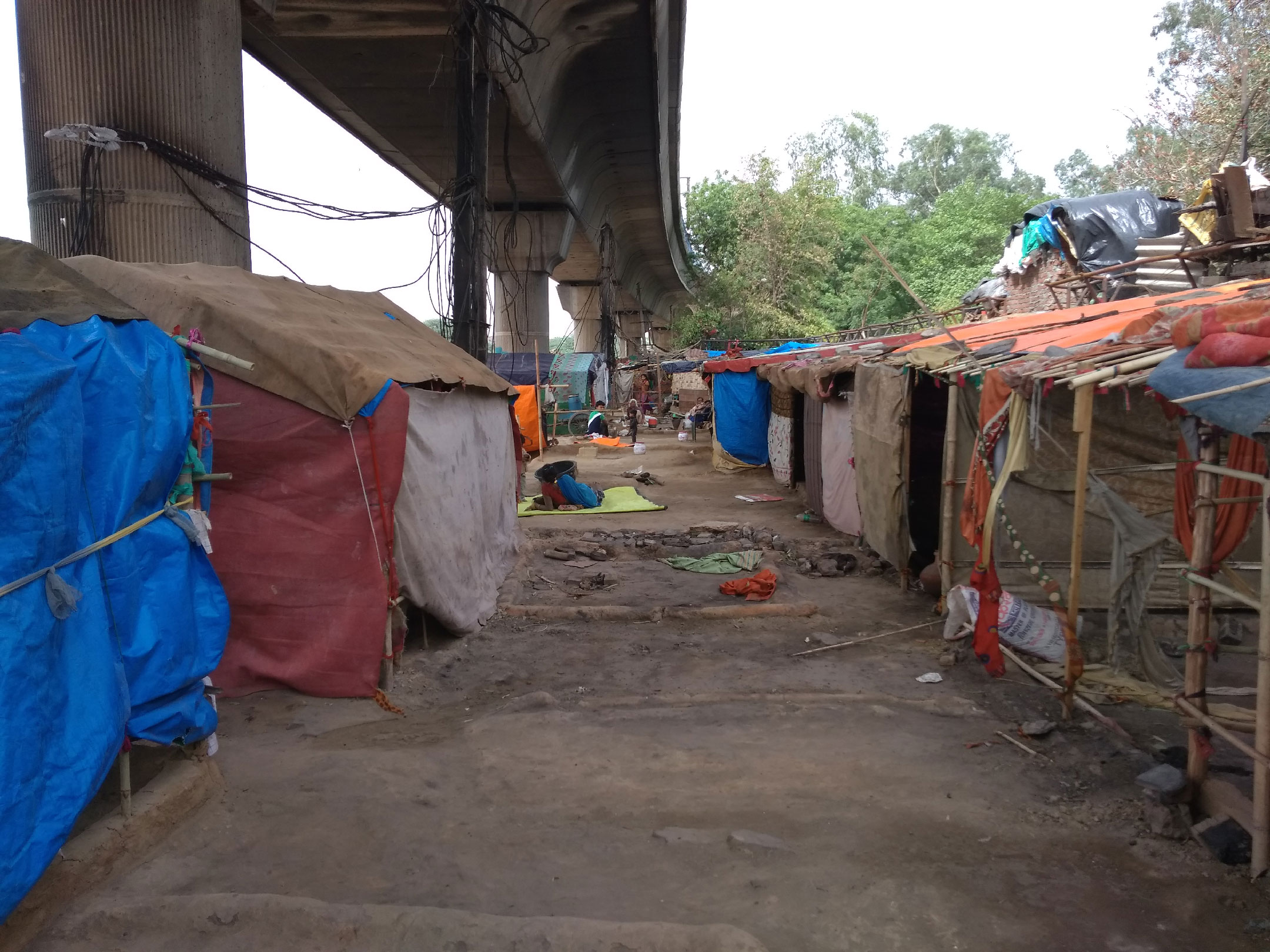
Most of the cities in India are self-built, self-organised by people and as a result these informal neighbourhoods, informal settlements are also considered illegal by the Government because if all outside the purview of planning processes. What this has created is a lot of inequality which also manifests spatially. There are a lot of forced evictions across the bigger Indian cities because these self-built neighbourhoods are seen as encroachments. We think it is important to argue that these are not really encroachments or eyesores which they are seen as, but self-created solutions because of a lack of social or affordable housing that the Government is supposed to provide, and inadequate planning measures, people are creating their own solutions.
A large part of work is about rights; it is based on advocating for the right to the city, the right to shelter and over time this has taken many different forms. The fundamental principles that our work is based on is spatial justice, and we are also looking at inclusion is public spaces.
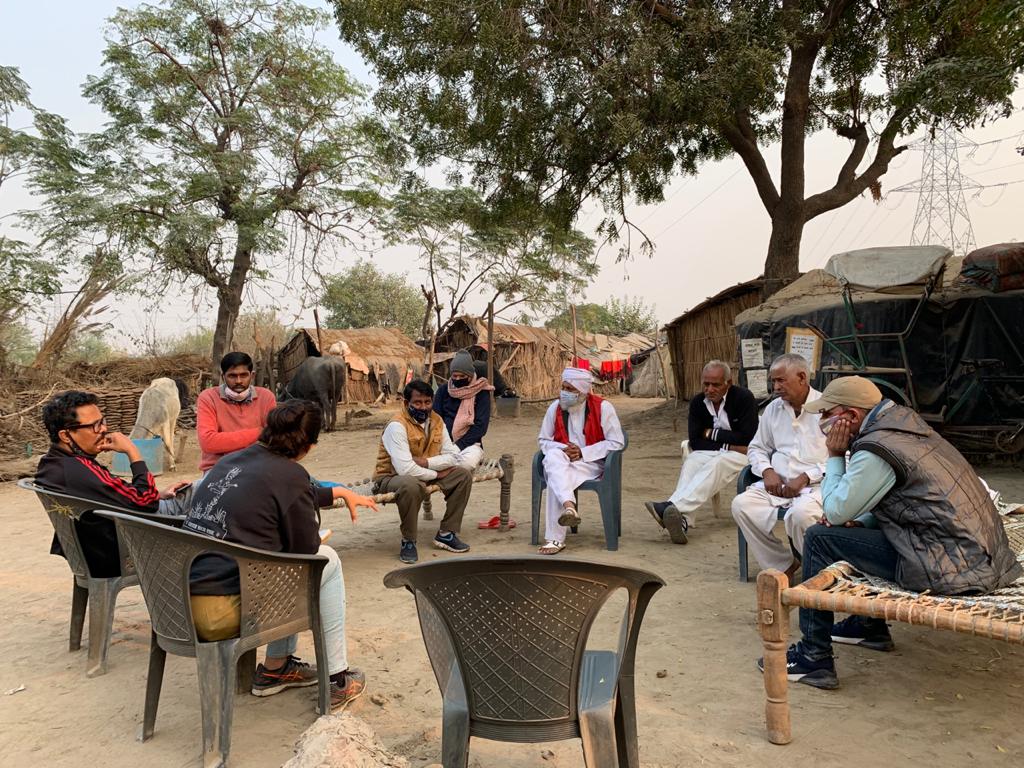
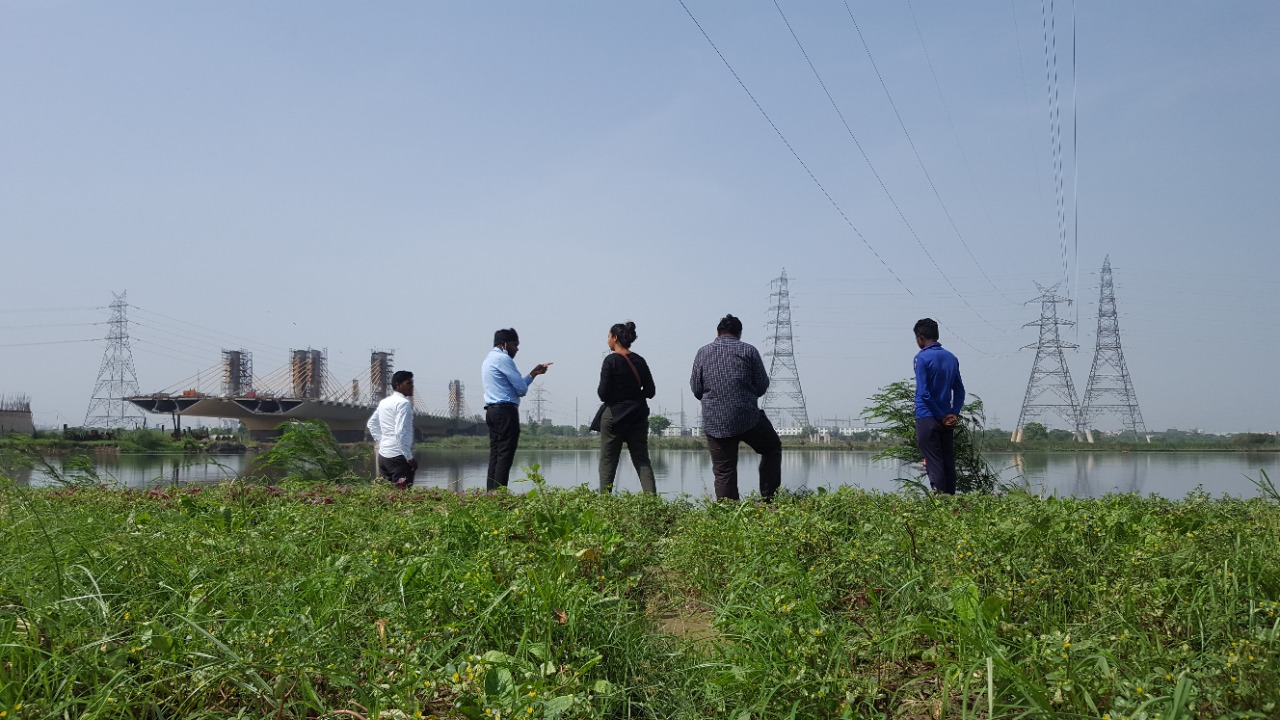
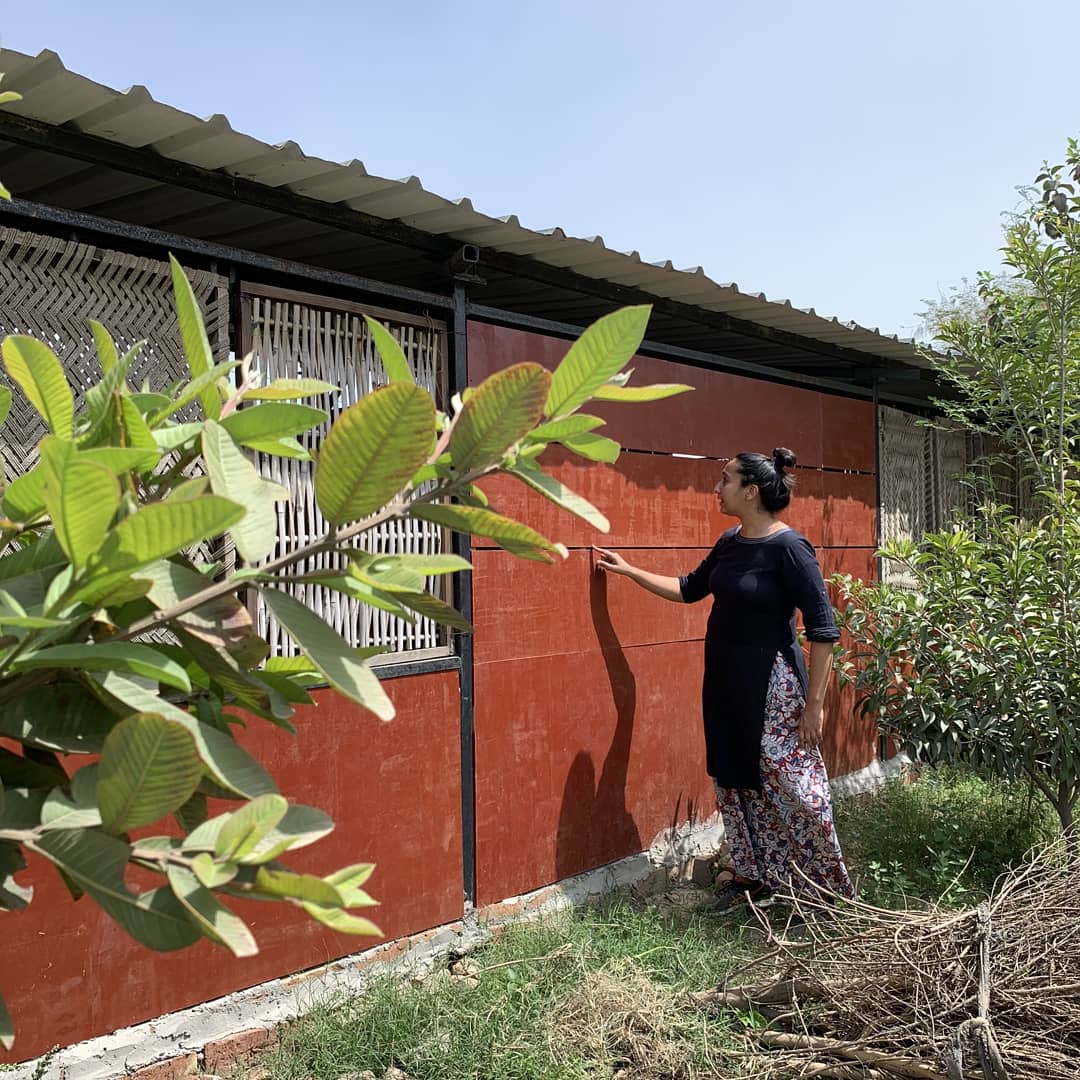
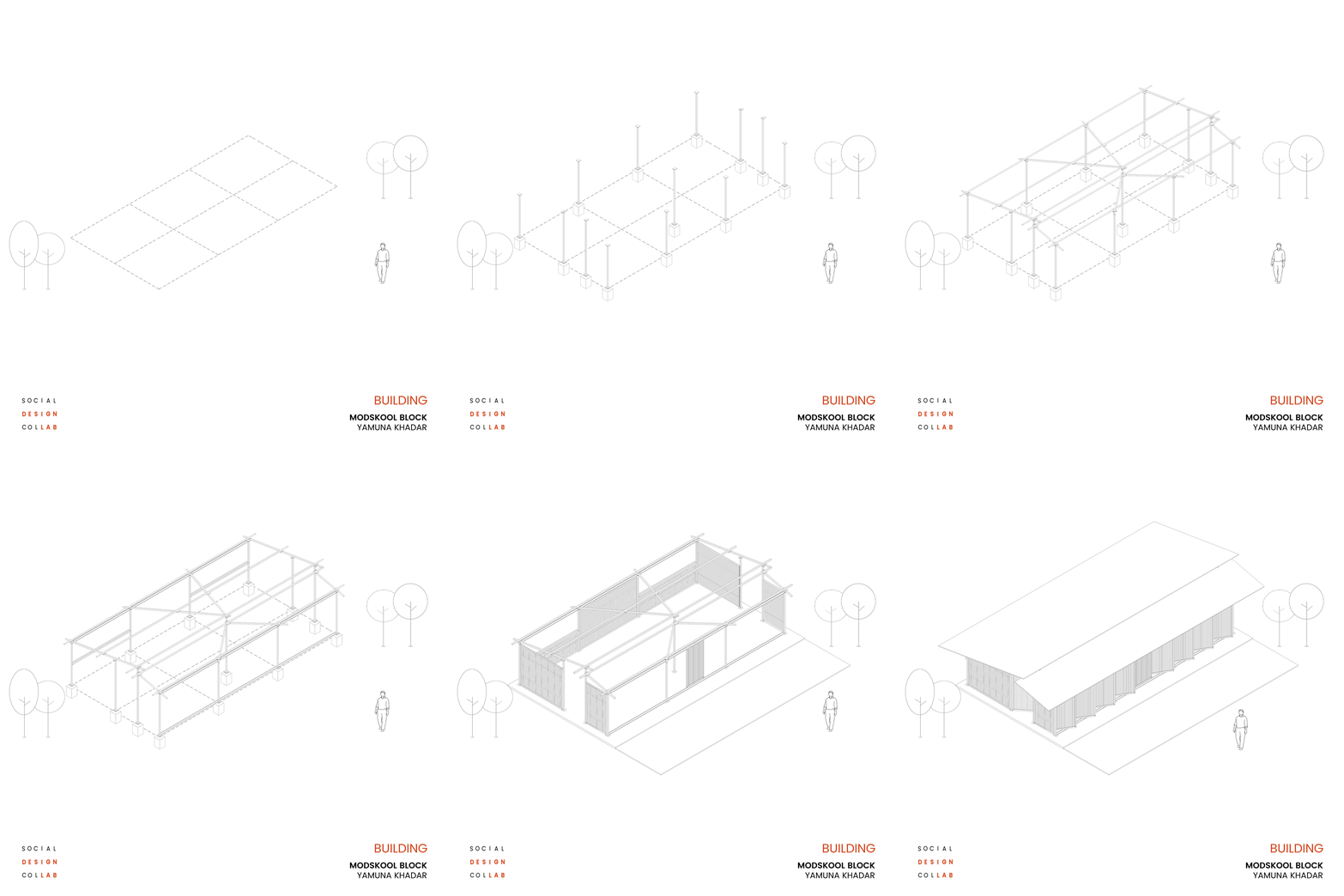
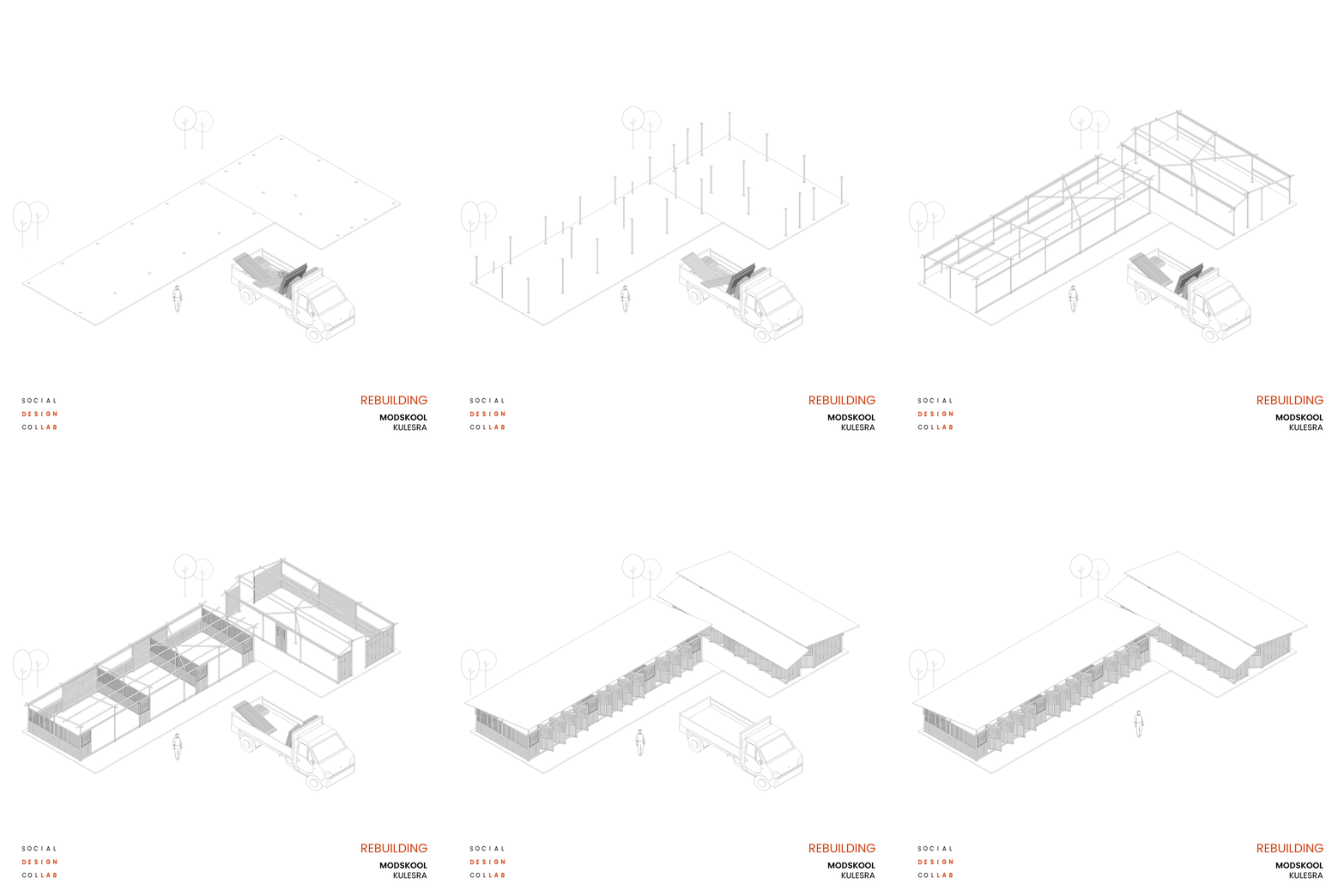
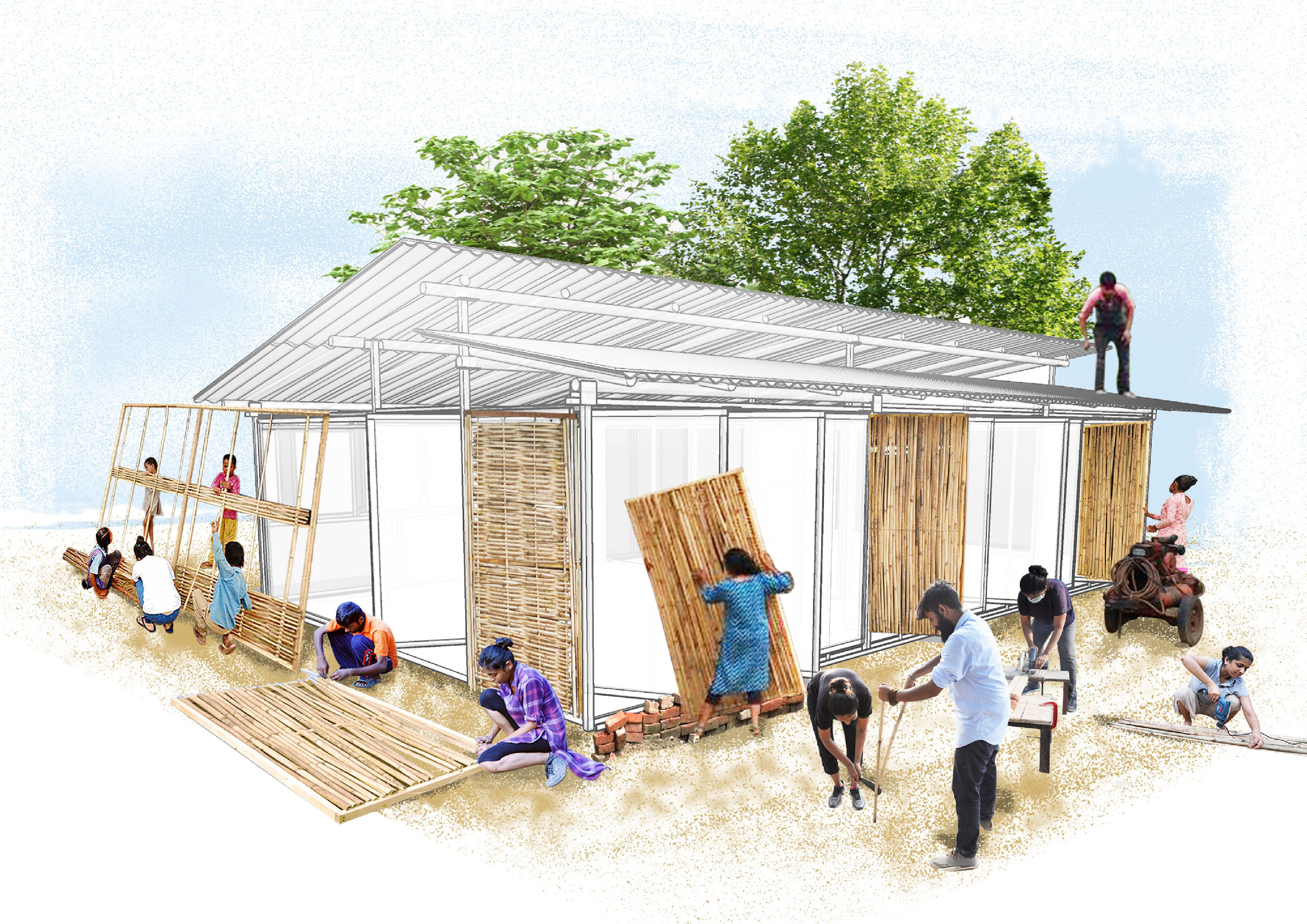
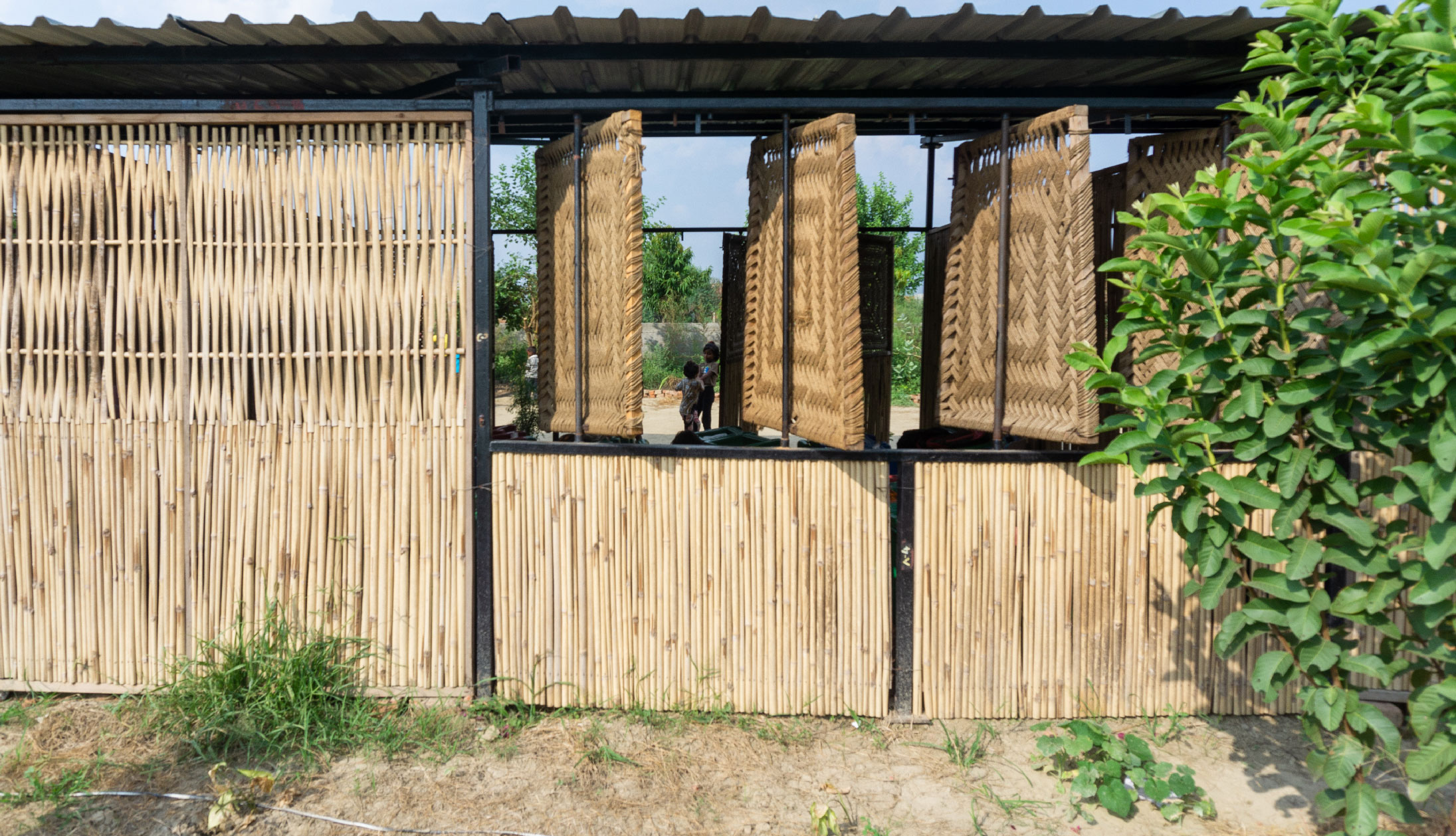
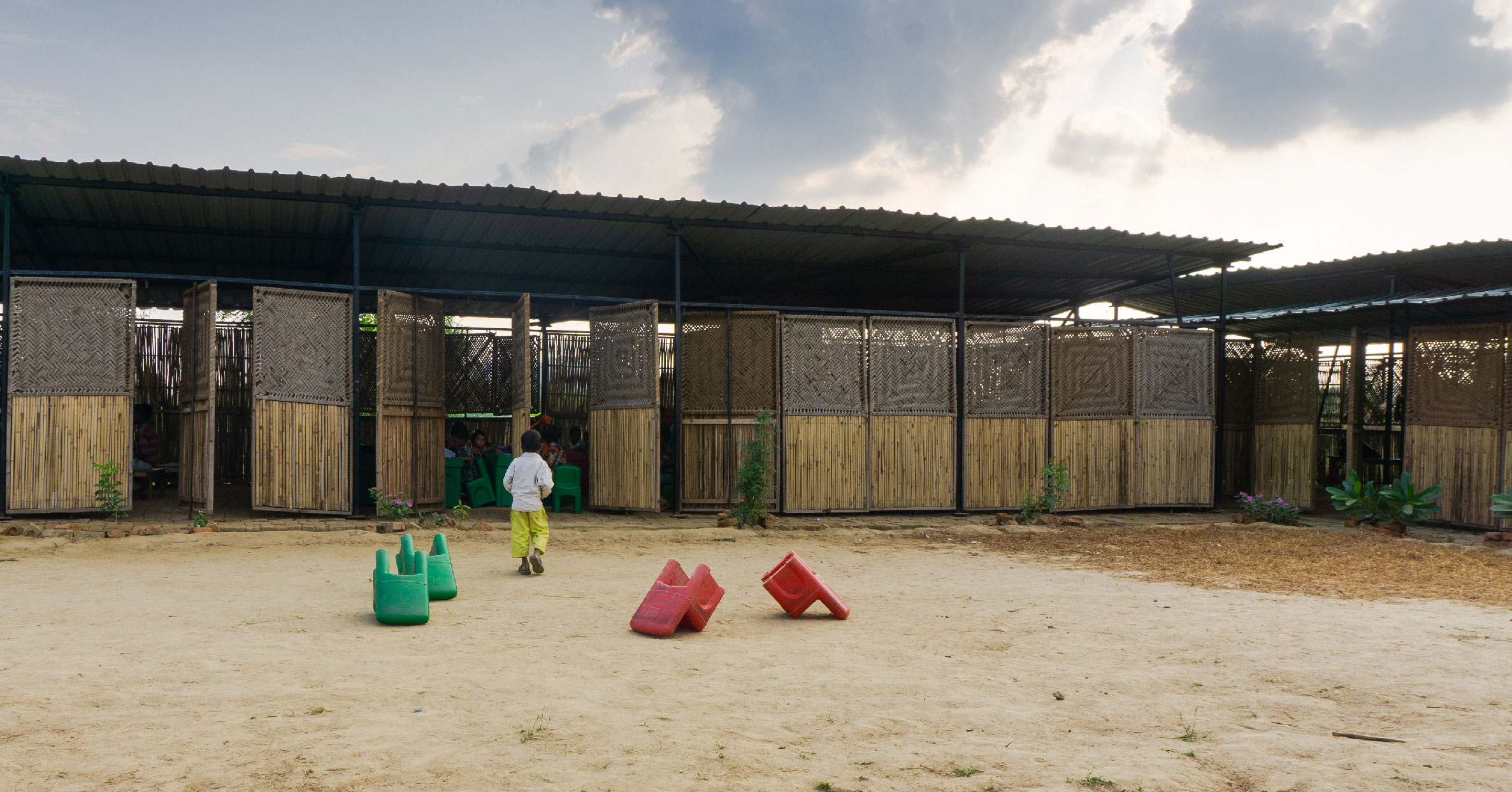
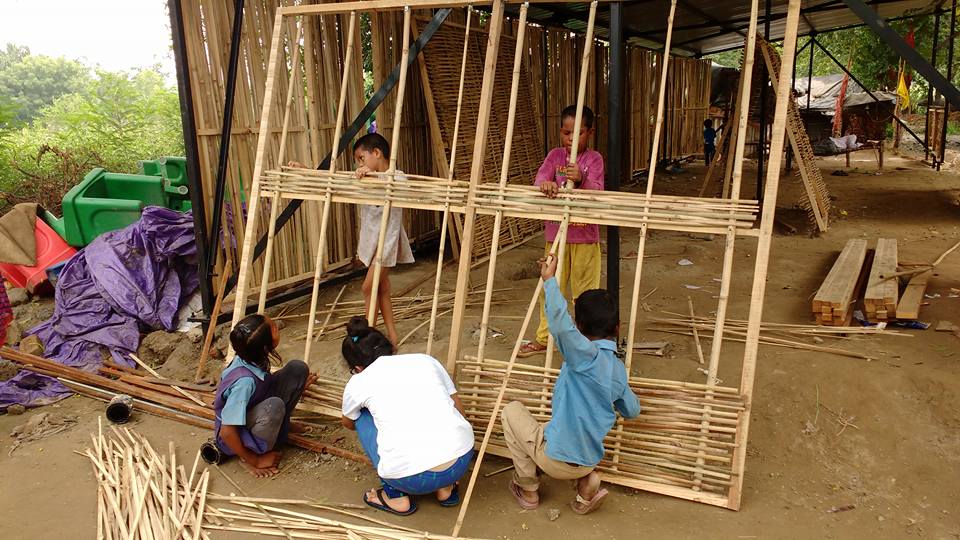
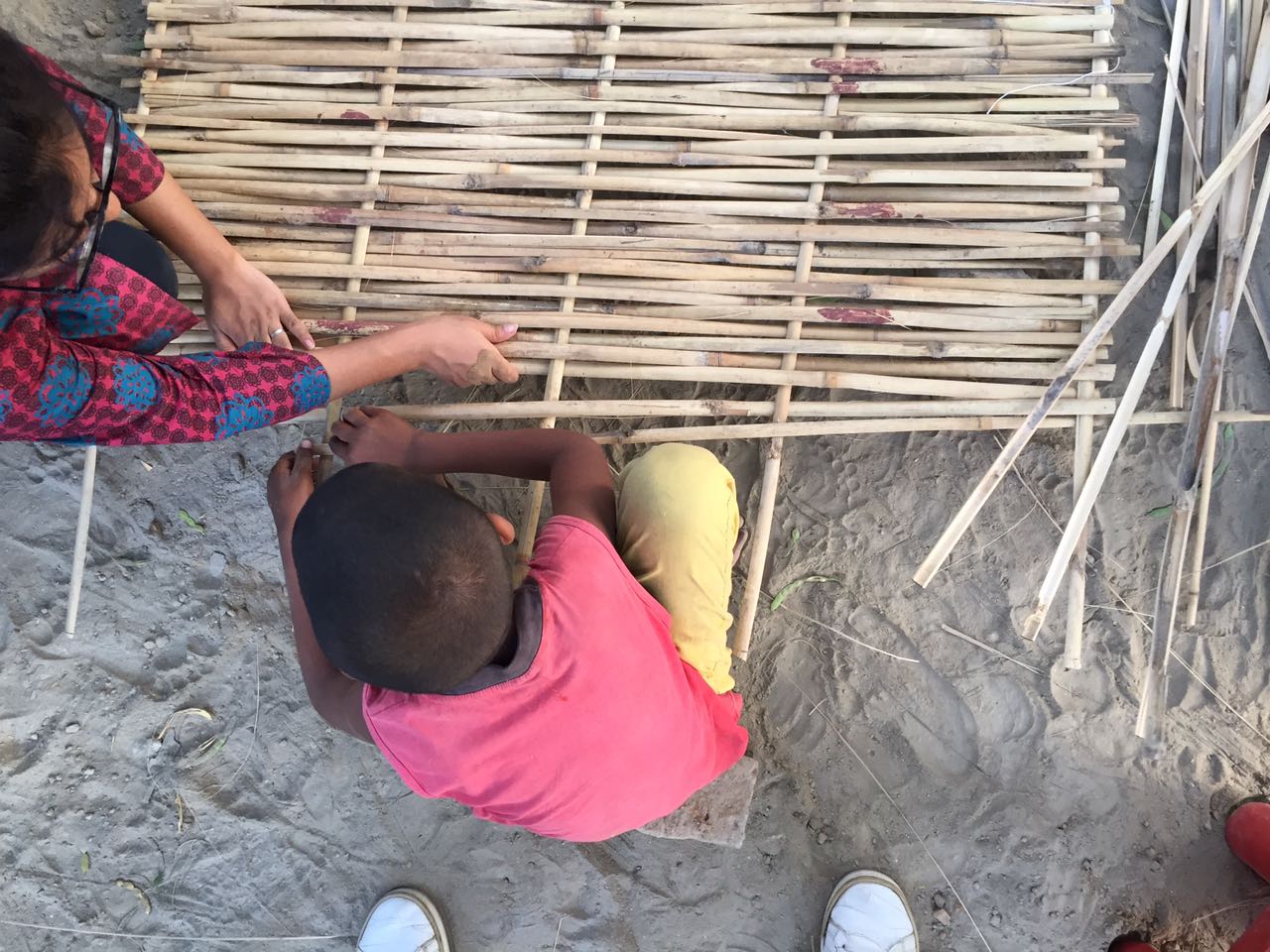
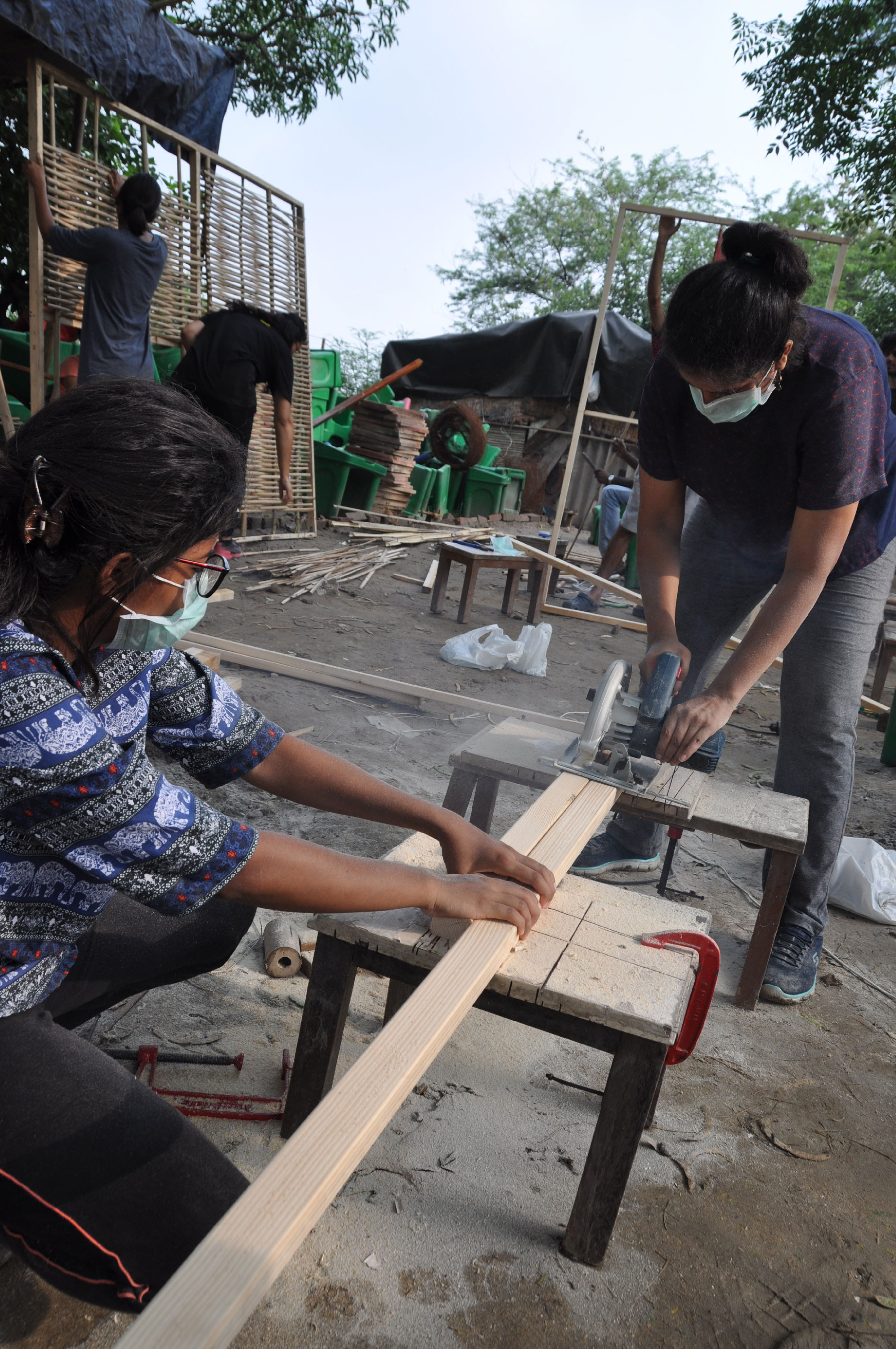
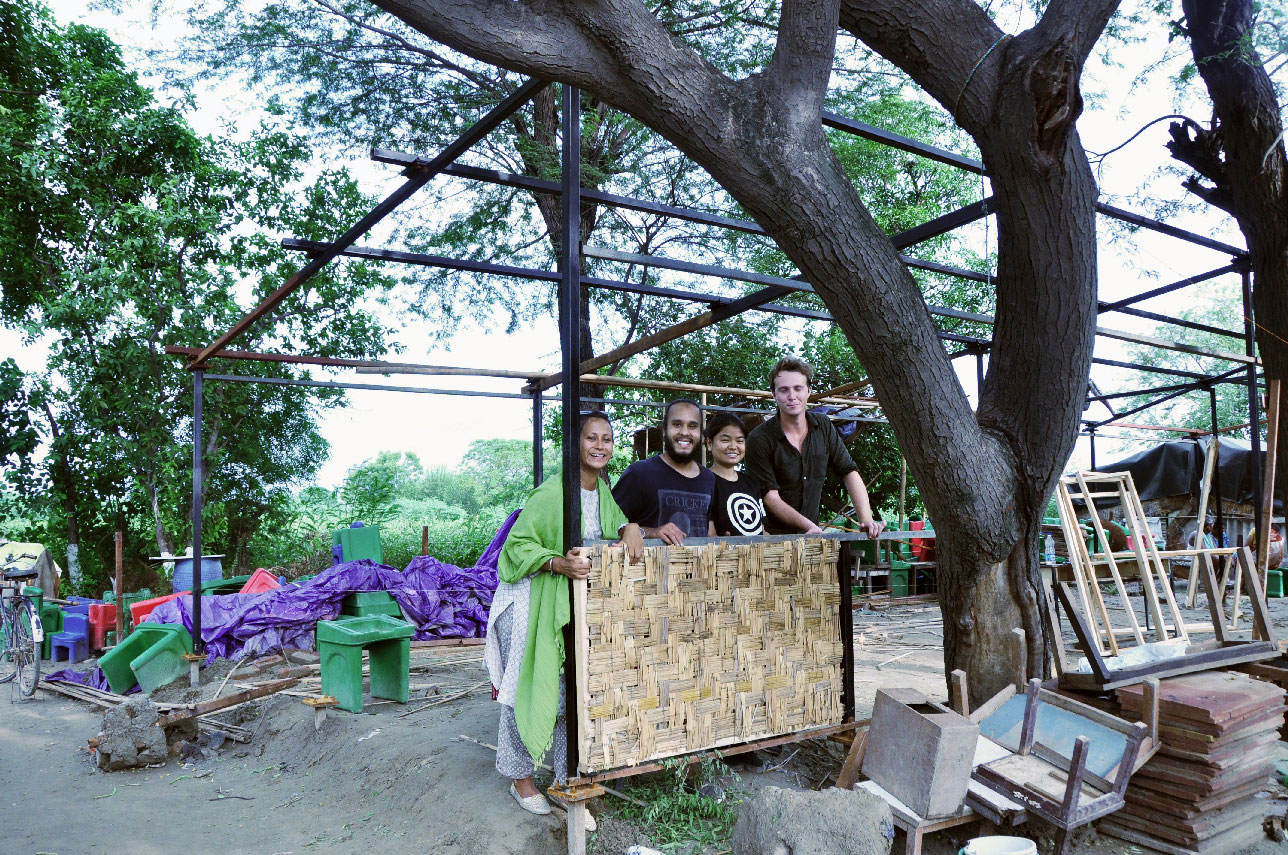
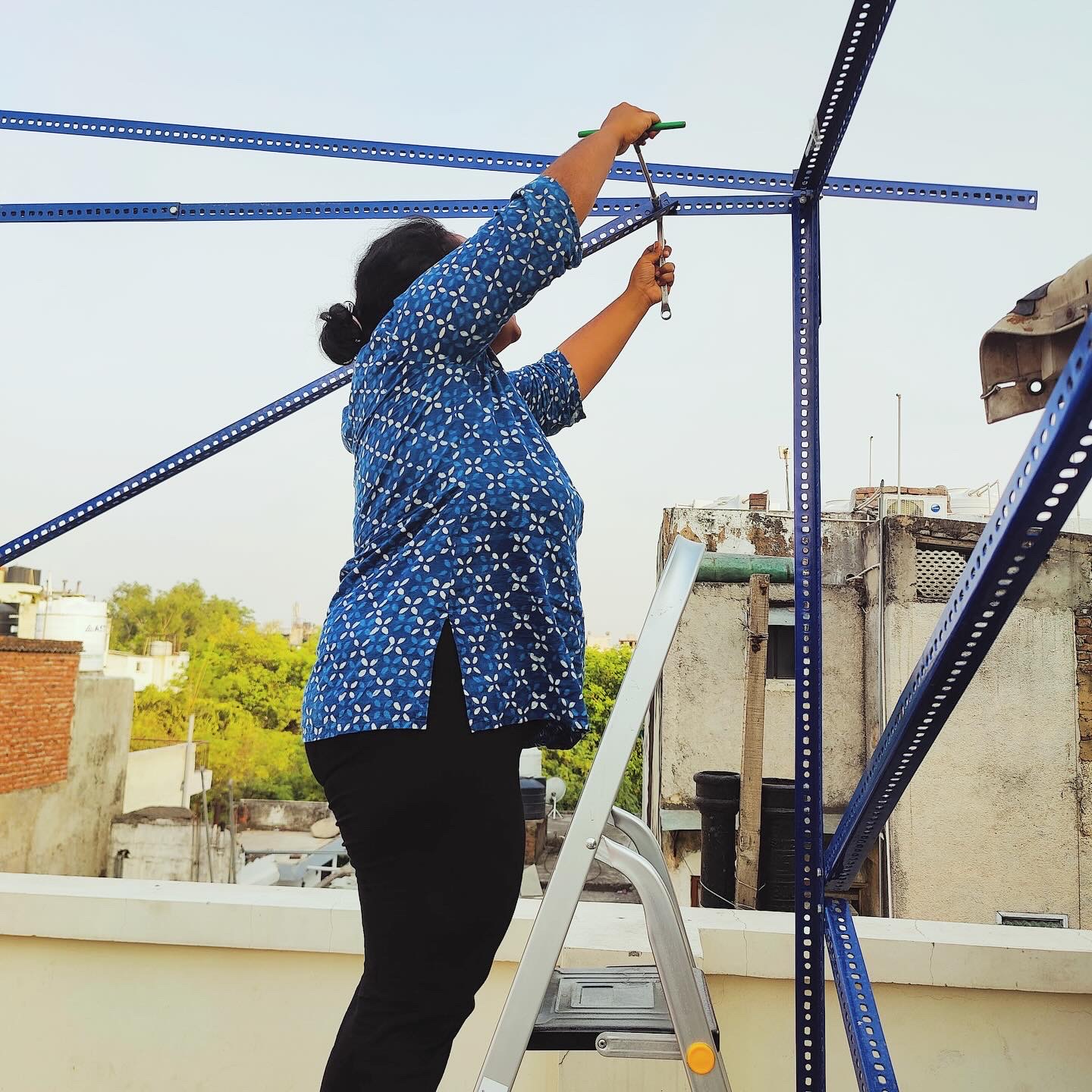
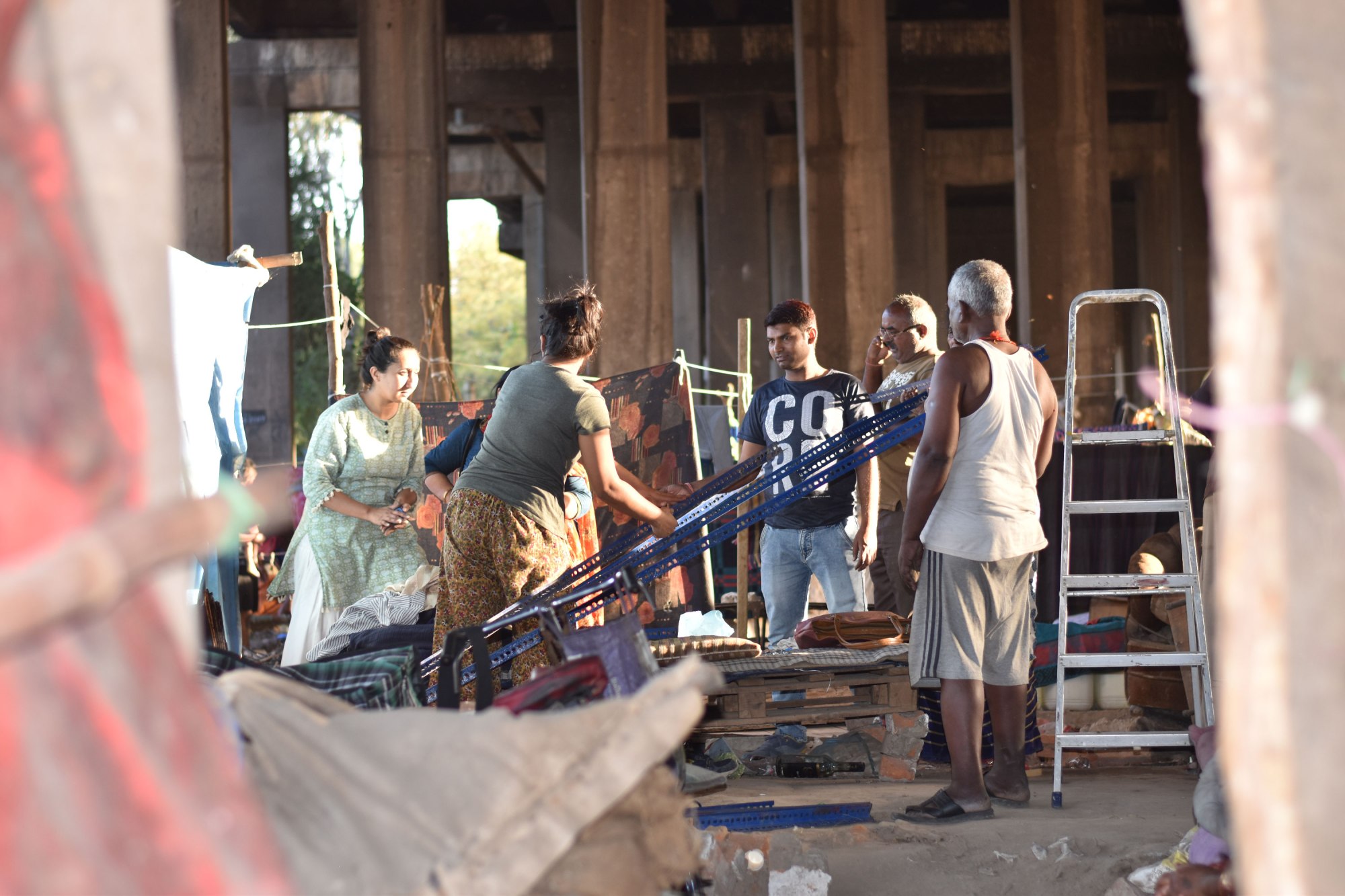
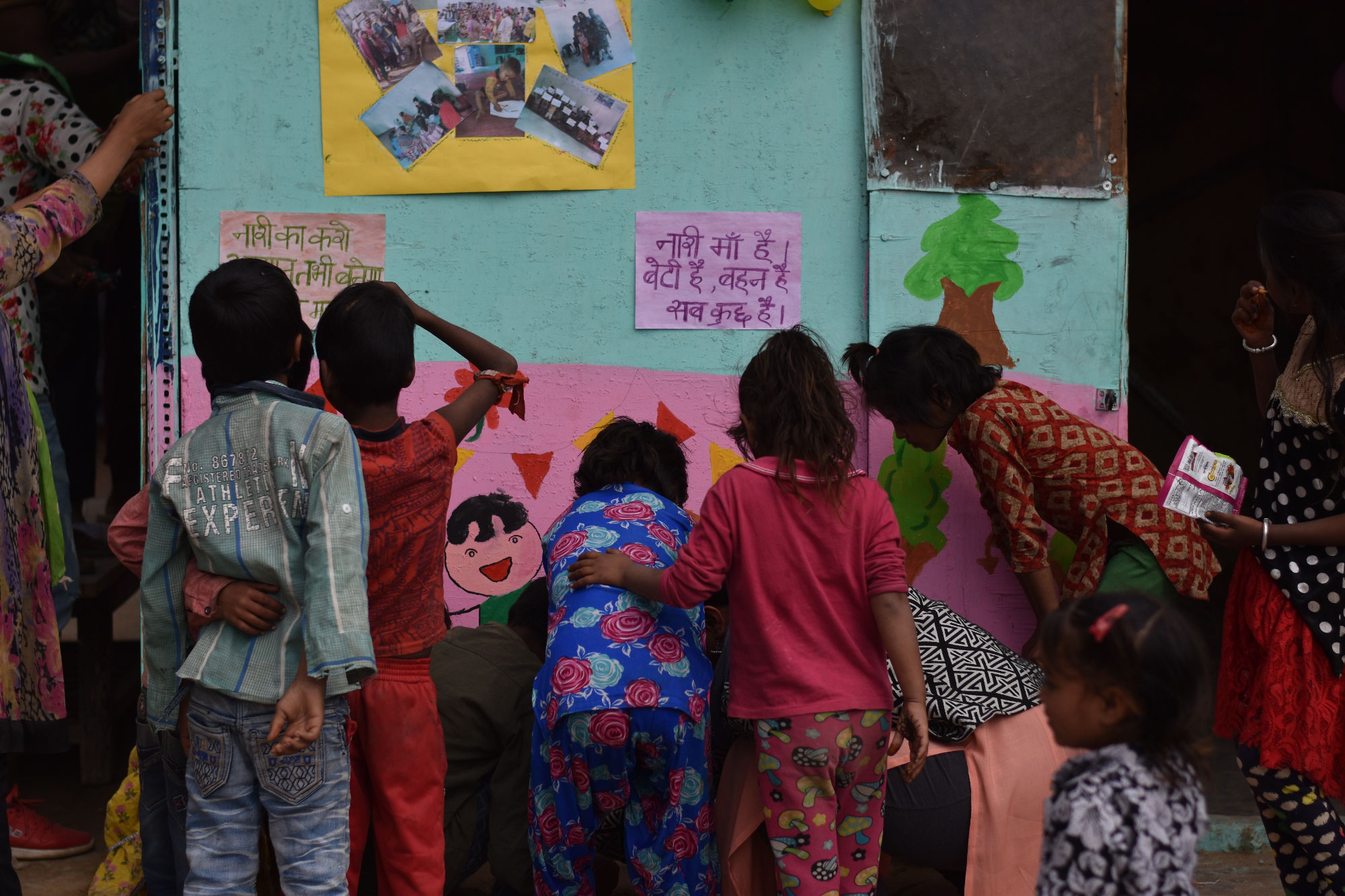
I would say it all started with building a school. I was working with Rakhi and Marco, and some social workers and activists who I was friends with, approached me after a school was demolished along the river Yamuna in Delhi, because the farmers are considered illegal. Once upon a time they were there in a legitimate way but as the planning authorities idea of what a sustainable city is changed towards a more world class city, the farmers were begun to be seen as encroachers as short term leases which were given to them, stopped being given out. I was approached by a few people to help them rebuild the school in a temporary way because they had gotten permission from the high court to build a temporary school and the brief was, ‘Can you help us build the school that we can open, that we can dismantle before the bulldozers arrive?’. So. I started looking at the design, with a colleague, Nidhi Sohane and after a series of multiple sort of design consultations with the school staff and the people on ground we come with a design. But the school staff could not raise funds for many many months, so we tried to help them raise the funds and as we spread the information on social media, through crowd-funding and help of friends, more people wanted to help make the school, to build the school with their own hands and what really started as a very small sort of initiative, snowballed into a bigger movement and so finally when we built the school, just in three weeks because some fifty volunteers, students, young professionals ended up coming to help build the school.
What I realised is there is really a need for such a space, there is need for such an architectural practice. Over time, I have come to realise that we are not an alternative practice, we are not a practice which is at the margins, I think we need to expand the definition of architecture. and this is also an important part of an architectural practice.
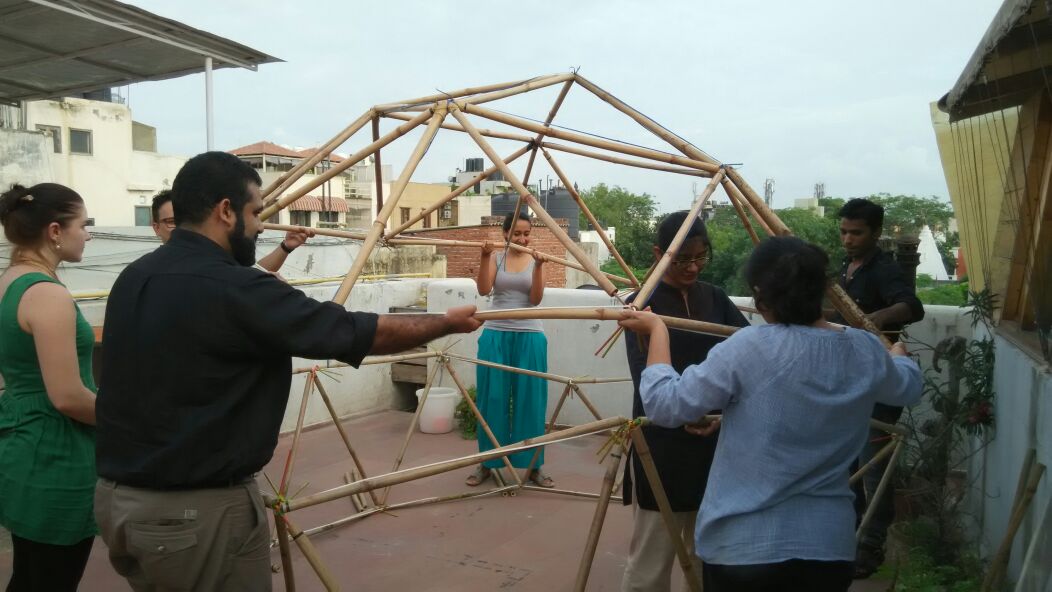
I felt there was a need for such a space for students, who also want to build with their own hands. I don not think architects are trained to build with their own hands. It is looked down upon. Labour is affordable, but I think students do want to learn to build that, which in their own workshops; it is not an experience that they really are able to get. That was one reason and the need for a practice which is more embedded on the ground with local communities. That is how Social Design Collaborative started, and it really started with just me collaborating with whoever had time in a very informal way but around 2019, I realised that maybe should have an identity, I founded it, as an organisation.
Since then, our team has grown. Sometimes, we get support in terms of grants that we apply for, sometimes consultancy projects with NGOs and sometimes we do not have salaries to pay for. I think over 2022, the studio was closed because we do not have funds but of course work continues in many different ways. A large part of the work I have done has been pro bono, for years, and of course then you also need to find more creative experimental ways to sustain the practice.
We have also started working through the medium of community art, through artistic engagements. Activism has always been an important part of the work, in designing campaigns as collectives protests sometimes, but what I have realised is grassroots engagement can only take you so far. It is also very important to work at the level of policy advocacy and planning, and engage with governance and our work has started straddling both. It is sort of a multifarious approach – a practice spanning art, architecture, also academia at times and policy advocacy and planning. So it is that sort of web of different approaches.
What the practice has been working on is housing rights, spatial justice and inclusion in the built environment. More recently, we have also started working with gender inclusion in public spaces, and after we saw the impact of covid and social distancing on the livelihoods of street vendors, whose livelihoods are linked to public spaces and a large part of our work spans between policy advocacy and grassroots engagement. It also focuses on public awareness.
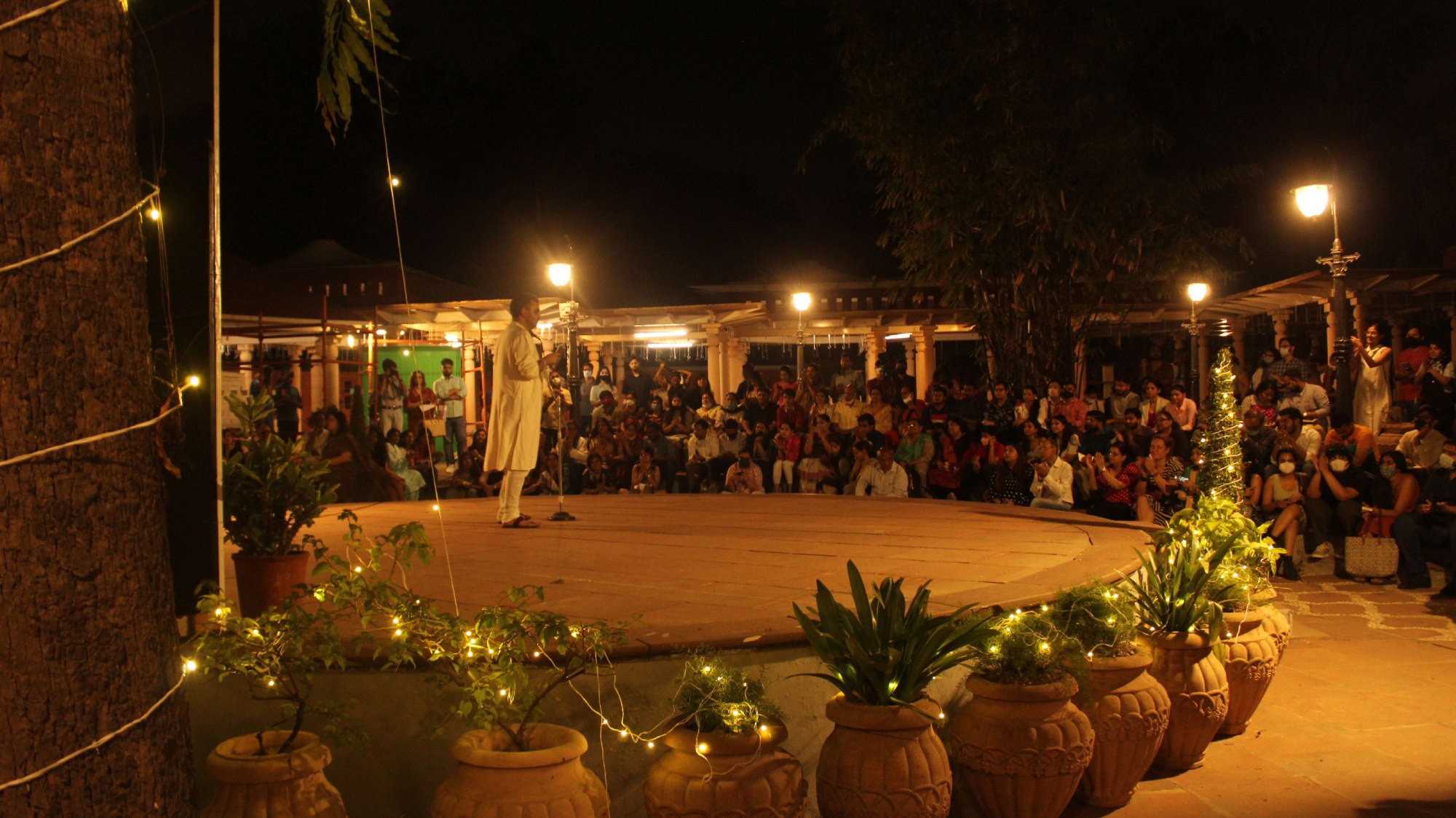
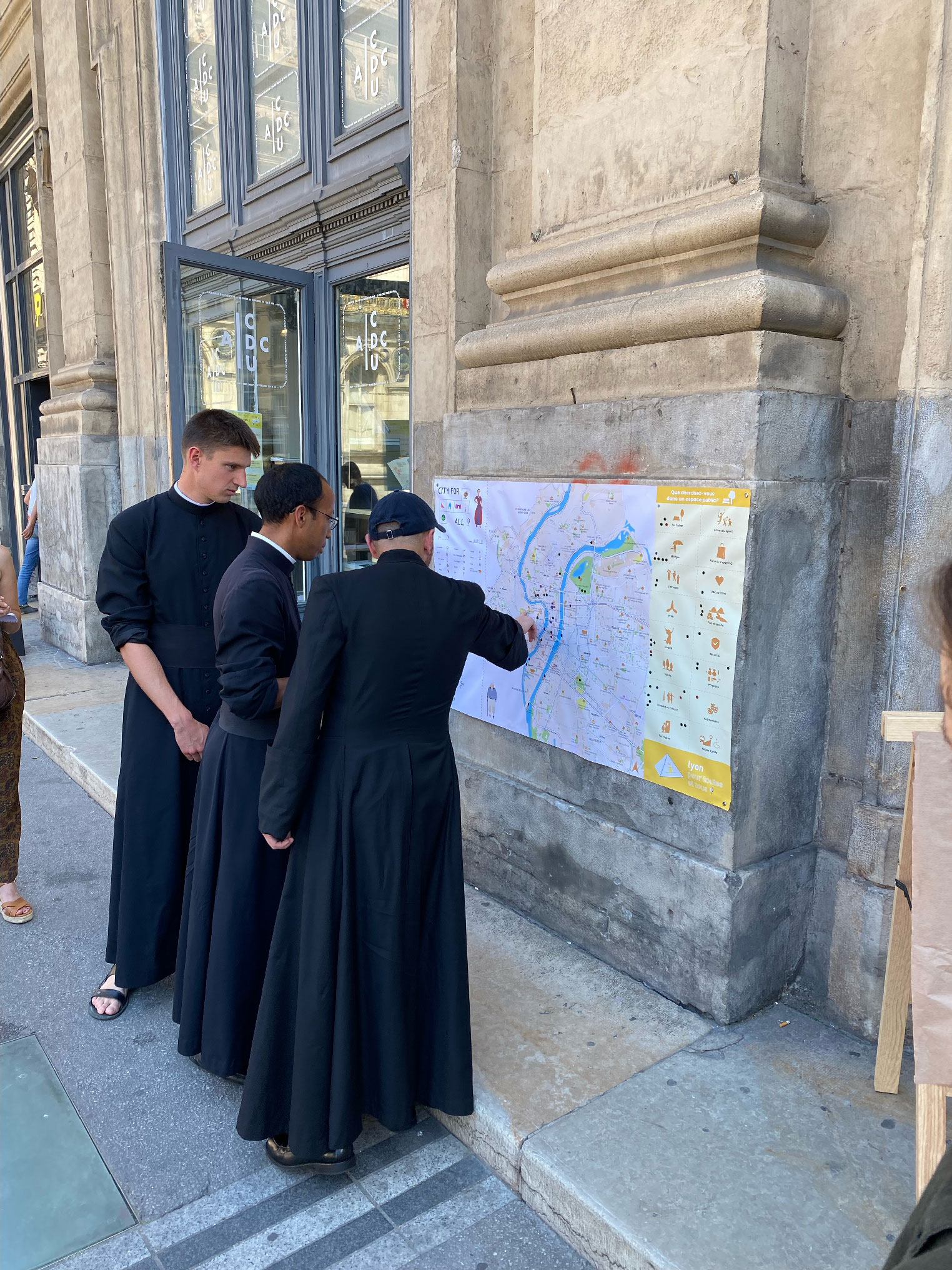
For example, it is also very important that we open up this dialogue for the general public. We did a project for public art festival called ‘City for All‘, which was across six Indian cities and we took it to Lyon (France) in 2022. It talked about how we can make sure public spaces are equally comfortable for woman, for transgender people, for non-binary people. How can we feel equally confident and powerful just as much as men do? This is not just a topic of discussion in India, it is as relevant in France and the idea was that these are discussions, these are conversations you can have on street, these are conversations that we can also make accessible.
At Bikaner House (Delhi), a well-known queer poet Vikramaditya Sahai, they were talking about as a transgender person what is their experience, and also the fact that the longevity of a transgender person is only 32 years.
I think we do not have access to these sort of lived realities. We cannot empathise with other people because we are also not able to talk to them and a large part of my personal work, and now the work of Social Design Collaborative has been just creating spaces for conversations.
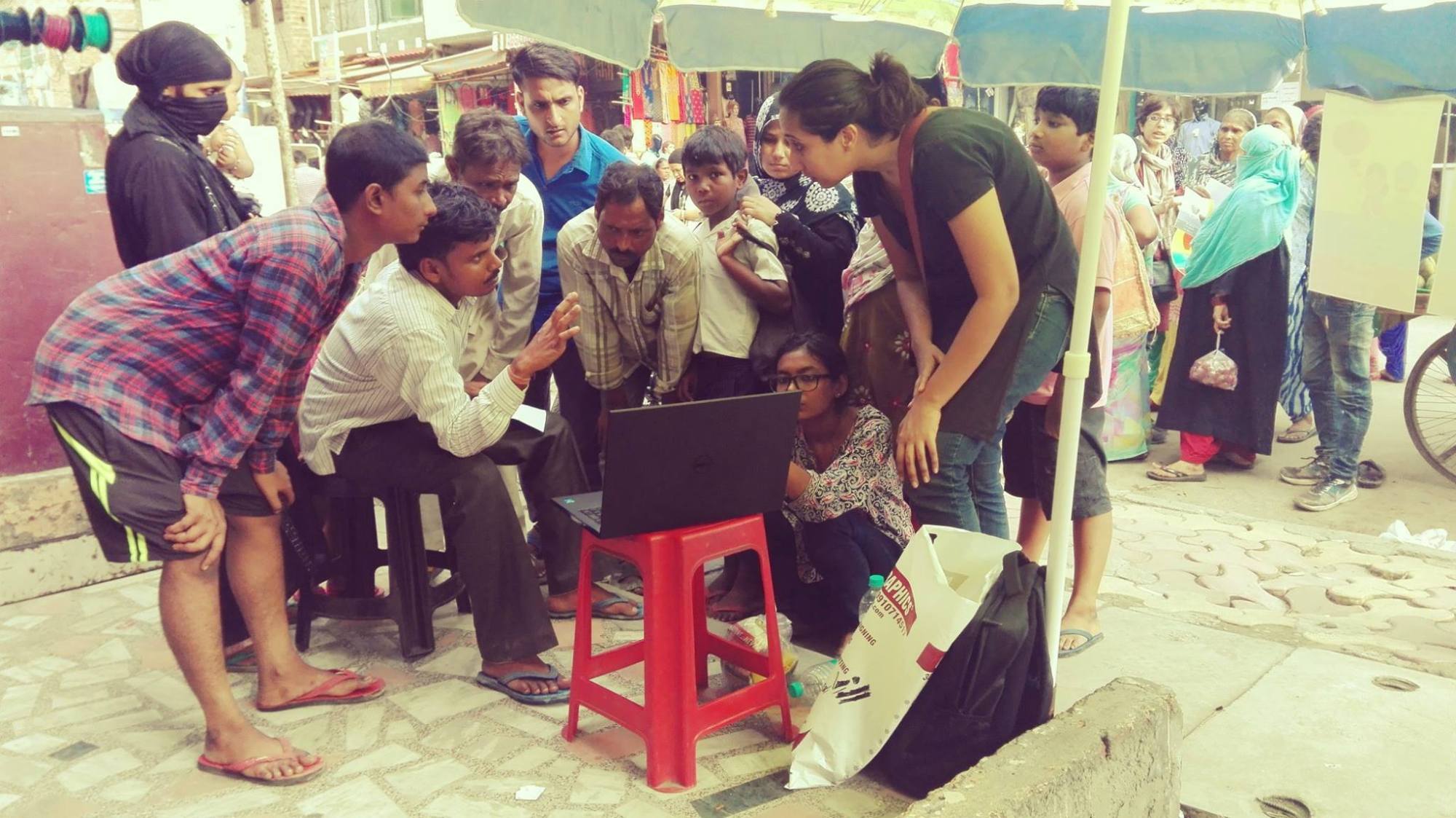
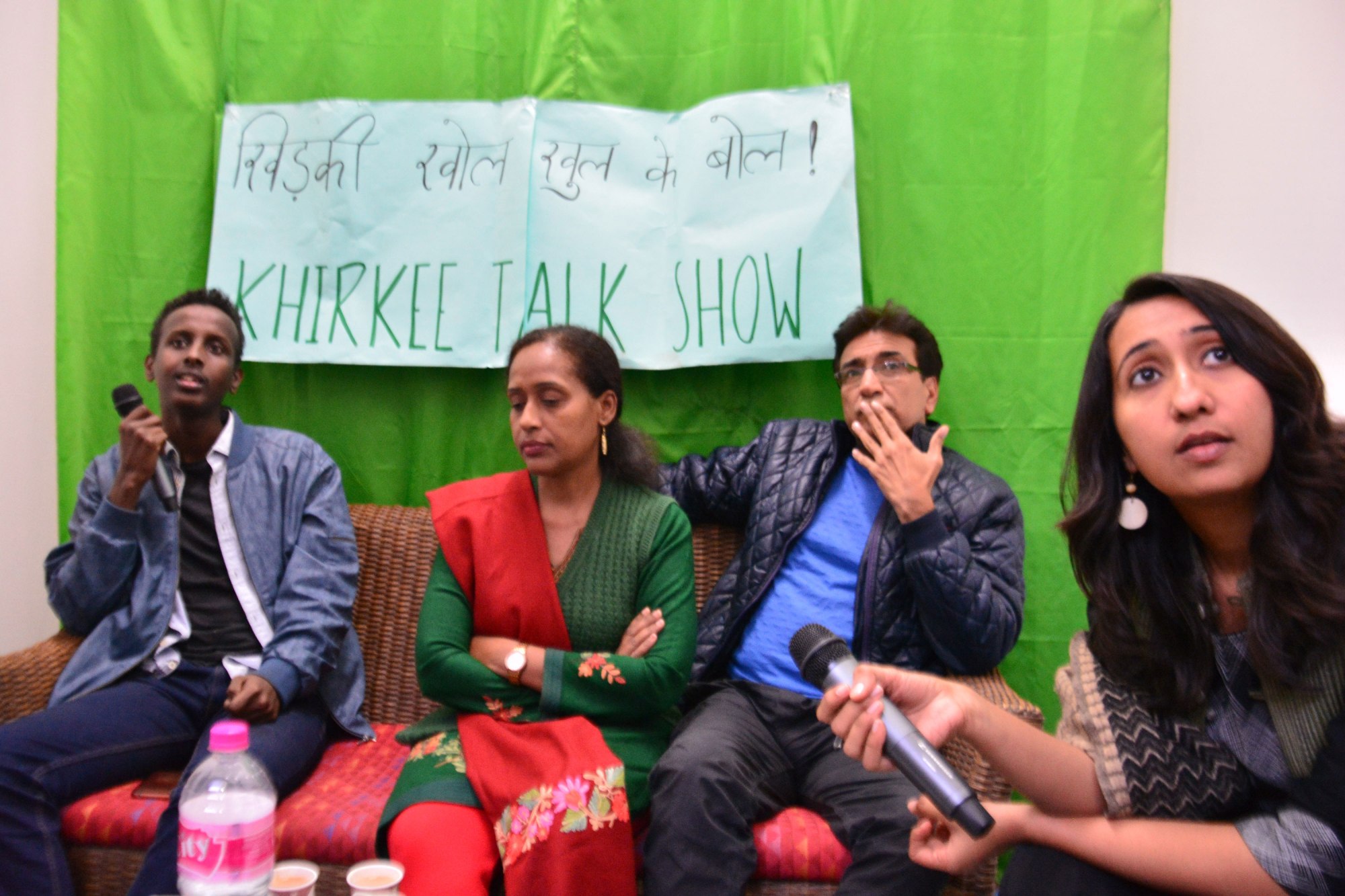
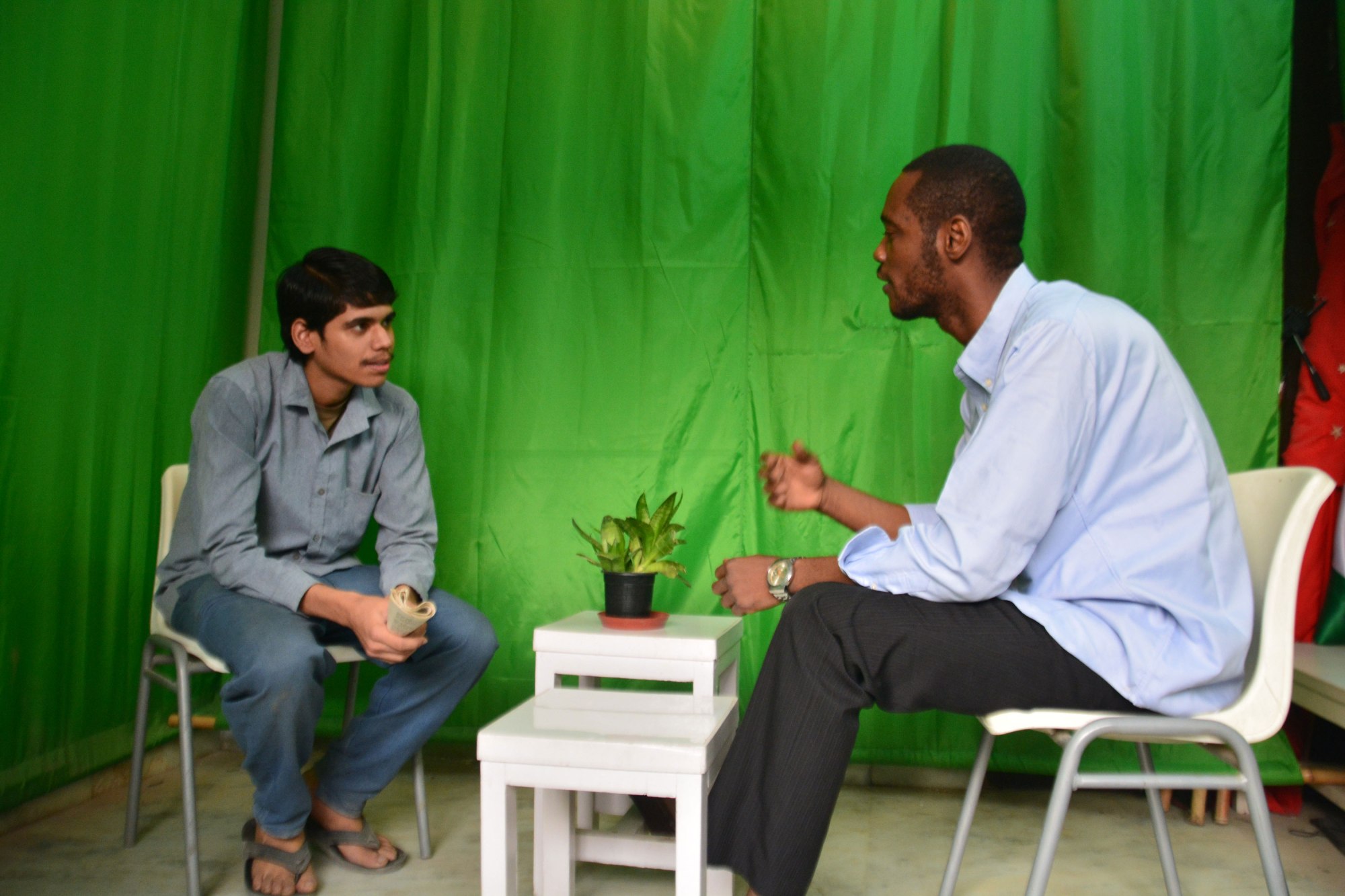
That was the work that I was trying to do in Khoj as well as an artist, where I had created a Phone Recharge Shop to create, to be able to bring about more cultural integration after some cases of xenophobia, some attacks on people from African countries like Nigeria and through a Phone Recharge Shop where people could exchange media, they started listening to songs and sometimes also watching movies from each other’s cultures. I think everyone got to know about each, through the medium of music, through the medium of media so that really helped create, foster dialogue, create sort of empathy towards each other. We also did these spaces called ‘Talk Shows’, we would pull people who were passing by in, offer them chai and get them to talk to each other. That sort of approach has continued into Social Design Collaborative and the ‘City for All’ idea was to be able to talk about, gender and sexuality on the street. It is not always easy of course; people are very biased, people also some times get very agitated, get upset over many things, but these are conversations which are important to have, especially in the architectural and design space. Because if you are designing built spaces, if we are designing our cities, then only if there is understanding and sensitivity in our minds, if there’s more diversity in the planning spaces, in the architectural spaces then we can also design more diverse and inclusive spaces so overtime this is what we have been looking at.
CULTURE
<00:18:52>
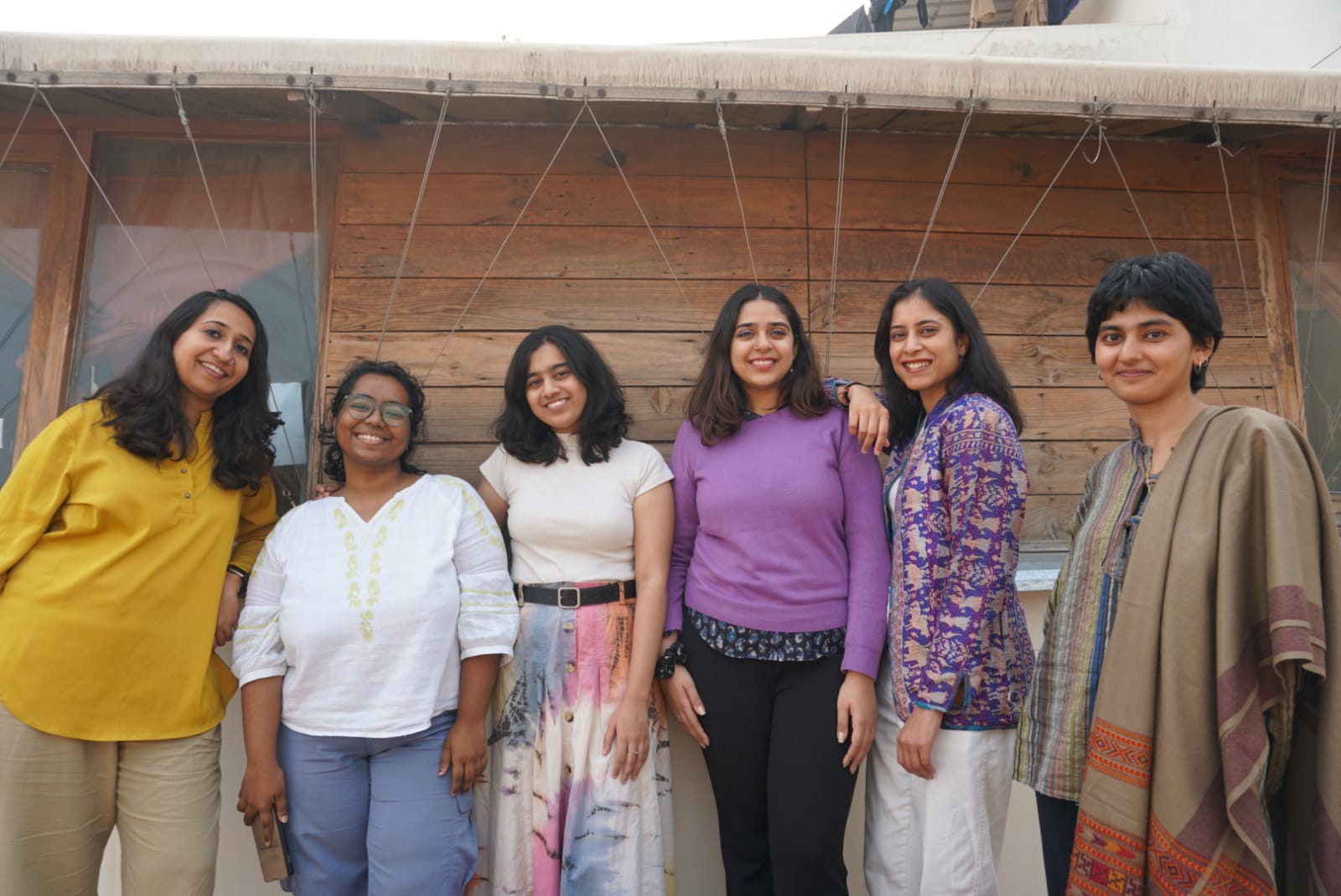
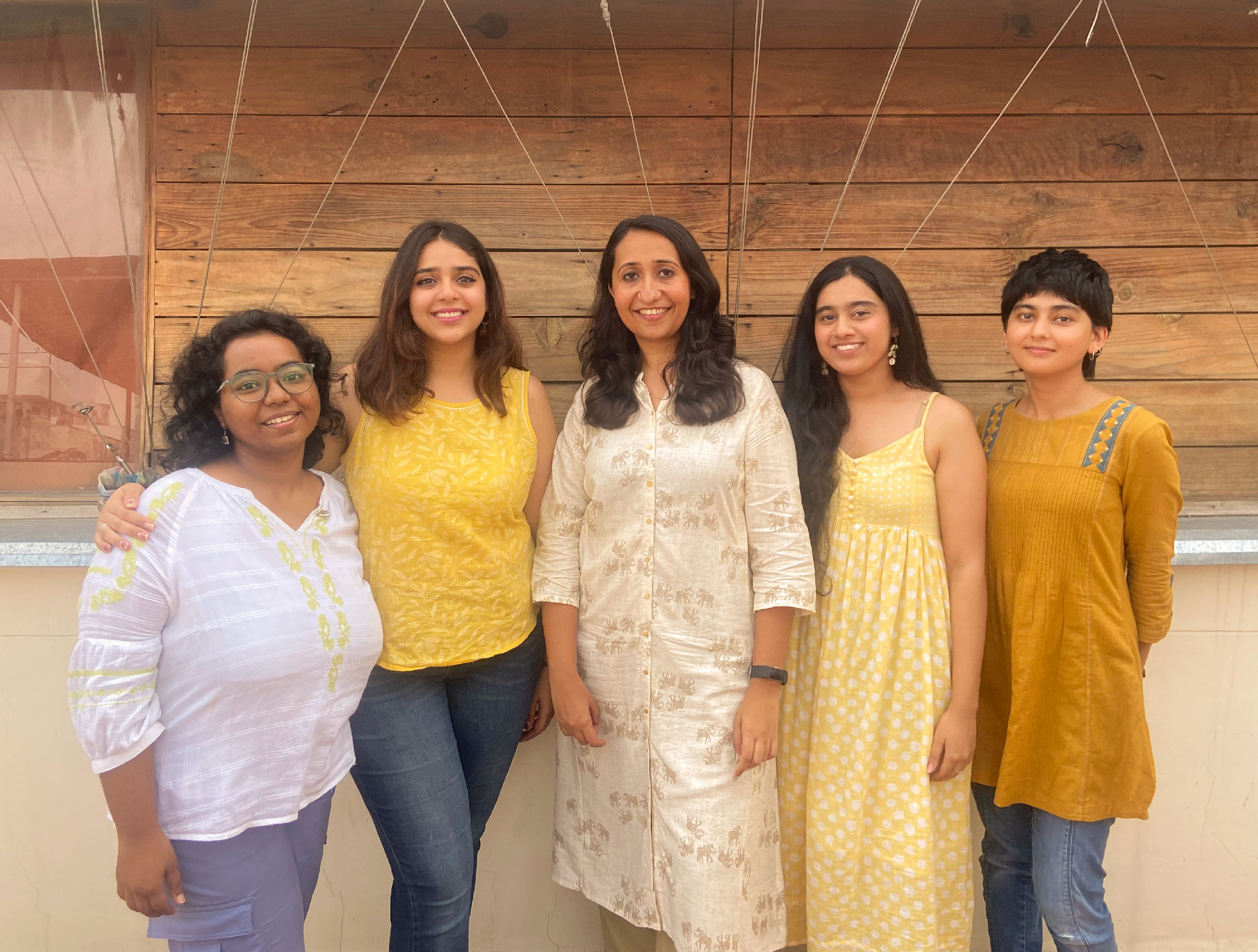
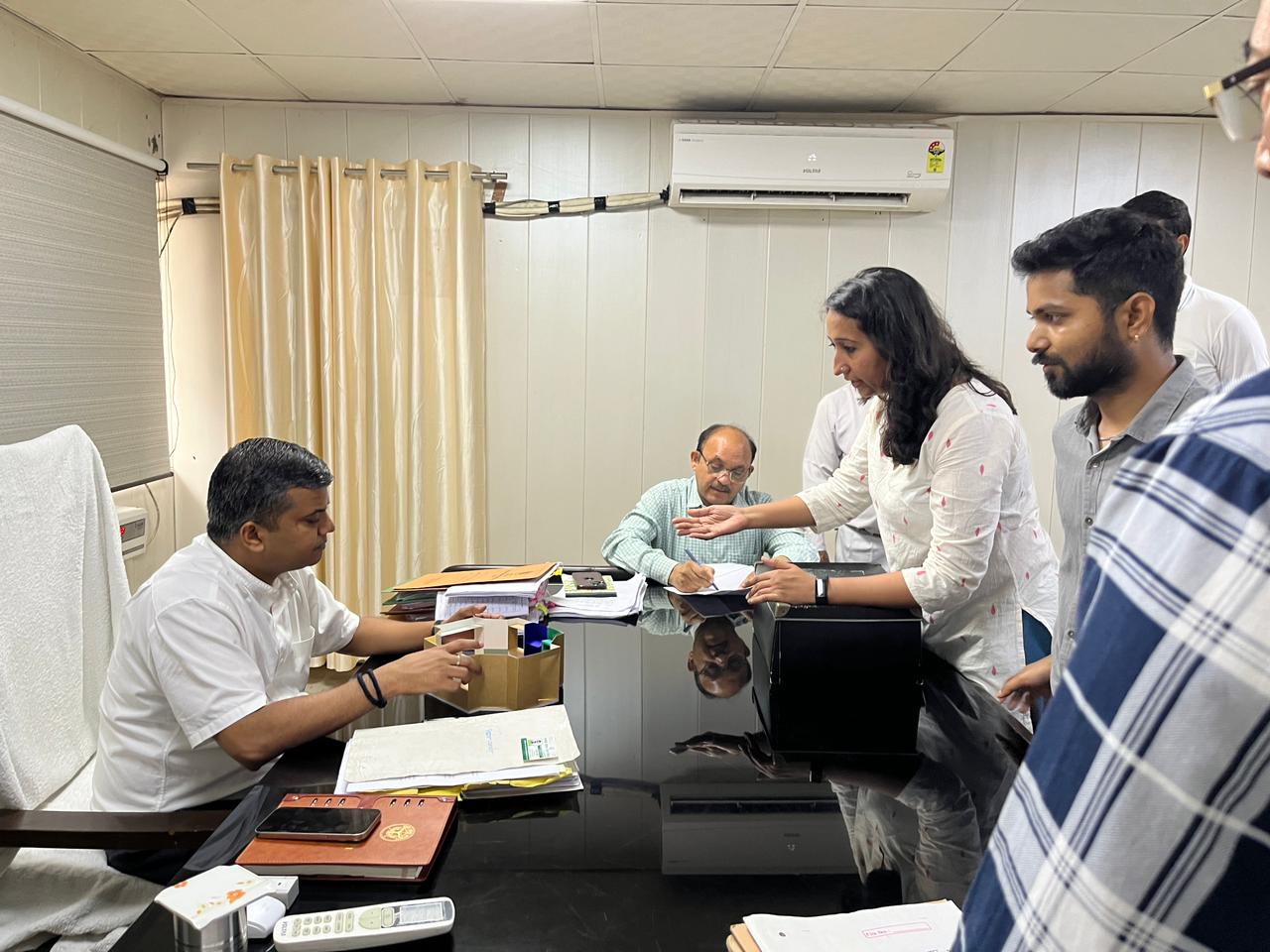
SJ: Over time we have had different compositions of team; we have an interdisciplinary team, in which we have sociologists, designers, architects and social workers – that is usually the format. Sometimes more focused on the architect when construction is going on, sometimes more focused on the sociologist, right now currently we are working on designing an Anganwadi as an important piece of important community infrastructural space in informal settlements across Delhi. We have a core team, which is full-time based out of the studio and with regular sort of engagements on ground and we have a part-time team made of community coordinators who are the leaders, who are the link between the core team and the larger communities that we are in touch with, so that is the format of the team.
Where do I see Social Design Collaborative heading? As I was saying before, it is very organic, it is very incremental, just like the work we do as well. I never planned that we would have a studio, that we would have this office, but over time the practice has taken this form. Going ahead, I would think that there are different levels of leadership that gets formed, because I founded it by myself.
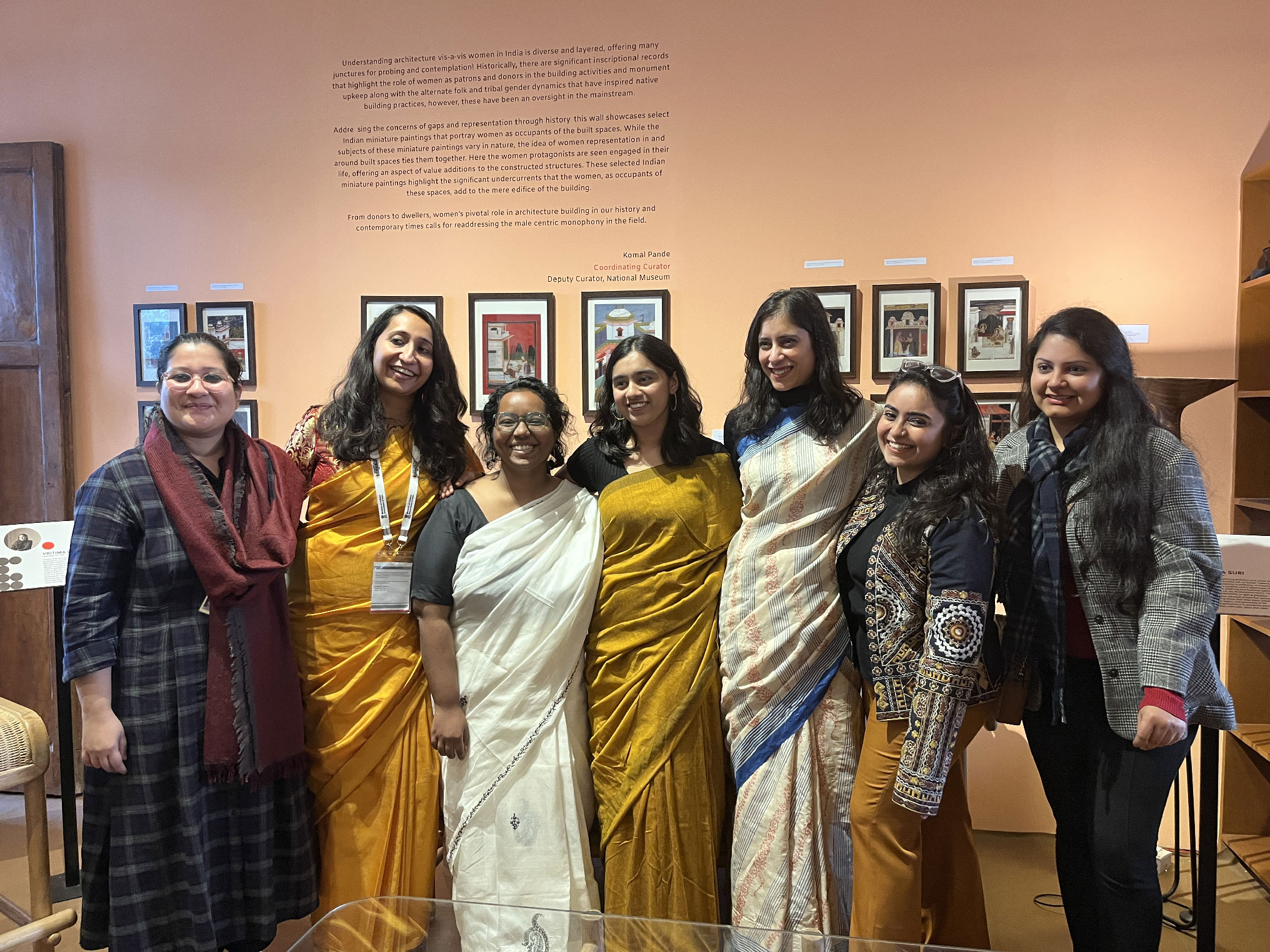
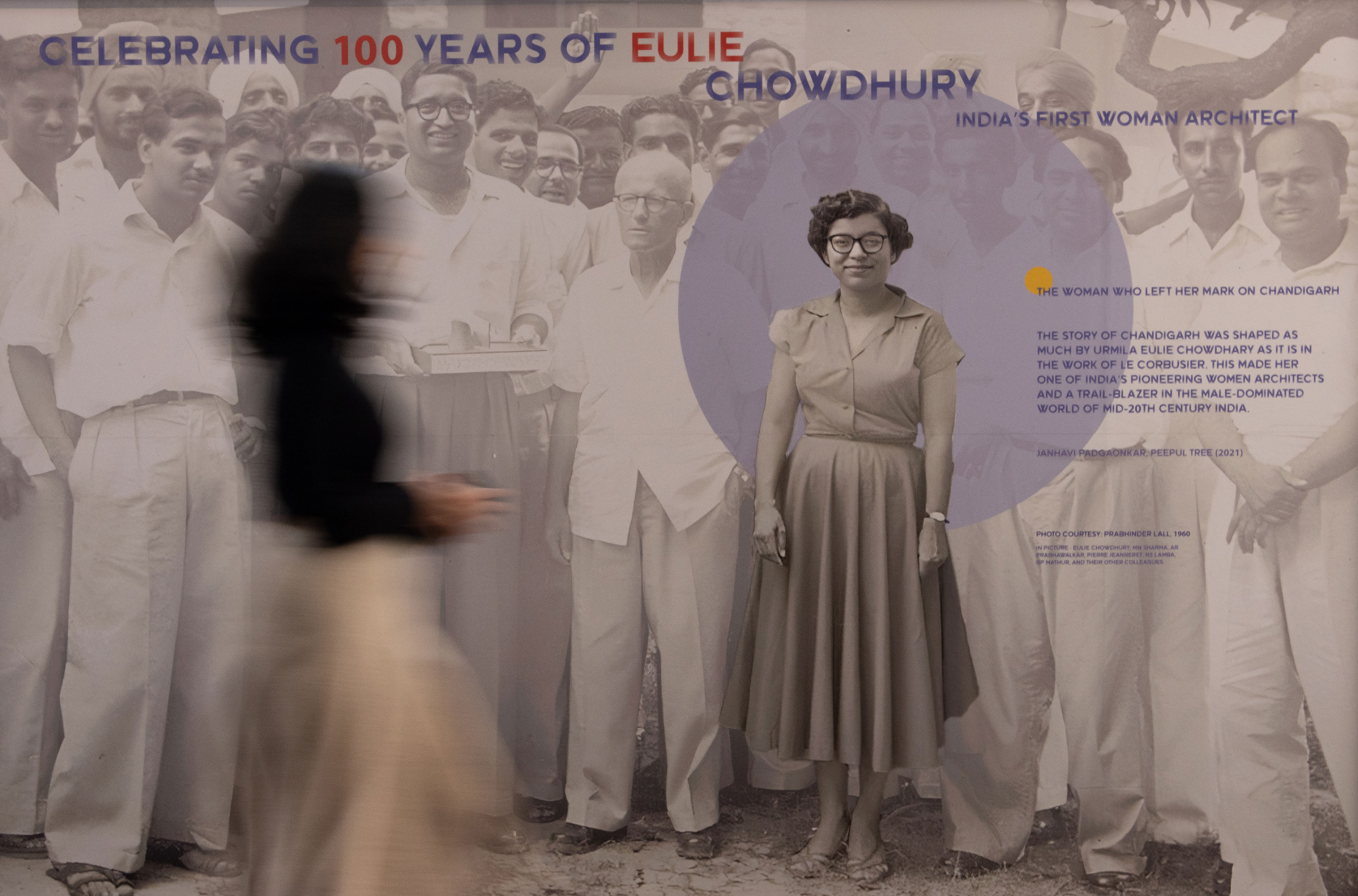
When it comes to Indian practices (perhaps it is the case around the world as well), there are not many practices led by women, by themselves. Recently, we did an exhibition at India’s first Art Architecture Biennale and we showcased the work of eighty women architects from across the country. When we were looking at statistics, even though sixty percent of the students in architecture in universities of architecture are women, when it comes to the field or practice, only twenty percent of practising architects are women and when you look at women leading practices, it would be a mere one to two percent. So, at that point, it really became important for me to lead a practice as a woman.
Over time, I am realising that it is a bit lonesome to be the only founder, and when you have two partners or three partners, it is a different sort of a camaraderie which I do miss, but going ahead I see different levels of leadership as the younger people in my team take the practice forward in different directions. I see perhaps Social Design collaborative is a very experimental space right now but perhaps, over time it is more of an NGO and would be one part of the studio, and one is a more lab sort of a space. Right now, our work is also very hyperlocal, it is embedded in Delhi, even though we work in other Indian cities as well, Delhi is our base. I do see our work in other geographical locations perhaps not just India, other places in Global South as well. A large part of our discourse is on creating more networks of solidarity in Global South, when it comes to housing rights, when it comes to right to the city, so I do see ourselves going ahead also working across these networks.
Design is a conversation for us. I think it’s a conversation for most architects. Many people also question, ‘Why are we called ‘Social Design Collaborative’?’; because design is social. Why do you need to say it? I think like we say feminism till we have gender equality, I think we need to say social design till actually the social aspect of design is an important part of contemporary architecture and design.
For us, making sure that a design process is more opened up, more open-ended, involves all the different stakeholders who are a part of that project, who are a part of that process, has always been an important part of the work that we do. We do not have a client and an architect relationship – it is more of a shared ownership model, that is a part of our process.
We are also very mindful of our work hours. It is also very important that we create inclusion and ethical practice in our own studio, but we have realised our work hours also have to be flexible , because we have to weave our work hours around the livelihoods of people we are working with.
PROCESS
<00:25:30>
SJ: I think what we are constantly seeking is dialogue with the Government, because people on ground are always willing to have a discussion, willing to come together and create something as a group. A large part of our work is very embedded on ground and self-initiated, it came from a sort of frustration with the status quo, when the Government fails to create a much needed infrastructure, when it fails to create certain spaces then how do you go about creating those spaces yourself. […]
The biggest part, overarching message of our work, or the overarching discourse we are trying to create is more equitable cities; is the Right to the City, and this kind of urban discourse needs to be created in the space of governance but also in the public psyche, and those are the kind of projects we are usually looking out for.
Writing is an important part of the work that we do. It is hard to juggle with on site, on-ground work and also write and teach at the same time. Personally I see myself moving through different phases, maybe two three years, I am focusing more on research and writing and then the next two three years are more sort of hands-on and construction-based. Writing in the public realm through op-eds, through articles, through academic papers is an important part, to create the kind of urban discourse that I was talking about, towards Right to the City, towards Housing Rights so that is something the team also actively tries to participate in.
The open source section of our website is really just a compilation of all the manuals we have created in collaboration with activists, in collaboration with social workers, in collaboration with different NGOs we have worked with, they are also sometimes building manuals, which we hope are useful for students, for young professionals, perhaps people who are not architects, so a large part of our ethos has been making design and design conversations accessible, working on design literacy and the open source section on the website helps us in that. It is an integral part of the work, because the idea always has been that, design is not just something – it is not patent driven, it is not copyright driven, when you are trying to work at the level of, when you are thinking of social change, when you are talking about social issues through the medium of design, then you really hope that more and more people are able to find that design useful so it makes no sense for us to sort of like create fences around anything we design. In fact it is very important for us that we have designed something then that is also disseminated and actually this is a lesson that I gained over the last few years. We have realised that our work really begins after we have finished designing something. It begins when we are able to disseminate it, when we are also able to share it, when we are able to create the larger discourse that we feel is important.
SJ: The strength of our work is working as a collective. There is a lot that we can contribute to the society, to the built environment, but the moment we start working with different professionals, people from the field of academia, from economics, in our case – human rights law, social work activism, together we are able to do a lot. I have two examples that come to mind, the architectural practice which is not always about building in our office and is linked to the question of equitable built environments, is also connected to the larger housing rights movement in Delhi. For example, the whole network of the different civil society organisations, working towards Housing for All is an important network that we are a part of and those monthly or weekly meetings form a large part of our work outside of the practice. When Delhi’s Master Plan for 2041 was being drafted, the development of the Master Plan was done over three years by the Delhi Development Authority in collaboration with National Institute of Urban Affairs (NIUA), at that time some forty civil society organisations, different community based organisations, NGOs came together to create a campaign called “Main Bhi Dilli” and we were a part of that campaign as well.
It was a very important people’s movement to make sure that the planning authorities are involving people, that they are taking feedback from the residents of the city because in the past three Master Plans that was not really done and if you want an inclusive city then you also need to have an inclusive city plan, and maybe we need to stop calling it Master Plan because who is this master who is designing for us all, in fact we made a tool kit called, “Kaun hai Master? Kya hai Plan?“
The idea was to also translate a very technocratic piece of document that the Master Plan really is, to the residents of Delhi. It takes an architect also a long time to go through the Master Plan, to understand it and of course it is very hard for people who are not trained in that to understand it. Being a part of collectives, working together, to be able to influence the Master Plan of your own city, to be able to question development plans which might be leaving out important stakeholders, has been really the integral part of our work. For example, when it comes to the school we have built with the farmers along the river a few years ago, I also realised that building a school can only do so much; it is a bit of a band-aid solution, but what is the root of the problem? It is that the farmers have been displaced, they are considered illegal, they are considered encroachers, why is that when they actually are responsible for food security in your city? Urban farming is such an important concept in Western countries; we already have that in India, we have that in the centre of Delhi, why are we removing it?
All of these are very challenging of course, especially when you work with precarious communities living in these informal self-built neighbourhoods. They face a lot of challenges on a daily basis, and of course, we are also part of those challenges, they affect the way we work, they affect the work that we do, sometimes we are working in a settlement or neighbourhood and we are planning to build a school or a daycare centre, and just two weeks later, the settlement is demolished. It is not even there anymore or it has caught fire; these are the kind of urgencies and challenges we are constantly navigating our way around, and dealing with.
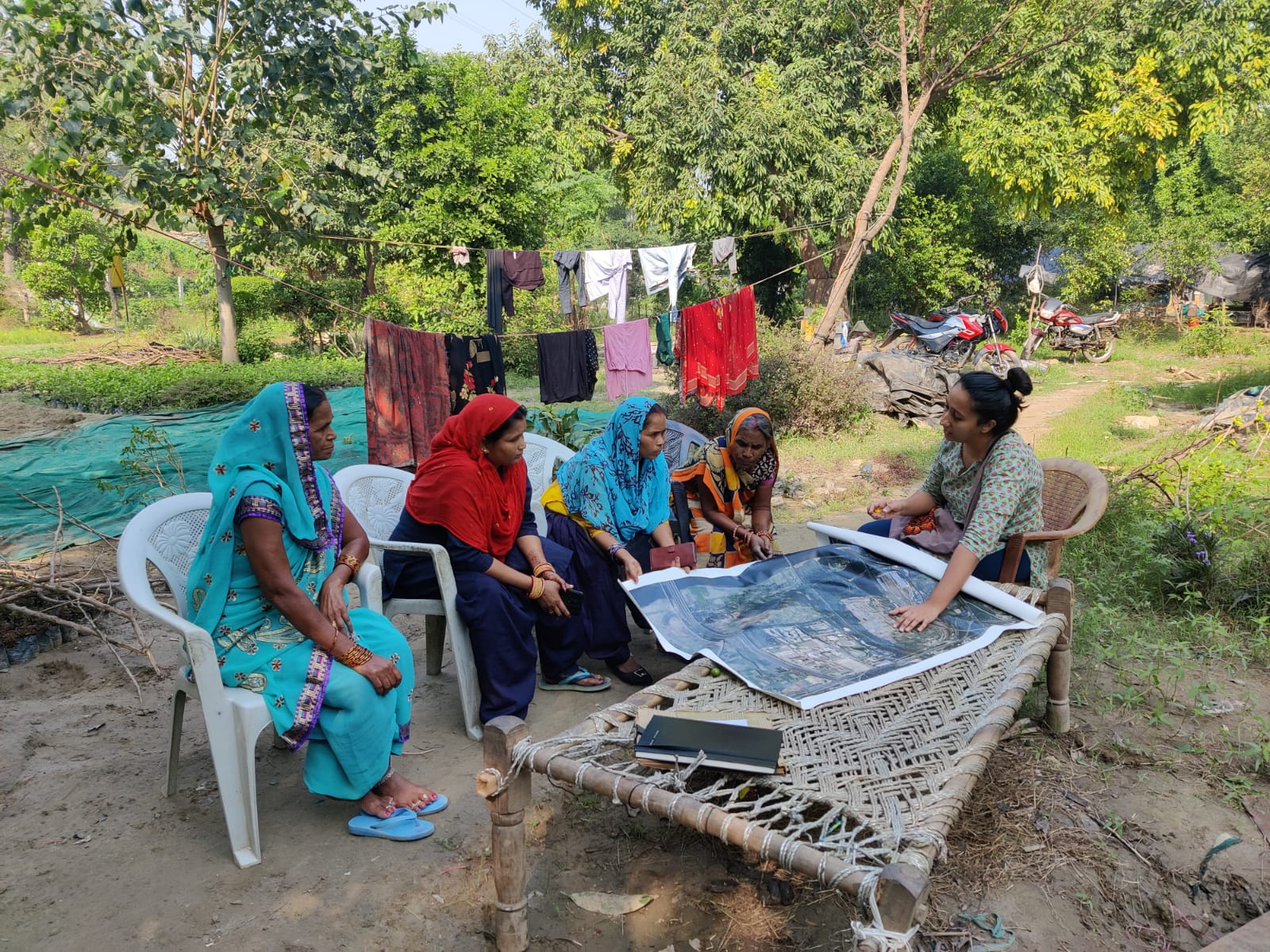
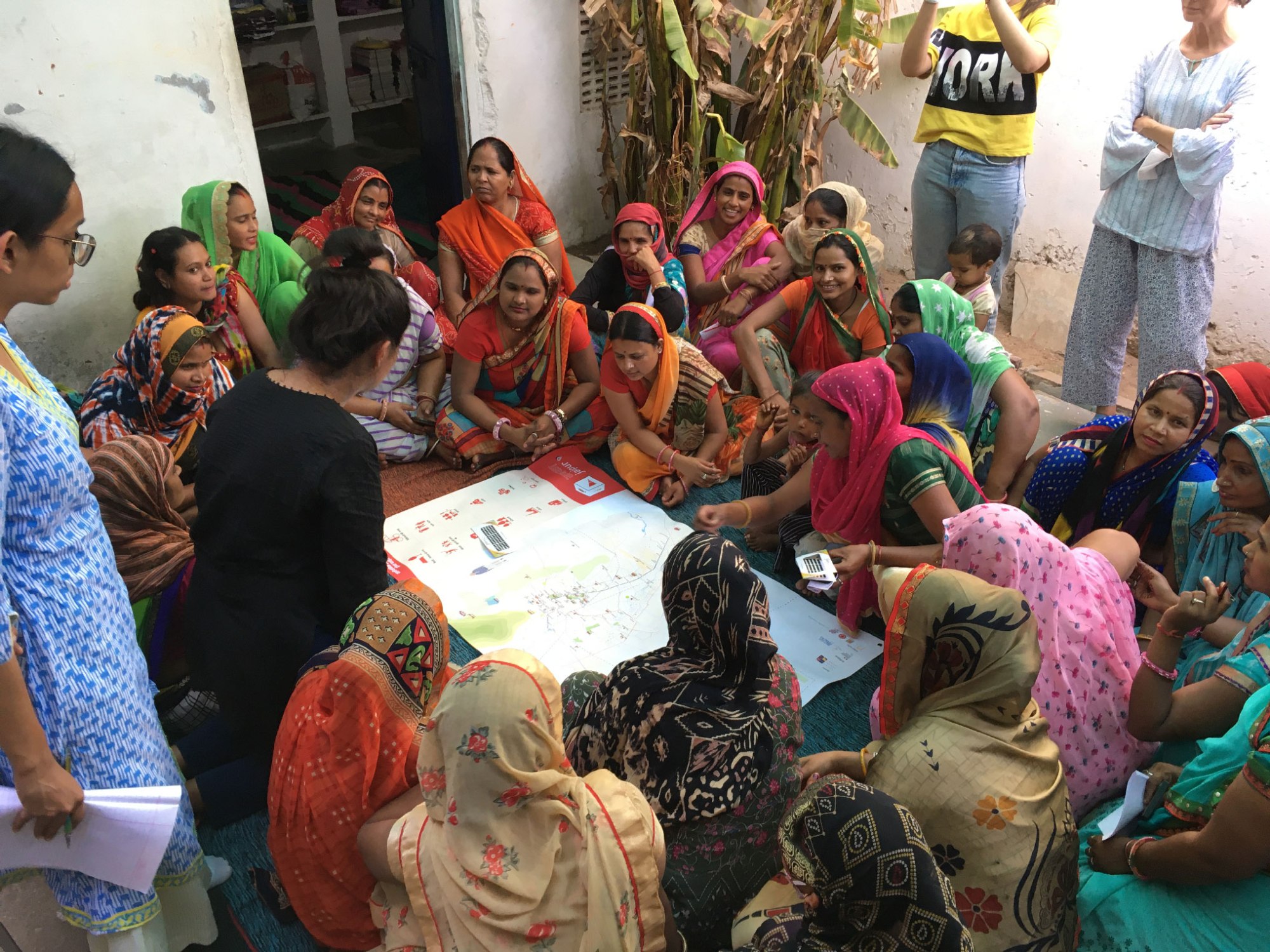
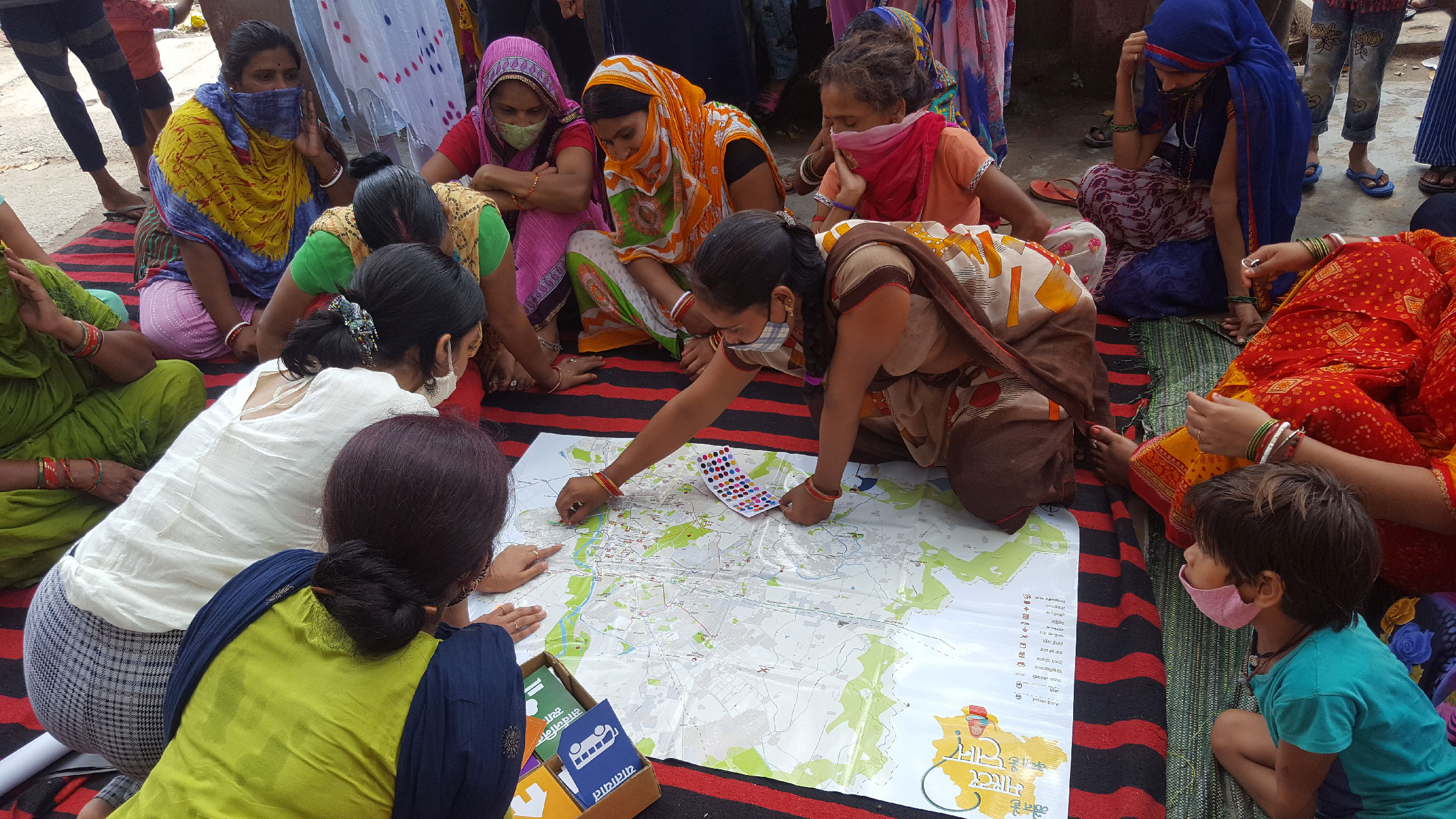
When the planning authorities make their maps, they leave out people who actually are living on the ground, so counter cartography, making maps with the people on ground – all of these are different ways that we have been working in.
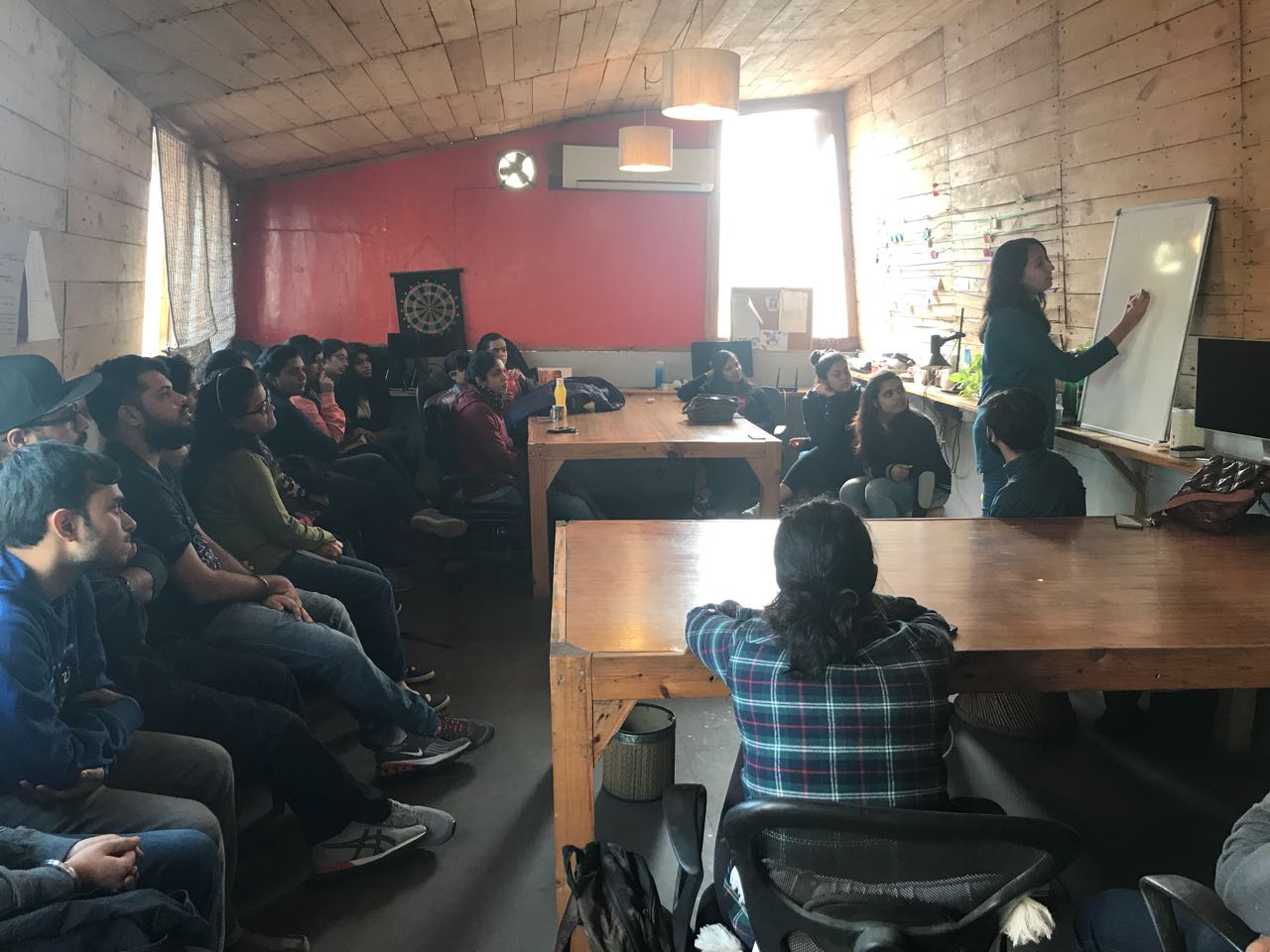
SJ: I started teaching a few years back and I realised that teaching is really a way of learning. The focus on pedagogy became important for me because I realised if we are talking about inclusion in the built environment, and more equitable cities then the root of it is really architectural education. Focusing on education is a very important part of that approach as well; if we have better architects, more sensitised architects, if one elective in my education has made such a huge difference in the kind of practice I have, then education can go a long way in creating more diversity, more inclusion in architecture, in the kind of architects we have. I learnt a lot of patience, which I did not have before then.
Pedagogy is a part of our work, not just through teaching; in so many different ways such as workshops. I think education is of different kind; of course, teaching in universities is one, but workshopping and curation is a form of education as well.
SJ: There are two things, the part that I value the most is people because spaces are made of people, and I think that I really enjoy that sort of connection. That is the reason when I was working as an artist in Khoj, when we were having these on-street conversations, just to meet people from different walks of life, outside our own bubbles, if I may. When you are listening to people, when they are sharing their stories and how those stories become a part of the architecture, how they become the part of the built, how they become a part of the space, which has been really sculpted together, by the people, with the people, that is something I really enjoy and that is the reason I keep doing what I do.
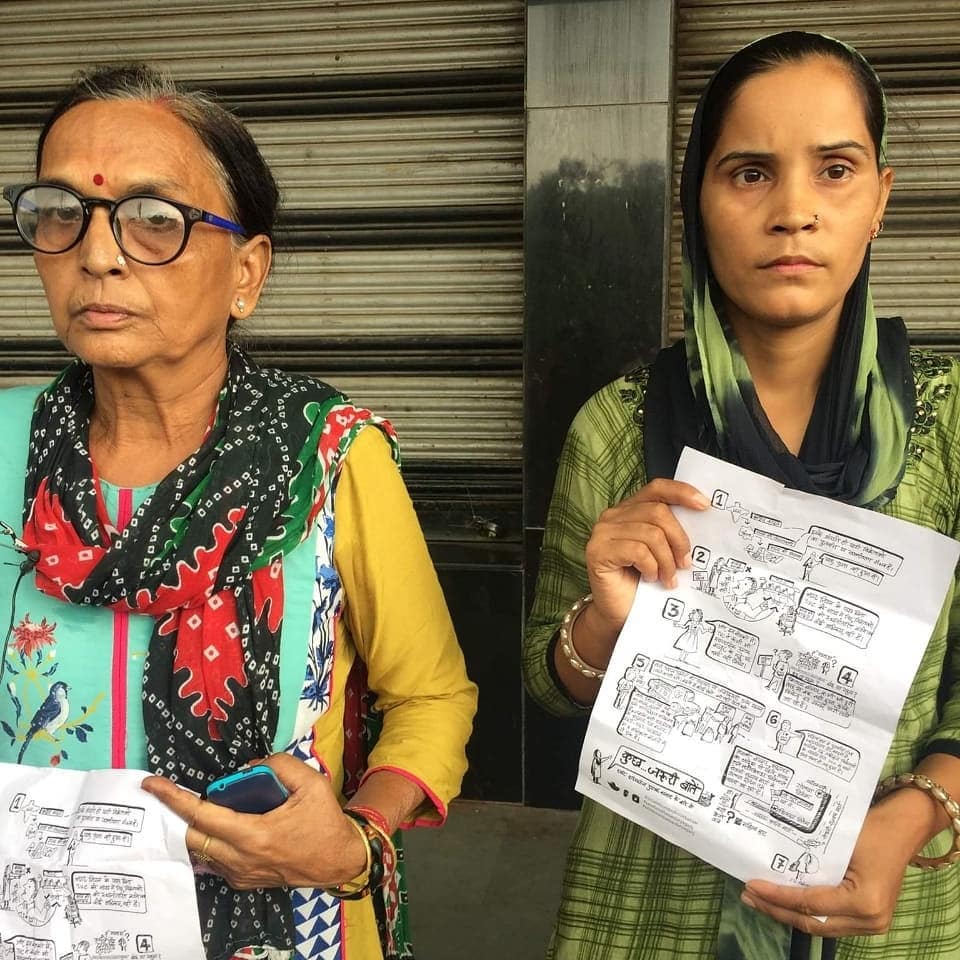
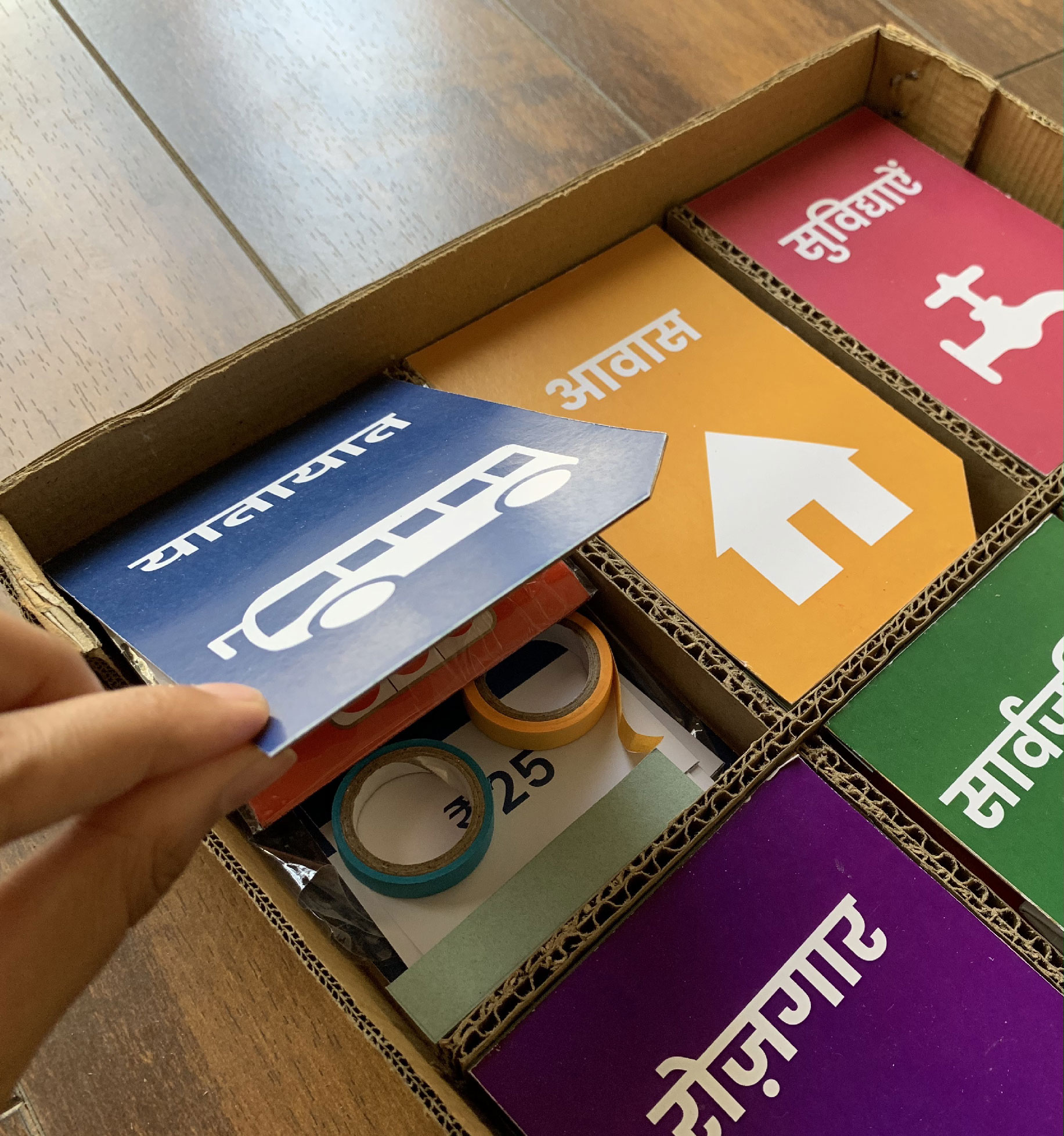
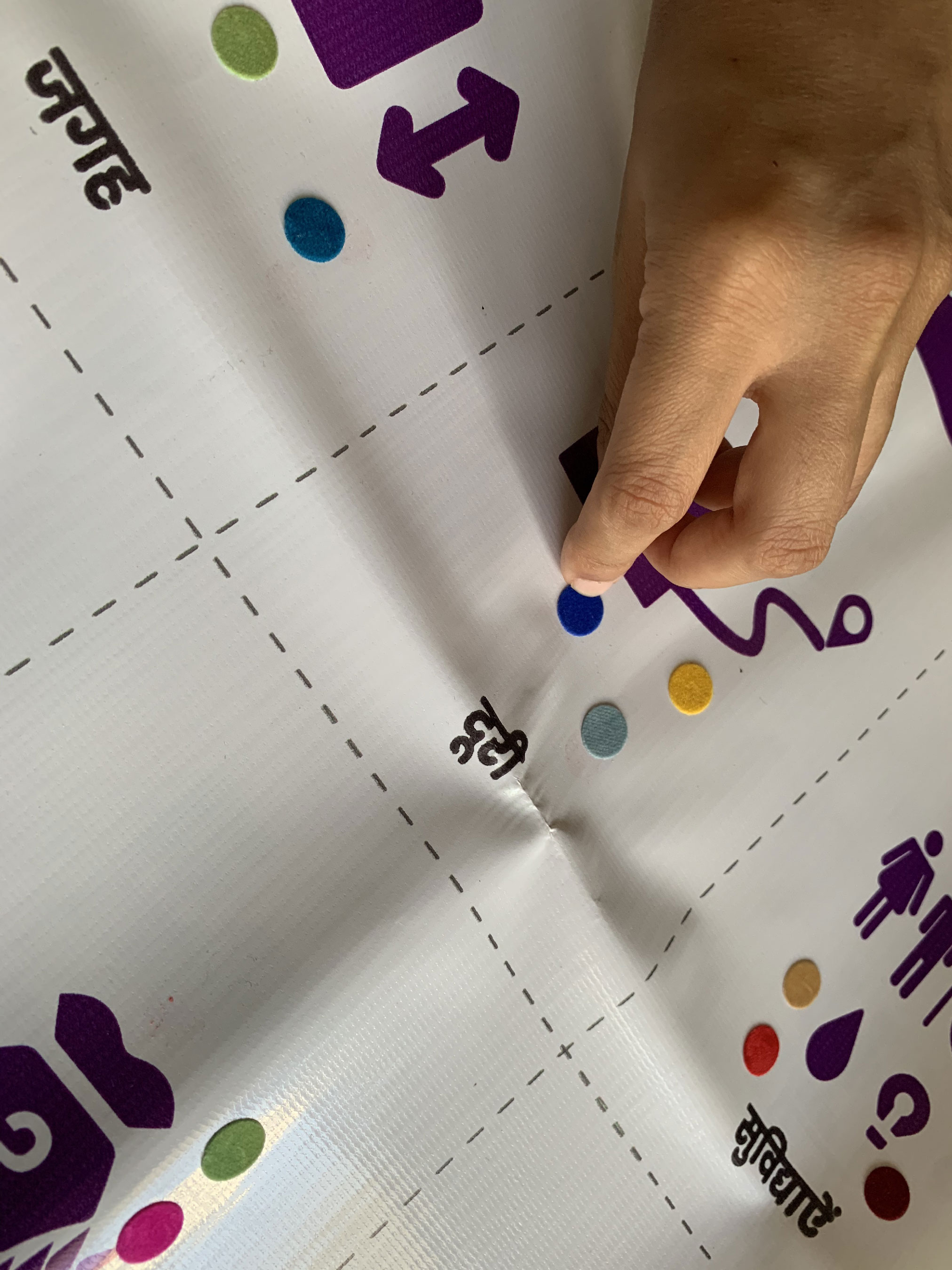
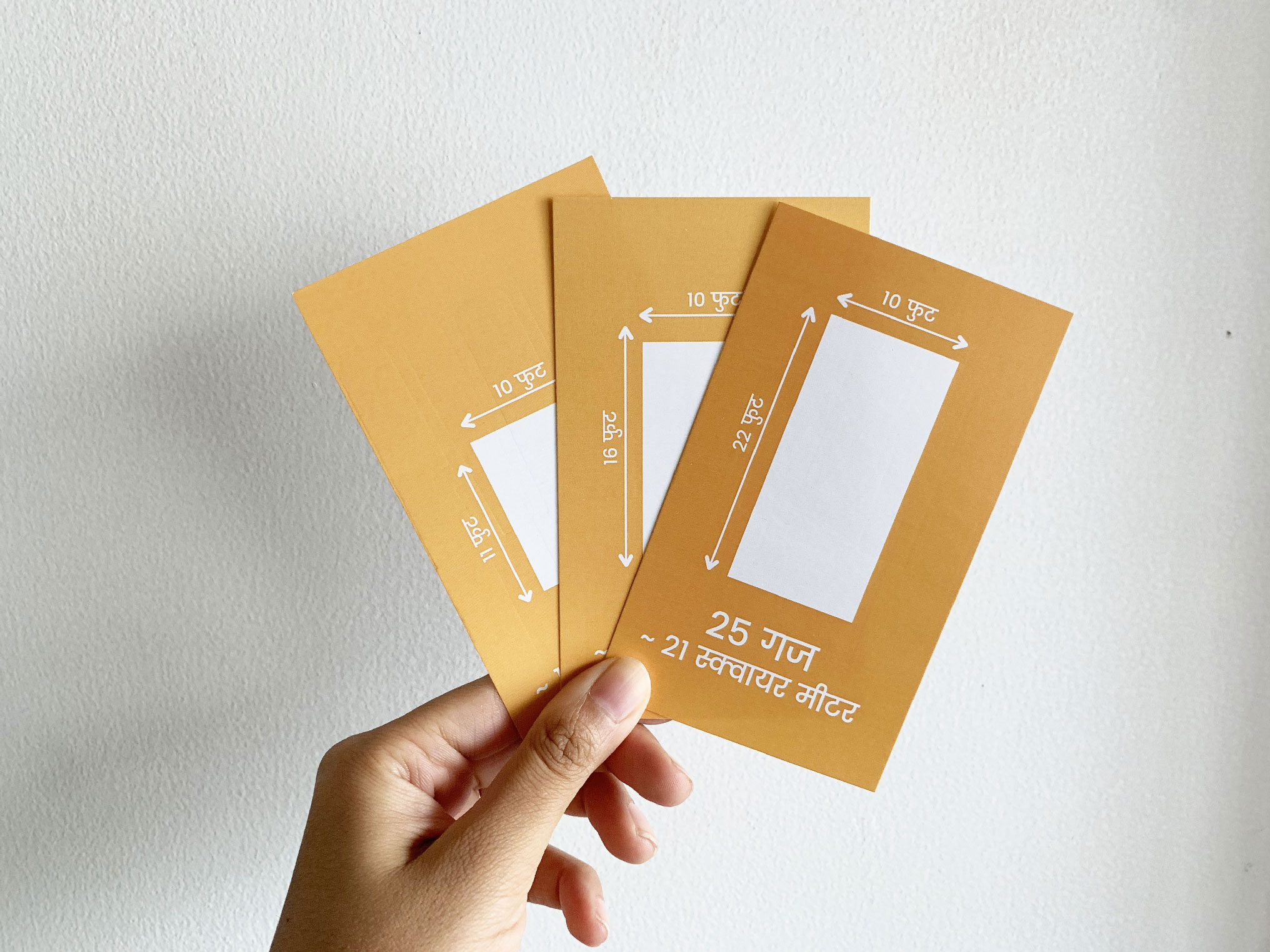
The second thing which I wanted to bring out is, accessibility is a very important part of our work and we have always focused a lot on communication design, on visual design and for people who are not architects, for people who are not designers, to be able to understand and relate to what is the significance of architecture or what does a city plan mean for you, how does this development plan affect you? Making design accessible has always been a very important driving force for me, that is something I really value and it all goes back to when I started, and I started with this existential crisis I was talking about, what is the meaning of architecture, what is the role and relevance of my profession and I think to be able to find answers to that in different ways, that is something I really value, I find it very meaningful, maybe in the future, I think it is something else but right now, that’s what it is.
SR: As a young student throughout my years at college, I realised that architecture is a very extractive practice which is constantly borrowing from the environment, from the earth, but I consciously tried to work with practices who are working towards sustainable building techniques and alternate building techniques but thanks to a few of my very kind professors who made me realise that architecture has a large social impact and that it can only serve those with wealth, material and power and I started looking at practices that focus on these areas and I came across Social Design Collaborative and I found myself in complete alignment with the values of the studio and the bottom of approach that we follow and so the journey began.
AS: While I was working as an architect in conventional practices, there was a time and I really started questioning the relevance of the profession, I started taking up a lot of self-initiated projects on the side as along with working full time and I started doing a lot of public based projects, so I did not like what was going on in conventional practices because everything was – you are designing for rich people, you are designing farm houses, so I did not like that and also I did make a shift. I moved away from the profession completely and I also did my masters in industrial design at Pratt in New York. There, I was really exposed to interdisciplinarity, I was surrounded by people from different backgrounds and everybody really talks about design is part of a larger system and that is what really stuck with me, which is part of a whole system. We are not looked at in isolation and that is what I found very rigid in my education as much. When I came back, I was looking for practices that have the same values and line of work and Social Design Collaborative really aligned with my line of conviction and my involvement in public projects, that is one of the reasons why I joined Swati’s team.
We are working in teams all the time but at the same time, there’s a lot of space that we create to express one’s thoughts, really express one’s opinions, not just limited to projects but also how you really feeling, because provided that we work in difficult environments and it does take a toll on your mental health as well, I really like that we can just be ourselves and have a voice.
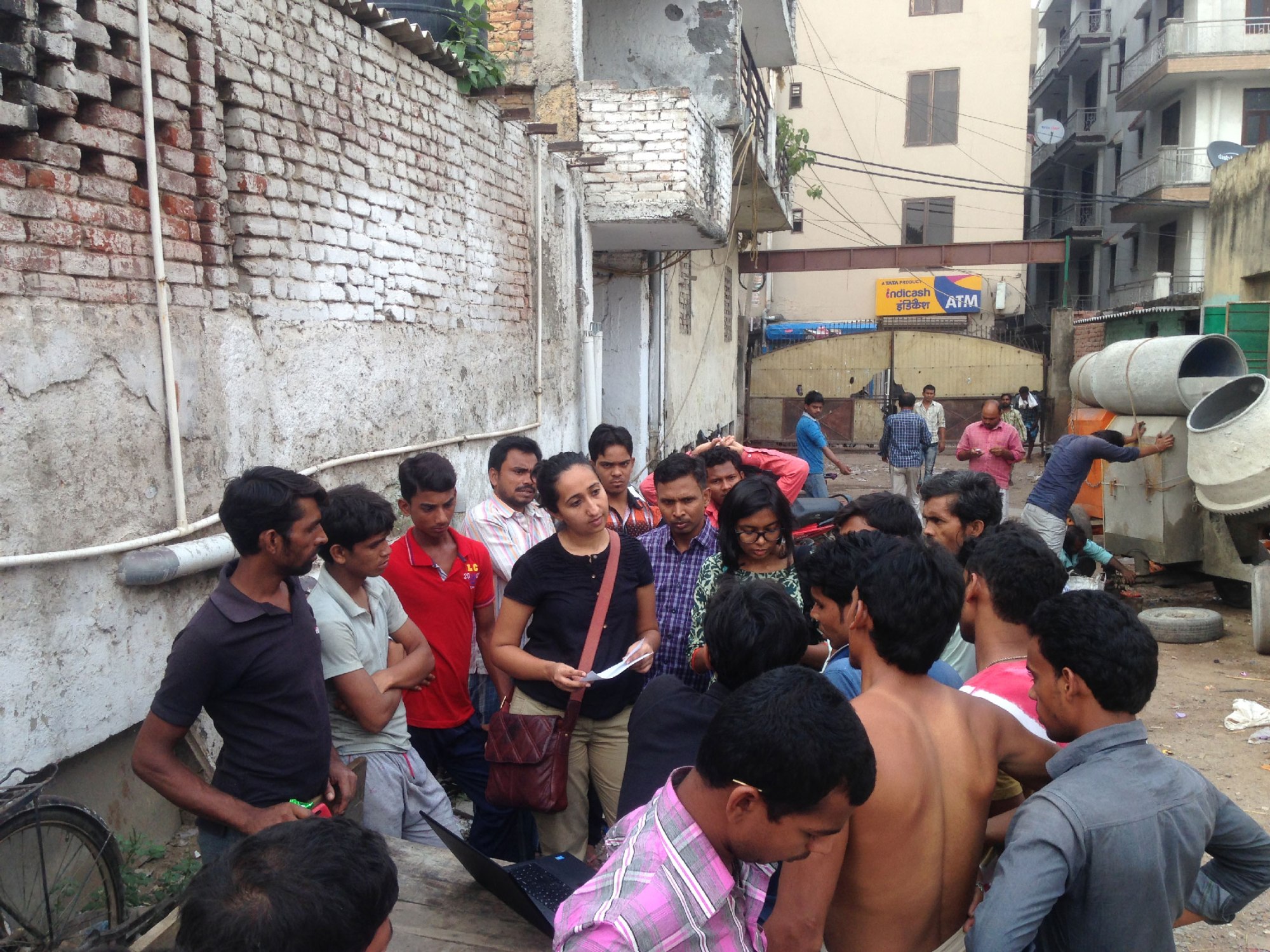
SR: The process of work is based on a lot of on-ground collaborations, liaising with different Government departments for various projects, and the emphasis is on making the process iterative. We work with a bunch of very talented field coordinators who help us connect with communities on ground, they have had long lasting relationships that they have built over the years with communities and that is how we connect with people on the ground and we do several recces of various sites and then while interacting the community, we get to know what their needs and wants are, as well as with the potential of that site is to build some sort of a community infrastructure and the process begins. So it is a lot of back and forth between the drawing board and the site, a lot of community consultations and I would say it is a highly iterative process.
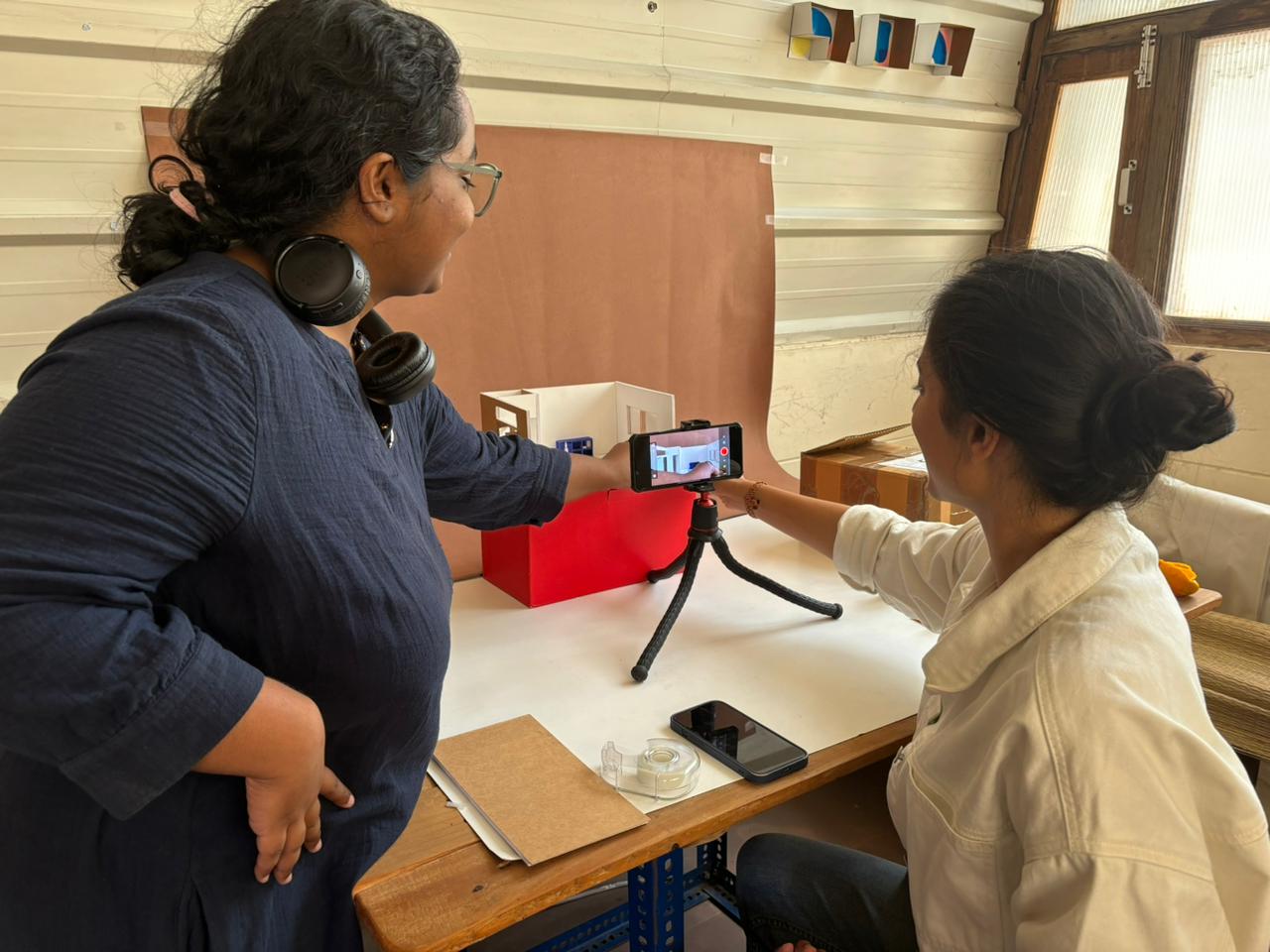
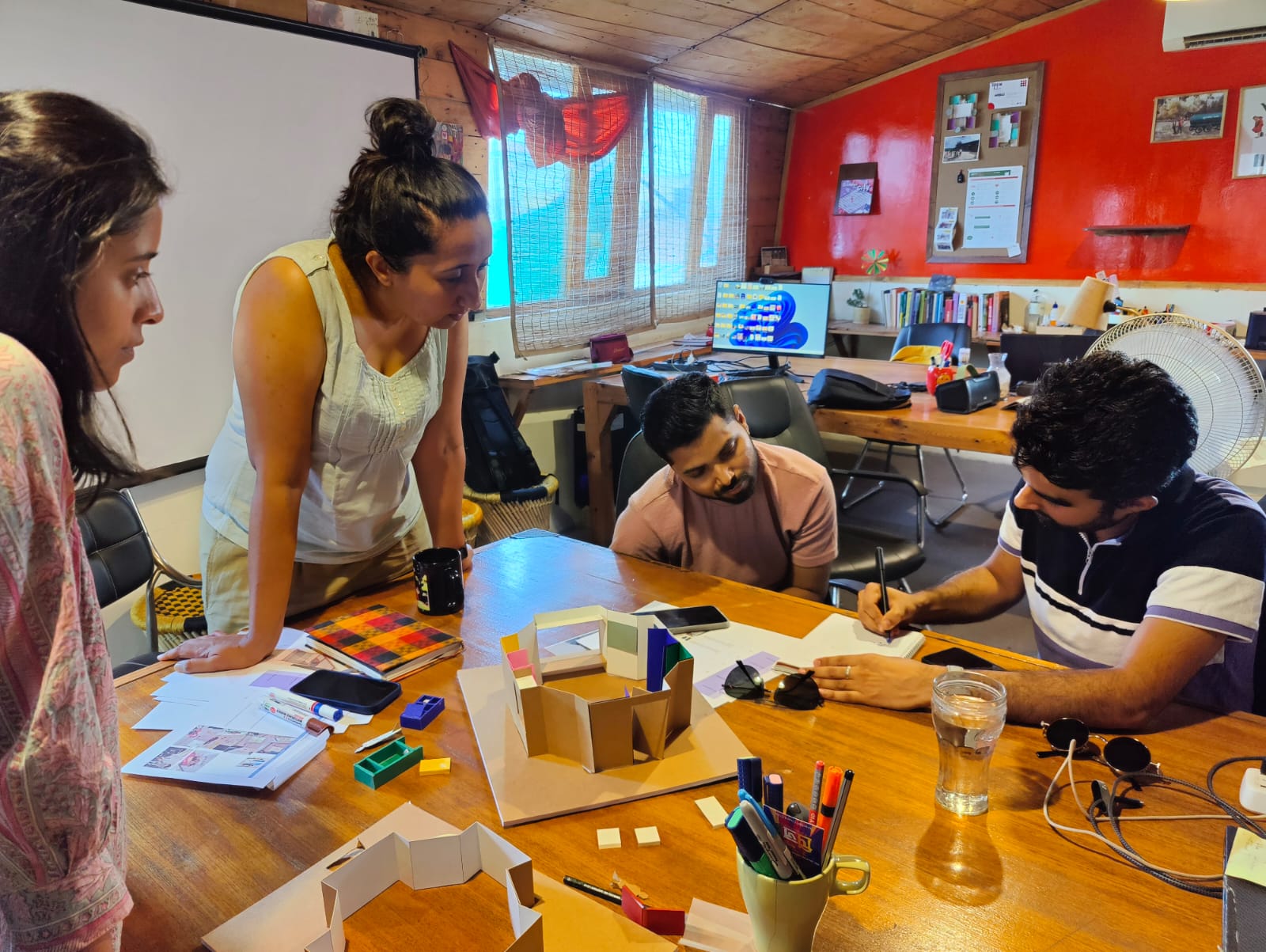
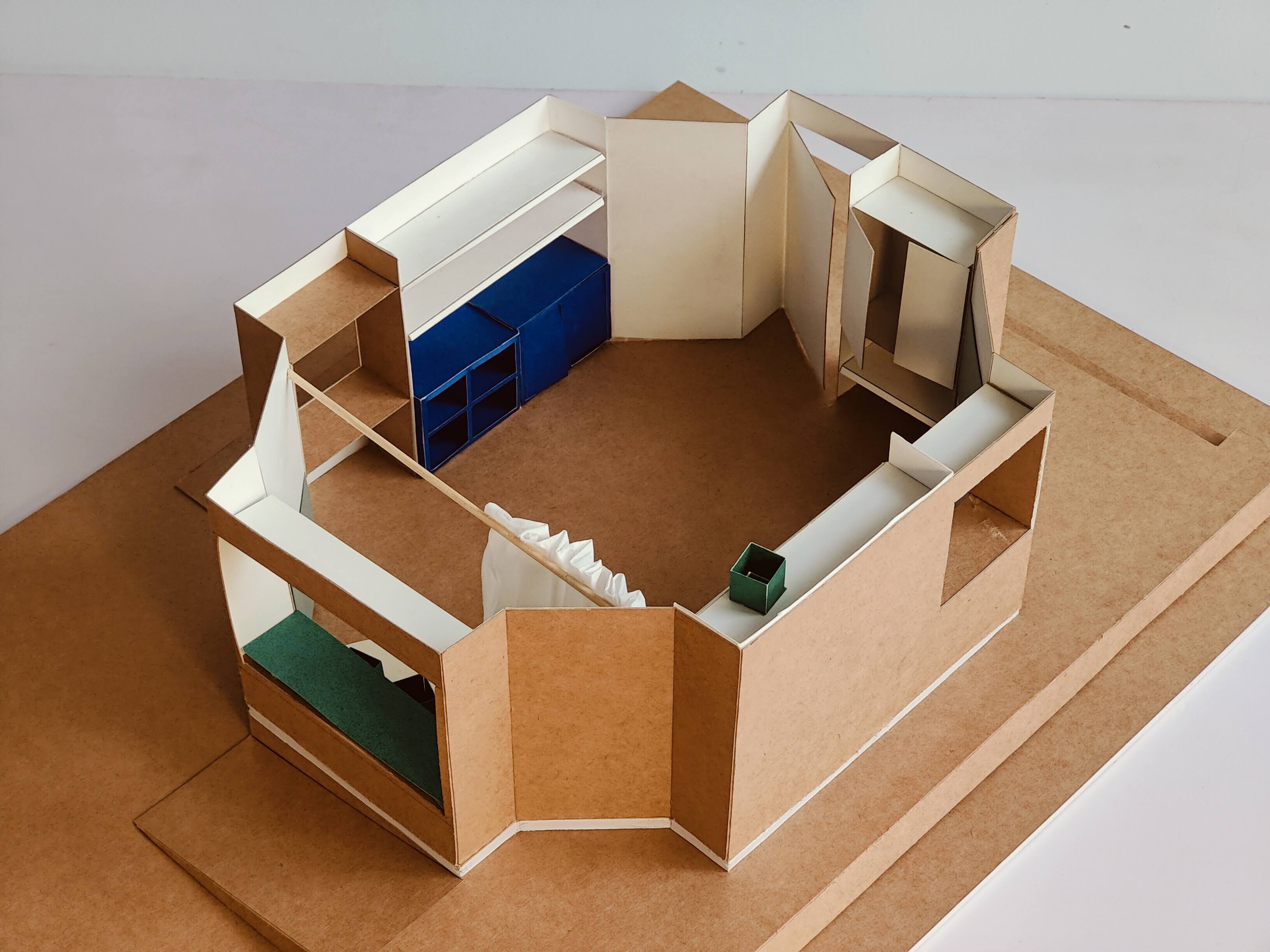
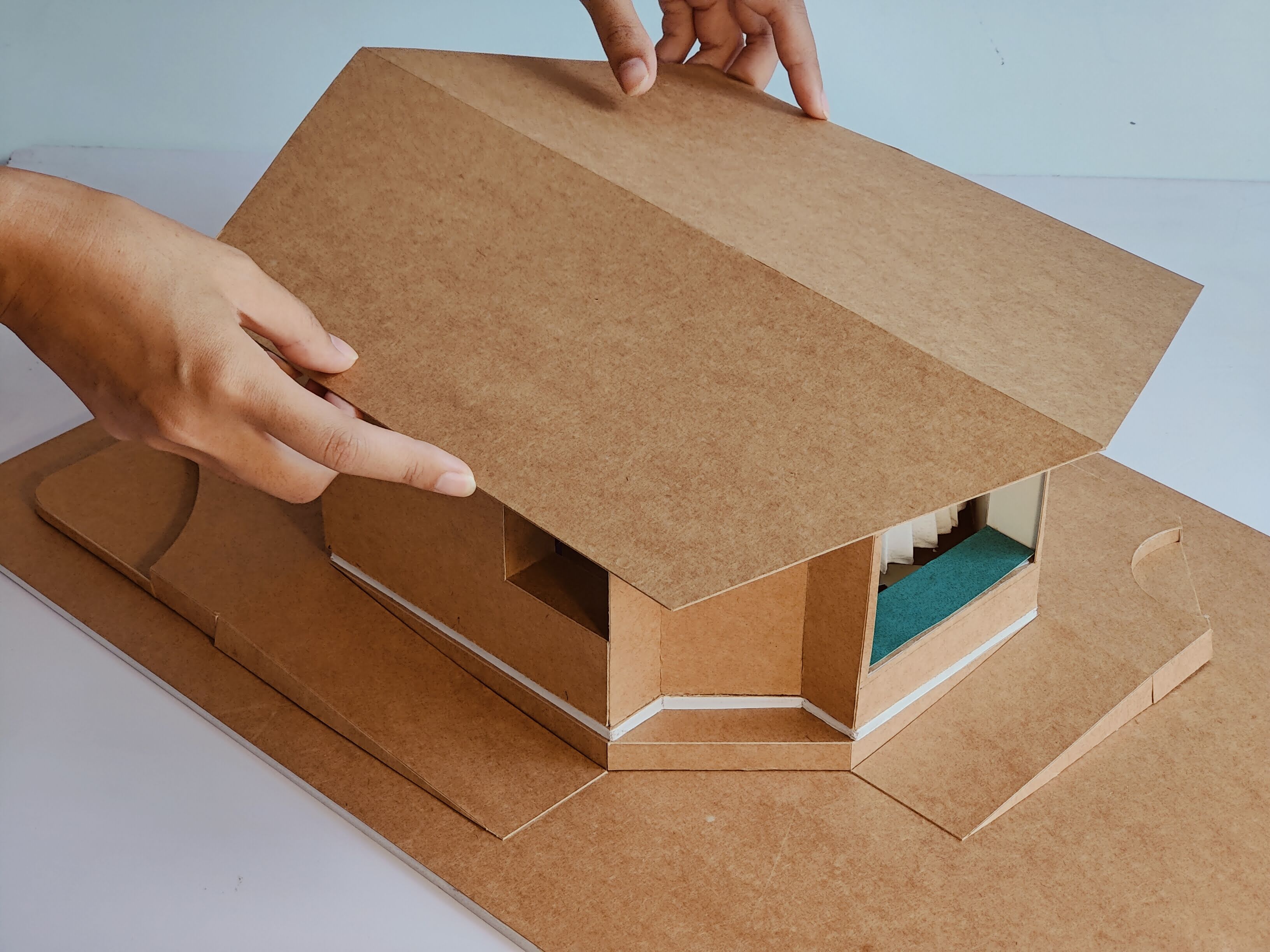
AS: As part of the design process we also need certain tools to convey our designs, to communicate the process to people because this line of work involves a wide range of stakeholders and most of them do not come from a design background, how do we communicate such a technical language to these people, so we used a range of tools but most importantly, we use models because we feel that, that is one of the simplest ways to conveying any design because it is tangible, people can touch it, people can feel it, so it is a very simple method.
AS: What is valuable to me is the sustainability of that change we are trying to create because it cannot end with immediate change. I think for me, at least in my work I try to see how can it become a system of change; it has to be long term, it has to be self-aligned, people should take it from us and take it on and take that change forward so it has to be a sustainable change.
SR: The thing that I value the most about this kind of work is community meetings and community engagements on ground work, a meeting which has gone well, where all of the people have voiced out their opinions, I have not found like a better satisfaction anywhere else in the world but also to add to your question about what makes a project successful – I think as architects, we are very hooked on to tangible aspects of any project, when we see something built on ground, we think that, ‘wow this is like a successful project’, but I think that the process that we follow is a very tedious and an iterative process and it has made me realise that all of these softer aspects of liaising, building trust and most importantly, building ownership of some infrastructure that you are building, so that people take it forward and it doesn’t just die with you leaving the project is very important.
CONTEXT
<00:44:45>
AS: I am very hopeful, things are changing, from the time that I left and I am back again, so people are – especially young practices are taking initiatives to really break the mould, to redefine what architecture is. I would actually like to see more young practices come into the public realm, take responsibility of our streets, take responsibility of public infrastructure and really change that. Also, the Government processes to allow for that.
Secondly, I come from a very multidisciplinary background and I want to look at the profession like that; where you are not just working with the team of architects but I see the future of firms and practices being a very multidisciplinary team, where you are working with engineers, with geologists, with soil experts, with nutritional experts and an architect is there and you are creating something together – so it is a system. I do not see it again as a very isolated profession anymore. It is changing.
SR: I feel very positively hopeful about the future of architectural practice in India because I see a lot of colleagues and people my age really voicing out the exploitive nature of architectural practice which has been in existence for many years now and the work culture is changing, the ethics are changing and people are standing up against long working hours and unreasonable ways of practice. So I think definitely there is a positive change that is coming out.
PRAXIS is editorially positioned as a survey of contemporary practices in India, with a particular emphasis on the principles of practice, the structure of its processes, and the challenges it is rooted in. The focus is on firms whose span of work has committed to advancing specific alignments and has matured, over the course of the last decade. Through discussions on the different trajectories that the featured practices have adopted, the intent is to foreground a larger conversation on how the model of a studio is evolving in the context of India. It aims to unpack the contents, systems that organise the thinking in a practice.
The third phase of PRAXIS focuses on experimental vectors of practice and explorative models that support thought-provoking ideas and architectural processes.
With a corporate history spanning more than 85 years, Şişecam is currently one of the world’s leading glass producers with production operations located in 14 countries on four continents. Şişecam has introduced numerous innovations and driven development of the flat glass industry both in Turkey and the larger region, and is a leader in Europe and the world’s fifth largest flat glass producer in terms of production capacity. Şişecam conducts flat glass operations in three core business lines: architectural glass (e.g. flat glass, patterned glass, laminated glass and coated glass), energy glass and home appliance glass. Currently, Şişecam operates in flat glass with ten production facilities located in six countries, providing input to the construction, furniture, energy and home appliances industries with an ever-expanding range of products.





















































 thinkMATTER