Category Archives: Lectures

Nehru and the Delhi Modern Movement: Architecture and Design in Delhi 1947-1980

Ram Rahman

A Recorded Lecture from FRAME Conclave 2019: Modern Heritage


In this lecture, Ram Rahman speaks about the works of his father, the noted architect Habib Rahman. He also speaks at length about Jawaharlal Nehru‘s vision for the new nation, the architecture and design in Delhi post-independence and its present-day state.

Edited Transcript

Basically, my approach to what I am talking about has come through photography. I am not really a historian. I am only here because my father, who you see there (referring to image 01), Habib Rahman was an architect and I grew up in the milieu of many of the architects whose work will be discussed today, but I will begin very quickly.

In a tribute to some of my Goan friends, these are pictures I did of Mario Miranda and Charles Correa at Dona Sylvia a number of years ago (referring to image 02). So, a tribute to them, tribute to these fantastic people who came out of Goa and did amazing work.

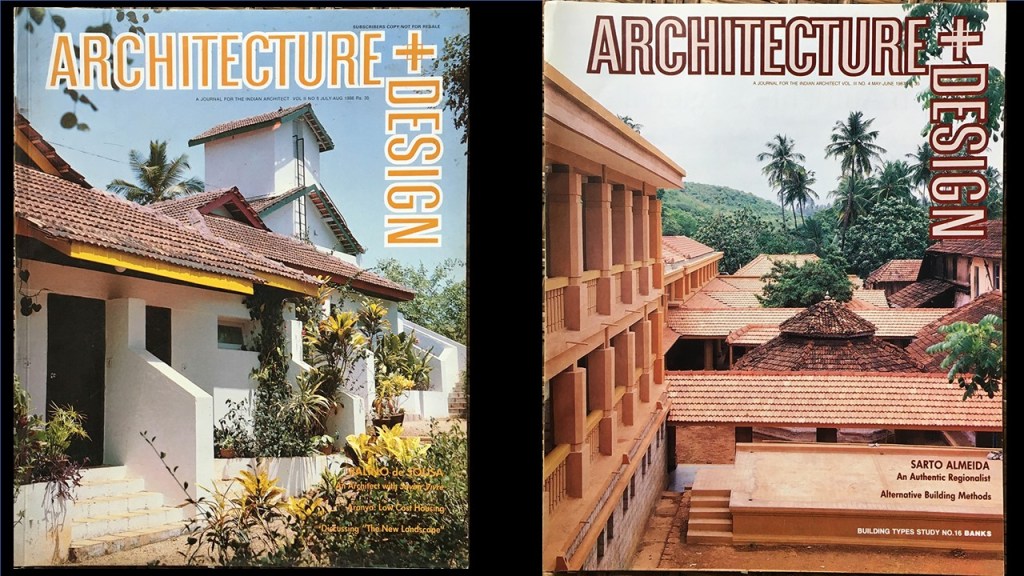
I first came here in 1986, it was for ‘Architecture + Design’ magazine (referring to image 03) at that time edited by Razia Grover. My introduction to Goa was actually Goan modernism in architecture. I came here to photograph the work of Ralino De Souza, Peter Scriver mentioned him earlier today, and I am happy he did. Also, Sarto Almeida and Lucio Miranda amongst many others. And these were wonderful issues at the time when much of this work had actually not been seen in the rest of India. So, salute to these architects too.

Continue reading Nehru and the Delhi Modern Movement: Architecture and Design in Delhi 1947-1980
GANDHI OF SPATIAL DELIGHT: THE CRITICAL PRACTICE OF LAURIE BAKER

Himanshu Burte

A Recorded Lecture from FRAME Conclave 2019: Modern Heritage


In this lecture, Dr Himanshu Burte speaks on the nature of Laurie Baker’s human-centric architectural practice; as an empiricist, environmentalist and extremely critical and creative practitioner.

Edited Transcript

So it is going to take a while for me to recover from one hour of Geoffrey Bawa and after this lush serenity, especially because I have to follow it up with an argument. But, I will go ahead and I am going to be talking about Laurie Baker. I have kept what I am saying fairly narrow and it is mainly in the form of a straight-on argument I am offering, and I am hoping that we can have a discussion afterwards, whenever we are scheduled. I have actually changed the title from what is published or what was originally given to it, because I actually took the title of my obituary for Baker, written just after he passed away and because of the resonance with yesterday’s discussion around Gandhi and Architecture.

I will begin by looking at the context, the objectives and the premises of what I have to say. To begin with, since this is about heritage and we are talking about Modern Heritage particularly, I approach heritage with the understanding that every map is really a plan. It just does not show you what is there, but it is a project. Heritage in that sense, I see as an exercise in constructing the future. By constructing the past in certain ways, by preserving certain memories and ascribing certain meanings to it, we are really constructing and doing the work of creating a future that we want. That I think extends to some extent to Prem‘s point, though I am sure he would not necessarily disagree with this. So, given that this is what is involved in thinking about heritage, it becomes very important to be conscious of our value positions and especially about the ethic of architecture, its politics, economics, the aesthetics and of course, the actual processes and practices that go into making the practice or the product itself. 

Continue reading GANDHI OF SPATIAL DELIGHT: THE CRITICAL PRACTICE OF LAURIE BAKER

CONTRAPUNTAL MODERNISM: THE ARCHITECTURE OF MUZHARUL ISLAM AND LOUIS KAHN

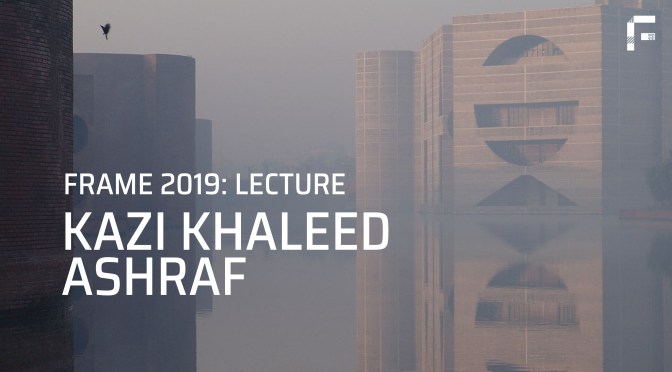
Kazi Khaleed Ashraf

A Recorded Lecture from FRAME Conclave 2019: Modern Heritage


In this lecture, Kazi Khaleed Ashraf discusses the works of two prominent contemporary architects – Muzharul Islam and Louis Kahn as counterpoints to modernism in the Indian subcontinent. He also speaks about understanding modernity, modernism and the positions either took in the way they practised architecture.

Edited Transcript

In the pursuit of framing and reframing modernism, perhaps we might have to rethink the various ways we described modernism, tropical modernism, we might have to call it – monsoon modernism. Monsoon in the subcontinent is what sank European modernism; that is something to think about. I have been tasked to talk about two architects – Muzharul Islam and Louis Kahn. Muzharul Islam is from Bangladesh. He is what one could describe as the kind of a father figure of modern architecture. That term, ‘father figure’, is how Ranjit Hoskote described Charles Correa. If you replace Charles Correa with Muzharul Islam and other specific details, that is Muzharul Islam in Bangladesh. He was an architect, teacher, activist and most importantly, he was openly engaged in politics. He was a hardcore Marxist, a politically engaged persona. So I think among all the pioneering architects we are discussing here today, this is an interesting moment to think about an architect, who is both – an architect professionally engaged with the larger cultural milieu, and also devotedly engaged in politics. And the other person whom you are more familiar with, especially I am thinking about the younger architects and students. I am not sure how much you are familiar with Muzharul Islam so I will be taking up the task of talking about him in the next fifteen-twenty minutes, but you are surely familiar with the other person, Louis Kahn, who was invited to Bangladesh, and Muzharul Islam was involved in that invitation.

Continue reading CONTRAPUNTAL MODERNISM: THE ARCHITECTURE OF MUZHARUL ISLAM AND LOUIS KAHN

EXPERIMENTS IN CITY PLANNING AND IDEAS OF MODERNITY (1880 – 1940)

Pratyush Shankar

A Recorded Lecture from FRAME Conclave 2019: Modern Heritage


In this lecture, Pratyush Shankar speaks about the development of cities during the pre-modernist period between 1880-1940. He also addresses the role of two architects, Patrick Geddes and Otto Königsberger, who were deeply involved in the movement. The talk also emphasises on the the evolution and questions of the City, of social institutions and public spaces.

Edited Transcript

If you really, really need to understand what happened in the 1950s, you must understand what happened between 1880s and 1930s because it is an important period. And that is where actually I would like to begin. 

My presentation is not really on architecture, but it is on cities. Well, that is an area of interest. That is something I have been researching for a very long time. I have been looking at cities from a historical perspective; and these days I am particularly curious about the period that I have listed here. I think it is relevant for the theme of this conference also, and I will give you a couple of reasons why I feel it is relevant to look at this period. 

Continue reading EXPERIMENTS IN CITY PLANNING AND IDEAS OF MODERNITY (1880 – 1940)

Claiming Space/Designing Space: Women Architects in Modern India

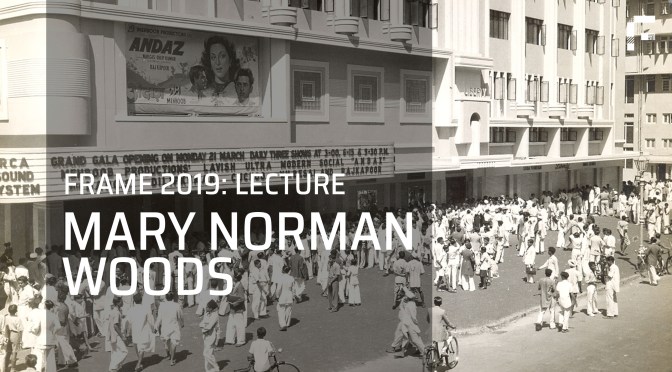
Mary Norman Woods

A Recorded Lecture from FRAME Conclave 2019: Modern Heritage

In this lecture, Mary Norman Woods talks about women architects in post-independent India, and their role in Indian society. She also speaks at length about two prominent women architects from two different generations, and their illustrated body of work.

Edited Transcript

Exploring the different forms that architectural practice might take beyond the usual metrics of originality and innovation can complicate our understanding of modern heritage and its implications for contemporary practice. 

Peggy Deamer, US architect, educator, and activist has argued that how architects practice is as important as what they design and build. Writing in 2018, Deamer put forth the proposition that “architecture cannot produce spaces of freedom — public spaces, healthy spaces, accessible spaces, affordable spaces, sensually liberating spaces — for the society architects presume to serve if they are produced in unfree circumstances such as unpaid labour, gender inequality, generational hegemony, unsustainable work hours, non-existence work-life balance, lack of collegiality or discipline, [and] crippling competition.” Her words remind me of a question that Ellen Perry Berkeley, another American architectural critic, writer, and educator, posed exactly four decades ago. Then, Berkeley wrote: “the real problem for a thoughtful woman is not whether she is accepted into the profession, but whether she wants to be accepted into the profession as it is now.”  

Continue reading Claiming Space/Designing Space: Women Architects in Modern India