
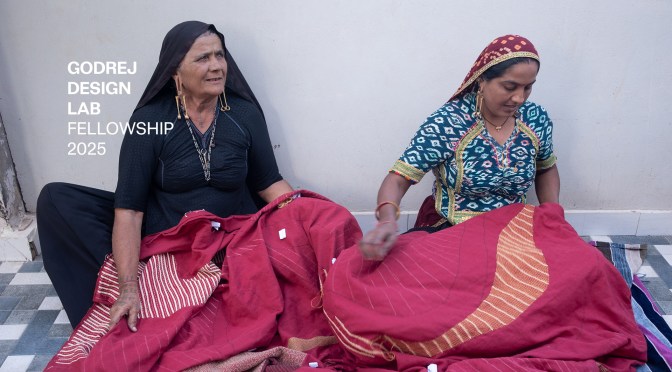
MORII DERO by MORII DARSHAN is one of six projects that emerged from the mentorship of the Godrej Design Lab Fellowship in 2025. The fellows exhibited their projects and processes at the Concious Collective in December 2025.
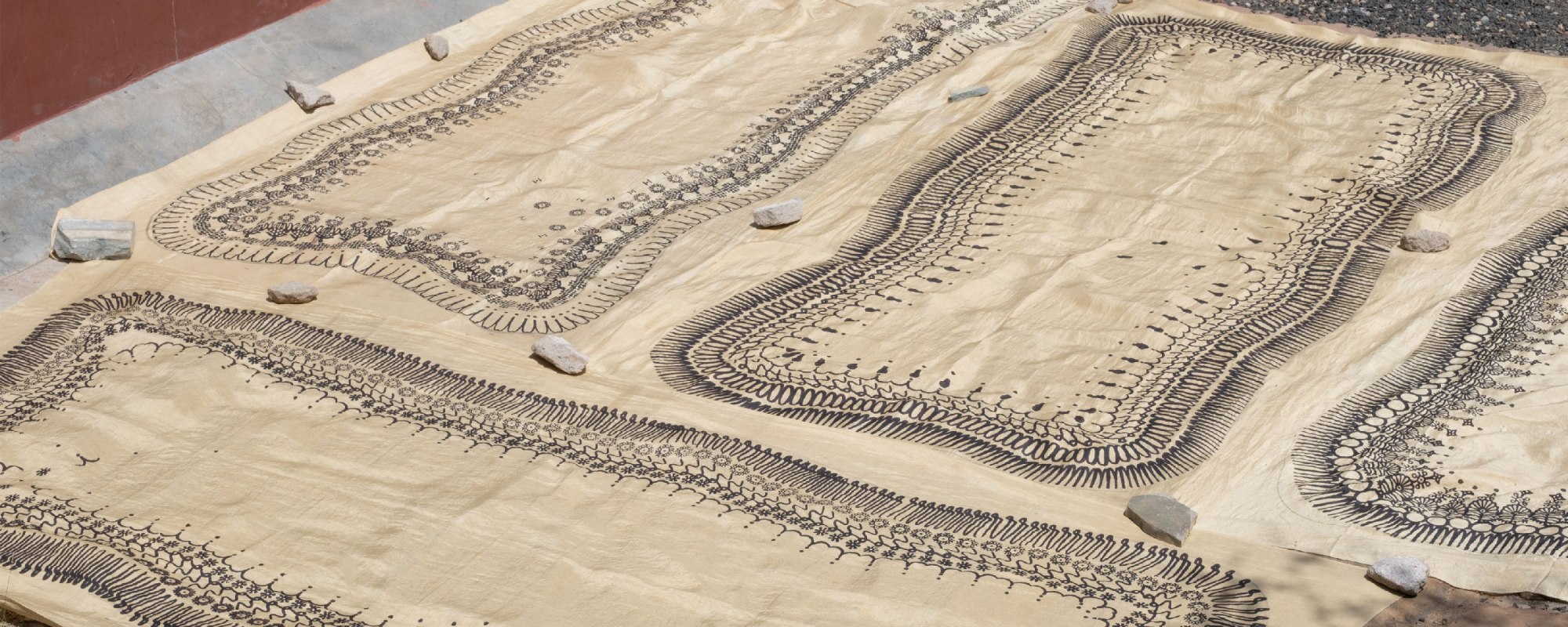
A portable textile tent, Morii Dero extends the craft-led practice into an interpretive process blending field-led research, designer-artisan collaboration. Using a stitch library and digitising processes, appliqué, Sujni embroidery, and block-printing, artisans translate natural forms into layered textiles. Freestanding, reassemblable, and foregrounding lineage, and the emotional resonance of hand-made environments, Morii Dero reimagines an archetype as an introspective textile space.
Morii Darshan is a Gandhinagar-based studio grounded in the knowledge, rhythm, and intelligence of hand embroidery. Working with over 180 artisans across twelve villages in India, the studio’s practice grows out of field-led engagement, observing, learning, and documenting stitch vocabularies from clusters in Bihar, Kutch, and Bengal. This long-term collaboration has grown into a stitch library that acts as both technical guide and conceptual toolkit, enabling traditional vocabularies to be reinterpreted for contemporary forms while retaining the cadence of inherited craft. Morii Dero emerged from a desire to think of embroidery spatially.
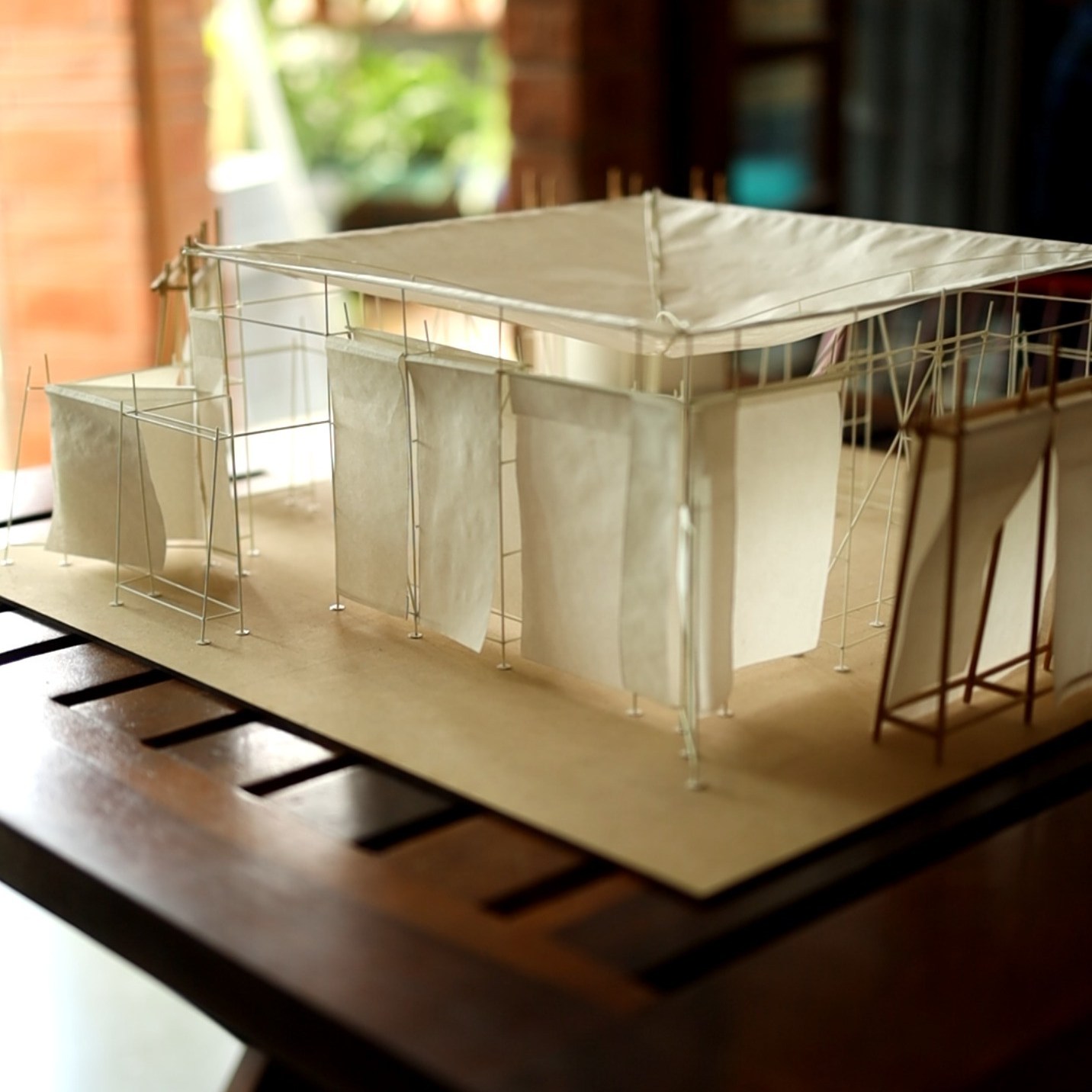
The initial inspiration, to explore the spatial potential of tent-making, rose from the possibilities created by portable architecture and spaces. From the rich legacy of tent-making in the country, Morii Darshan envisioned a pavilion-like space that could be assembled within indoor public settings, allowing people to step momentarily into an environment shaped entirely by handmade textiles. Embroidery, central to the practice’s identity, became the medium defining the tent’s interiors, atmosphere, and conceptual grounding.
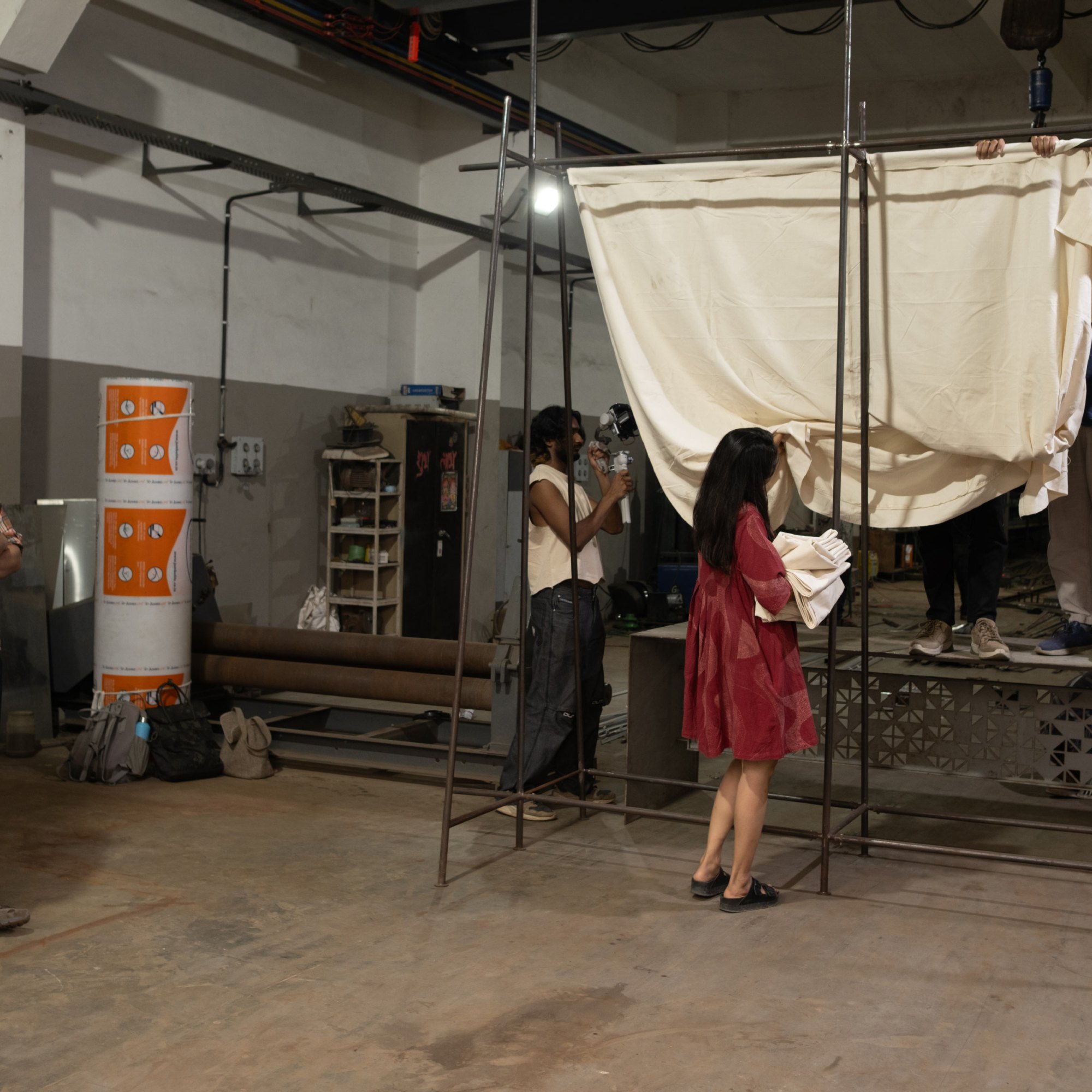
Designed with support from Naomy Parikh (Doro) and structural engineer BL Manjunath, the pavilion is built on freestanding metal framework engineered to support assembly and reassembly.
The portability is a conceptual anchor, allowing the pavilion to function as portable interior that carries its atmosphere wherever it goes, and enabling encounters with craft that are not tied to a site or context.
The crux of the project moves beyond the tent’s physical construction and focuses on a textile envelope, directly extending Morii Darshan’s core practice in embroidery.
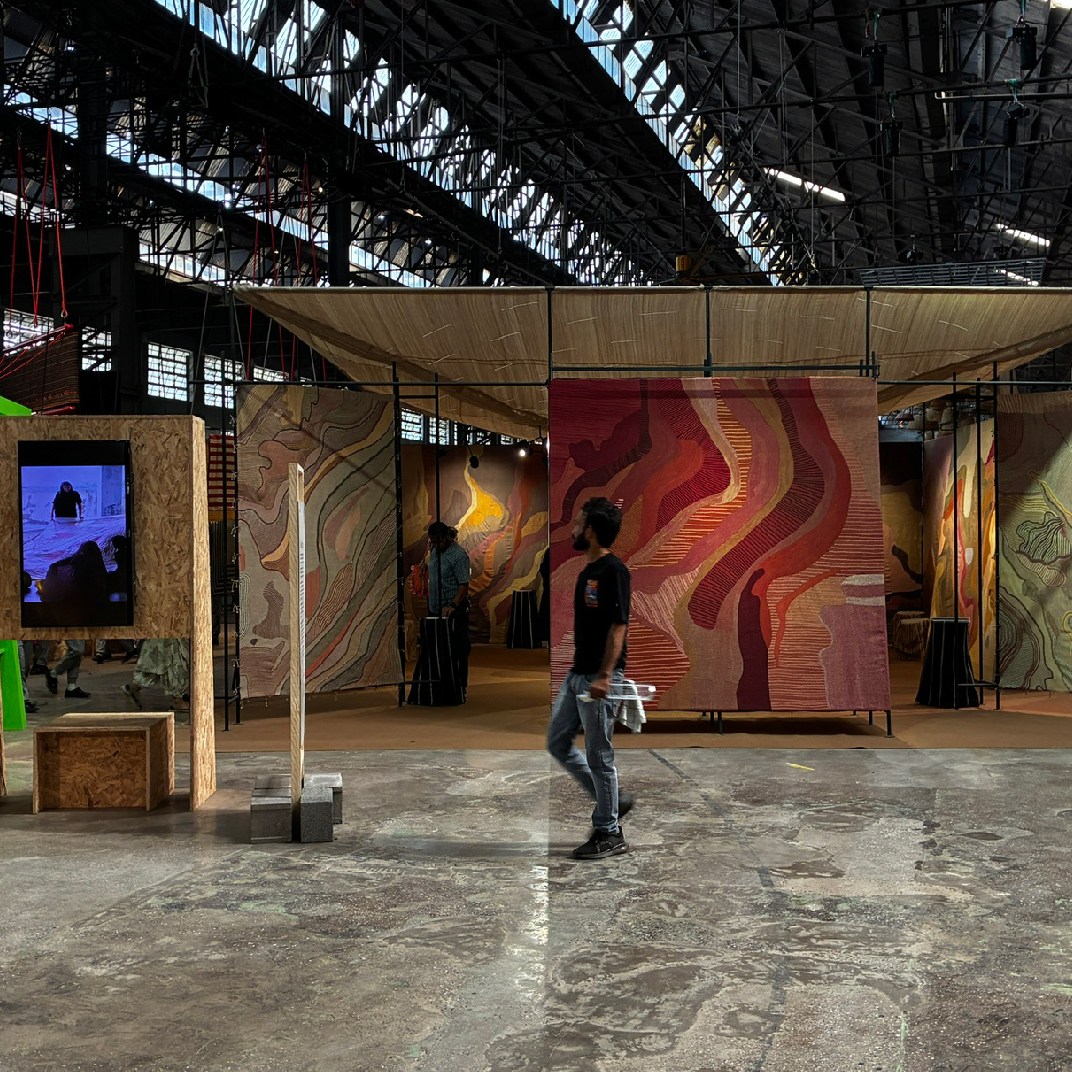
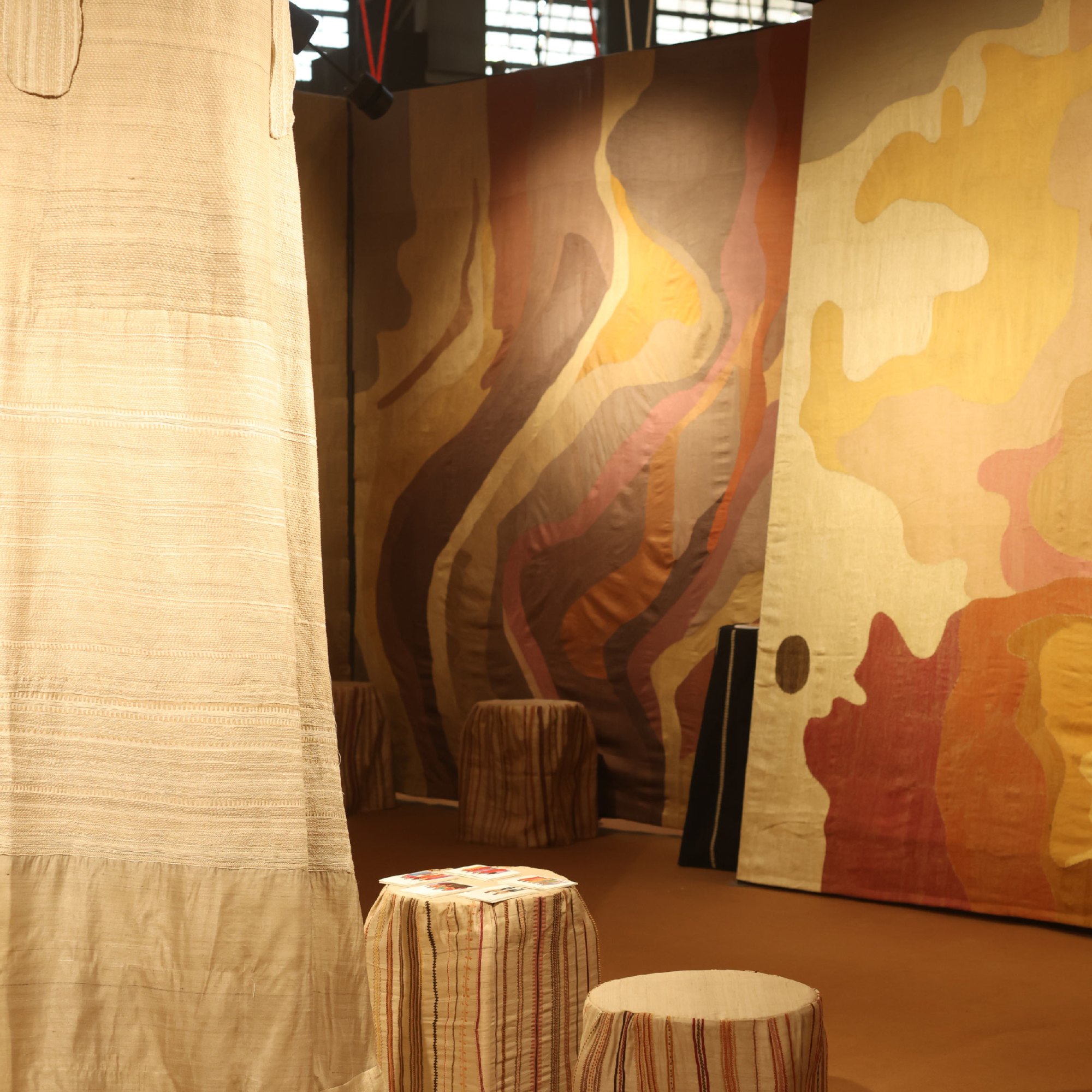
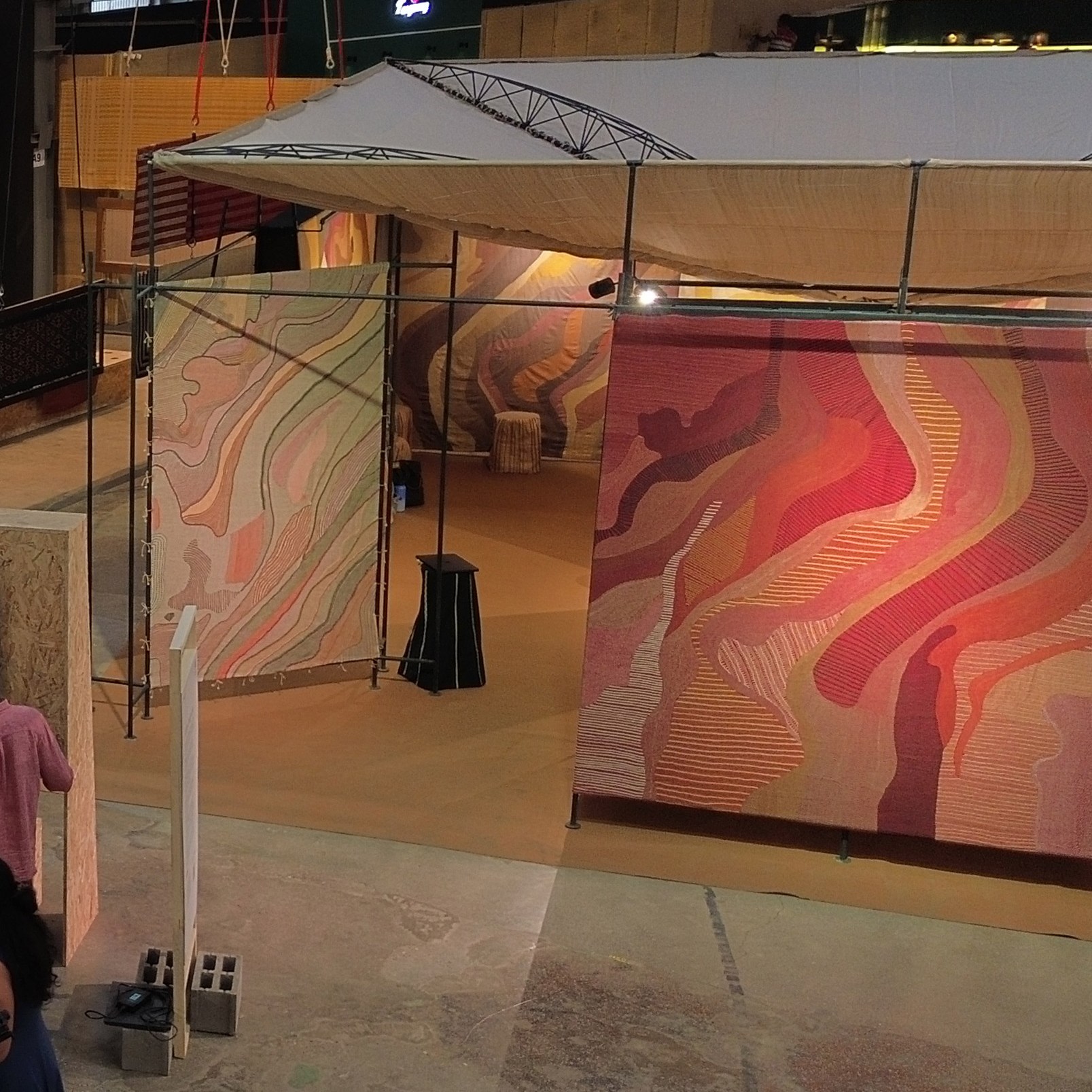
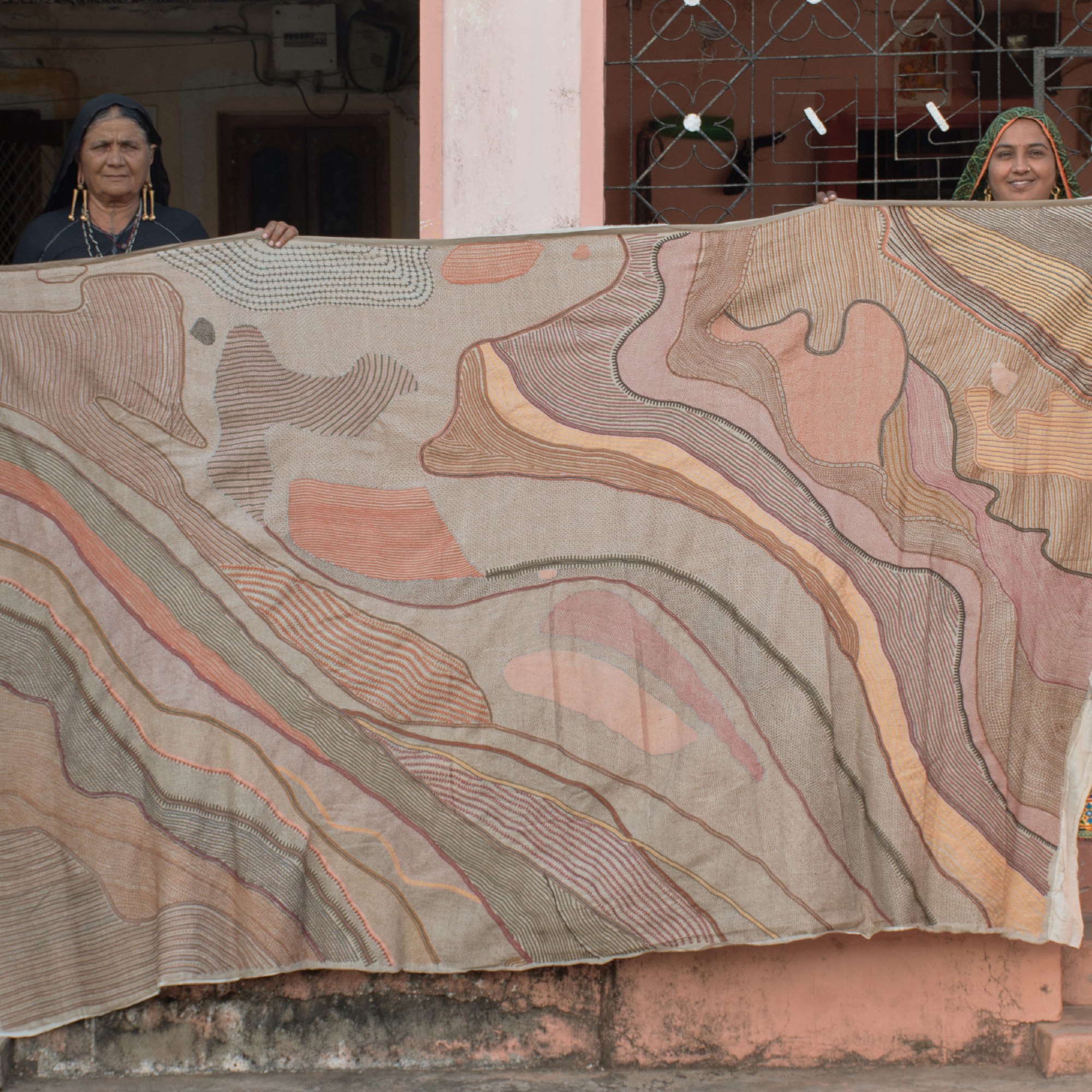
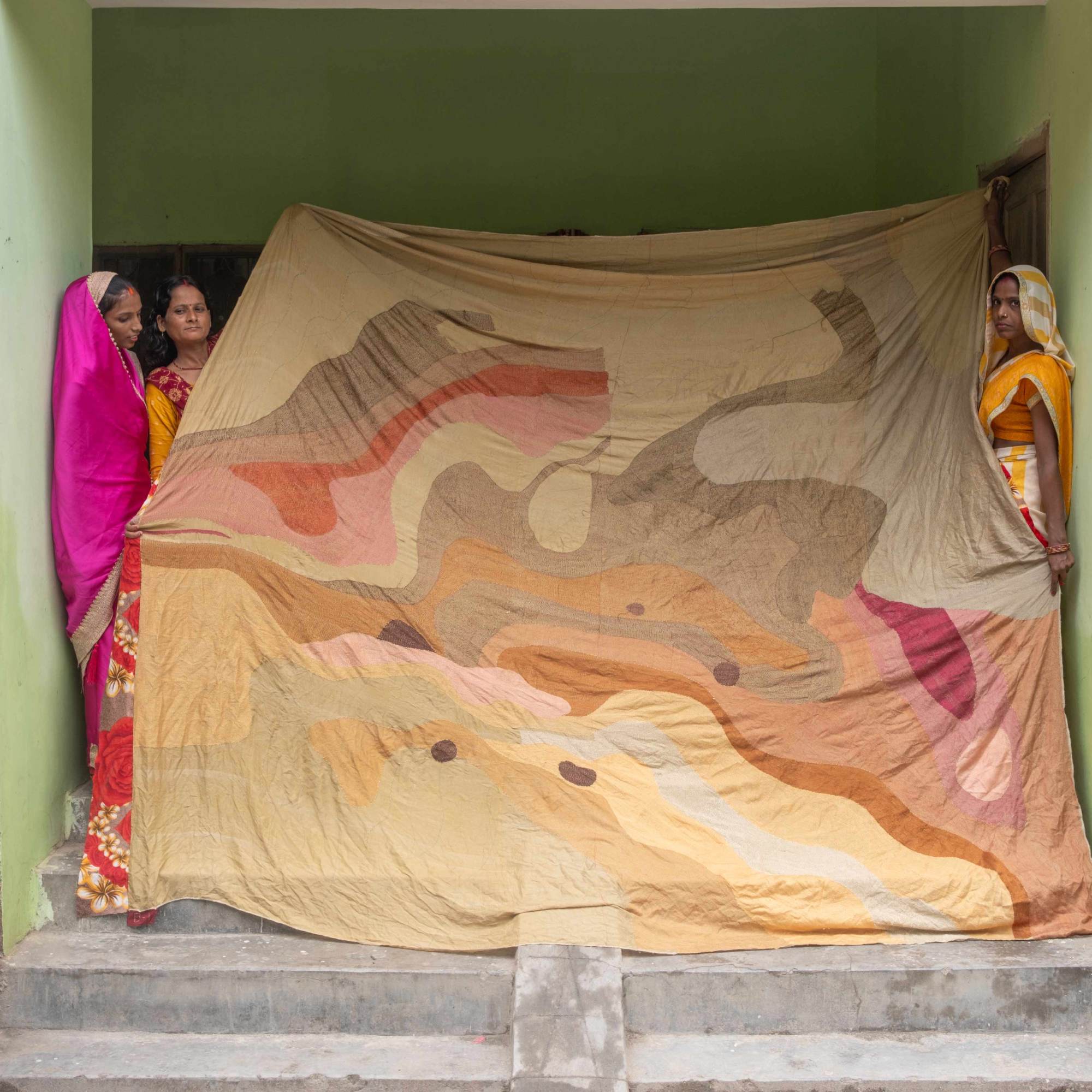
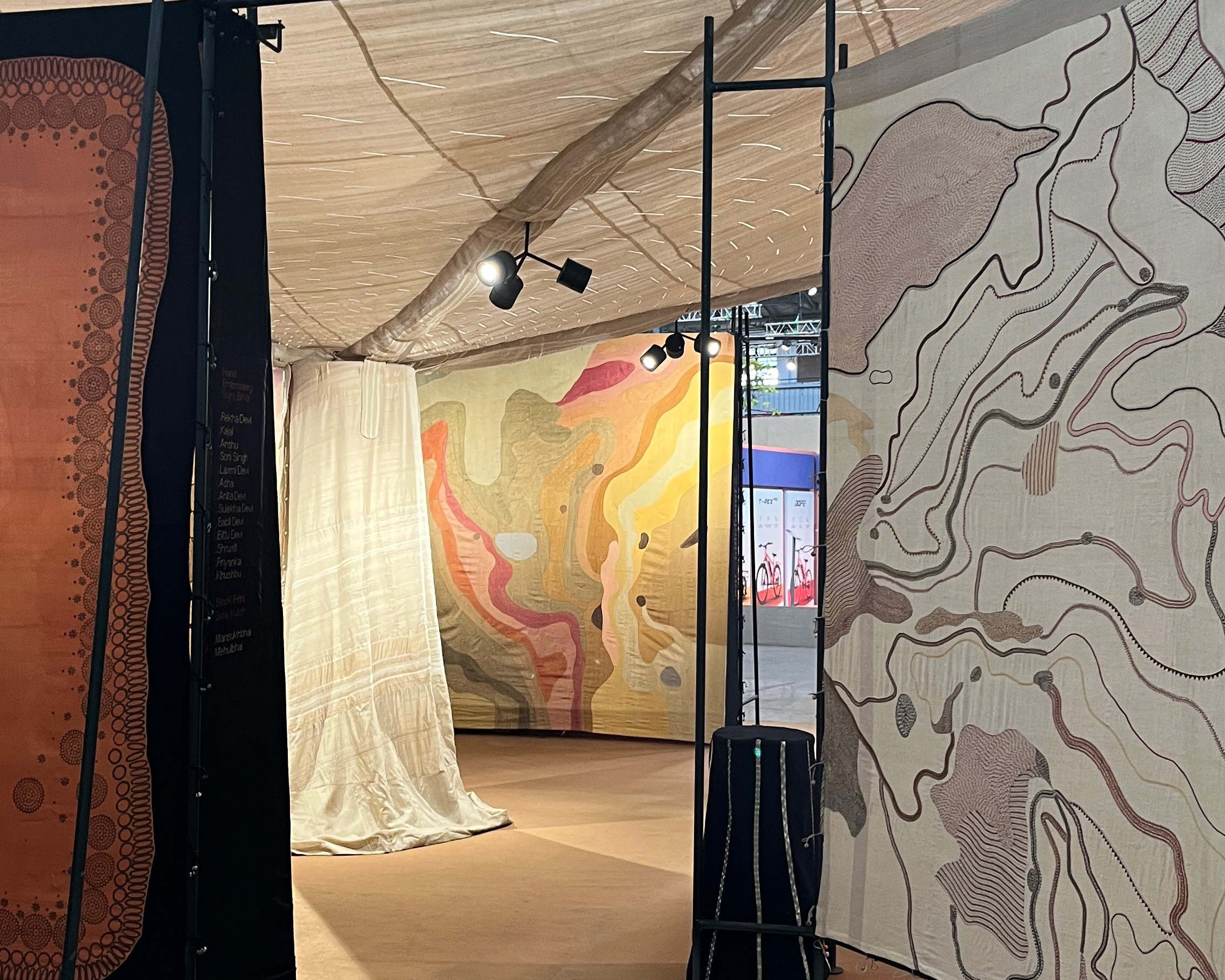
The interior panels were produced over 2-3 months by Sujni embroiderers in Bihar, who translated rock formations into layered, stitched topographies, an approach rooted in the studio’s ongoing interest in how the act of materialising can itself become a meditative process.
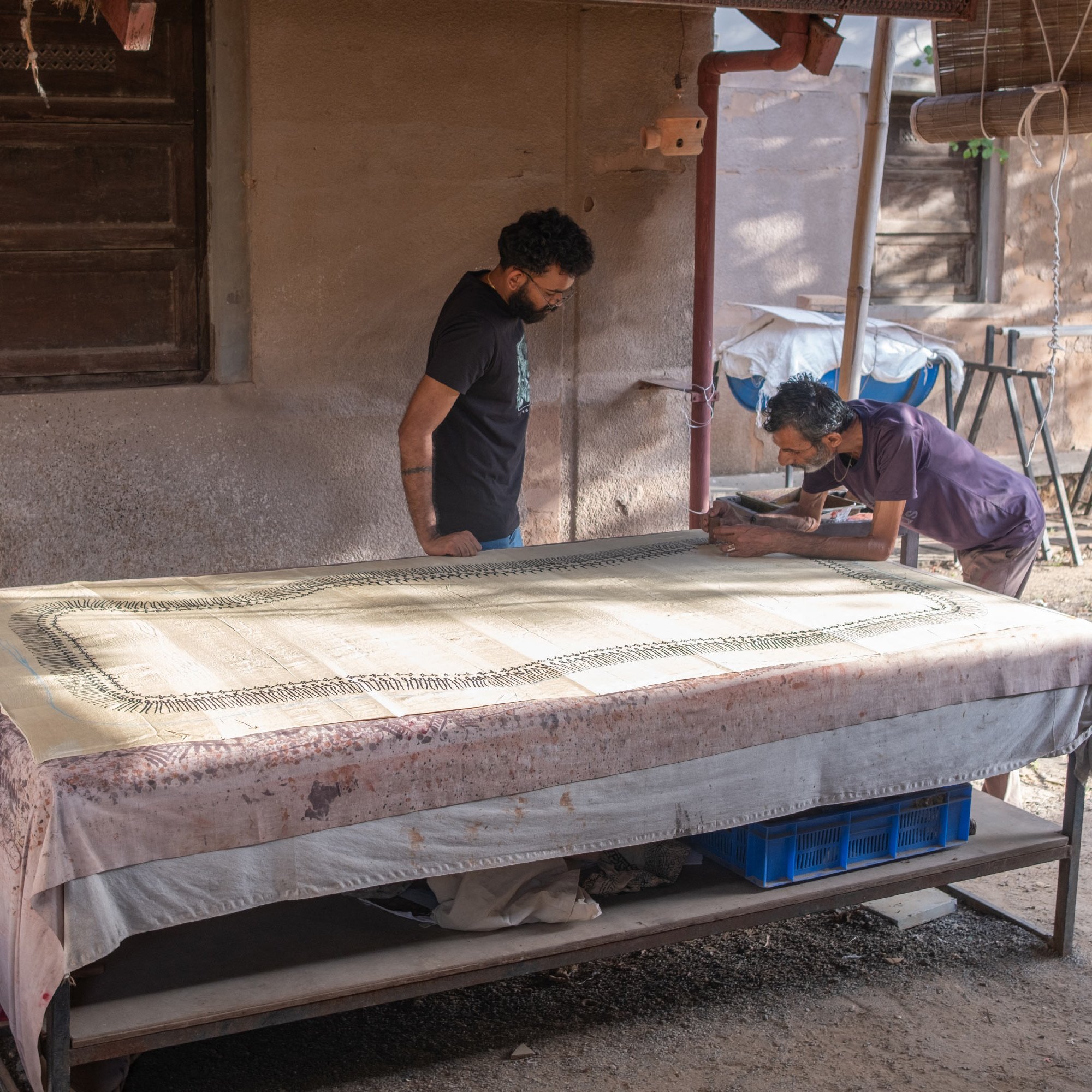
This sensibility carries into the exterior surfaces, developed through handblock-printing in Kutch. In a context where production pressures lean towards increasingly large blocks for speed, Morii Darshan and the artisans distilled the motifs into smaller abstractions that restore precision, freedom of movement and fluidity. Created by artisans in Ahmedabad, the appliqué roof completes the textile envelope, with all panels naturally dyed to unify tone and texture. At the centre, a textile pillar anchors the pavilion, functioning not only as a structural device but as a spatial analogue to the studio’s meditation-led philosophy, offering an axis around which the space congregates and settles.
The project is both revival and reimagining. It acknowledges India’s tent-making traditions while repositioning them from temporary shelter to a contemplative interior space.
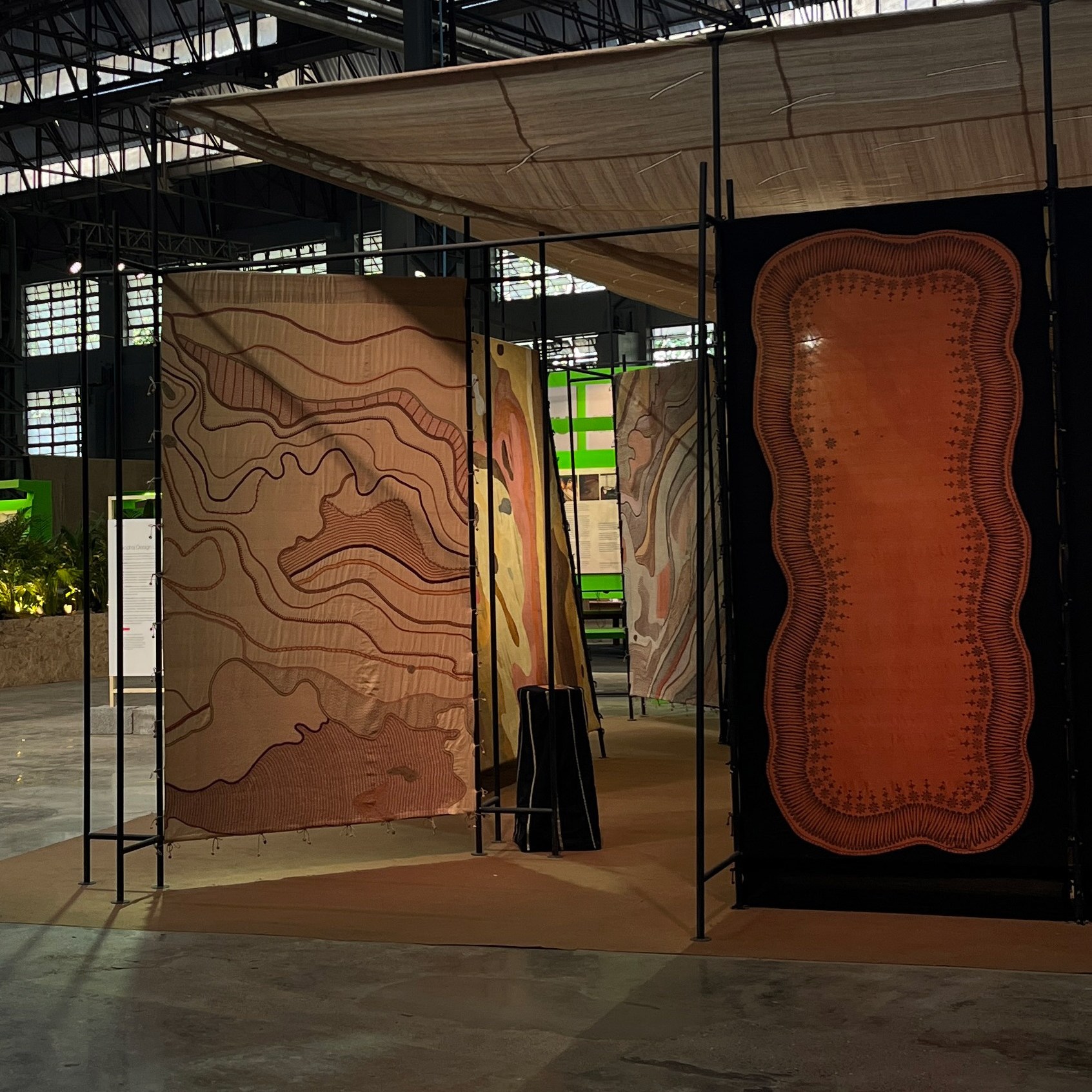
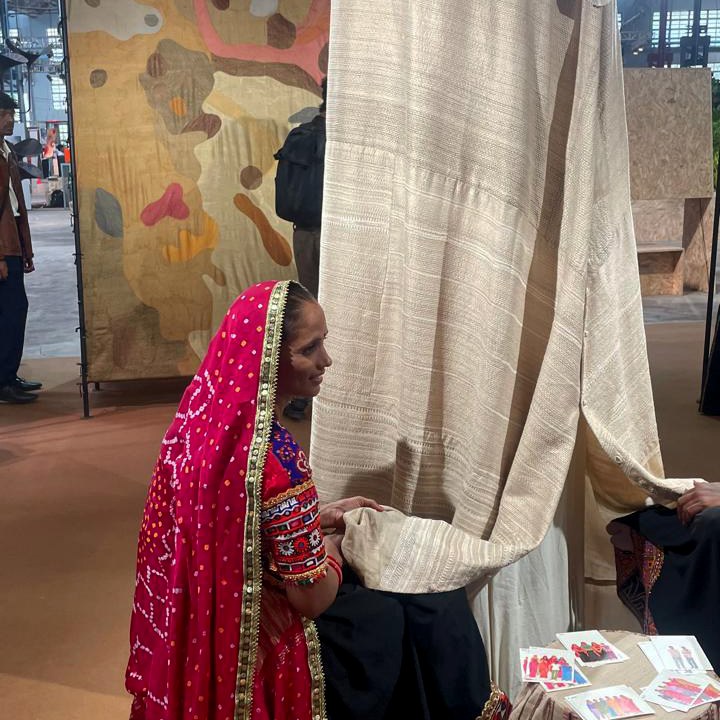
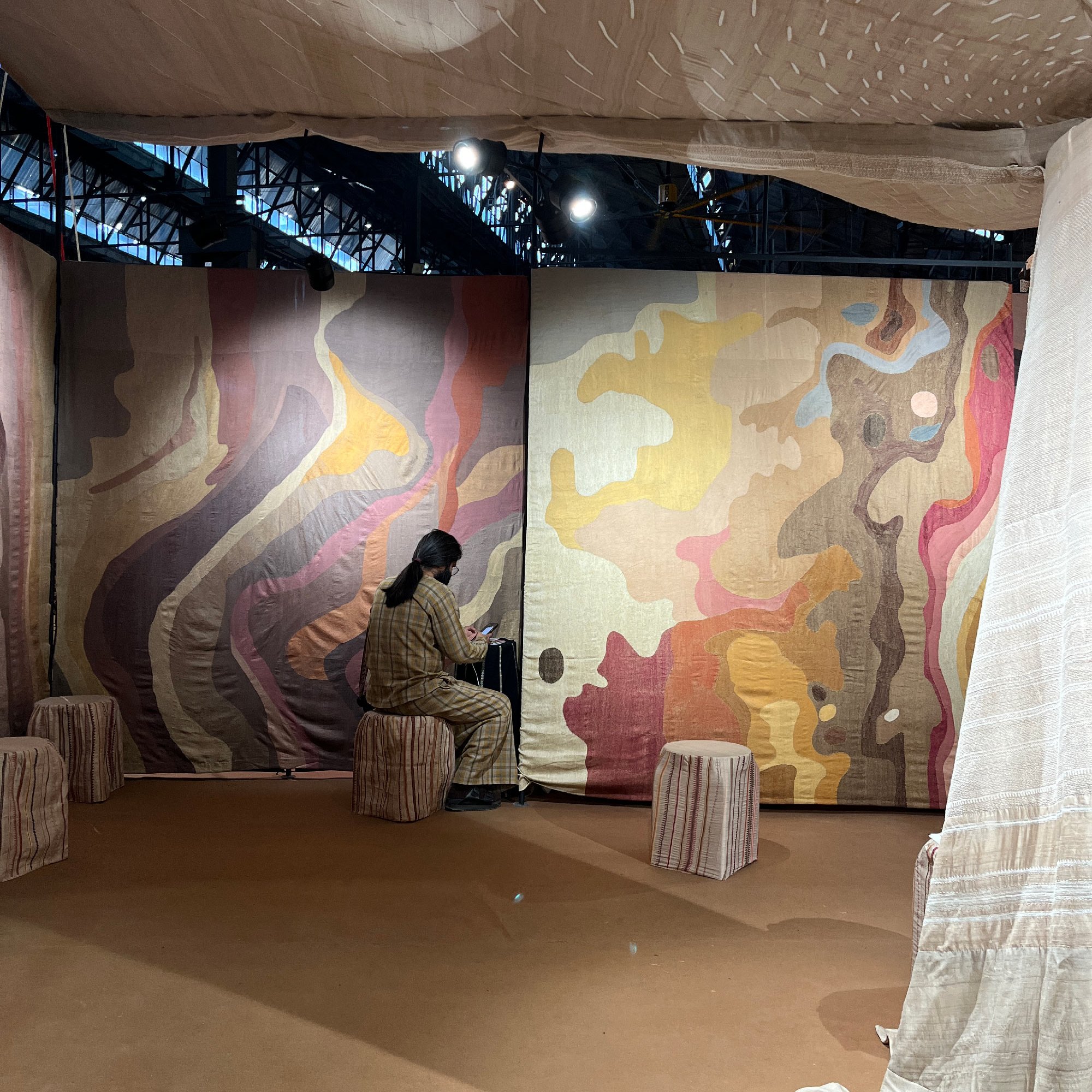
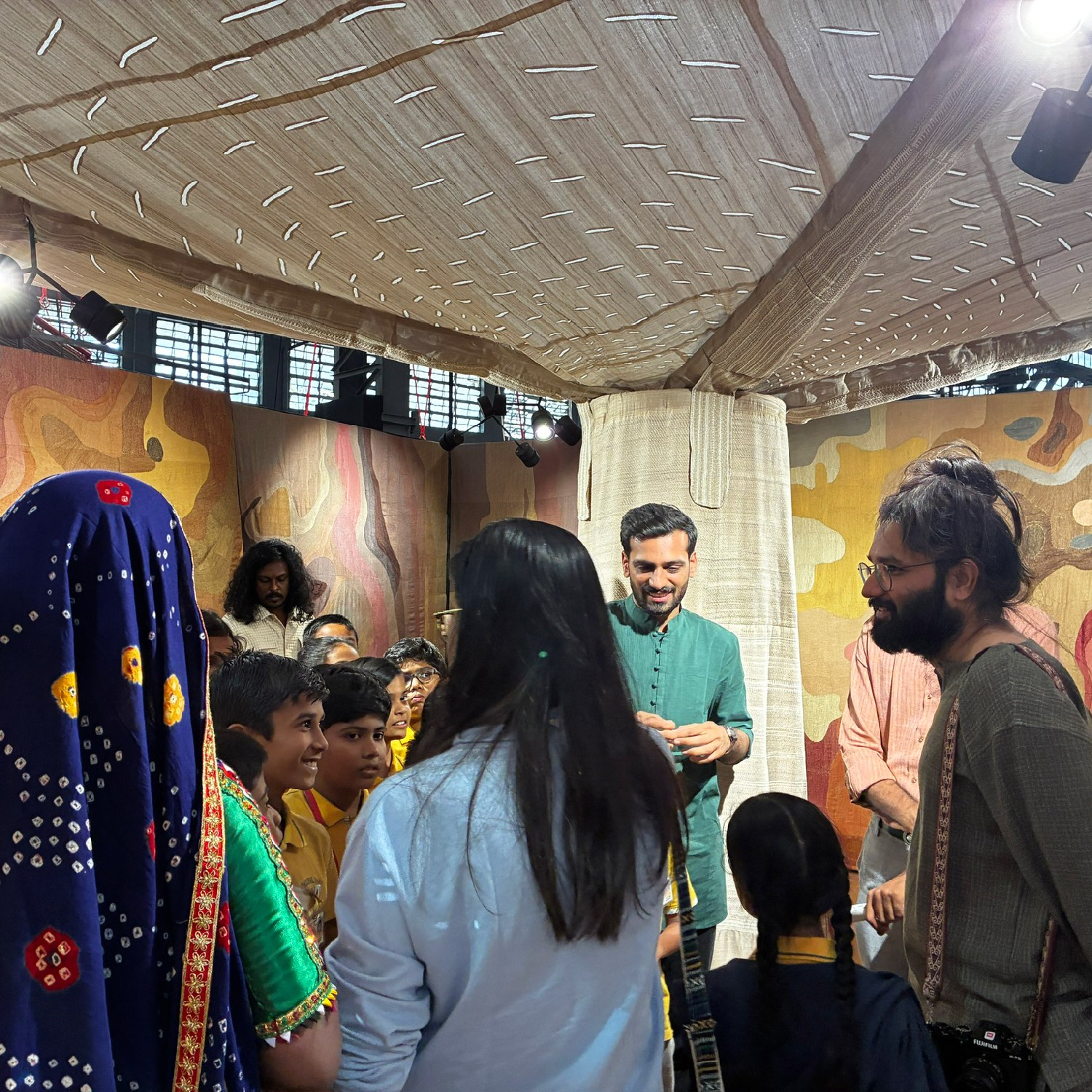
Across eight Sujni-embroidered panels made by almost twenty-five women, and exterior surfaces shaped over 5-6 months by Rabari artisans, Morii Dero demonstrates how the craft for embroidery can generate atmospheric, affective space. Its purpose is deliberately modest; to carve out a retreat within the everyday, where slowness becomes a spatial condition.
For Morii Darshan, the pavilion is an indicator of a future in which craft is not surface embellishment but a spatial medium, capable of grounding, calm, remembrances and consciousness in both, its making and form ♦

India’s vast heritage is woven through centuries of craft, where each stitch carries memory, skill, and care. Yet this delicate fabric is now fraying, caught between industrial repetition and disappearing traditions. Millions of artisans continue to work by hand, but their labour is often undervalued, and the beauty of the handmade is frequently replaced by imitation.
Morii Darshan was founded to stand beside these artisans, to preserve what is precious and renew it for a contemporary world. From our studio in Gandhinagar, we collaborate with more than 180 artisans across twelve villages in India, working with techniques such as Sujni embroidery from Bihar, Rabari and Jat embroidery from Kutch, and Kantha from Bengal.
Every Morii piece is made by hand and carries the imprint of many lives and landscapes.
Brinda Dudhat founded Morii and leads all our textile and design work. She is a trained textile designer and an intuitive abstract artist. She studied at the National Institute of Design in Ahmedabad and later worked on a World Bank supported project with the Asian Heritage Foundation in New Delhi before starting Morii.
Kabir is trained as a Graphic Designer which laid a solid foundation for his diverse creative pursuits. Kabir has worked as a brand and communication strategist in various corporate companies, playing a central role in creating Morii’s identity and overseeing its communication across all platforms.
Website: www.moriidarshan.com
Email: info@moriidarshan.com
Instagram: @moriidarshan
A structured, one-year, non-residential initiative, the Godrej Design Lab Fellowship Program supports emerging design talent through grants and mentorship. It provides a platform for creative practitioners to develop projects that demonstrate technical proficiency, innovation, and societal impact, contributing to the evolving discourse on design in India. The program encourages experimentation across different design fields and supports practitioners working with interdisciplinary thinking, sustainable approaches, and new methods.
Website: designlab.godrejenterprises.com/fellowship
Matter curated and designed the Godrej Design Lab Fellowship exhibition at Conscious Collective 2025.
Film by Matter. Shot and edited by Gasper D’souza, White Brick Post Studio.
Visuals: © and courtesy Morii Darshan
Photographs of Concious Collective 2025: courtesy Rishul Bangar & Studio Matter


