All posts by ASO Communications

On Drawing

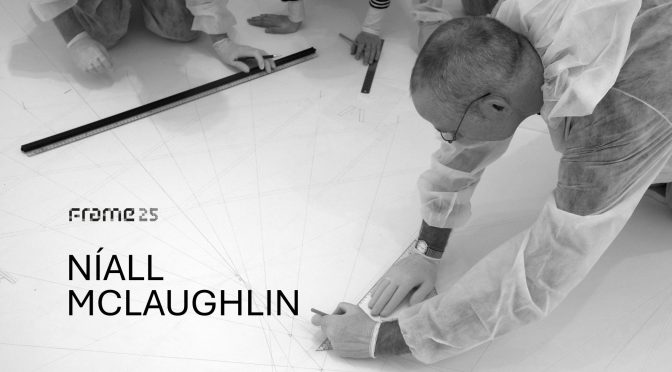
NÍALL MCLAUGHLIN

A Recorded Lecture from FRAME CONCLAVE 2025 —
[AUTHORING 01: TO DRAW]


In this lecture, Níall McLaughlin talks about drawing and building as verbs, not nouns, arguing that their real purpose is not to produce perfect objects but to pull people together. Drawing from his own projects and collaborative drawing experiments, he makes a case for architecture as a social act that binds communities across time, especially as technology transforms the discipline.

The lecture series presents the full set of talks from the conclave. The published text is an edited transcript (adapted from spoken presentations) rather than a formal essay written by the author themselves. For complete documentation including visual material and video, please refer to the recording.


Edited Transcript
[01:43] What was extraordinary about today for me was that it featured expansive talks describing the fertility of everyday life and all its particulars through drawing. There was a contrast between those projects we saw this morning, which were spare templates that described absence, blockage, and loss through drawing, and the last presentation this afternoon, which was about spawning, expressive techno-optimism, also embodied through drawing.

For me, the fulcrum of the day was that moment when we had the two sign painters in Hanif Kureshi’s film. Referring to a choice of fonts between Arial and Helvetica, one of them said, “Arial,” because “When I have a choice of typing A-I-R or H-E-L, I find it easier to type H-E-L.” The other one was still holding on to the beauty of the painted sign, its durability, the colours, the way they worked with each other, and pleading that these signs were superior to the mechanically produced ones; but the thing he said as an aside was much more important.

He looked around and said, “I used to have 20 people working here.” I do not know how you all feel, but a shadow passed over me when I thought about that, because what technology can do to a sign painter, it can also do to an architect. We have to ask ourselves, at this point in history: what do we think we will be doing, and how can we resist or acquiesce to the way technology will fundamentally transform
our world?

Continue reading On Drawing

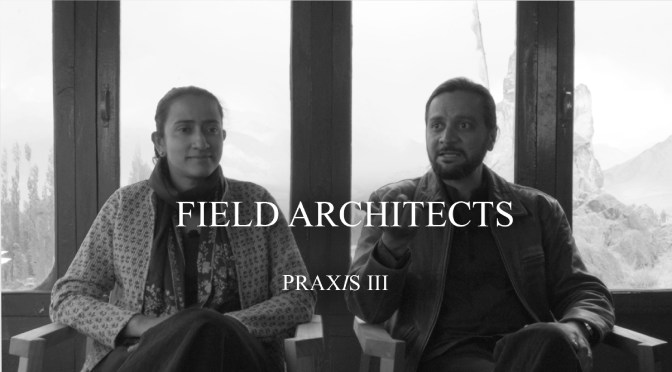
Praxis 28 | Field Architects

An editorial project by Matter in partnership with Şişecam Flat Glass, PRAXIS investigates the work and positions of diverse contemporary architecture practices in India. Field Architects, led by Faiza Khan and Suril Patel, is an adaptive and itinerant practice. Based out of Ladakh and Ahmedabad currently, the practice is simultaneously nomadic and rooted, allowing architecture to emerge through sustained engagement with place, climate, and lived experience. Formed through early exposure to rigorous studio cultures and materially-positioned site practices, their trajectory gradually deepened into a critical engagement with Ladakh’s ecology, cultural, and temporal dimensions. Within this fragile and potent landscape, characterised by environmental extremities and cultural continuity, the studio has developed a process-oriented, handcrafted language that is both technically rigorous and contextually aware. At the core of this approach lies a triangulated, interconnected landscape of three practices: Field Lab, a workshop, and the architectural studio. Collectively, through teaching, research, and construction undertaken in collaboration with local institutions, communities, and students, the studio has assembled a framework rooted in sensitivity and feasibility, closely aligned to its immediate conditions. Architecture here becomes a cumulative act – iterative, collaborative, and embedded within cycles of learning and production.


Continue reading Praxis 28 | Field Architects

“THE WAY I SEE”: VERENDRA WAKHLOO

Originally featured in [IN] SIDE, Volume 02, Issue 02.

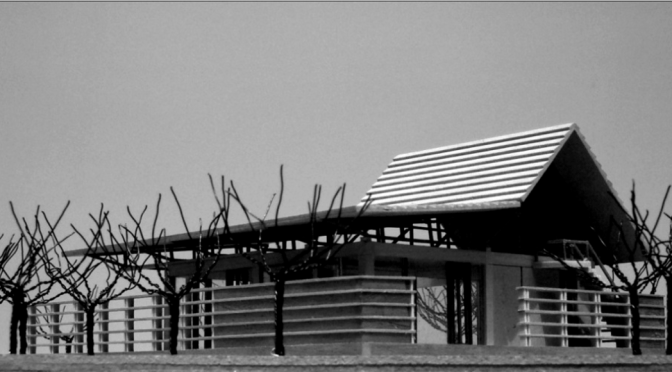
With three decades of prolific experience, Matra Architects led by Verendra Wakhloo is a practice based out of Delhi. Verendra Wakhloo writes about architecture as an ever-evolving paradigm – as an institution of values and exploration that is ideologically oriented to many identities and forces. He offers an insight into the ethos, relationships and principles that are essential in conceptualisation and realisation of the ecology of architecture, practice and people of Matra.

DESIGN AS A JOURNEY

“Architecture is not created by one, it is by many. And not only dealt by many, but constructed by many, also thought through by many. An idea emerges through a process, a dialogue which we open up,” acknowledges Verendra Wakhloo. A dialogue that Matra Architects has been trying to initiate for three decades under his guidance.

Continue reading “THE WAY I SEE”: VERENDRA WAKHLOO

MODERN SOUTH ASIA | KALA ACADEMY GOA

MODERN SOUTH ASIA
A Visual Archive of South Asia’s Modernist Heritage


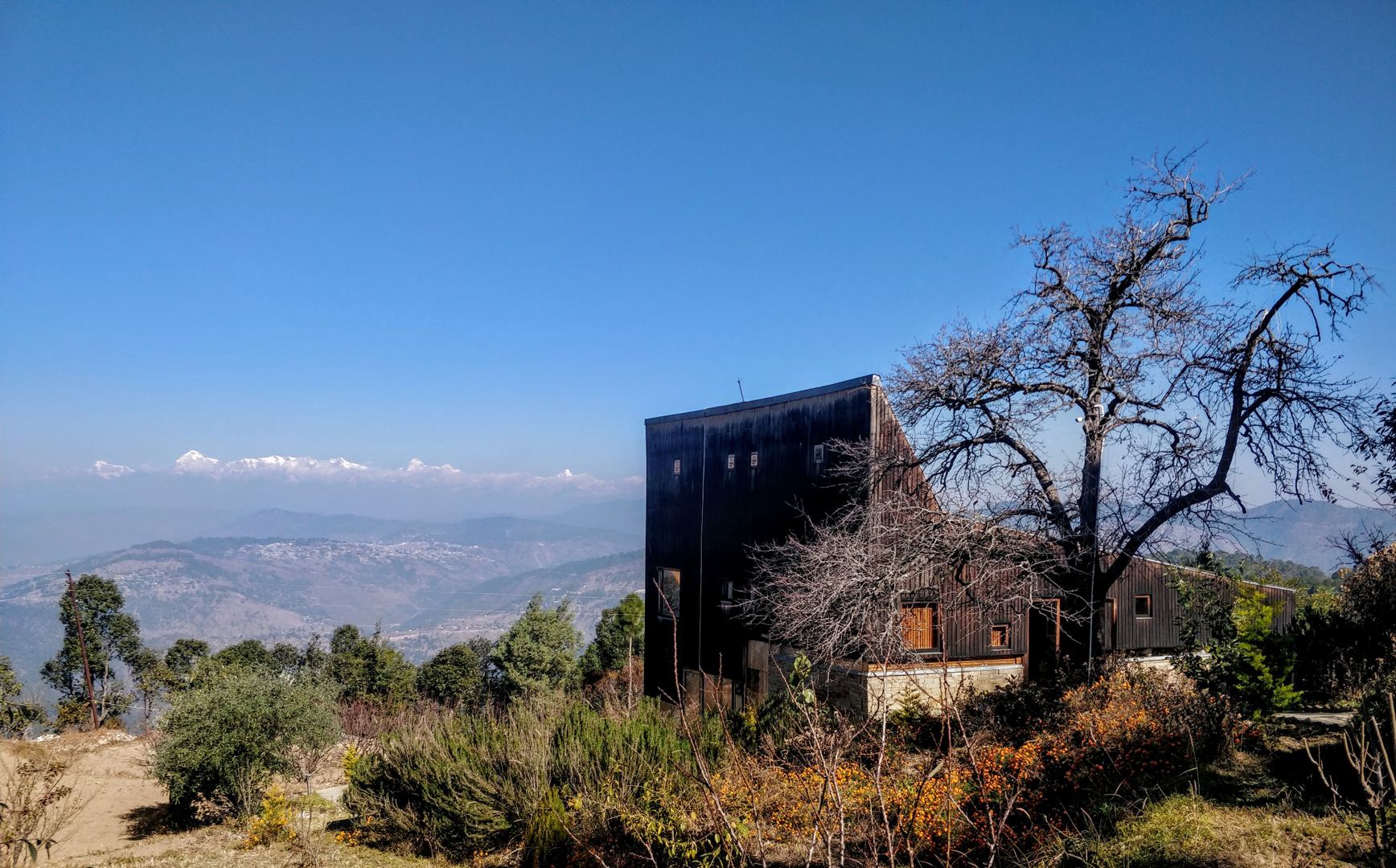
The Modern South Asia (MSA) series is dedicated to exploring modern architecture of historic importance in South Asia through photography-based books. The series will focus on architecture from the 20th century, designed and built by regional and international architects. Each book will provide the reader with an in-depth visual exploration of the architecture through contemporary photographs, architectural drawings, and newly commissioned writing by architects, thinkers, and academics. 

The MSA series is edited and photographed by Randhir Singh. The project is supported and published by Arthshila Trust.


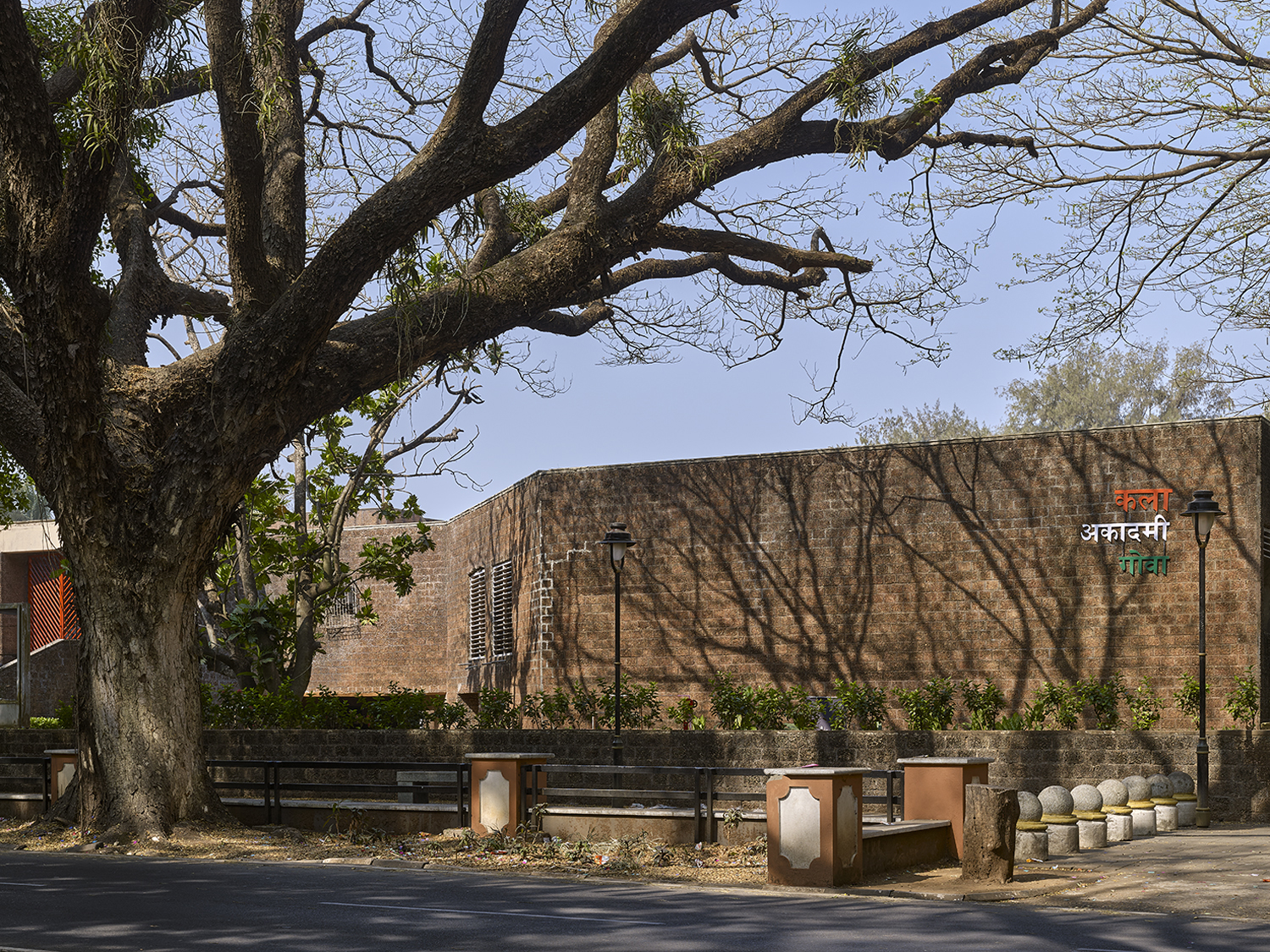
The Street As Stage: Charles Correa’s Kala Academy Goa

Essay by Rohan Shivkumar
Photographs by Randhir Singh

This could be a sequence from a Buster Keaton silent-era comedy. One summer evening, a man is sitting on the edge of the river, sipping his coffee. There is a warm breeze drifting over the water as the sun sets. He hears the gentle strains of a piano playing Beethoven’sMoonlight Sonata’ over the sound of the waves lapping the shore. Caught in its spell, he walks towards the music. He must find out who is playing. In a daze, humming to himself, he climbs the steps of an amphitheatre to a blue-tiled terrace. In one of the rooms, he sees a woman playing the piano. A student stands over her shoulder watching her hands. The man wants to get as close as he can to the music. He walks straight towards her and collides directly into a pane of glass. The glass shatters. He falls. Everyone rushes to help him – the piano teacher, the watchmen of the building and other people enjoying the evening breeze off the river. Befuddled, he sits up. Luckily, he is not injured. Only his nose is a little bruised, and so is his pride.

Continue reading MODERN SOUTH ASIA | KALA ACADEMY GOA