
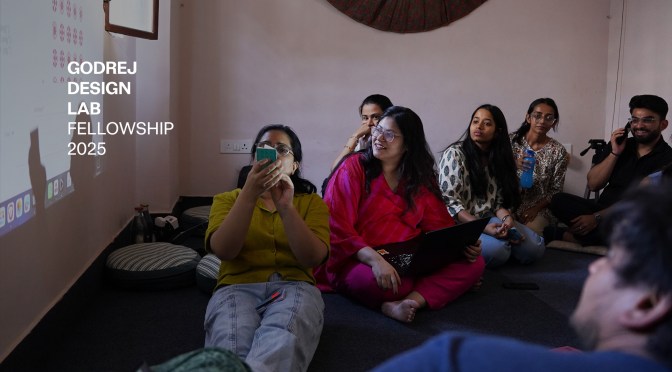
CODE.YATRA by AJAIBGHAR is one of six projects that emerged from the mentorship of the Godrej Design Lab Fellowship in 2025. The fellows exhibited their projects and processes at the Concious Collective in December 2025.
code.yatra has been a year-long journey across Udaipur, Jaipur and Vadodara, asking how code can meaningfully extend one’s practice, whether that is a clown weaving it into storytelling, an analogue designer animating collages, a musician reimagining stepwell acoustics, or a photographer mapping city rhythms.
Through masterclasses, workshops, meetups and collective experiments, yatris translated their encounters into live-coded audio-visual works using Sonic Pi and p5.js, and co-created new tools and ideas – from an interactive board game, gesture-based soundscapes to shared code libraries which they now share forward in the larger community and beyond.
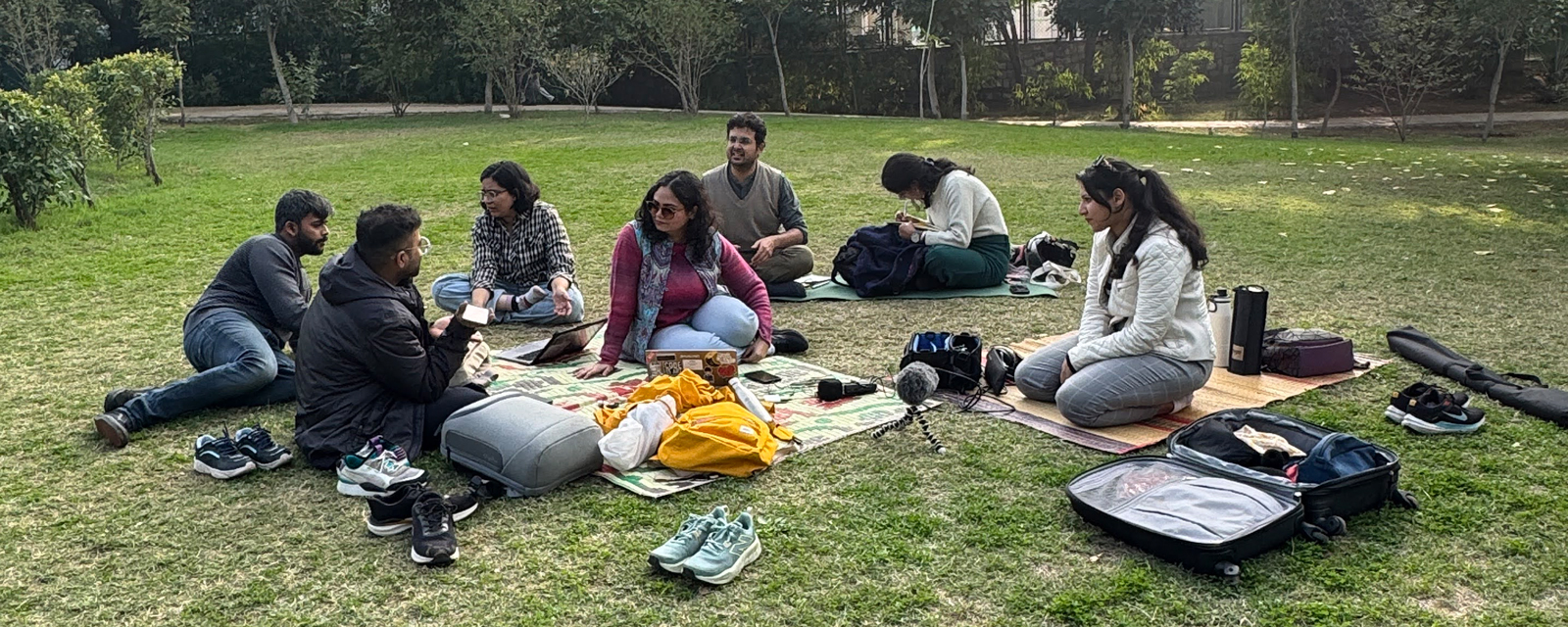
Founded by Nanditi Khilnani and Computation Mama, Ajaibghar is a creative technology studio operating at the intersection of art, code, design, and culture. In this context, the studio’s practice is driven by the question: how can design be grounded in local, situated contexts?
As a project, code.drift exemplifies their orientation by using technology and tools to create new aesthetics and meaning for our situated context. Conceived as an immersive creative-coding workshop series, code.drift integrates live-coded visuals and music with the lived experience of urban environments. Extending on the Situationist concept of Dérive – a drift through the city- participants observe the rhythms, textures, and energies of their surroundings. These urban immersions are a synthesis for material for generative artworks, sonic scapes, performances, and collaborative experiments.
In this light, the project positions creative coding as a tool integrated in design practice rather than a purely technical exercise.
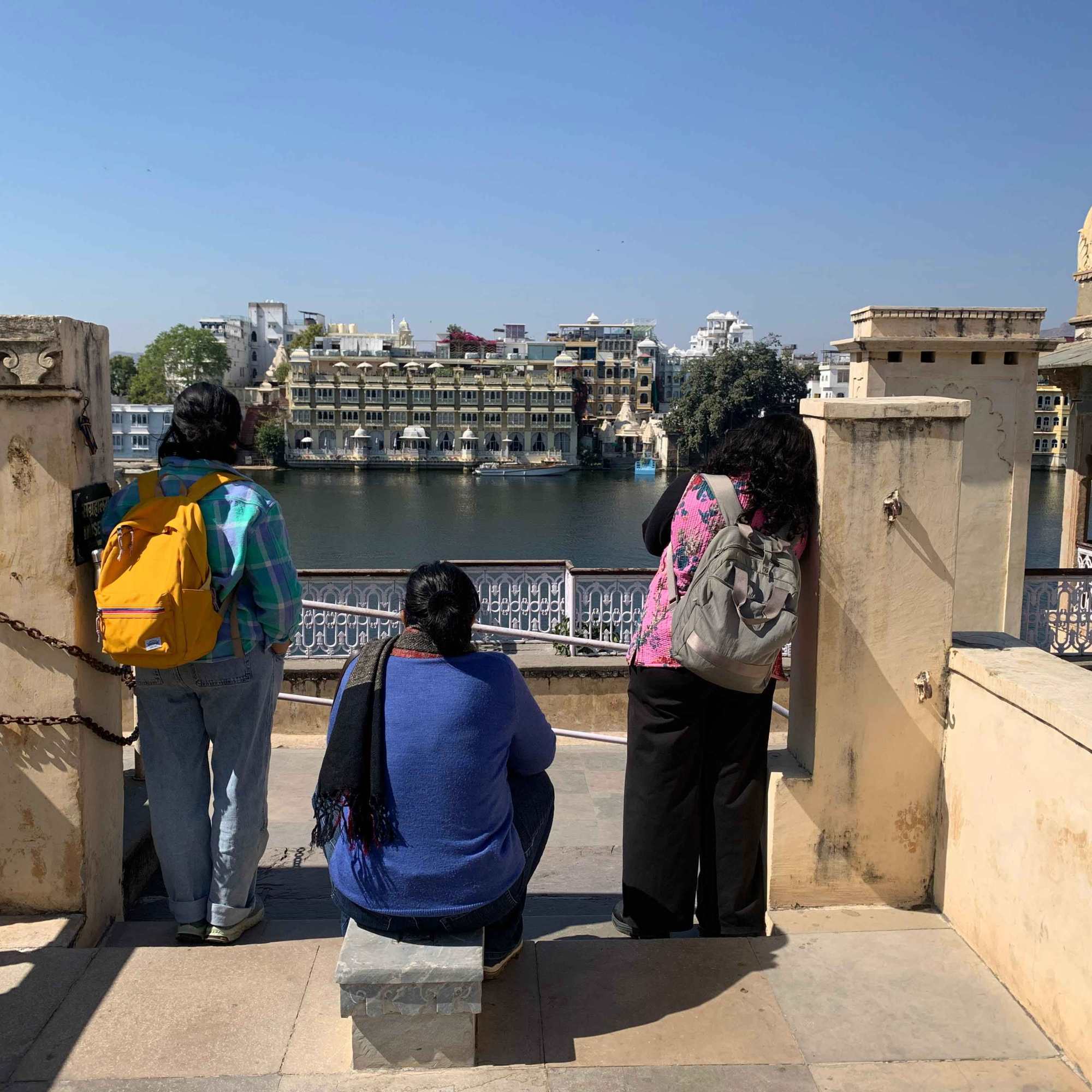
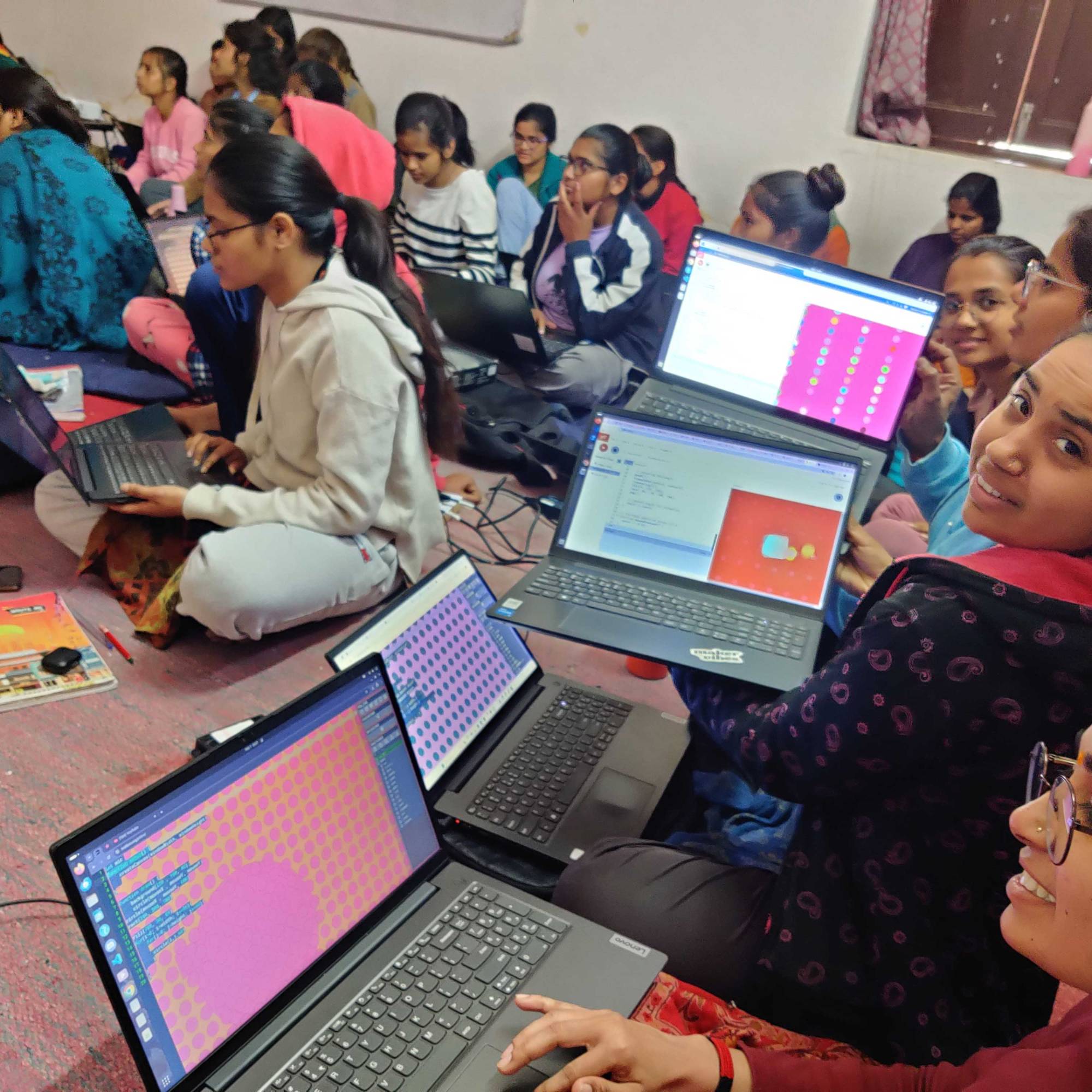
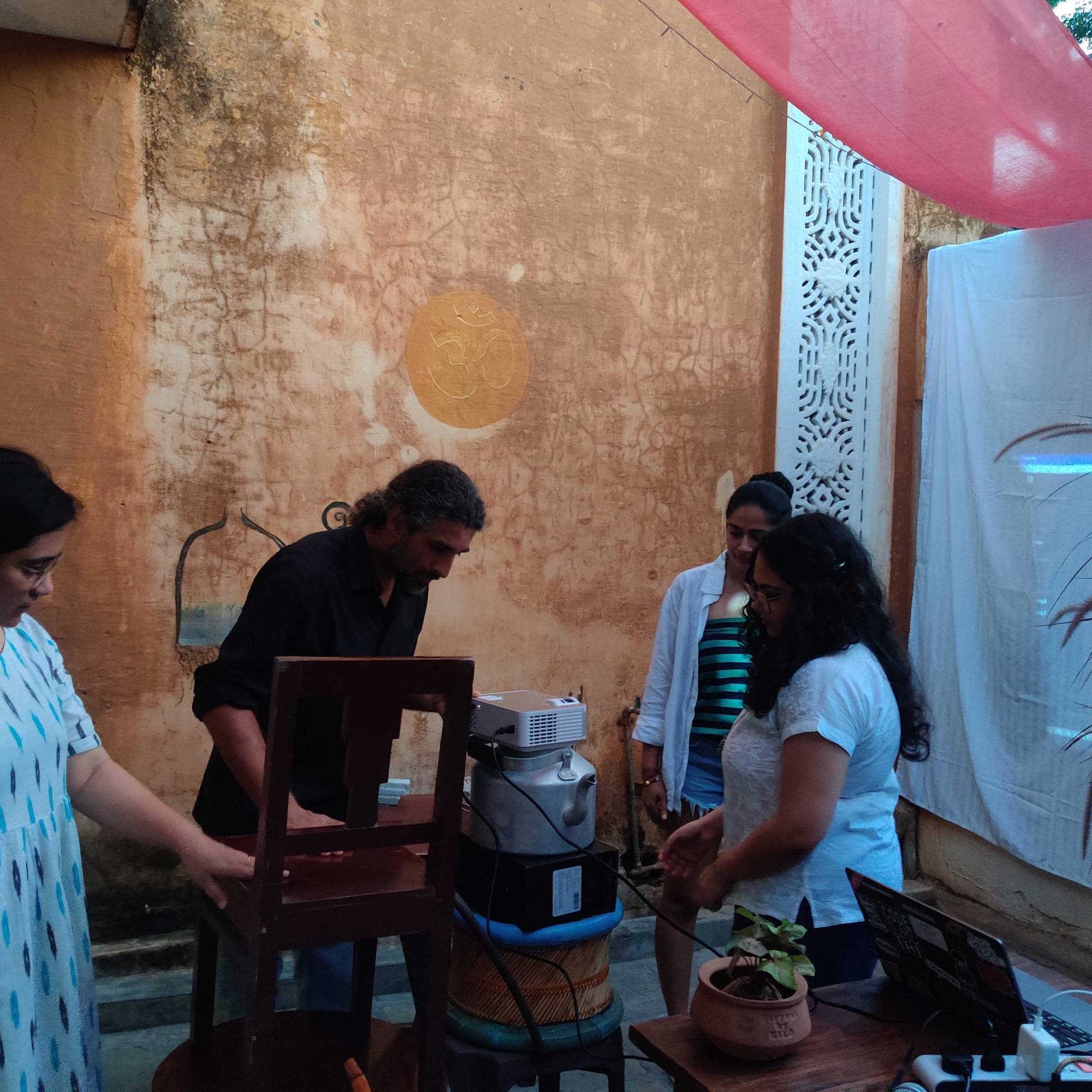
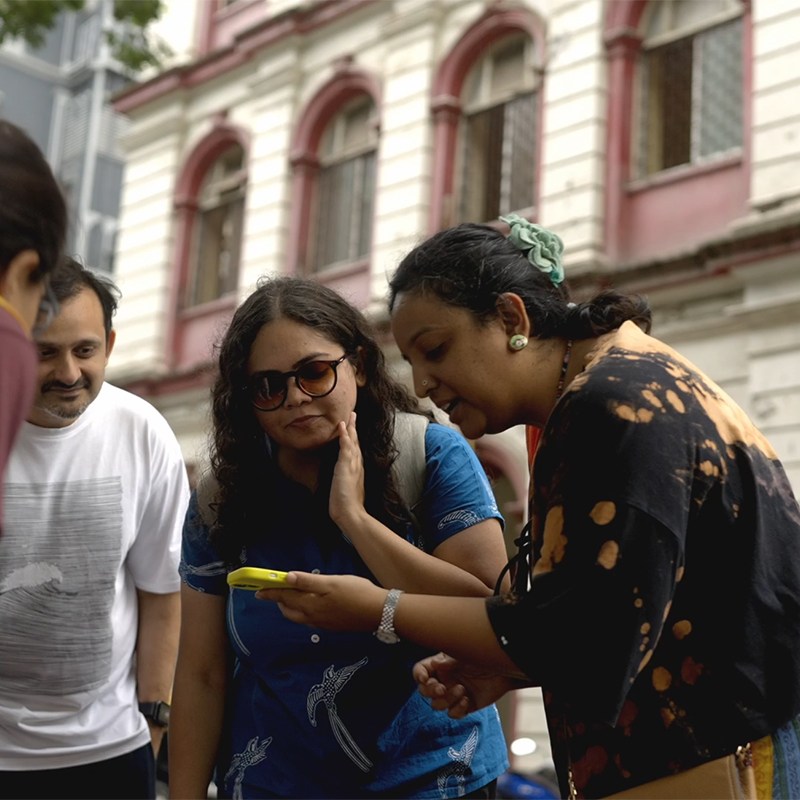
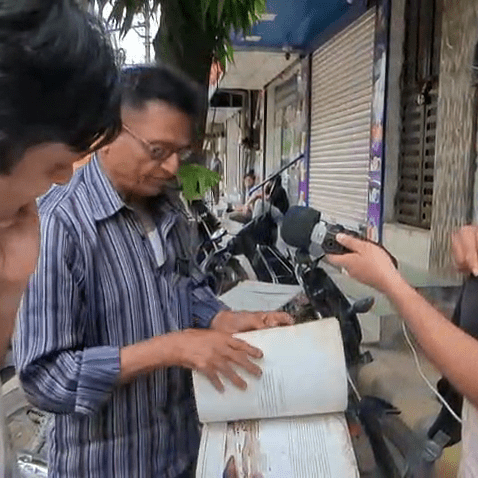
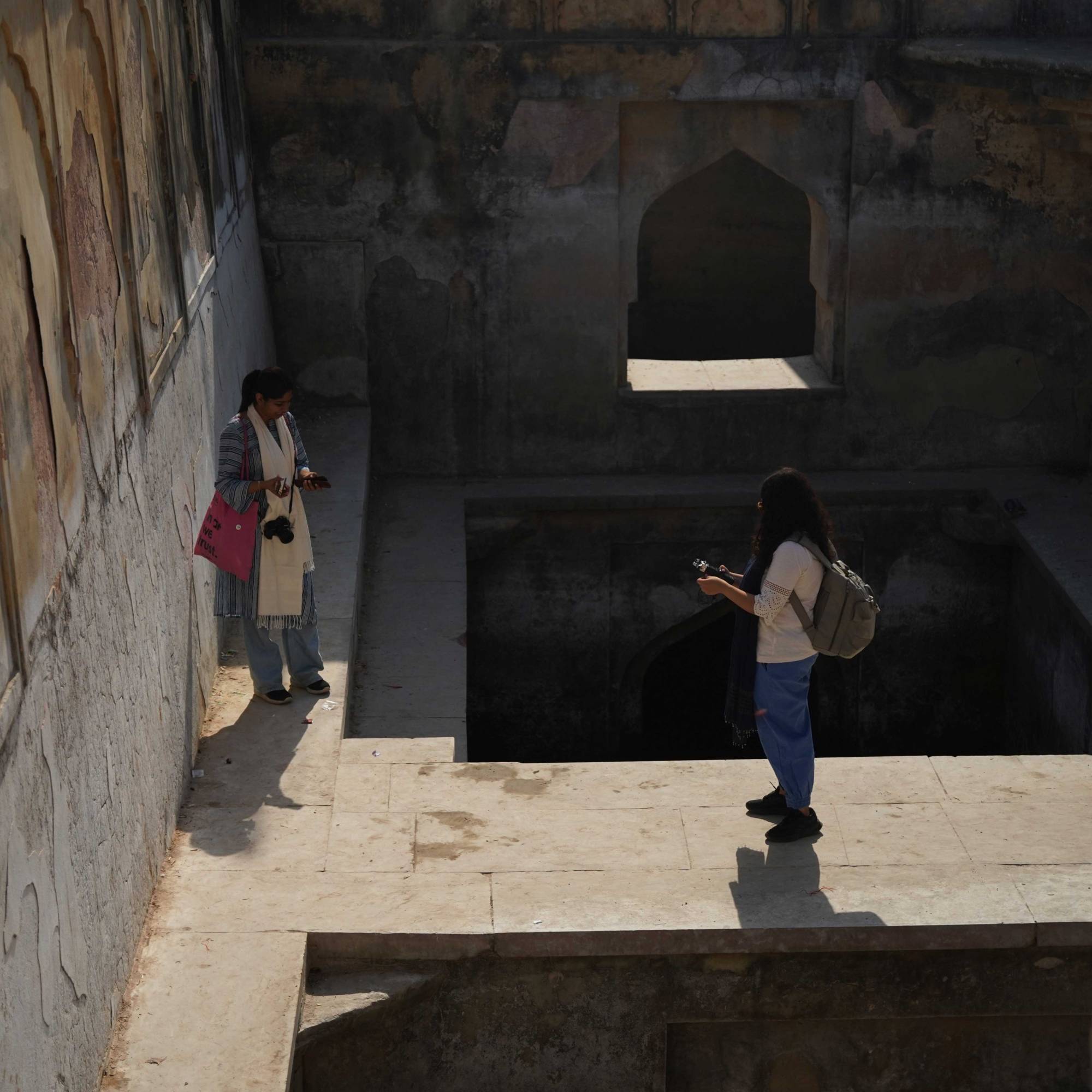
Emerging from the momentum of code.drift, the year-long journey of code.yatra across Udaipur, Jaipur and Vadodara scales this approach as a triptych of urban wandering, code as art and jam sessions.
Rather than teaching coding through a STEM-oriented lens, the practice foregrounds intuition, observation, and playful exploration. The process begins with spontaneous and uncurated city walks during which participants record both sounds and visuals.
These recordings then form the basis of coding exercises. In the sound component, participants work with field recordings and musical textures -processing real-life samples, constructing rhythmic structures, and generating melodies – translating sensory impressions into ambient compositions that hold memory, presence, and narrative. The visual component adopts a collage-based methodology, drawing from collected imagery, hand lettering, local arts, typography and simple animations to create generated visual narratives.
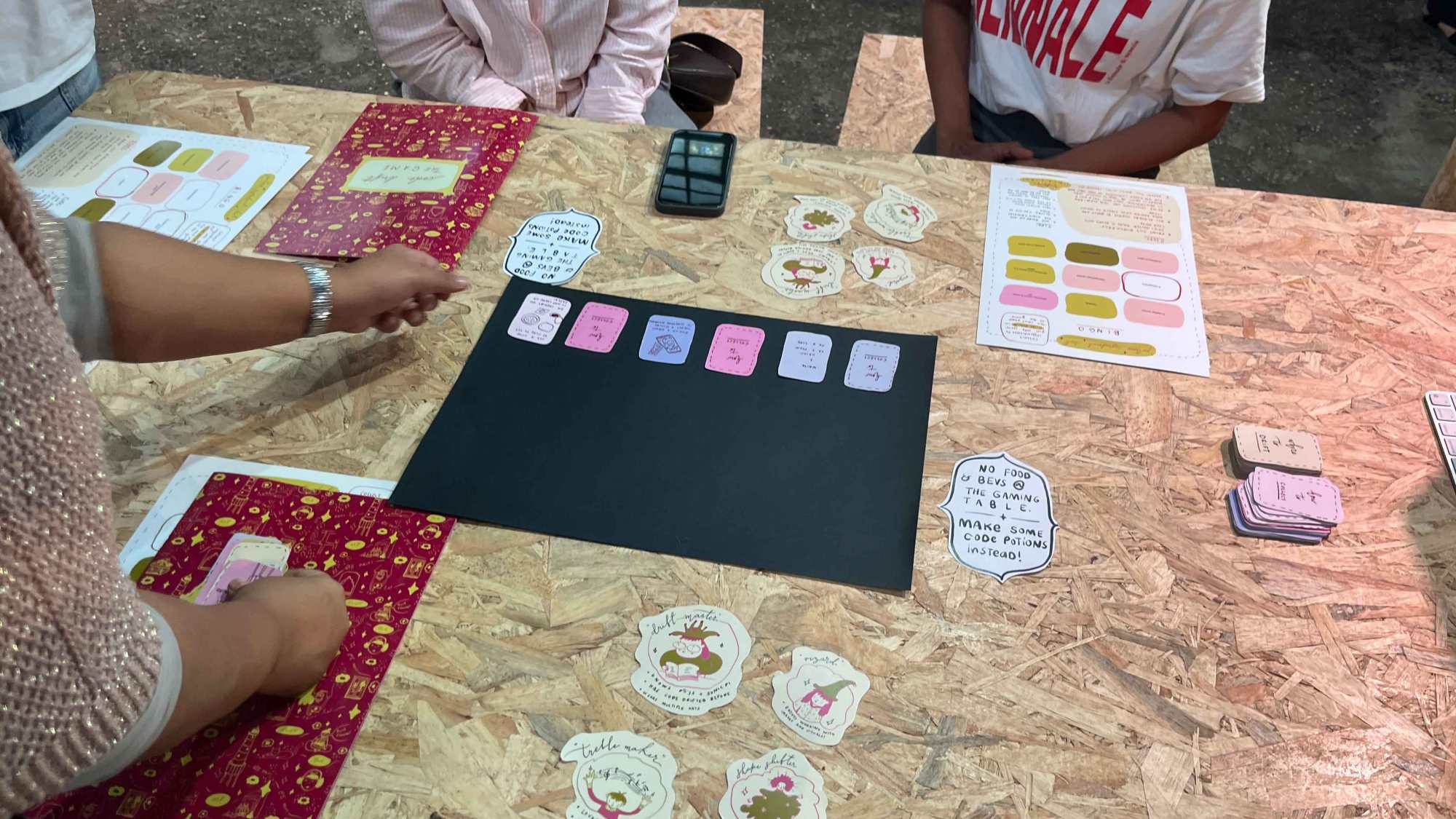
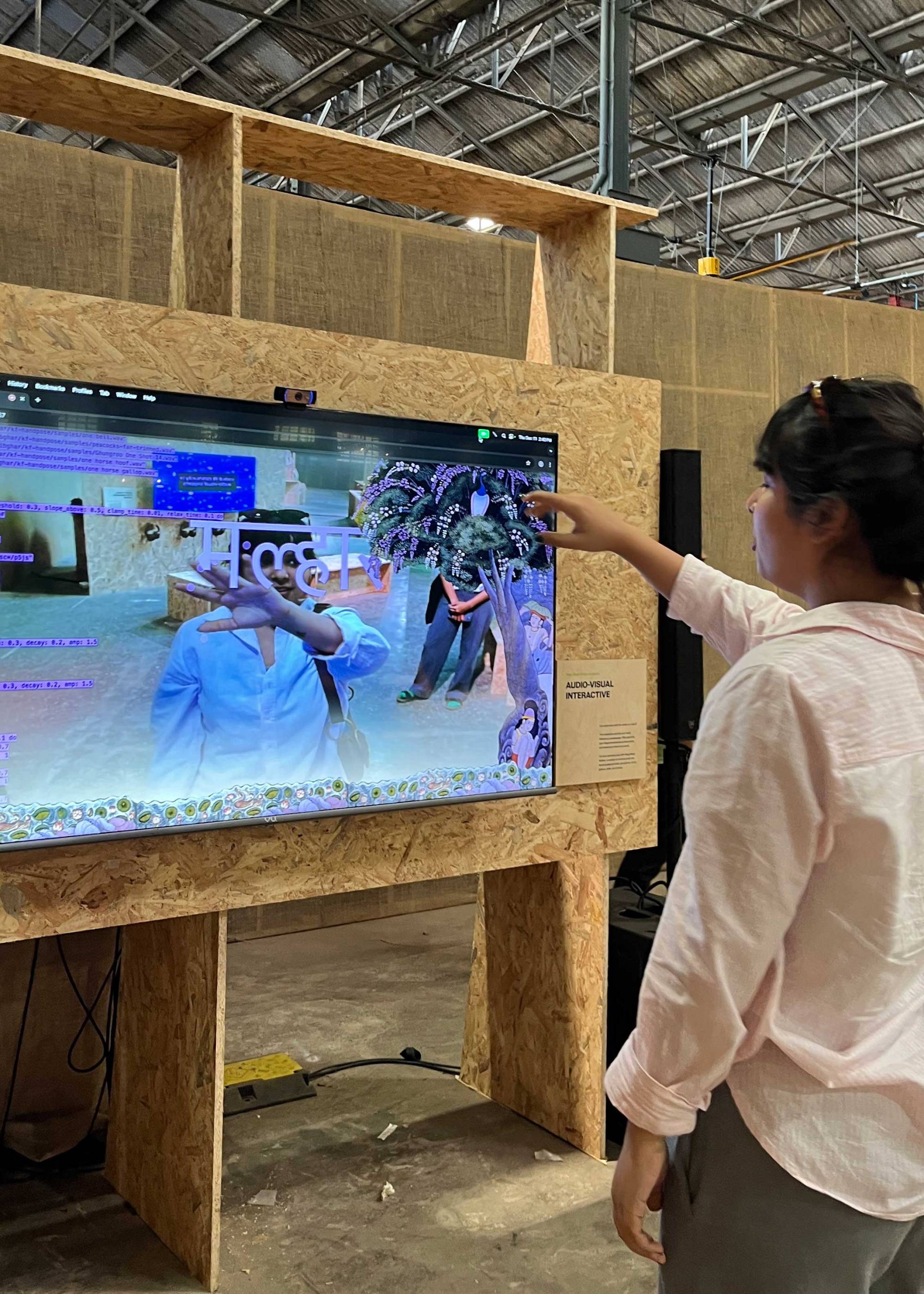
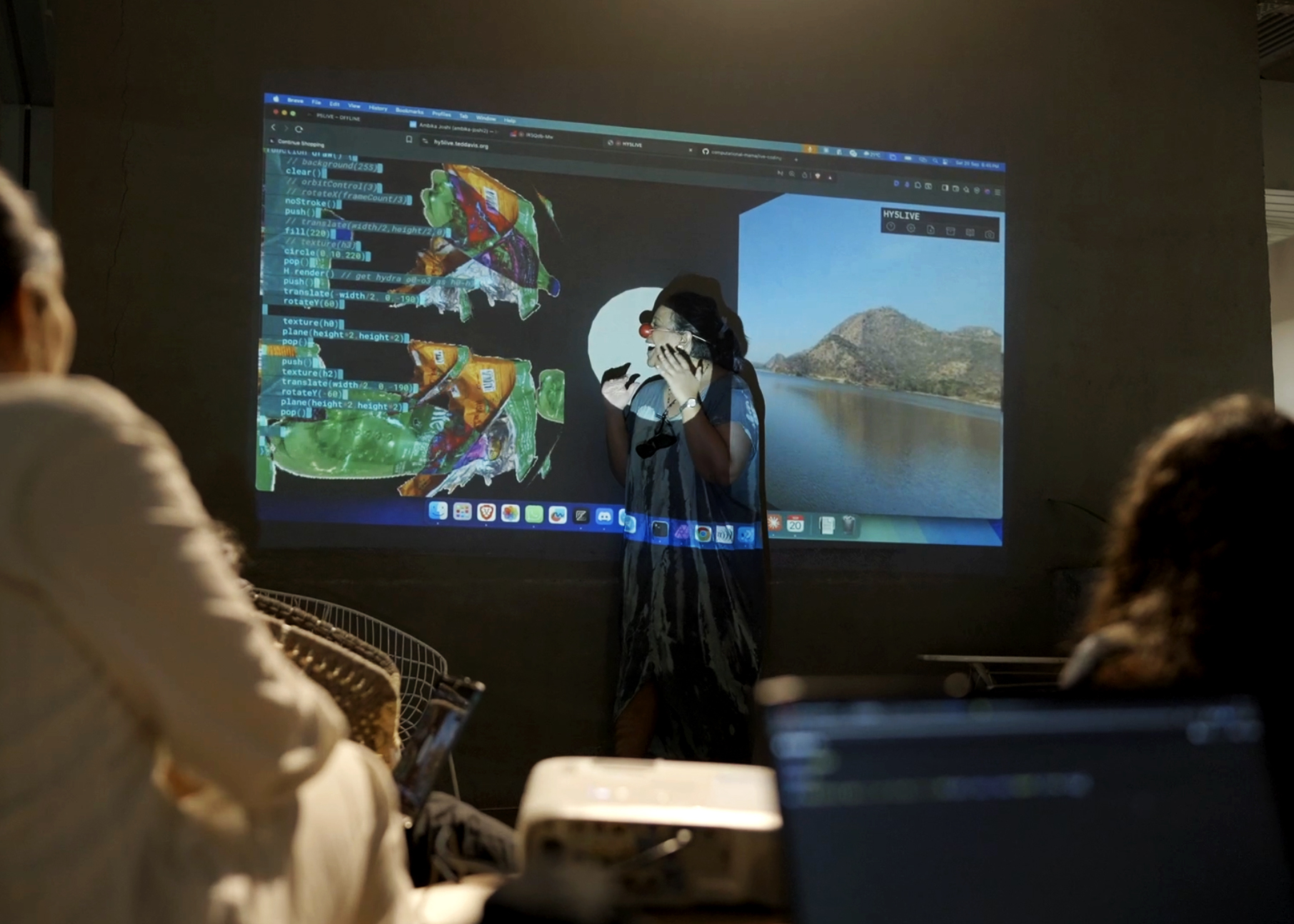
Culture and Community become two cornerstones, and Collaboration, a third, intentionally embedded within the practice. Practitioners engage in pairs, merging their perspectives to produce a single, cohesive, accessible portrayal of an essence of the city. This model fosters shared authorship and thusly rooted possibilities, wherein the programme pivots beyond the static to encounter newer pathways that are more responsive yet impulsive; playing out as a liberatory force.
In Ajaibghar’s work, a recurring objective is to democratise design and creative technology. Conventionally, design is often perceived as accessible only to those with specialised training or institutional privilege. By creating friendly, dynamic and non-hierarchical experimental spaces, projects like code.drift and code.yatra expand access to computational tools and reposition coding as an expressive medium. Participant reflections affirm this shift: few describe technology as a catalyst for creativity; others note that coding enriches analogue practices such as collage, offering new intersections between work and play. The emphasis from participants has been that coding, when detached from the narrow domain of app or software development, becomes a means of inventing personal logics and exploring alternative solutions to complex problems. The ethos frames design as an empathetic, collective pursuit that enables personal expression, shared exploration, and meaningful engagement ♦
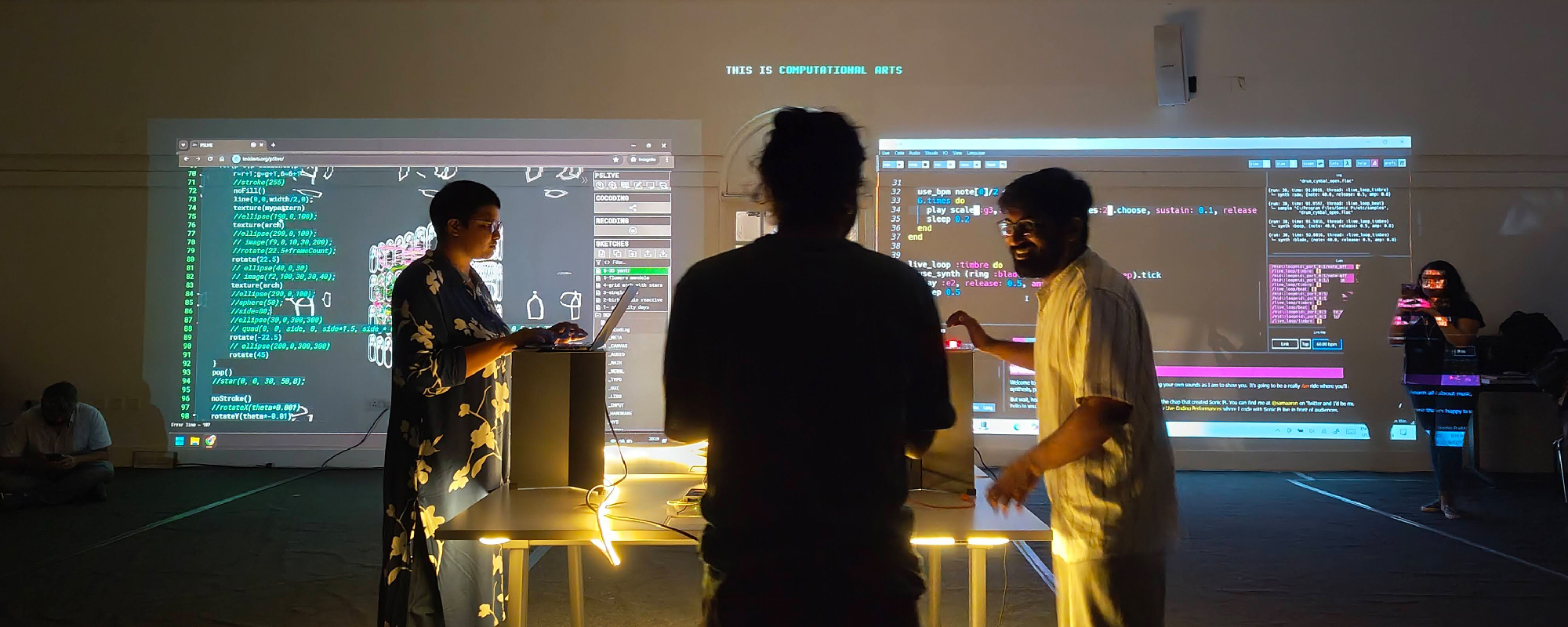
Ajaibghar is a creative technology studio & lab for art, culture & futures. The practice brings together emerging technology, experience design, cultural strategy & community building. Their work has been featured at the India Art Fair, Serendipity Arts Festival, Singapore Swiss Week, Iterations Creative Coding Utrecht, Wildcity, Vogue India, VICE Media, EyeMyth Media Arts Festival, ACRI, among others.
Ajaibghar has a strong practice of community building to foster artistic collaborations, research, and capacity building for tech-art. These include Blob Labs Gen-Z Research Lab based on Speculative Futures, code.drift – a beginner-friendly Creative Coding workshop programme, dra.ft – a community for emergent ideas of text, LAB59 – a Pop-up community lab & studio.
Nanditi is a musician, livecoder, and cultural technologist building inclusive, experimental spaces at the intersection of sound, code, and culture. Her practice blends feminist tech approaches with community-driven methods, creating environments where people can explore, play, and collaborate. Her sound worlds draw from ambient textures, field recordings, emotional melodies, Hindustani classical structures, and algorithmic logic to create immersive, introspective experiences.
Computational Mama is an artist and creative technologist. Her work explores code as a practice of care, which she models through facilitating communities for creators to learn code. She also works deeply with AI searching for intersections between motherhood and AI, she is currently building spaces for non-western feminist dataset in AI language models and helping artists make their own solar powered AI servers!
code.yatris: Damini Rathore, Mangesh Mahajan, Sukhmani Kohli, Shalin Shah
code.drift game and exhibits: Sushma J, Abhishek Kapahi, Bhoomi Jain, Sameera Mudgal
Website: codedrift.ajaibghar.com; www.ajaibghar.com
Email: nanditi@ajaibghar.com; ambika@ajaibghar.com
Instagram: @ajaibghar.co
A structured, one-year, non-residential initiative, the Godrej Design Lab Fellowship Program supports emerging design talent through grants and mentorship. It provides a platform for creative practitioners to develop projects that demonstrate technical proficiency, innovation, and societal impact, contributing to the evolving discourse on design in India. The program encourages experimentation across different design fields and supports practitioners working with interdisciplinary thinking, sustainable approaches, and new methods.
Website: designlab.godrejenterprises.com/fellowship
Matter curated and designed the Godrej Design Lab Fellowship exhibition at Conscious Collective 2025.
Film by Matter.
Shot and edited by Gasper D’souza, White Brick Post Studio.
Images: © and courtesy Ajaibghar & Godrej Design Lab
Drawings: © and courtesy Ajaibghar


