
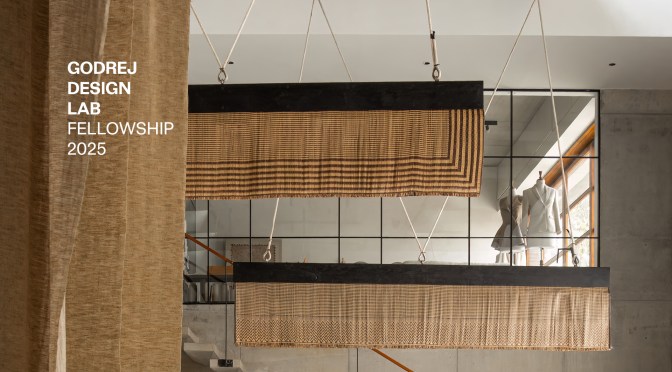
PAKHA by THE VERNACULAR MODERN is one of six projects that emerged from the mentorship of the Godrej Design Lab Fellowship in 2025. The fellows exhibited their projects and processes at the Concious Collective in December 2025.
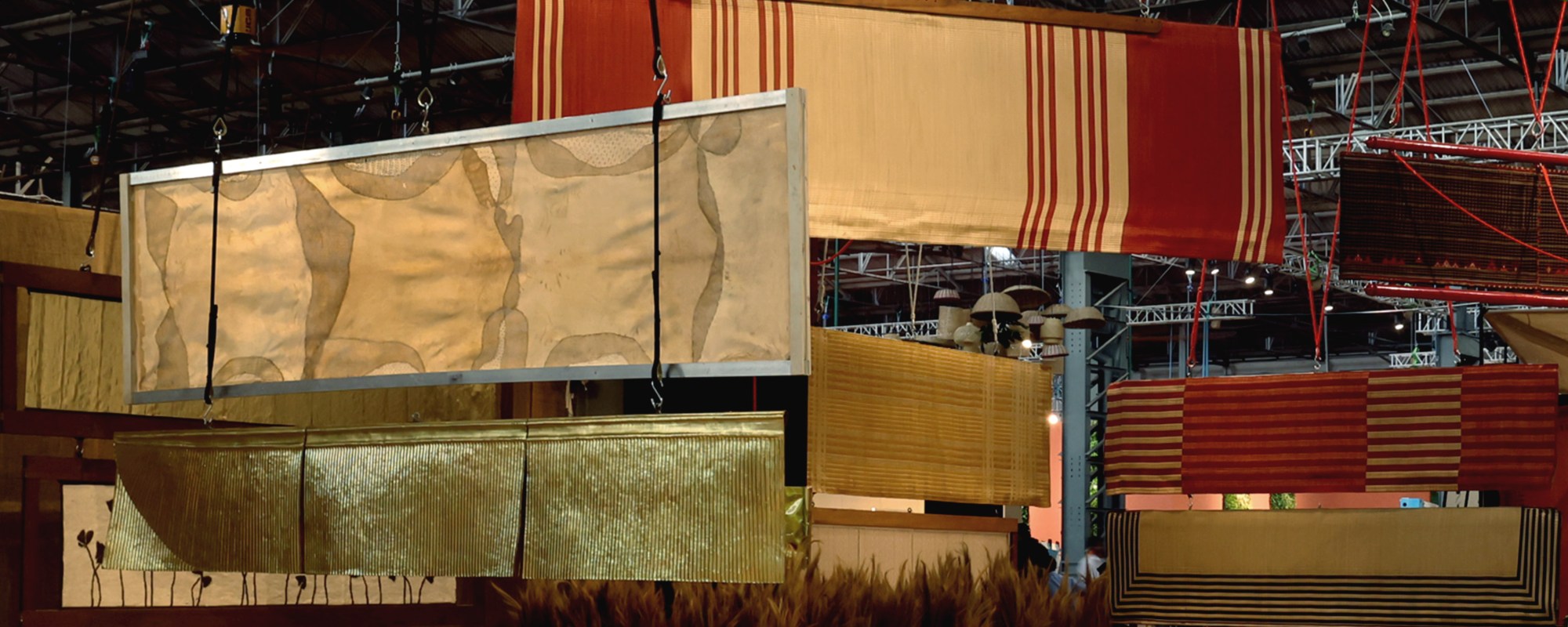
PAKHA offers a way of revisiting the single-blade fan at a more sculptural level, an object as beautiful in stillness as in movement. The blade becomes a stage or canvas for moving art, adding craft as a layer of presence. Through reconfigured mechanics and materials that historically resisted both wind and the manual force of Hath Pakhas, it invites a contemporary reconsideration of vernacular techniques, evolving the fan into a functional and visually assertive expression of sustainability.
In The Vernacular Modern‘s practice led by Abhirup Dutta and Deeptashree Saha, PAKHA reflects a relationship with everyday objects, exploring how new technologies can dialogue with past ecological and cultural knowledge. As homogenisation accelerates, designs grow detached from the cultural, climatic, and material intelligences that once informed them, exemplified by the modern fan’s long-unchanged form that is sleeker and optimised for efficiency.
By revisiting the single-blade ceiling fan common in early South Asian architecture, the studio positions vernacular knowledge as an active design resource mediating ecological wisdom with contemporary technological expectations, framing PAKHA not as a nostalgic revival but as a methodological critique of the placelessness of contemporary design.
The single-blade fan predates the era, having enabled an inhabitation of hotter spaces through the manipulation of thermal gradients in earlier times. Comfort in a stagnant, humid environment is achievable as long as the gradient is lower than body temperature, a simple principle that PAKHA poses as a vantage point.
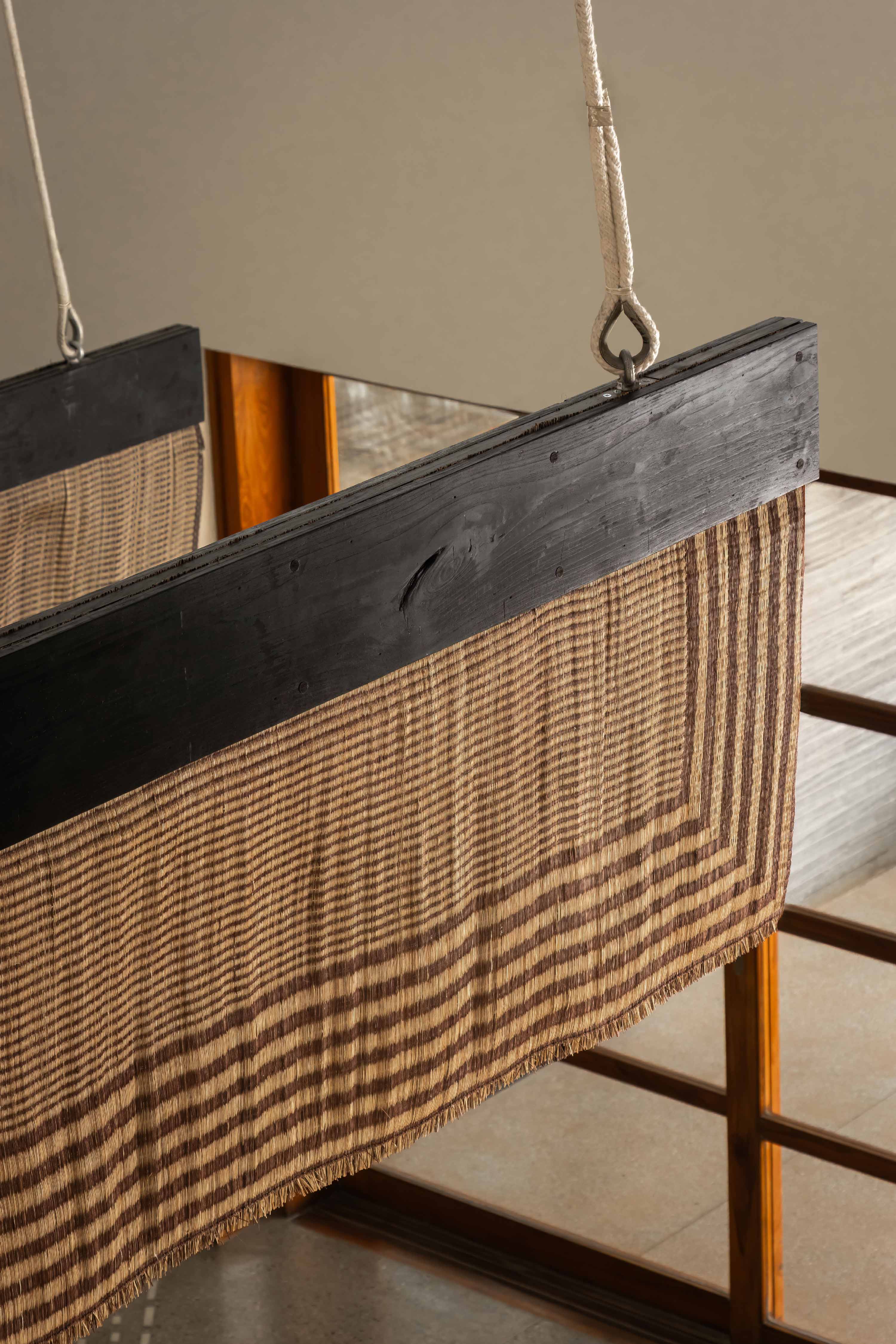
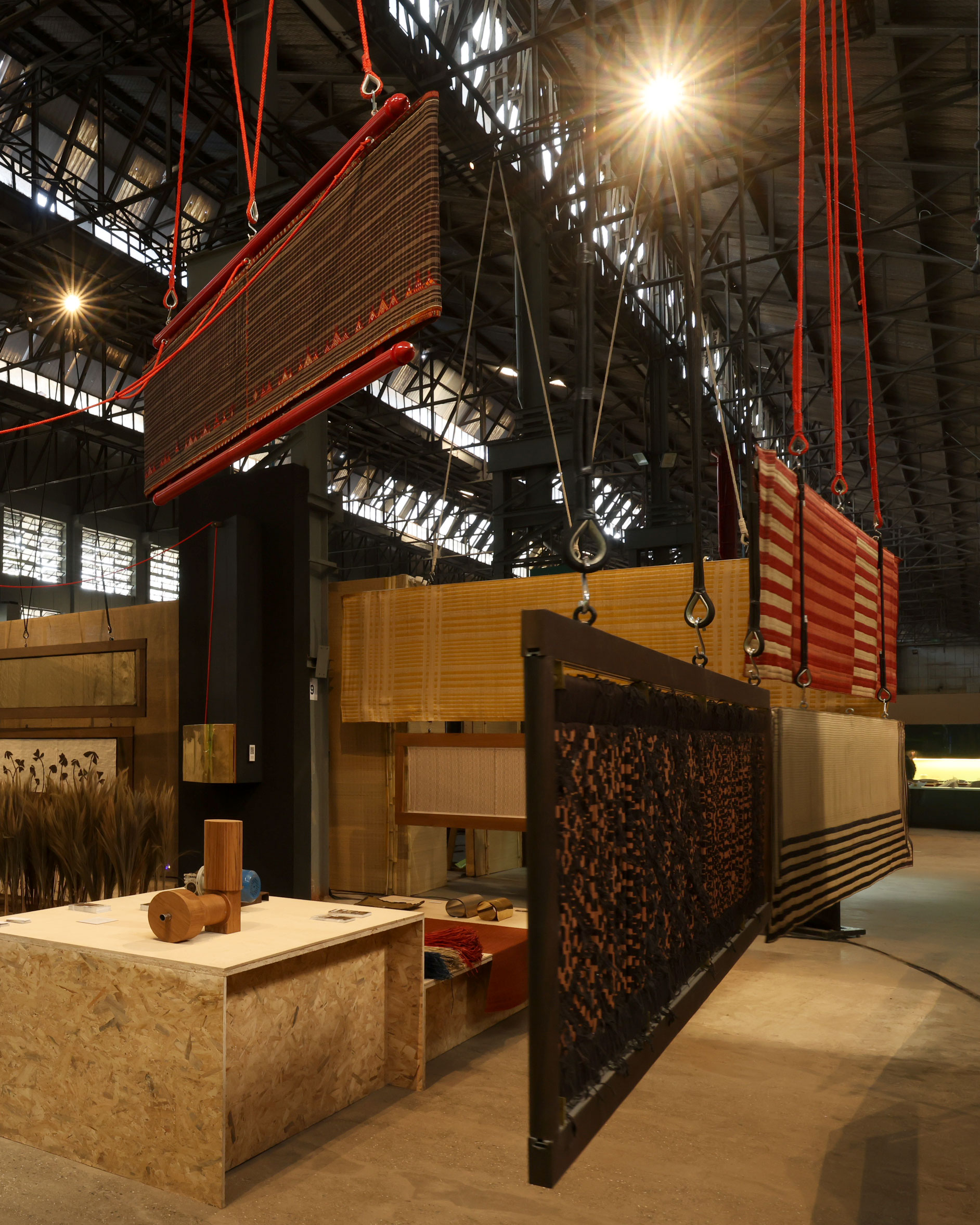
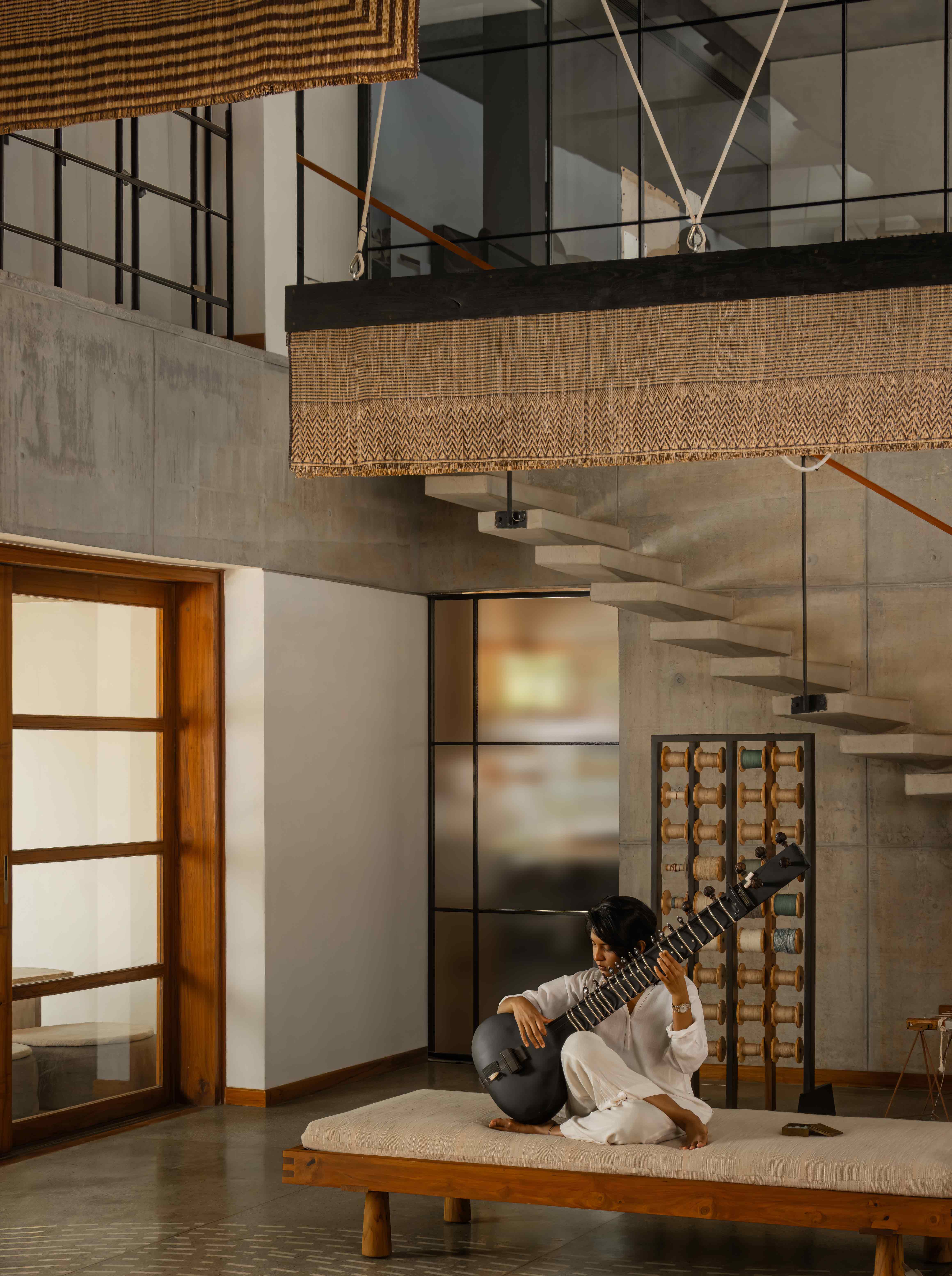
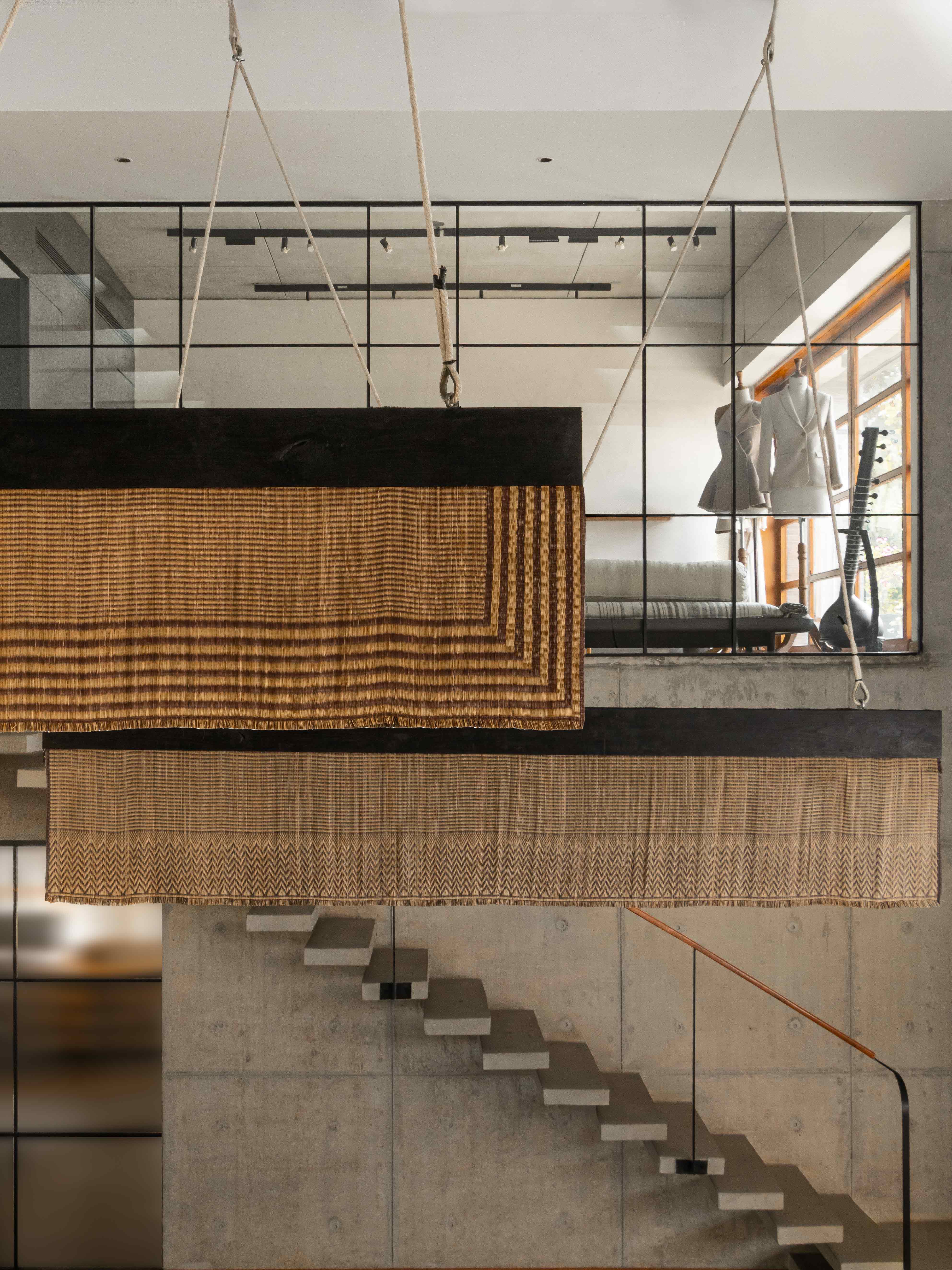
Unlike contemporary fans, which propel air down like inverted helicopters and compensate with speed, the PAKHA moves air along the lower gradient, preserving the natural stratification of hot and cool air while creating a breeze.
An encounter with such fans in an old church in Kochi sparked an interest, carrying memories of childhood. Experiencing their effect in the humid climate highlighted the ingenuity of the design and ignited an inspiration for the PAKHA project. For the studio, vernacular practices serve as reservoirs of situated intelligence, frugal with materials, climate-responsive, and iterated through lived experience. A proprietary motor mechanism was developed to preserve the atmospheric quality of airflow while getting acquainted with challenges related to motion fidelity.
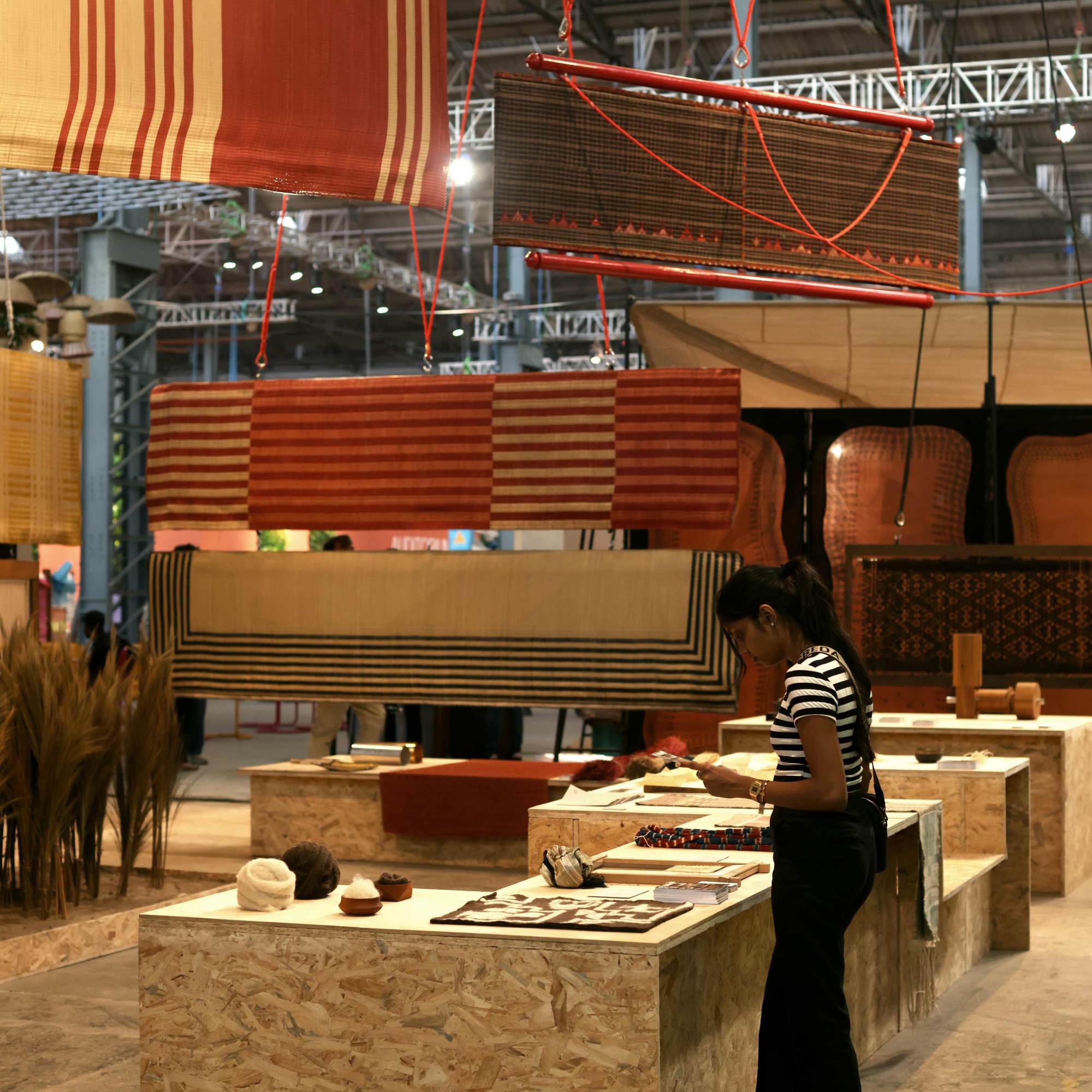
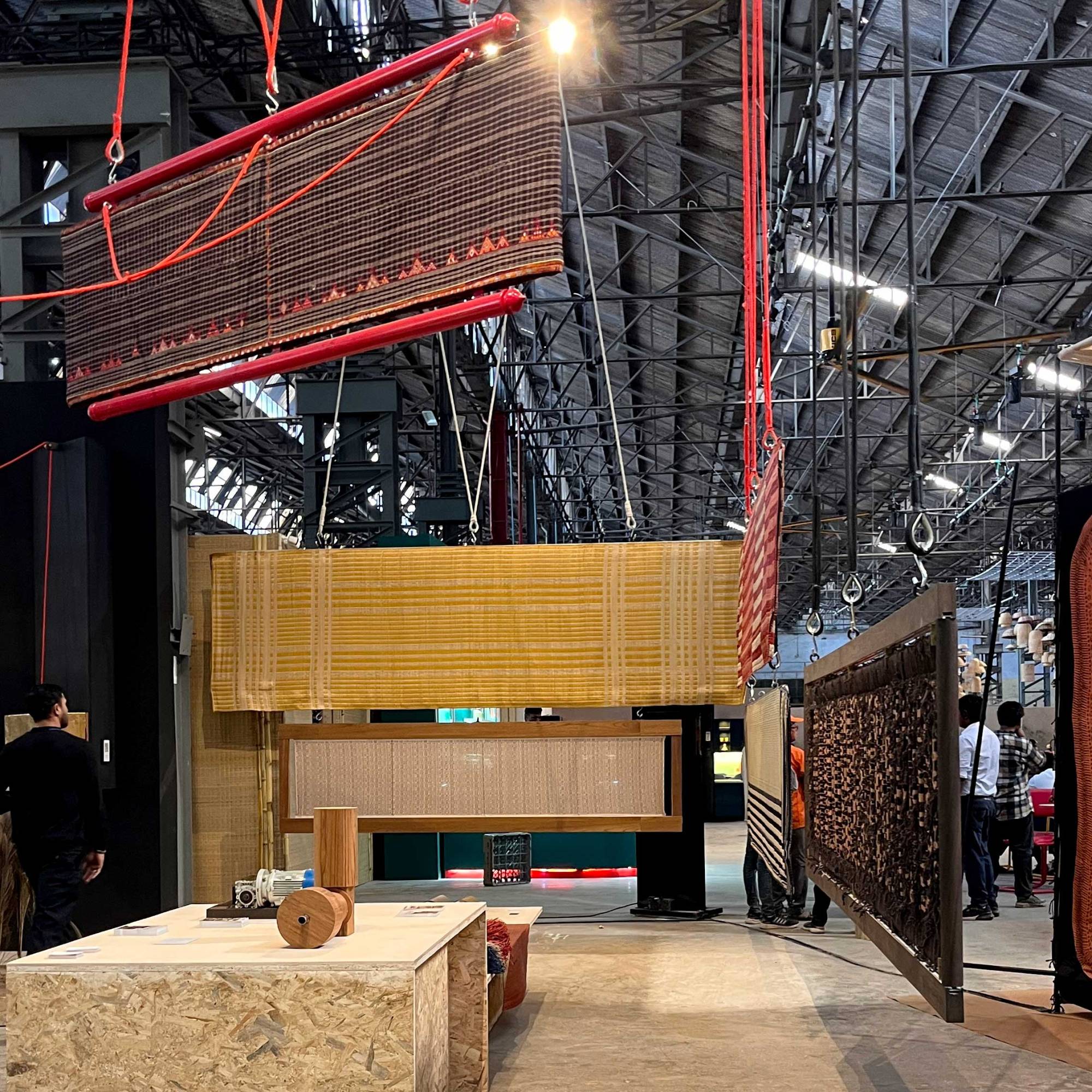
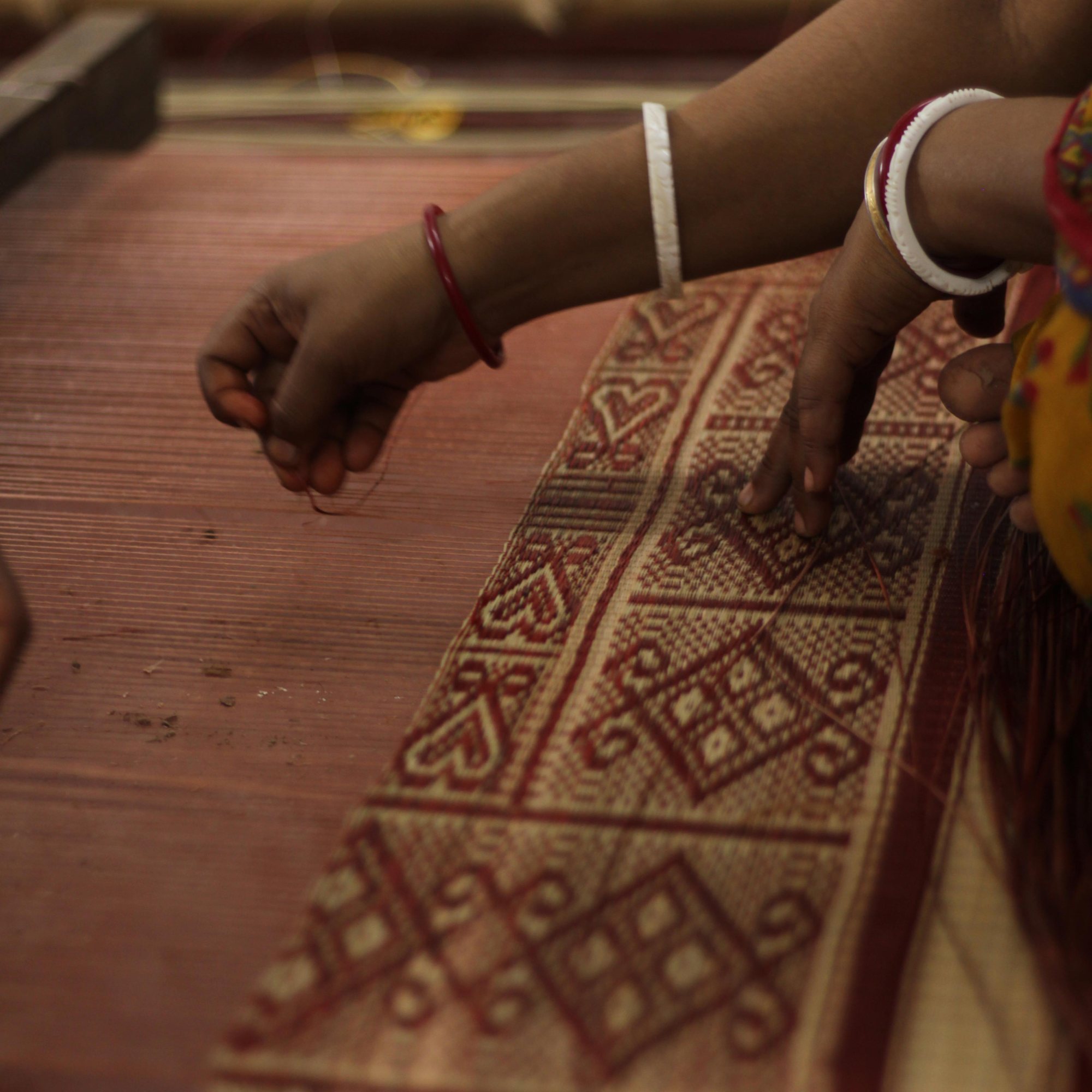
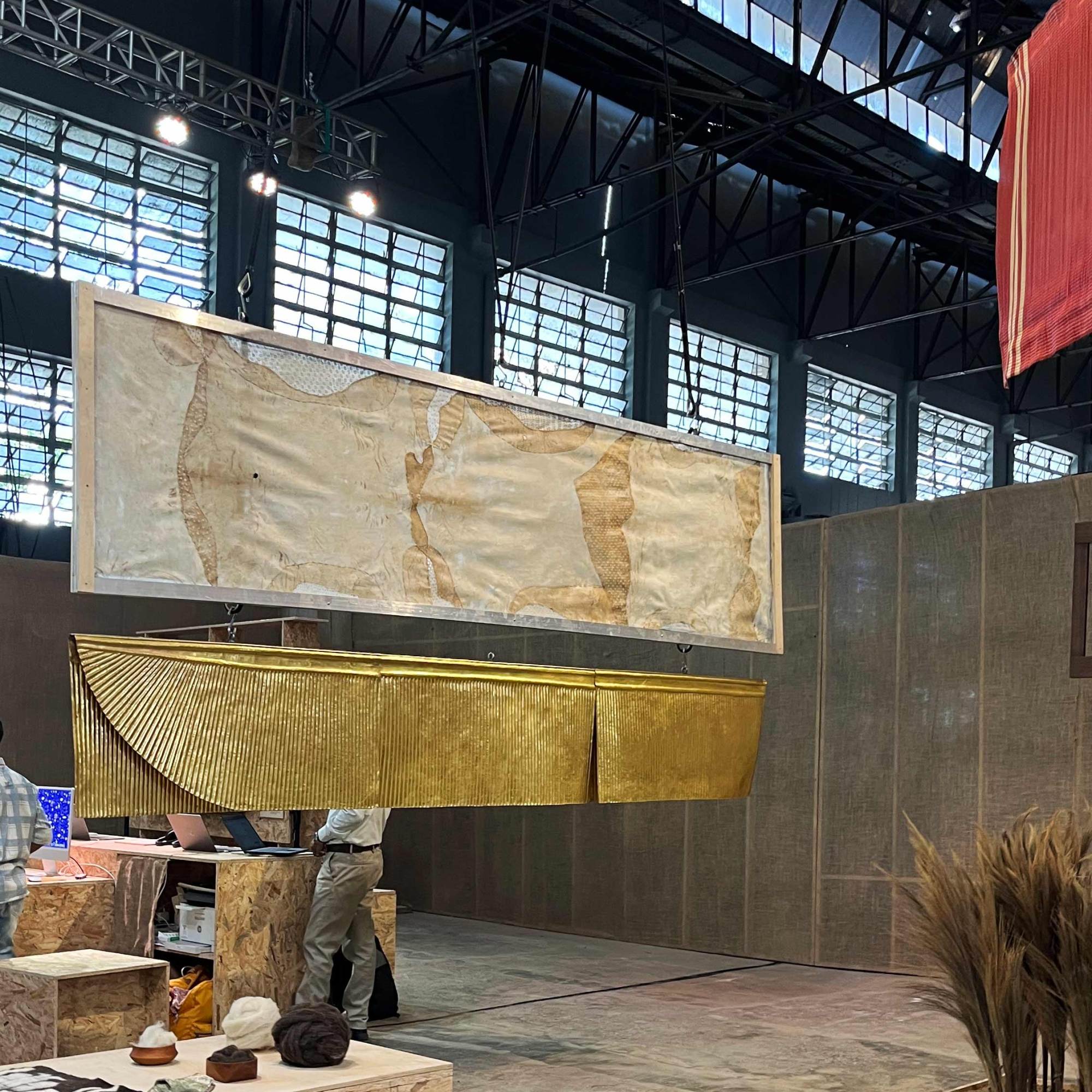
Structurally, the project synthesises multiple craft lineages. Carpentry, metalwork, and industrial design articulate the core mechanical framework while the blade becomes a site of material experimentation.
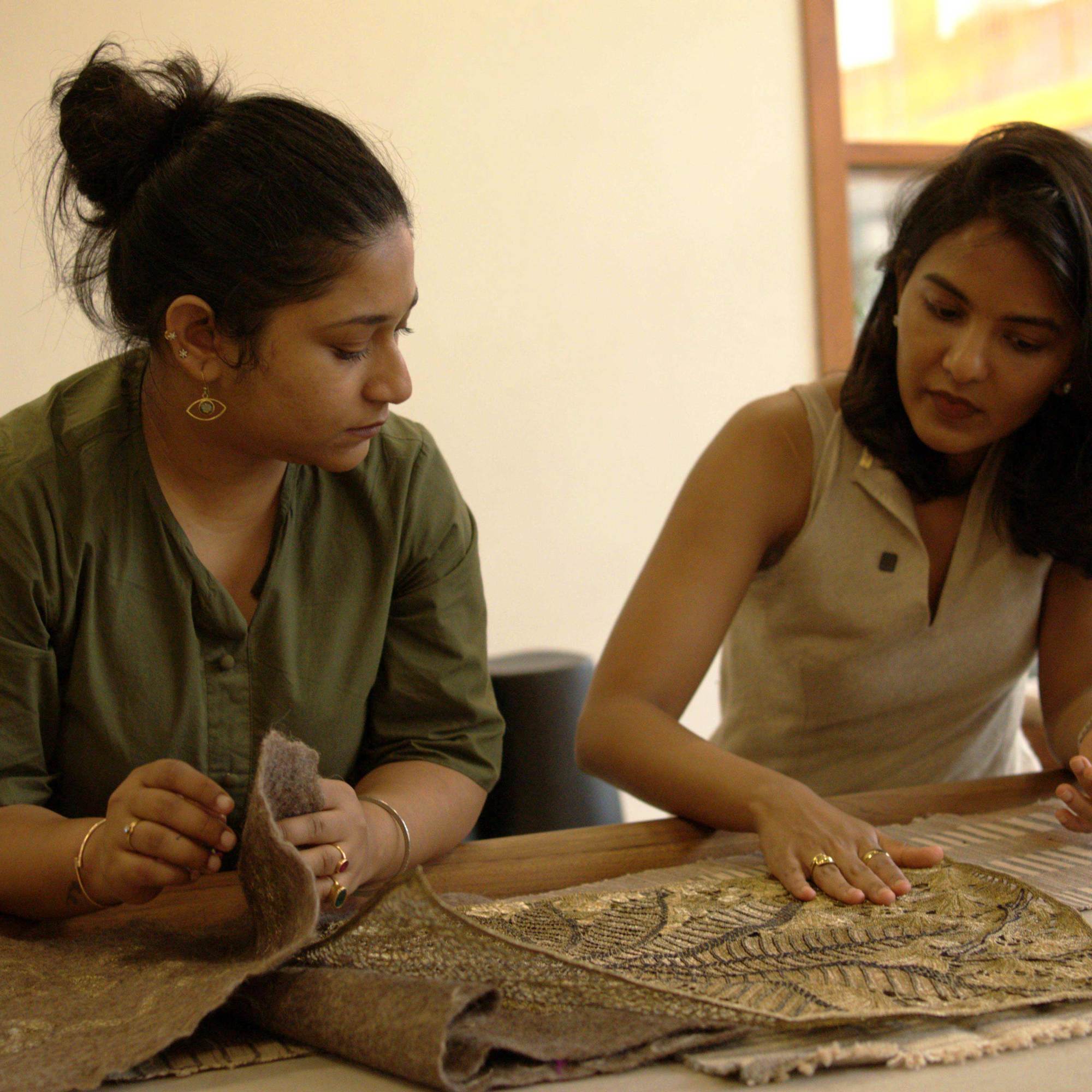
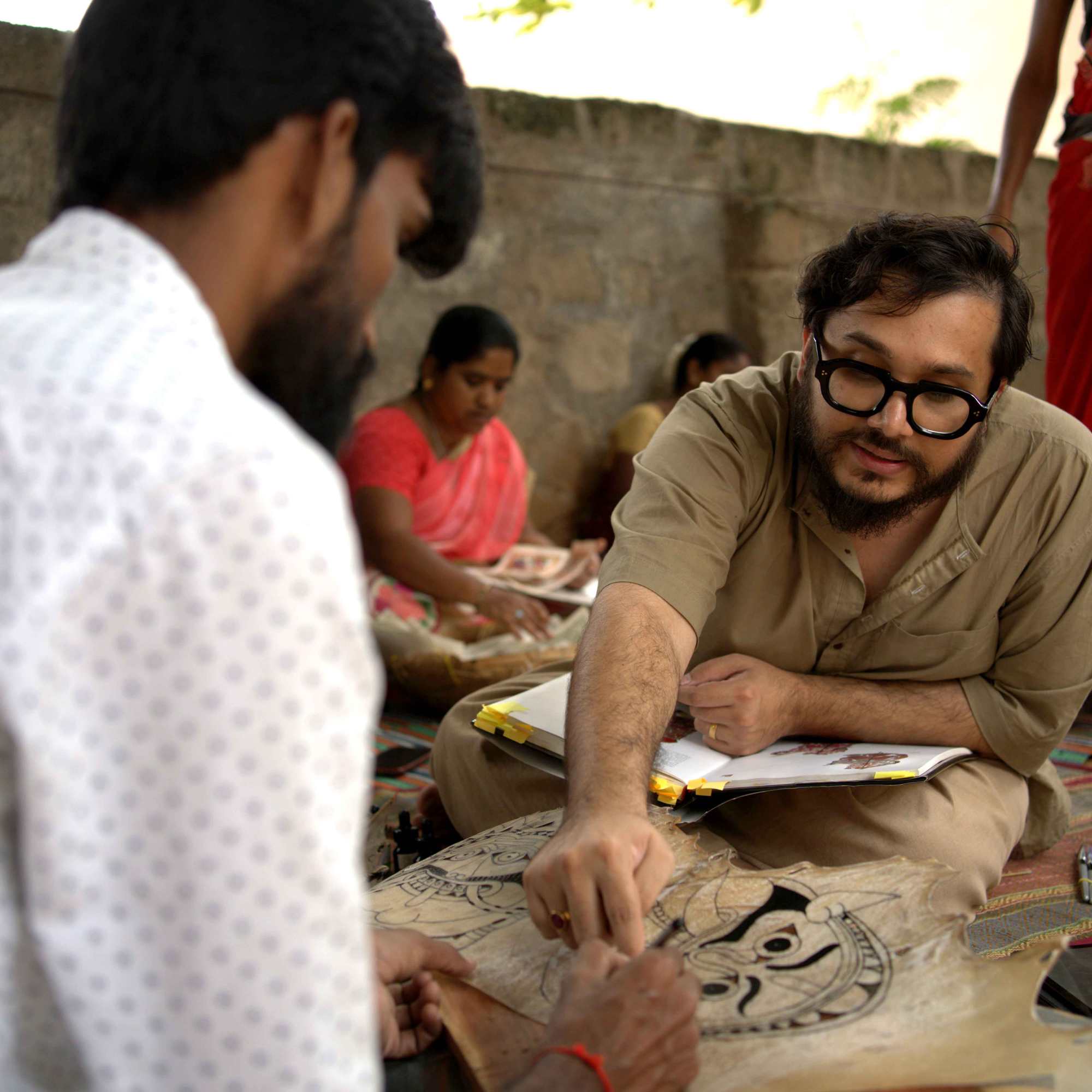
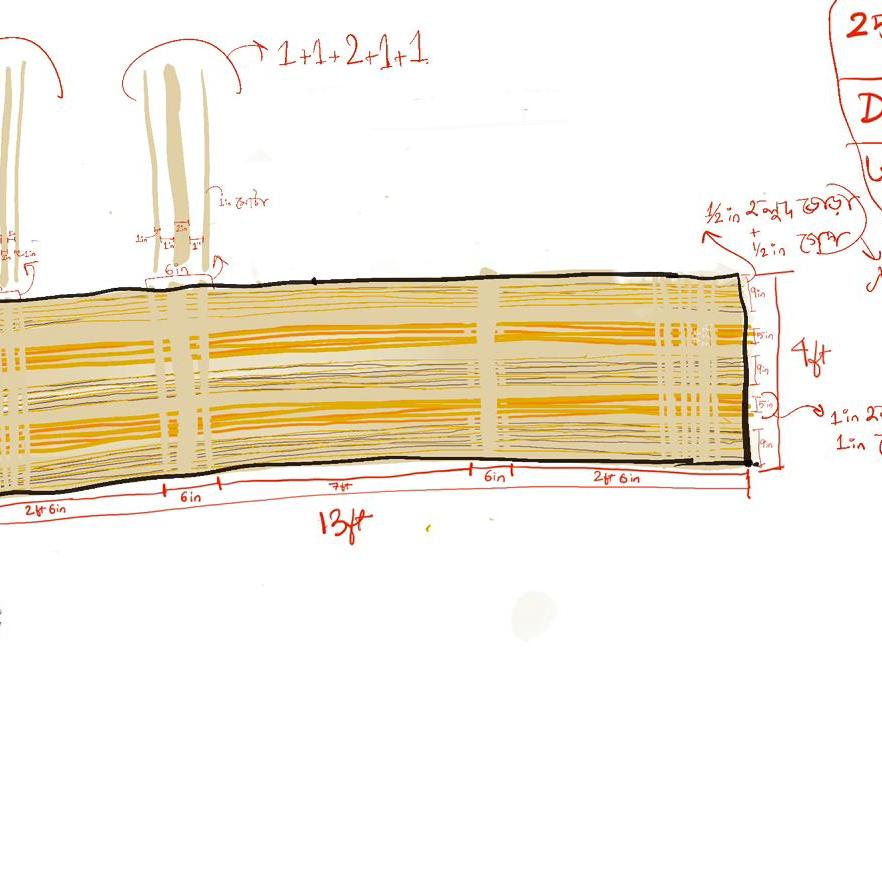
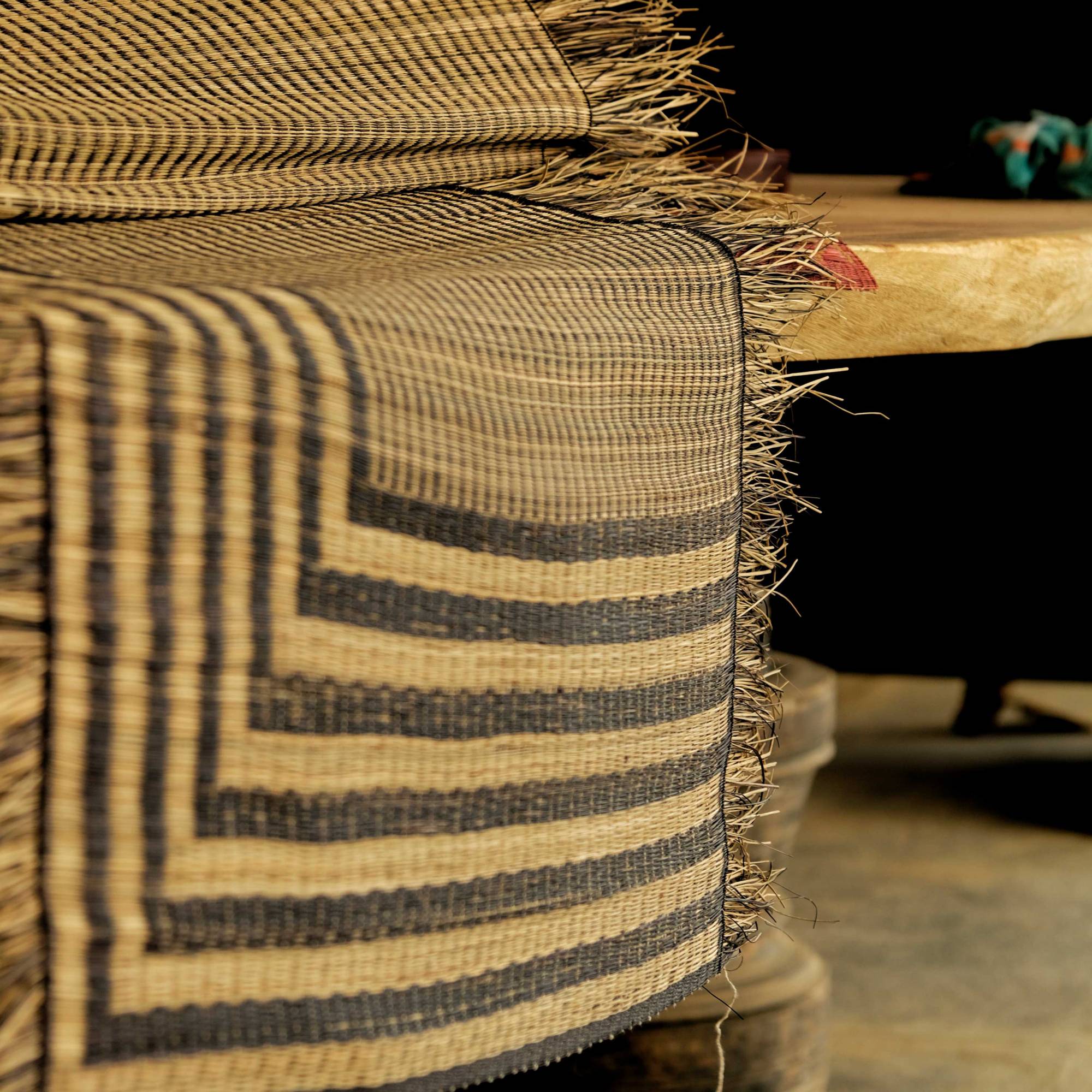
What started as a mechanical project using levers and pulleys, focusing on understanding feedback responses into the system gradually evolved into a mechatronic system with iterations to capture human intuition and muscle memory, maturing as a flexible operation remote from the fan’s location. Collaborations with Studio Ame by Geethica Naidu integrate embroidery, beadwork, and handloom textiles into lightweight aerodynamic surfaces. Leather artisans from Nimmalakunte in Andhra Pradesh interpret Tholu Bommalata leather puppetry into translucent patterned planes which help with efficient resistance to air and improved air quality. Bengal grass weavers bring breathable woven mats called Madur which once served as flood spreads to offer comfort from heat, and repoussé brass introduces tropical memories with improved air quality. All these equip the fan to adapt to multiple configurations.
The material selection is crucial, surfaces that resist wind and enhance airflow, while engaging craft clusters, often women-led. Each craft adds intention rather than decoration. As a whole, the work challenges stasis and path-dependence in design thinking. PAKHA operates as an interface between high-tech functionality and cultural practice, proposing an object capable of reinstating sensitivity and localised meaning within contemporary interior settings ♦
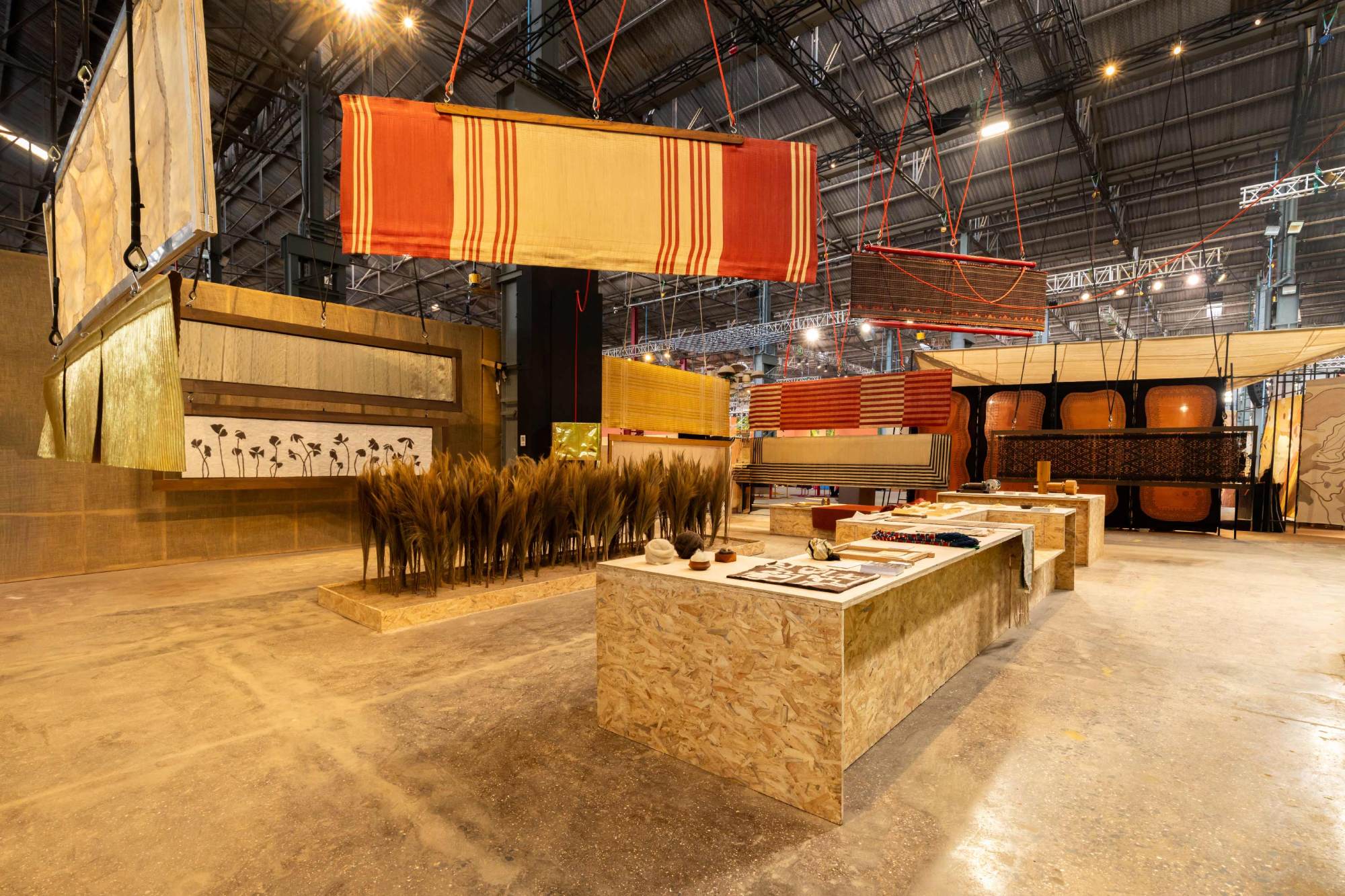
COLLABORATORS
Textile: Ame Design Studio, Geethica Naidu, Bengaluru
Madur: Surajit Mat Unit, Gurupada Mana, Mednipore
Leather: Shiva Shinde & Mani Shinde, Nimmalakunte
Brass repousse: Vivek & Omprakash, Varanasi
The Vernacular Modern, is a multidisciplinary design studio based in Bengaluru, India, also known as ‘woodlabs’ earlier. Working closely with an ever-growing community of artisans who truly believes in holding on to the vernacular wisdom and craft with an intent to bring back this knowledge as a part of our everyday living.
Founded by Abhirup Dutta, an architect and product designer based in Bengaluru, and Deeptashree Saha, an interior designer, and stylist hailing from Kolkata, ‘The Vernacular Modern’ is a homage to artisanal values and a slower, more intentional way of life.
The aim is to revive simple practices which are conscious and sustainable to our surrounding, without compromising modern luxuries of life.
Abhirup Dutta is a Bengaluru-based architect and product designer driven by a deep fascination with production, technology, and the mechanics of execution. He believes good design is engineered, not styled, and gravitates toward refined outcomes that reveal intelligence in construction rather than excess in aesthetics.
Deeptashree Saha began her design practice in Kolkata, where she worked with prominent interior houses and celebrated international brands, cultivating a refined understanding of spatial composition, visual storytelling, and the discipline required to execute complex projects. At The Vernacular Modern, she combines creative leadership with hands-on business and operational stewardship.
Website: www.thevernacularmodern.com
Email: deeptashree@theverncularmodern.com; abhirup@thevernacularmodern.com
Instagram: @thevernacularmodern
A structured, one-year, non-residential initiative, the Godrej Design Lab Fellowship Program supports emerging design talent through grants and mentorship. It provides a platform for creative practitioners to develop projects that demonstrate technical proficiency, innovation, and societal impact, contributing to the evolving discourse on design in India. The program encourages experimentation across different design fields and supports practitioners working with interdisciplinary thinking, sustainable approaches, and new methods.
Website: designlab.godrejenterprises.com/fellowship
Matter curated and designed the Godrej Design Lab Fellowship exhibition at Conscious Collective 2025.
Film by Matter.
Shot and edited by Gasper D’souza, White Brick Post Studio.
Images: © and courtesy The Vernacular Modern & Rishul Bangar
Drawings: © and courtesy The Vernacular Modern


