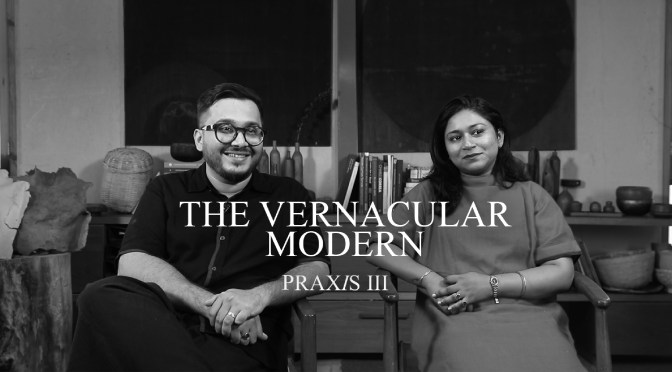
An editorial project by Matter in partnership with Şişecam Flat Glass, PRAXIS investigates the work and positions of diverse contemporary architecture practices in India.In the episode, Abhirup Duttaand Deeptashree Sahareflect on the intellectual roots of their work asThe Vernacular Modern. While anchored in their emphatic thematics of material cultures, and engineering, the imagery of the vernacular and the modern eponymously makes for their repertoire of furniture, art, architecture and objects. The formidably functional range is deeply researched, as evidenced by the studio’s process that is simultaneously organic and directional, embedded in the idea of ‘slowness’ and ‘an artisan-led’ approach. The Vernacular Modern’s work places these objects as signifiers in a complicated context and legacy of craft heritage in India. Working consciously with old demolition timber and towards contemporary narratives born of relearning and exploring, it asks a more nuanced question of itself – about true sense of collaborations, and developing products with a purpose.
EXCERPTS FROM THE INTERVIEW:
AD: Abhirup Dutta DS: Deeptashree Saha
FOUNDATIONS
<00:00.36>
DS: When we started, there were a few things that was concerning as a young practitioner or as someone who is passionate about this profession. You want to do something but you see certain problems or concerns. One of them was the fact that there were not many craftspeople left to undertake proper well detailed, well-crafted products. Things have been too mass-production oriented; most of the younger generation has also moved towards that, or have been doing something else. Whoever is left do have so much pride in what they are doing so either they are very old, almost towards the few last years.
When we started our practice, that is something that was really concerning and it was an effort to kind of make things which had a story. To make pieces which are like modern heirlooms, but in today’s context.
AD: The entire journey has been always a set of coincidences and stories that kind of form together and when you look at it in retrospect, it is making sense. We were evolved out of classical architecture and interior design, and at the end of the day, I am an architect and she is an interior designer and when we were both practising in our fields or when we were interacting with people in our fields, the largest challenge we saw was that we were not getting a set of motivated people to take the right approach to doing something. There is always the right approach, and there is a quick approach; everybody were more focused on how to get it done faster by compromising both the quality and the values of something and that became a bit non-negotiable for us.
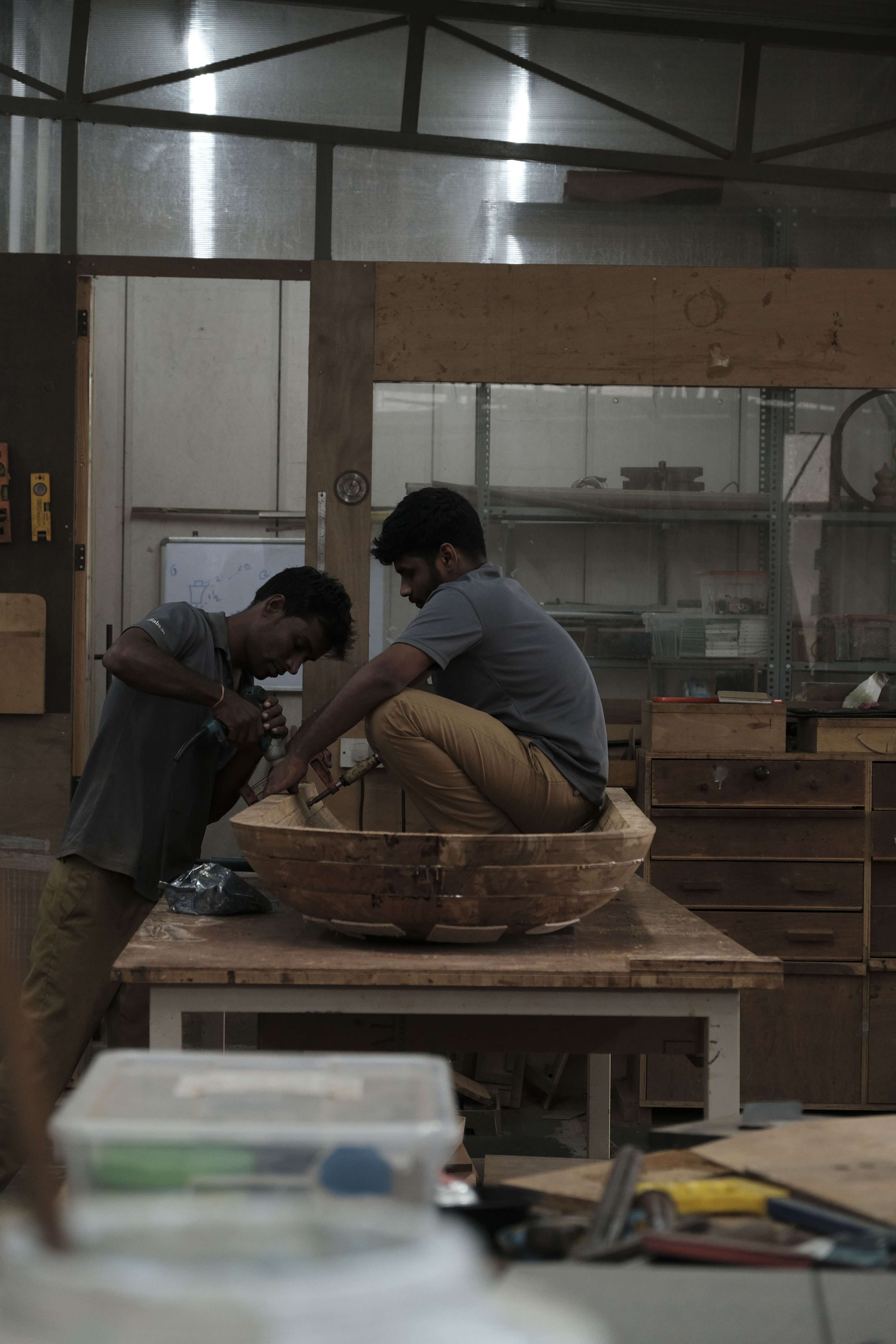
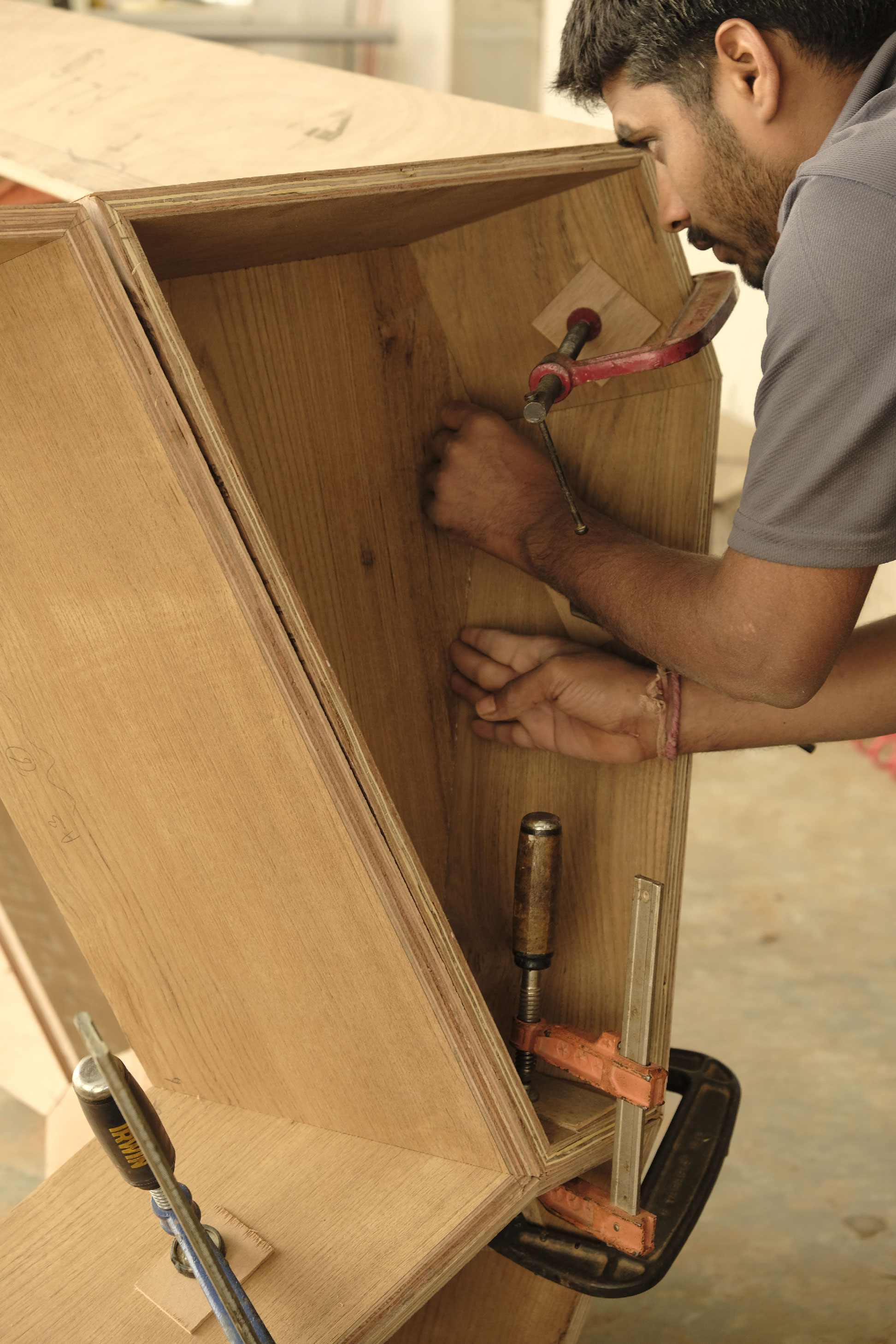
Somehow carpentry was kind of a starting point and that is how the whole journey came about and it was the idea that, how do you get the whole thing together so that at least the set of people who are working with you are motivated to do it the right way.
I think that goes back to both our childhoods, like how we saw our grandparents and our parents, and the kind of dedication they had towards their practices and their jobs. For me, a large part of my childhood was based around my paternal home in Calcutta. My grandfather was a maker and used to work with a lot of metal-based kind of solutions to things, right from making machines to making custom parts, to making these little things that required a lot of patience. He was teaching a lot of people to take the craft forward, lot of them moved out and became makers of their own standing, and that aura kind of stayed. You may not remember everything that you see at that time because you are not observing because you are wanting to look at that but you kind of end up looking at this thing and something stays back.
It is not something that you can explain, it is just a feeling that stays with you, and I think beyond that the entire education was something that helped. Architecture was interesting; I did play with lot of these 3D software that in my early school days and that is somehow came together in a very interesting manner. Then the biggest turning point was when we were doing our internship. During that time, I got to spend some time in nice studios and with a lot of nice mentors who really set a benchmark for how one should interact, like buildings are more than just a plan and a product that you make, and there is a lot more detail and soul that goes into it and that kind of gave that little stepping stone, slowly that became an identity.
DS: At a very subconscious level, because you are not actively seeking to take inspiration at that age, it affects you and moulds you in some form. My maternal grandfather and uncle were involved with wood heavily. Logging was legal those days so there were auctions, they would go source wood; I would see these huge blocks of wood being sliced, so there was always this familiarity with wood as a material, with the smell and as a texture. I literally grew up playing with blocks of wood; so that definitely was in some way a very influential factor. Similarly from my paternal side, it was a different aspect all together. They were hardcore into business and it somehow showed me that anything, even if you want to have a initiative, which is very entrepreneur or socially impactful, it needs to make sense economically. Both these aspects affect what I am today and then I studied in Jaipur. It was kind of not an overly developed city, and had that slow-paced factor to it. With so many craft sectors over there, you get so much opportunity to work closely with them and that is getting reflected in what we are doing today in some sense.
It is also a conscious decision that we eventually start taking beyond a point because what started as ‘Woodlabs’, was an absolute bootstrap experiment, a social experiment. It was something where we started to say that, ‘Can you do wood working at a pace? – where you are not always you are going to get projects where there is bottomless funds, in that little space. Can you still figure out a way to make sure that whatever you are contributing has some value in it?
AD: The entire process of spreading was also slow because you are also kind of consciously taking feedbacks, you are assessing the challenges and that kind of set a tone to how you approach and solve a problem. It is not always about the quickest, and the most lucrative way forward always, sometimes you would want to take the longer route because it creates value.
DS: Also, it is a personal thirst to kind of learn better.
AD: The biggest foundation to the entire idea was that, it was actually never about doing wood working, or it was never about doing products, it was never about architecture. It was always about the idea or the fear or the reality that crafts today are at a point where they are sustained by the last generation, and in more sectors, they have not translated into the next, because the master artisan who was able to make a sustenance and a name for himself in the craft saw the struggle and never really found it worth a life to get his generation into it. When we started, it was like that we have carpenters, we are going to make furniture, we are going to make wood, we are going to experiment with wood, so let’s call it ‘Labs’ – ‘Woodlabs’ is the name. In retrospect, it was not about wood, it was about figuring out the medium that we are comfortable in and then slowly spreading out into mediums that we can explore.
As I said, it is an economic and a social experiment for us where we thought that we can do make it sustainable again, find itself balancing and then you apply the same thought process to the rest and you have a place where you can play; it is like a palette and then you keep adding layers to it to make it more interesting and fun.
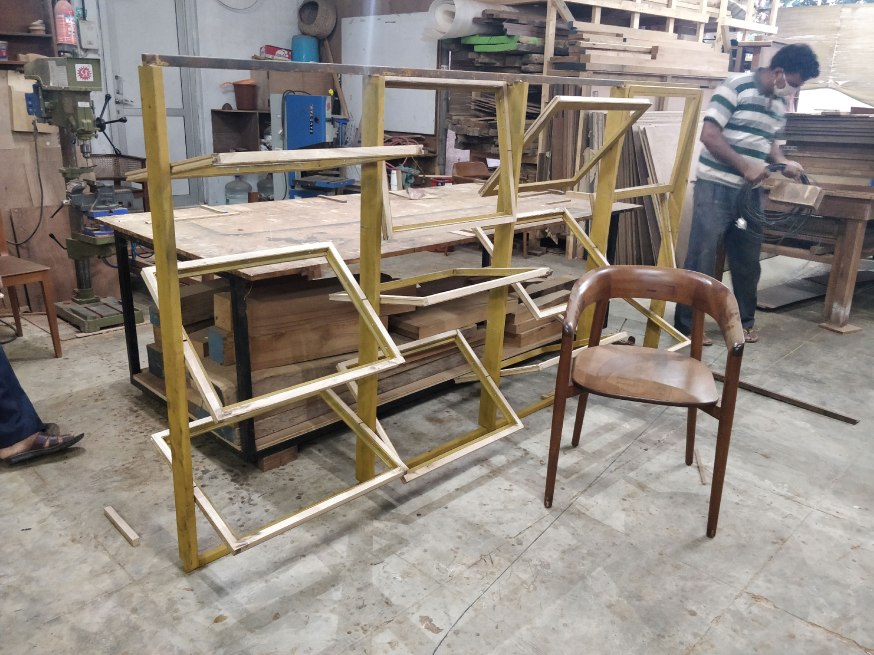
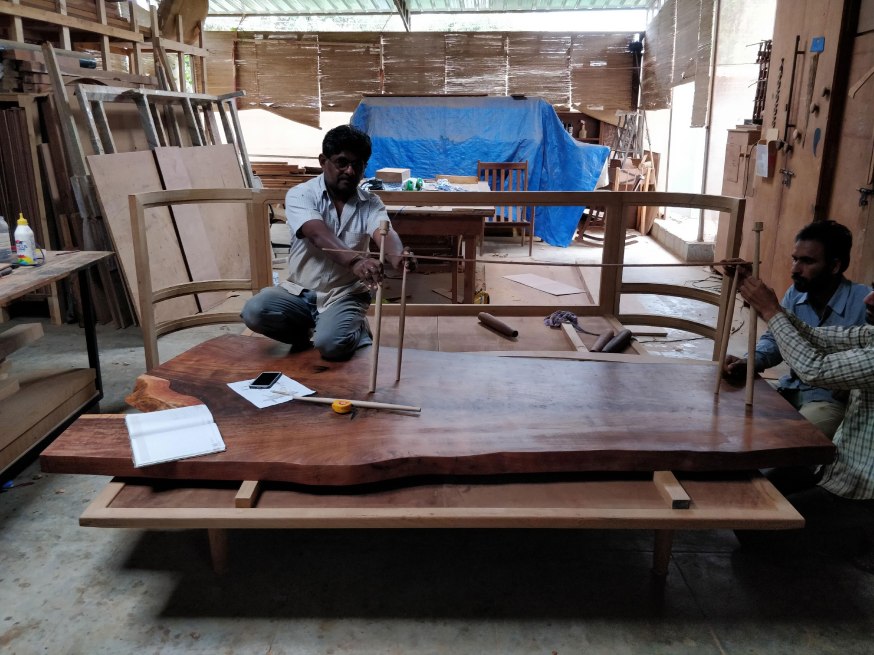
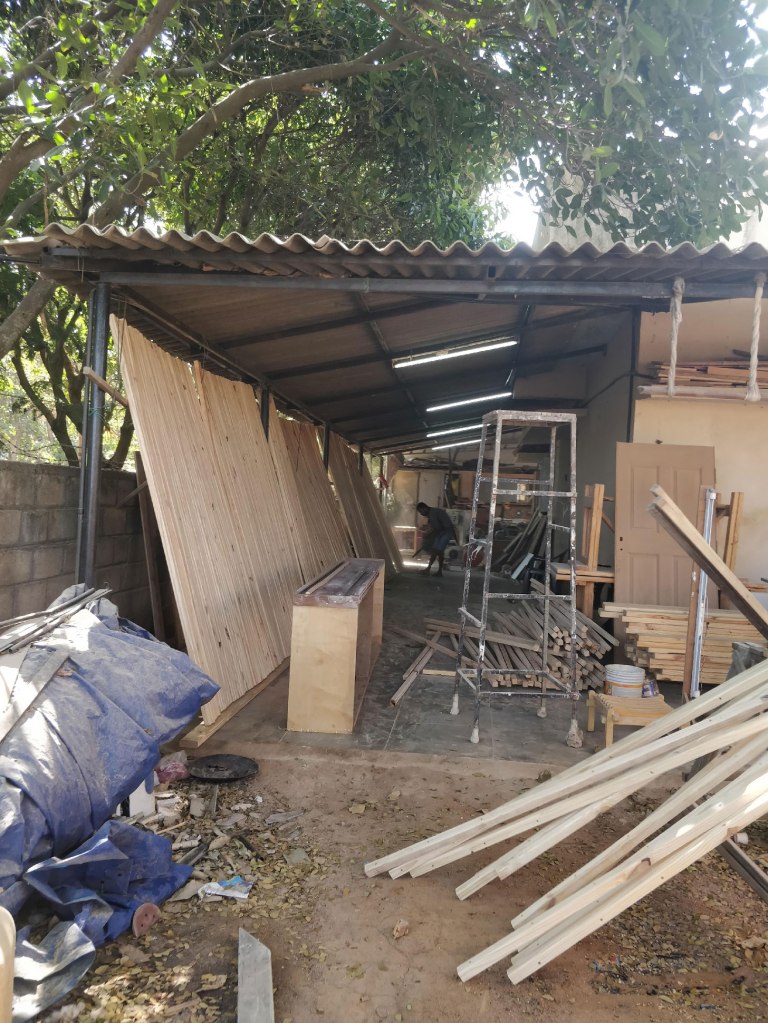
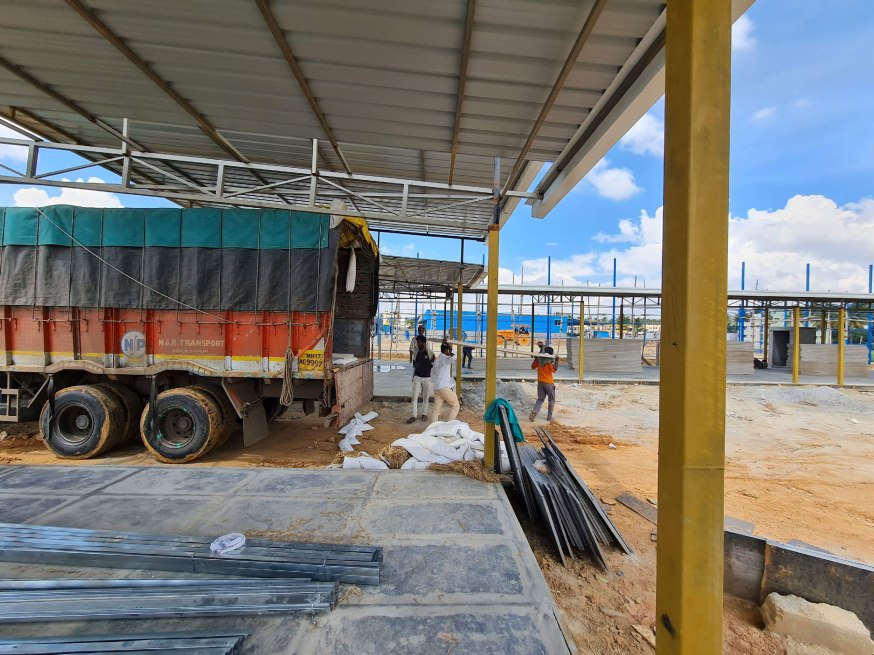
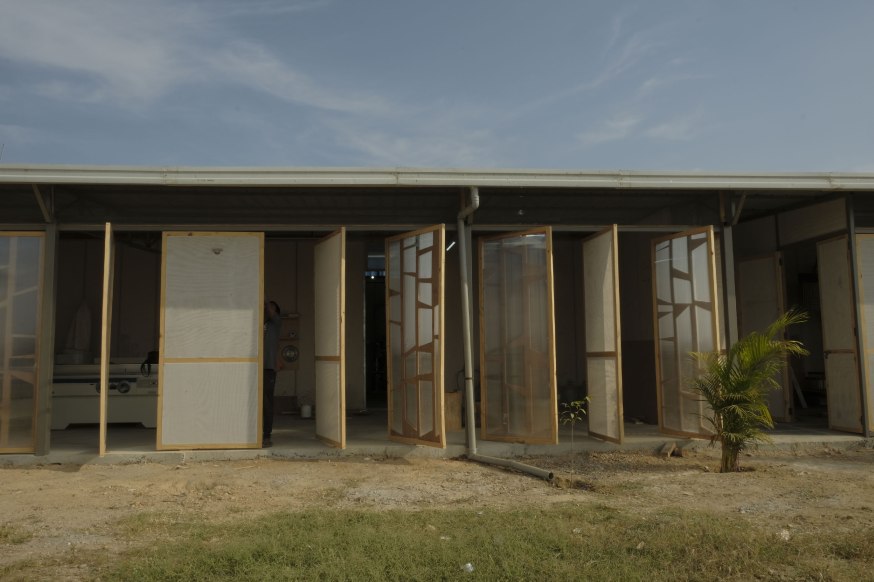
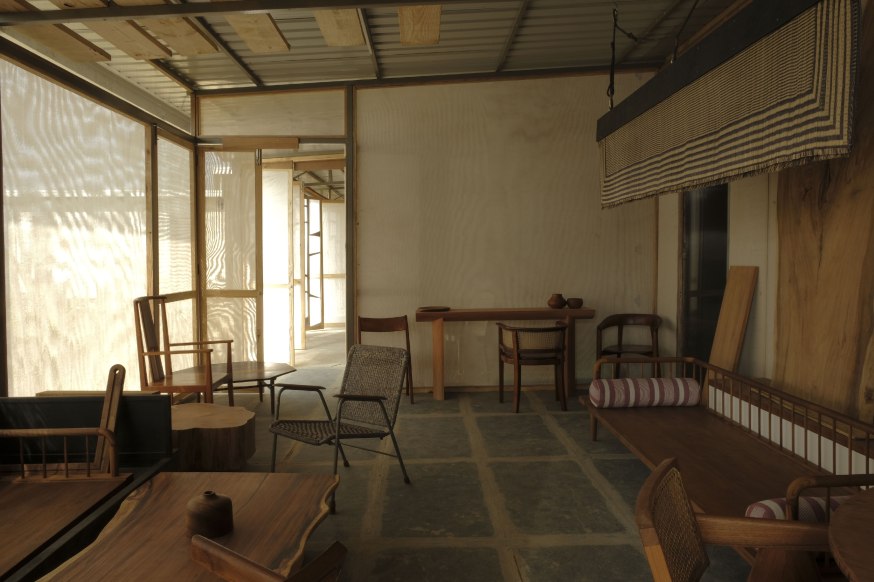
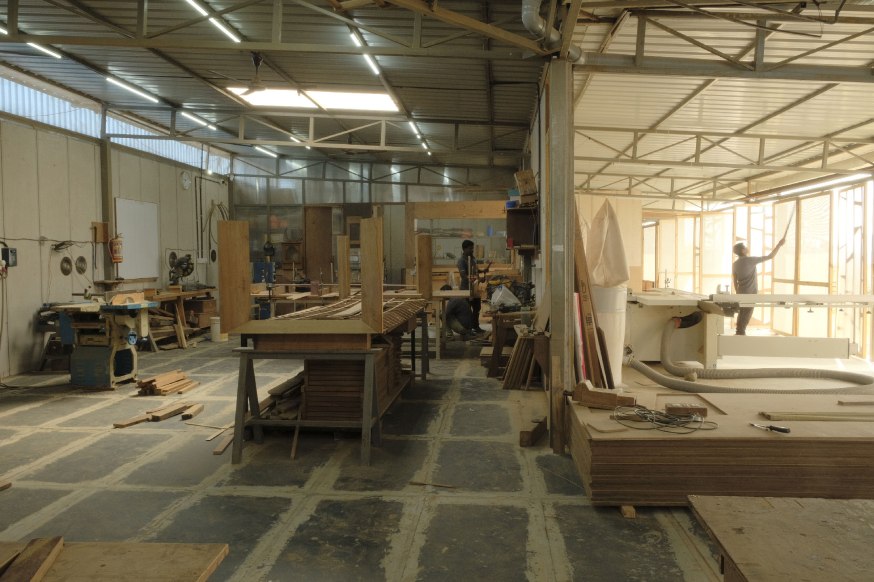
First Workshop
Second WorkshopCurrent Workshop
CULTURE
<18:53>
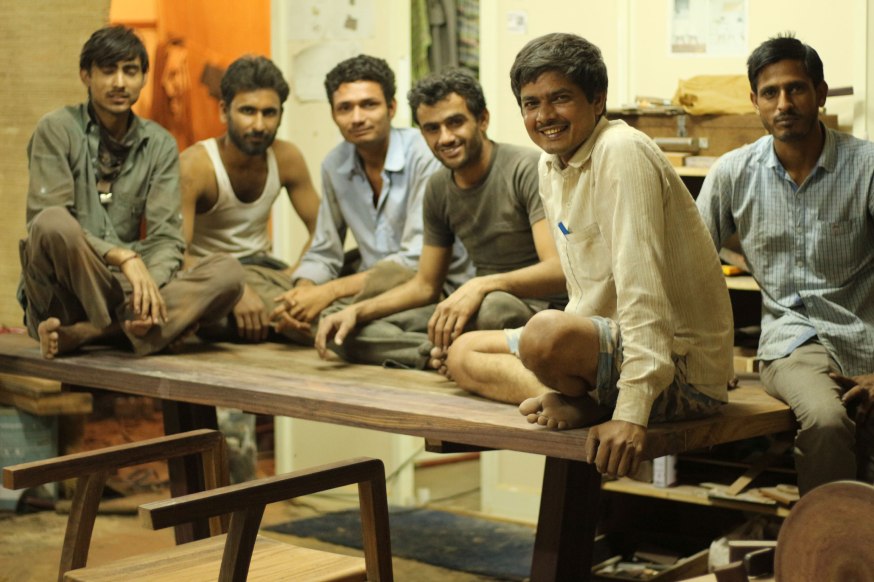
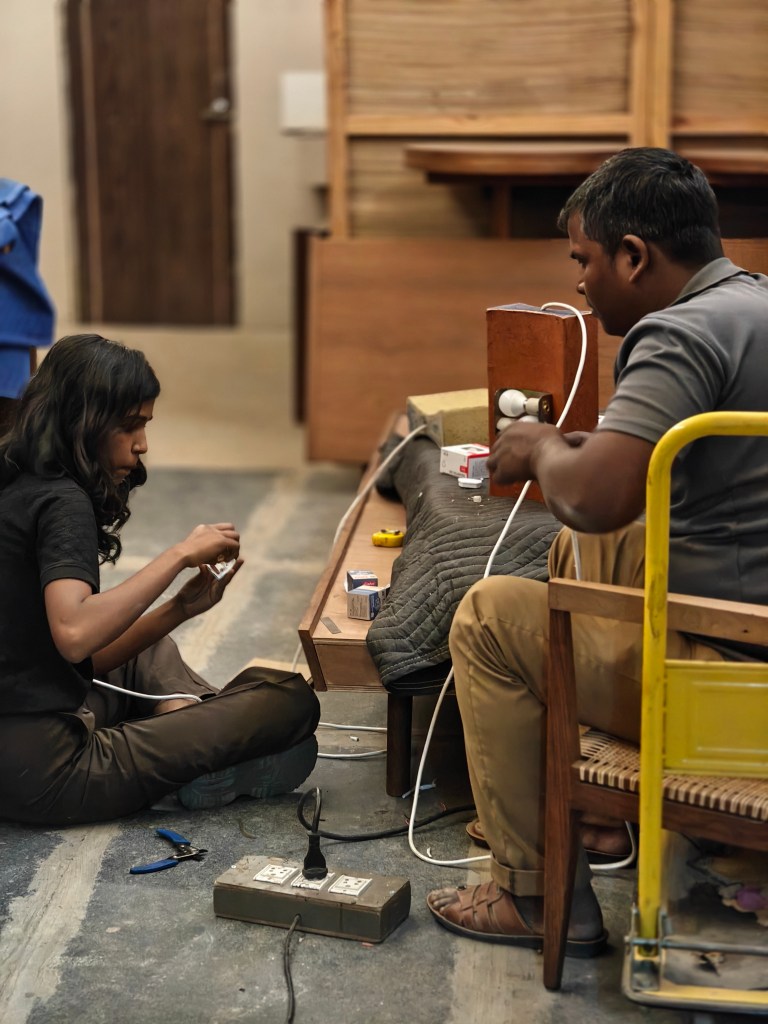
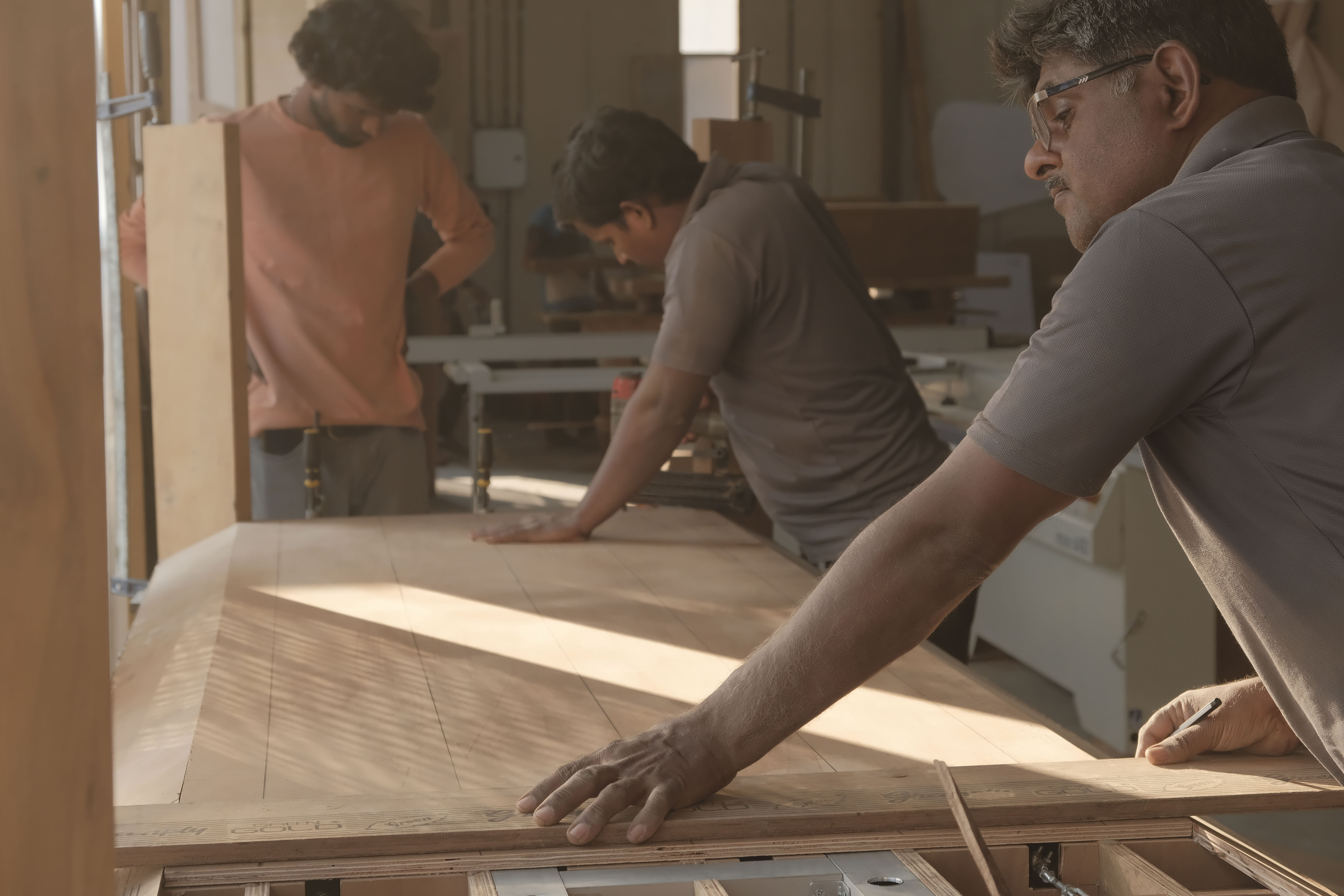
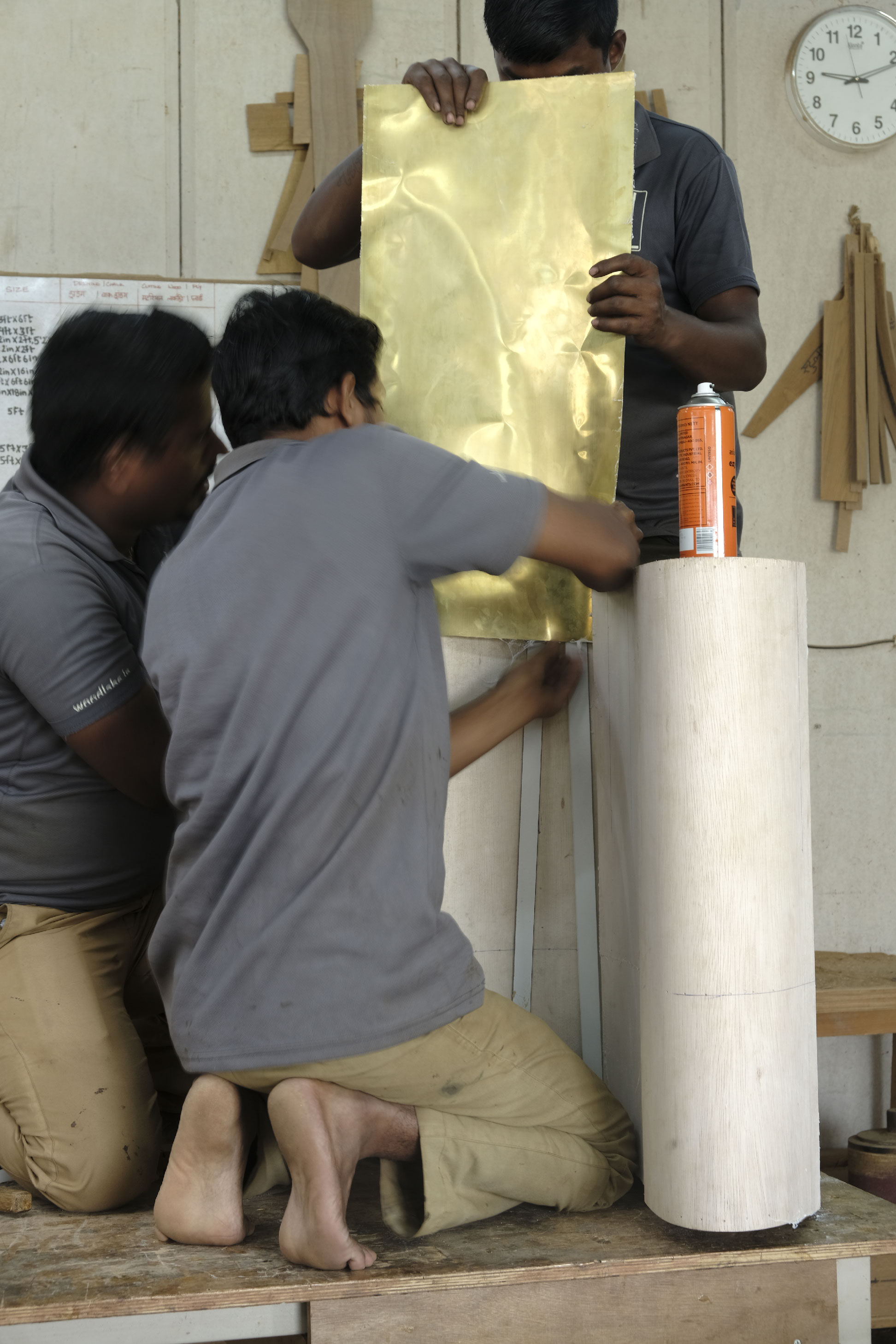
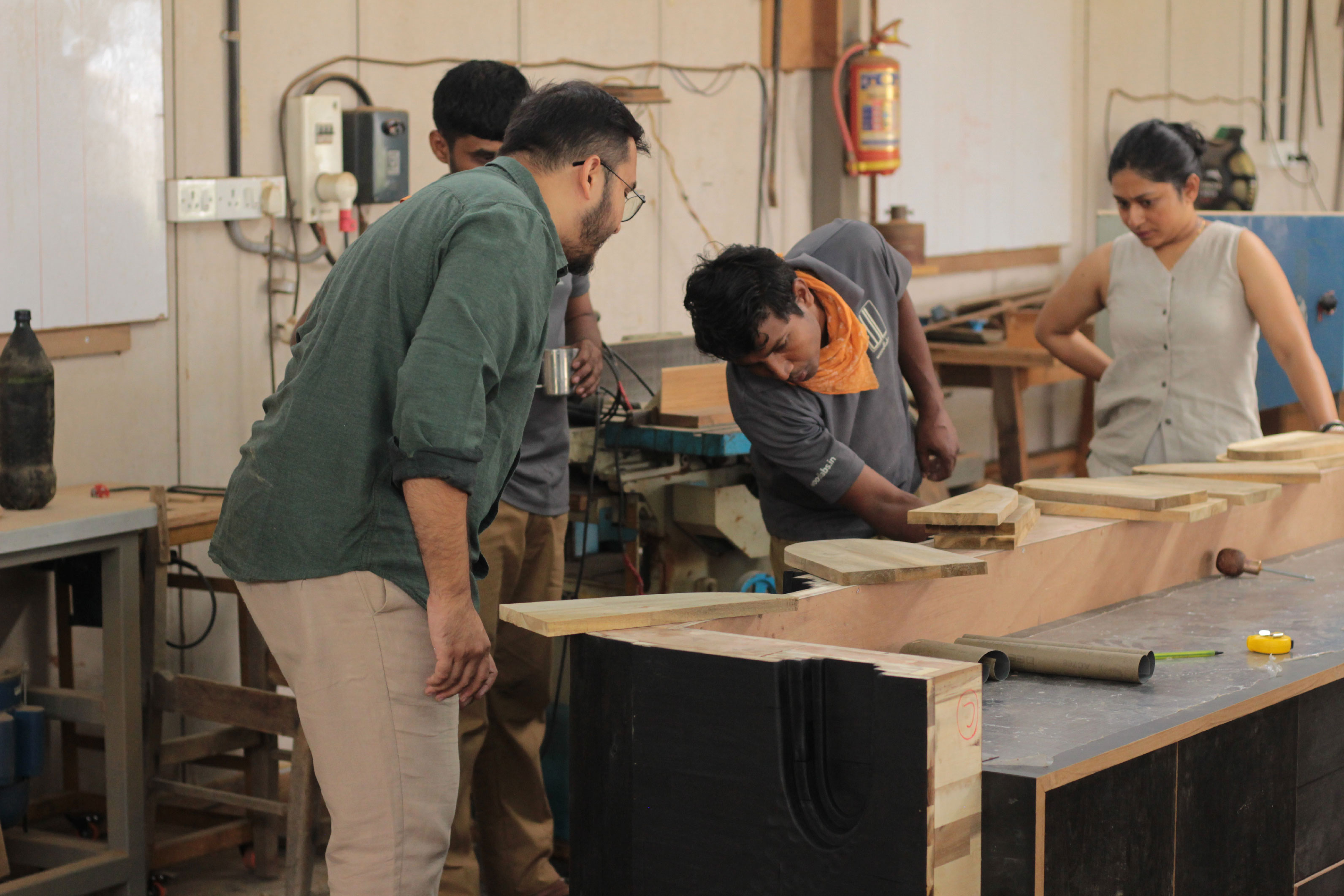
DS: The core team of artisans (a skilled team of ten) who are trained to be A-list carpenters are quite a bunch of interesting people. When you interact with them, for them carpentry is almost like an extension of what they know as equally as other things. For instance, they know weaving, they know farming, gardening, of course. They know electrical, plumbing, welding etc. These are things if you ask them they may not tell you, but as you come closer to them and interact more you realise it. It gives us the confidence to do much more than just carpentry. Thus, most of our pieces have very interesting blend of other things as well, like we do our welding in house, we do our own electricals.
AD: At a basic level, what we always tell them is that, just like when you study somewhere, it is that much a college can teach you, it is that much your profession can also teach you, but then to excel you have to start owning skills that are more personal to you and you have to figure out a way how to connect the dots and that connection does not happen unless you are put in a situation to figure out a solution. Whenever an artisan joins, it is a process where they slowly grow into the factory and they grow into the way of working.
When we are designing, we are trying to break away from the imagery of it. The imagery is dominated by a lot of these factors which they think is the right thing to do. In craft, a lot of these factors are what they consider as the ‘flaw’ of the craft – but technically what is the flaw? It is just the way that the material is behaving in a certain circumstances or a set of conditions.
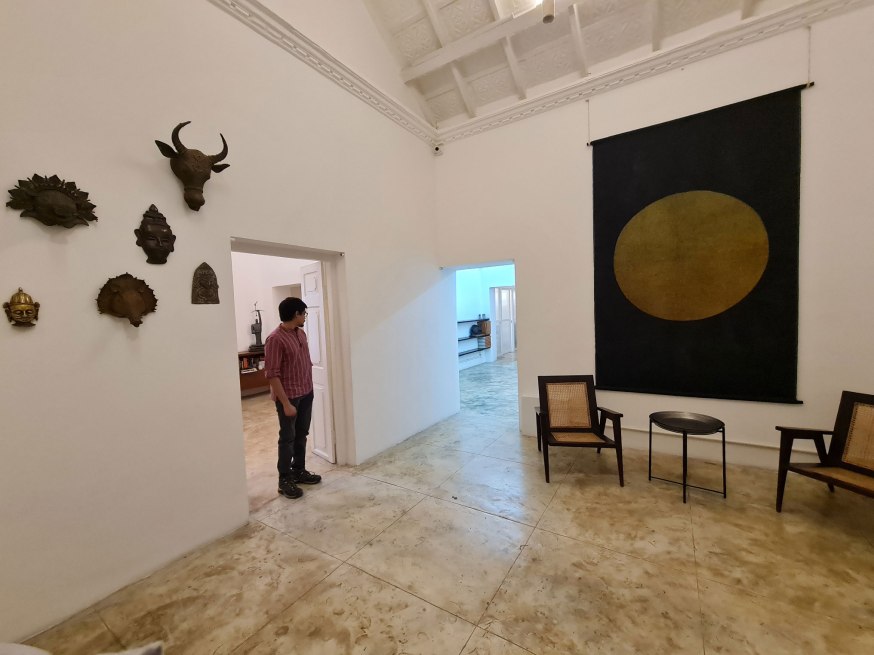
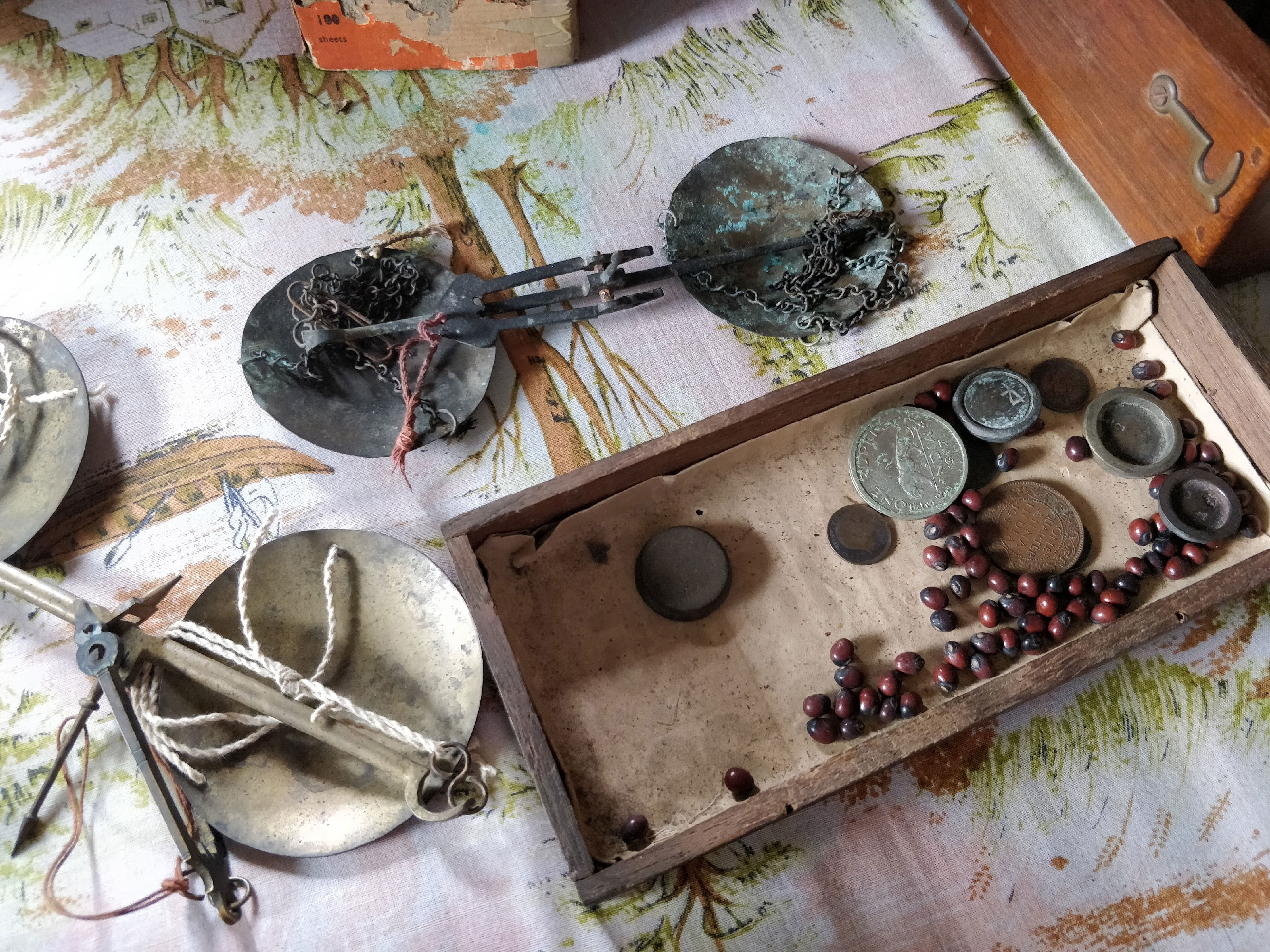
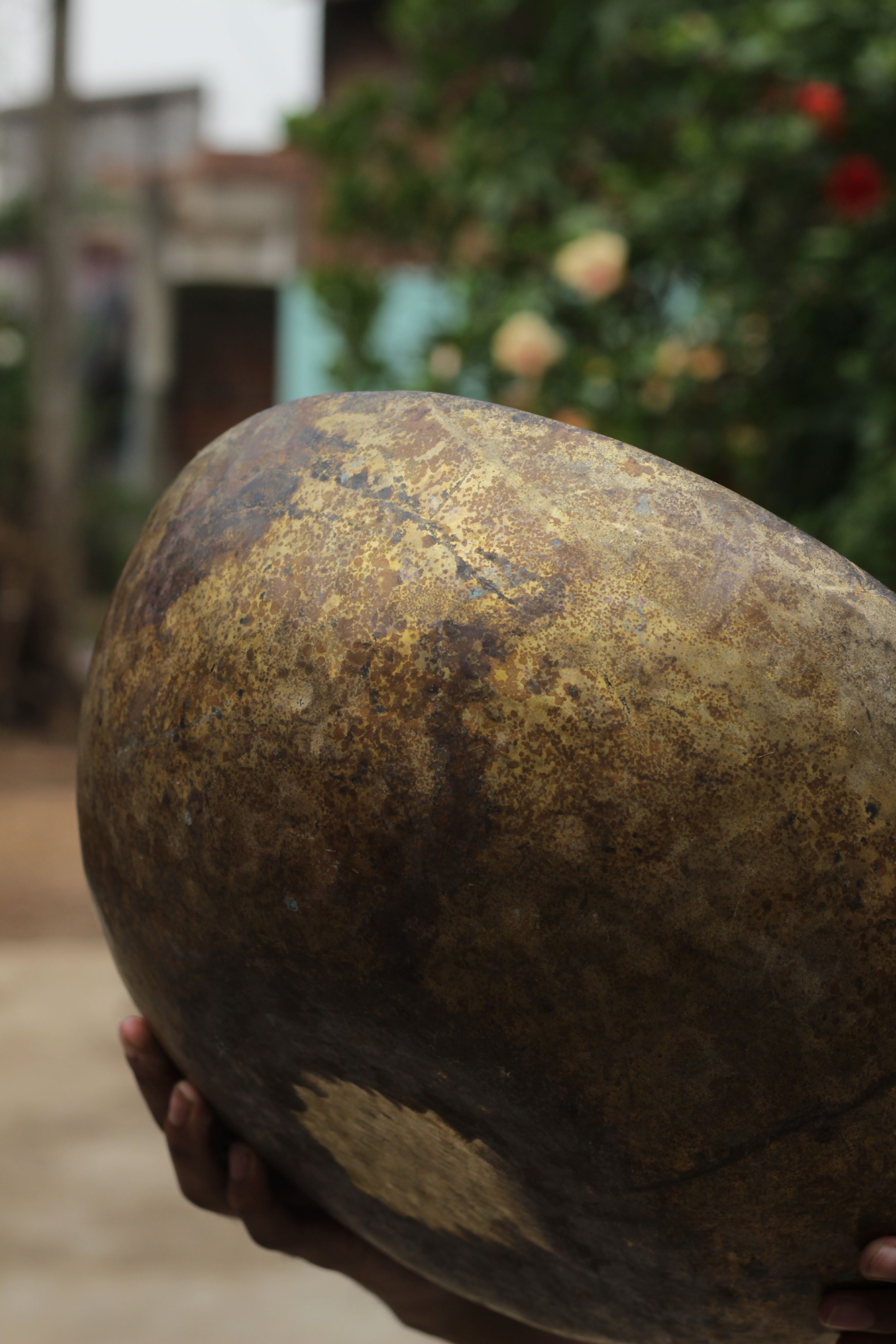
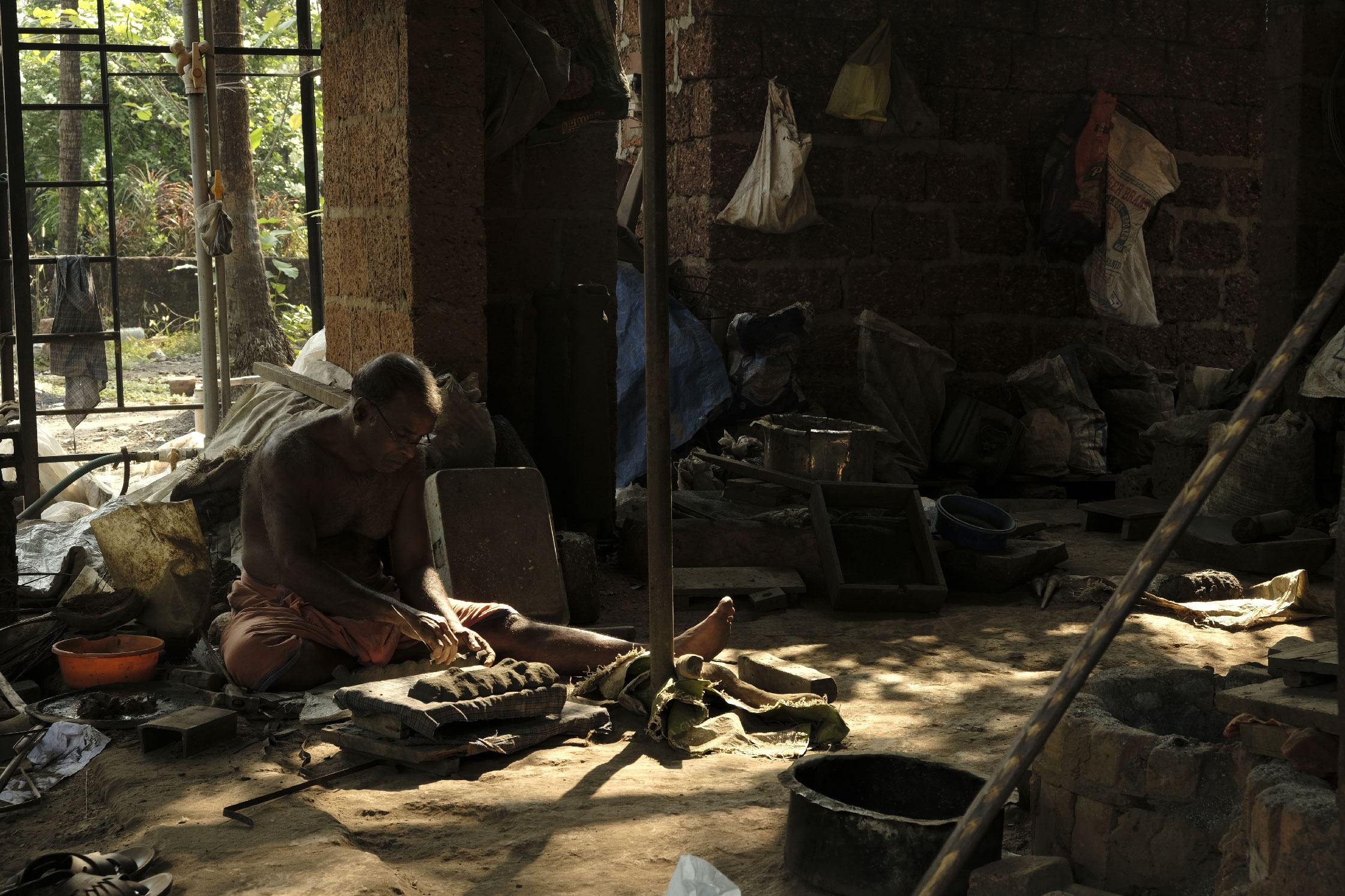
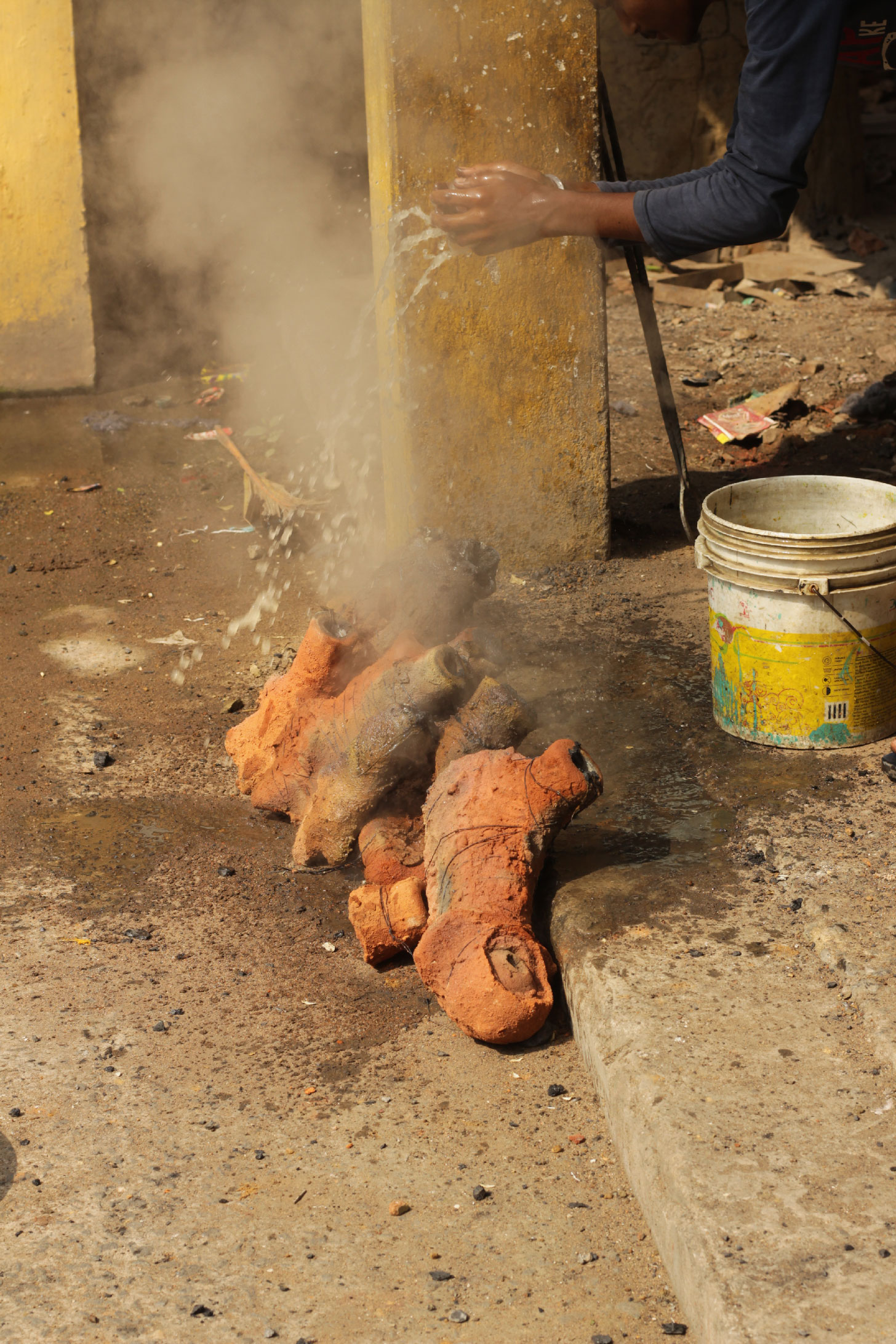
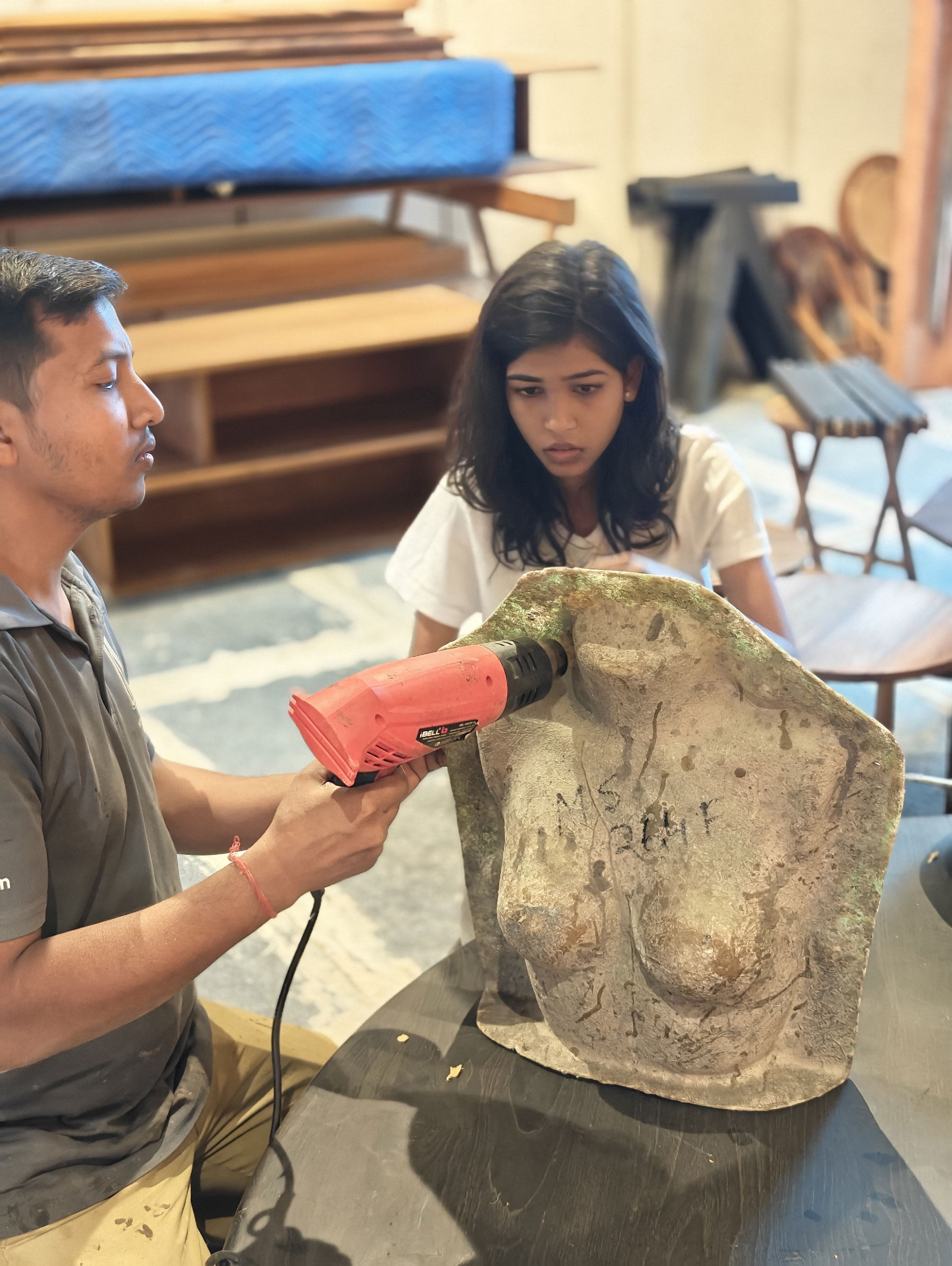
We are working with this cluster from Kerala who do bell (Kansa) metal casting. They are used to a lot of shiny metal pieces, which are high gloss. They are high gloss because they are puffed till that level. But what was interesting to us is when the metal is exposed, you basically have the wax mould, covered up with mud, bake it in a furnace and then you mix and pour in molten metal into that, now when that metal is getting exposed to sooth, it has that casting of a very blackish kind of a surface, and creates a patina and if you see really vintage bolts, only the outer surface would always retain that patina, only the internal surface, they would buff it up, as you are eating out of it and you would not want those pieces to go into your body through food, which makes sense. However, that is like a sacrifice you are laid for the metal when you are using it over time. When you are cleaning it and using it every day, that gets sacrificed before the metal and the life of the pieces also is longer. So it is not a flaw, it is just how that material is behaving in a certain condition and that surface is beautiful and interesting. When you are working with the artisan, they would not even show us such things. They have these discarded pieces in one corner or in one box or in a cupboard.
AD: Whatever they showed was only shiny, and then it took us a while for us to get comfortable with them to ask the questions like, “Why make it shiny?”…
Pretty much all our documentation happens like that; we will be staying with the artisans for a while to just understand the craft. They are not for a specific project, but we are just documenting the craft as a very open-ended documentation. You are just documenting because you are trying to ask questions about what it is and why it is more like just a documentation of the craft; you are trying to understand the process and the material, so the entire ethos of the workshop kind of revolves around this where we all are trained to always ask questions, and if they go wrong, make a mistake , it is all okay.
DS …and also be excited about something else happens by mistake…
AD: Till date, that has led to a lot of very interesting processes, the designers who have stayed with us for longer, have been able to move forward and do things that are more interesting, because it is not simply about the conversation that it can be made. It is about understanding the process of how, why and all of that, and then you kind of get together and create that.
At a very gist of it, we really try hard to make sure that these hierarchies are broken – everyone should be free to observe, ask and adapt to something – every artisan that comes in should be free to pick up and understand a skill that suits to them. Opportunities are there for all forms, everybody is free to push themselves forward; everybody is free to express their ideas and it is okay to make mistakes,
AD: As a matter of fact, when you start this dialogue, people start opening up and are actually candidly having conversations with you without an agenda because they know that it is okay to talk about a few things, it is okay to question it and nobody is going to put you down about that. A lot of our processes are experimental, and there are a lot of ways we work, but when we do, there is a lot of internal research that happens.
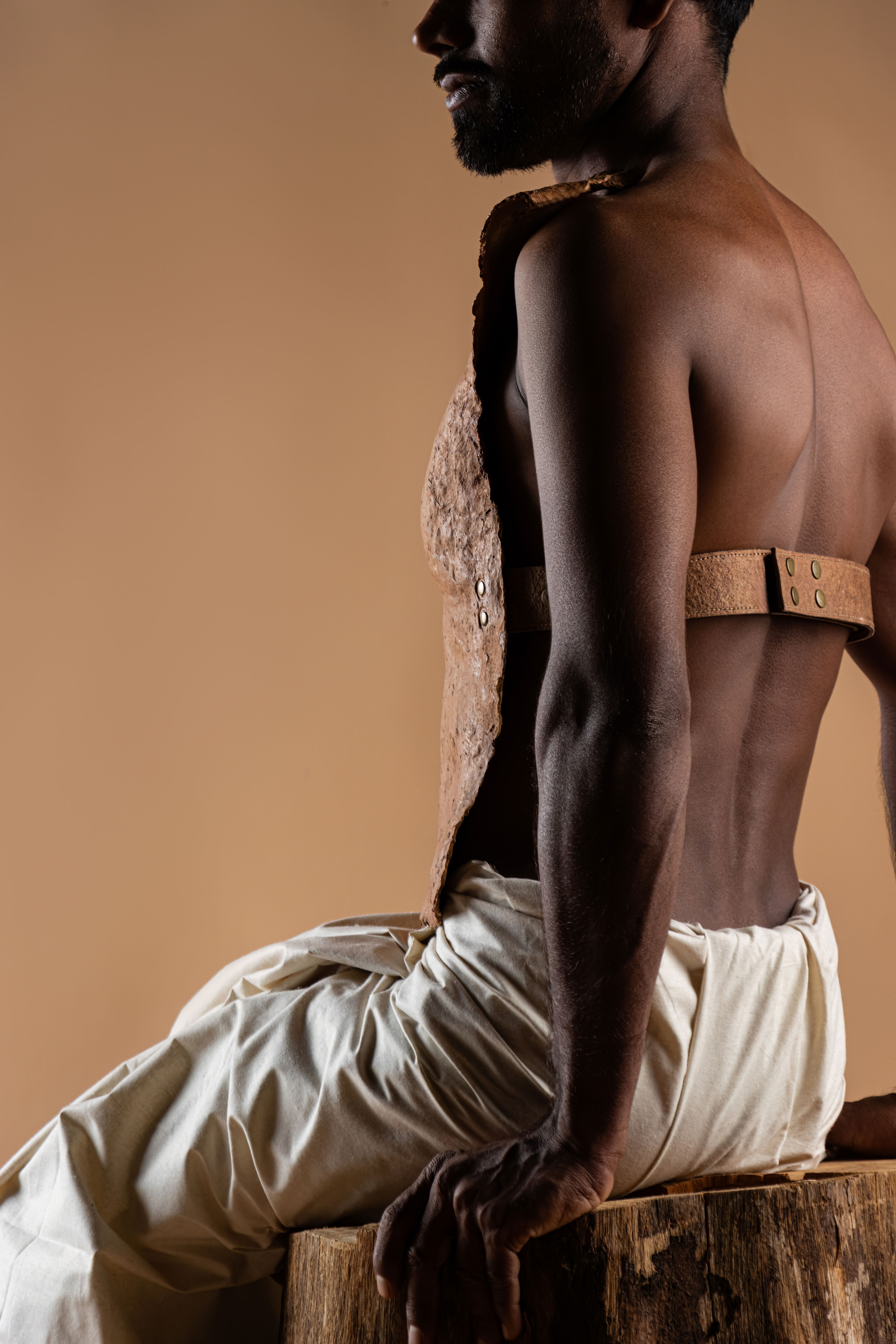
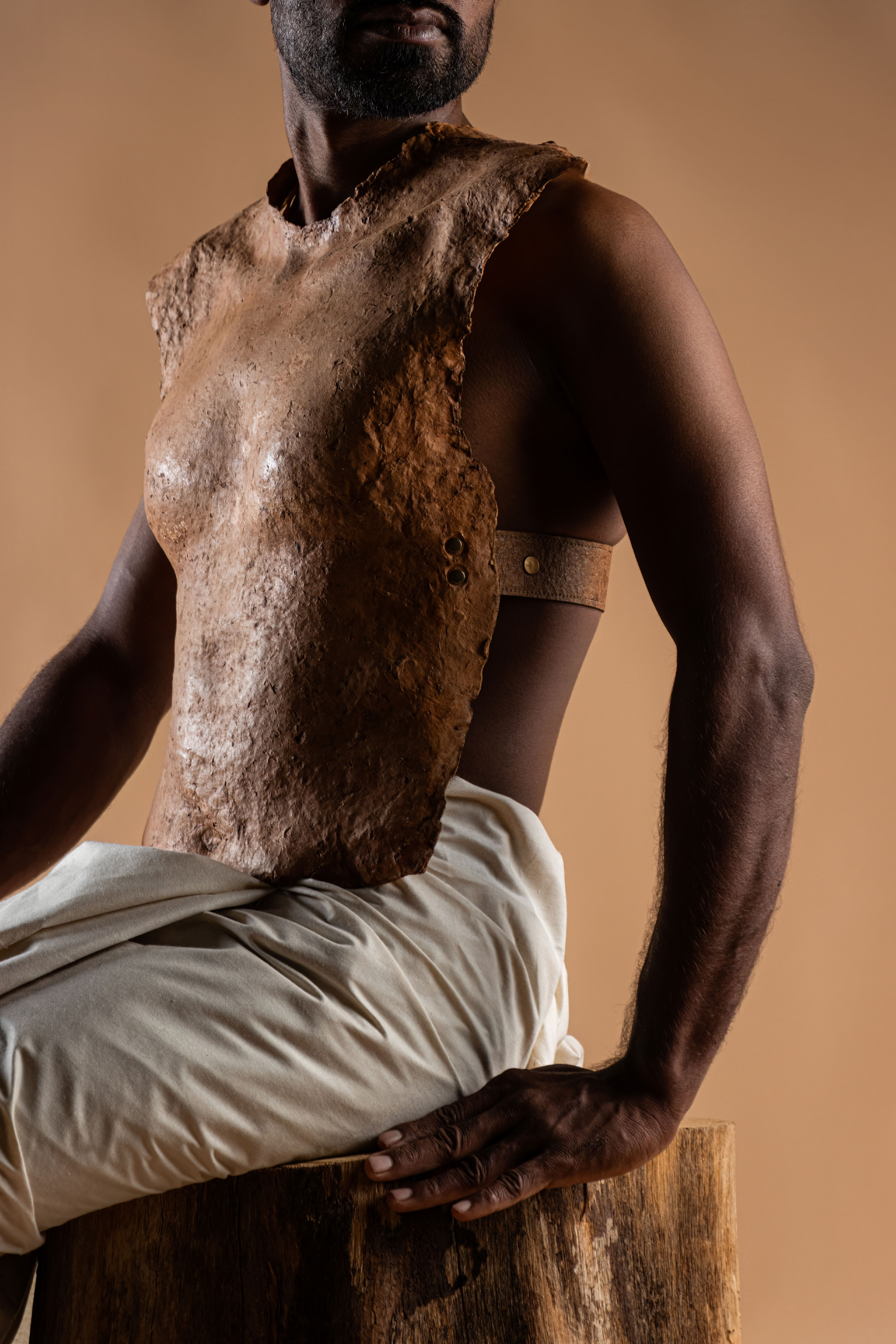
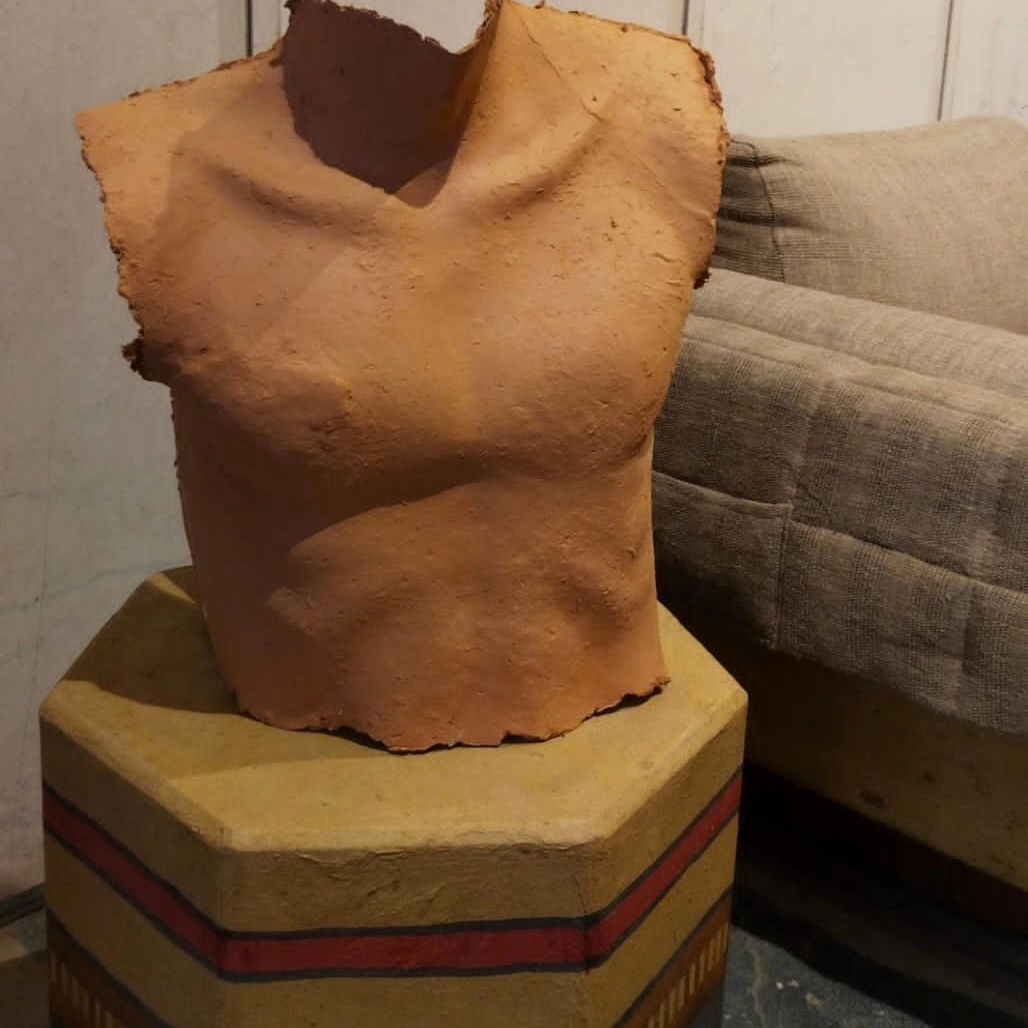
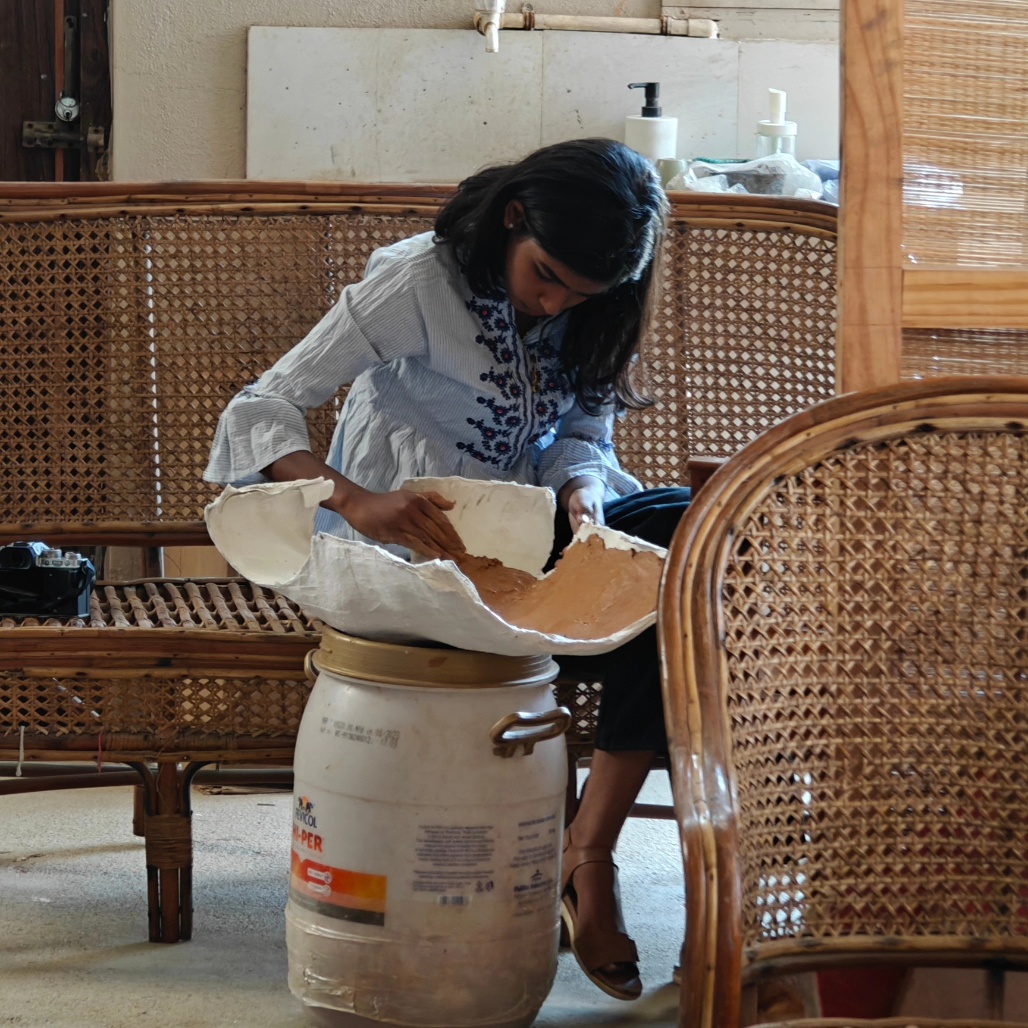
In internal research, we were exploring this idea of paints which are completely not made from these artificial materials, which could be very eco-friendly, and could be used on toys. We were able to work with this milk paint and kind of create this product but when we were doing these things, one of the artisans interestingly brought up a topic that his wife makes this pulp, and they granaries out of it. We asked him if we could see it. The next day he called up his relative, he took some pictures from his neighbour’s kitchen and we found these earthen wares that are made of paper. That was a crazy eureka moment for us because we knew that the granaries and the paper machine culture existed but it seemed more localised to certain larger products.
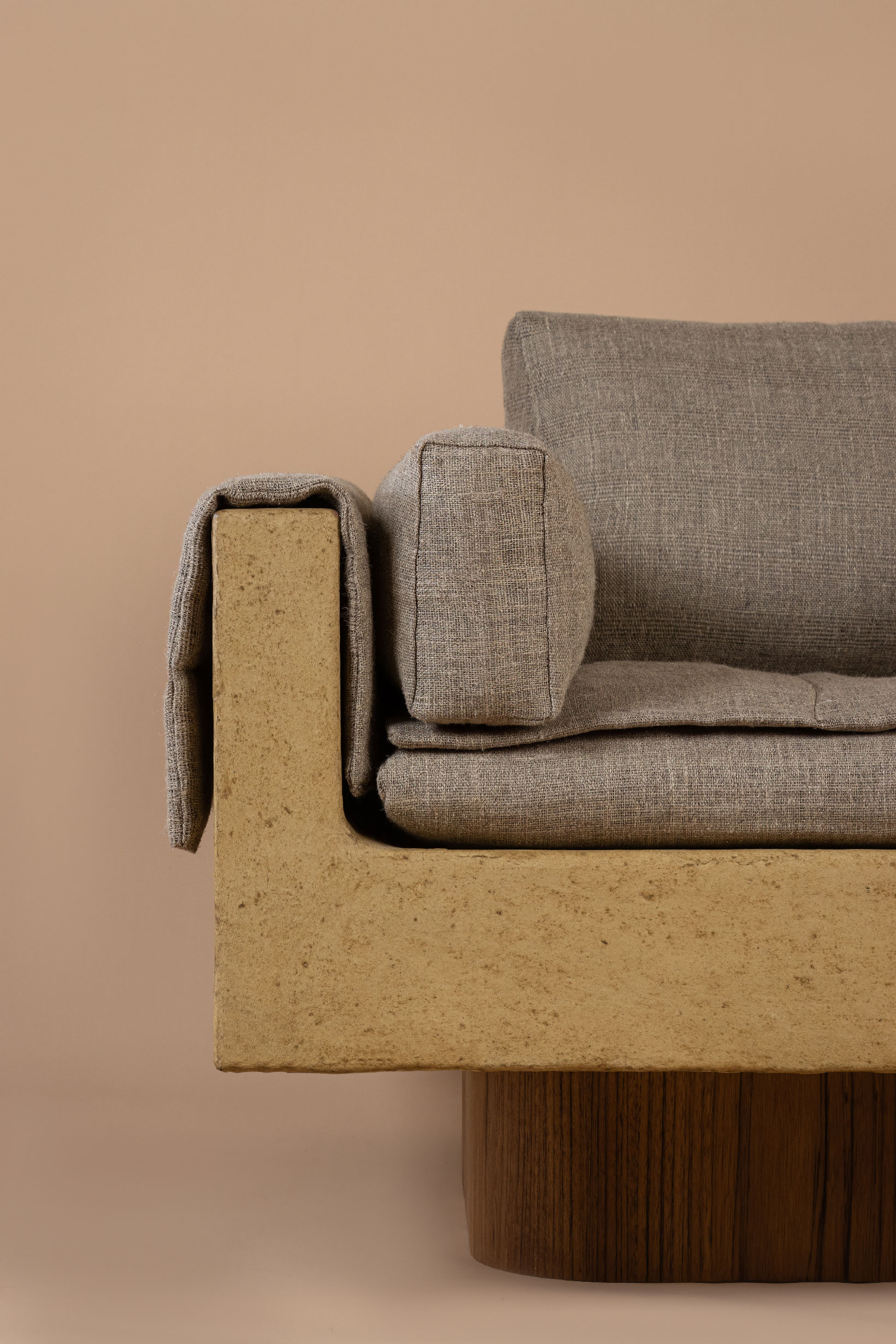
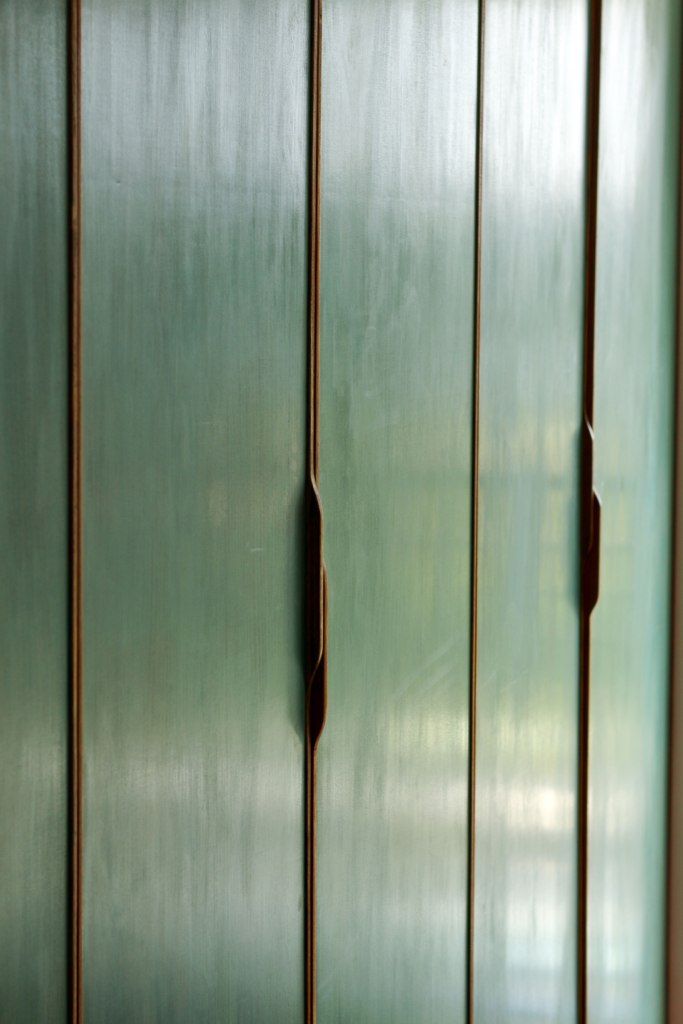
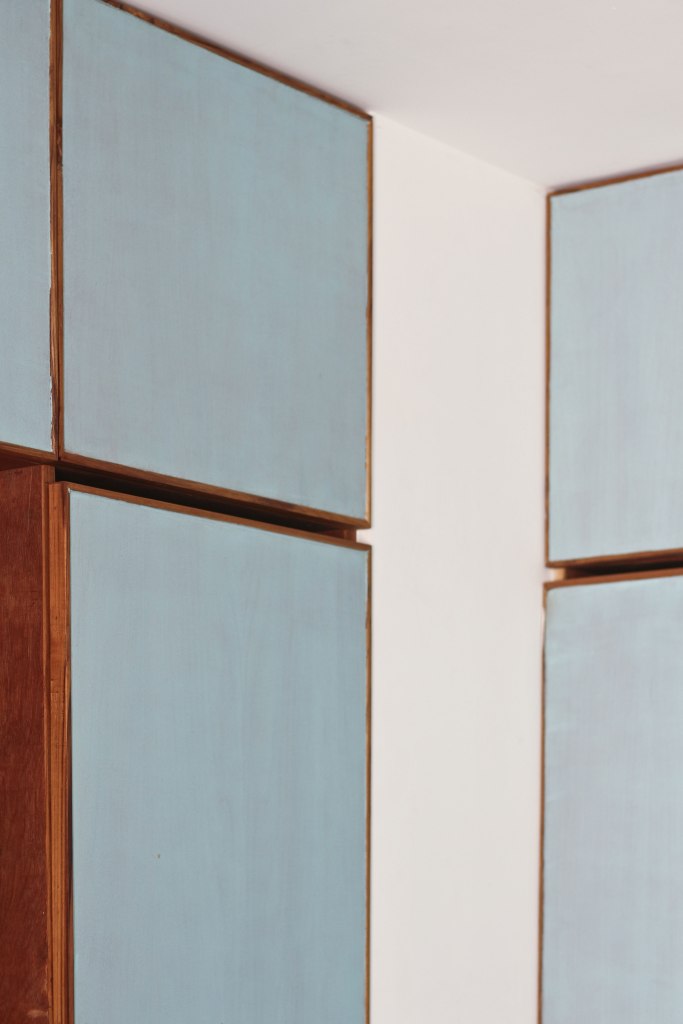
Then we started this whole conversation of trying to understand it and it took us close to two-three months of absolute research and then another six months of experimenting accumulative year to kind of come up with a recipe of surface coating, which is just made from old saree, normal local clay and mud, and shredded newspaper. Suddenly if you put these three together in a certain proportion and in a certain mixture, it makes this versatile paste which can be applied on any semi-absorbent surface, something which can exchange moisture and it can travel to different forms. You can basically waterproof it with natural oils further and suddenly you have this material that kind of blurs the line between architecture and products – it is like mud-architecture but it is happening at a very product level.
This entire product, and process came about by someone candidly throwing out an idea. It was nobody’s intention but it is always about the attentive ears and eyes that search for these threads, like you want to pick different things from different places and see how they interact with each other, and only once you are able to put this out, we realise that, it is something that is very versatile, like it is still developing, like even after one and a half years and putting out one set of idea…two sets of ideas, it is still continuously evolving into something that we do not know what it is exactly, and we are more than happy because this is what they did in their villages.
AD: When someone practices this vernacular knowledge, it becomes a vernacular craft; when somebody excels in that craft, it becomes a handicraft and a product that you revive but sadly today, if I say that I am going to handicraft fair, it has a stigma attached to it. The stigma comes because of the fact that the handicraft fair is just handicraft because of its novelty and its imagery. It is not about the techniques anymore, the struggle and the artistry that goes behind it.
For us, it is very important to dissociate with the idea which is why we never use the word handicraft – it is always about vernacular craft and vernacular knowledge.
PROCESS
<30:34>
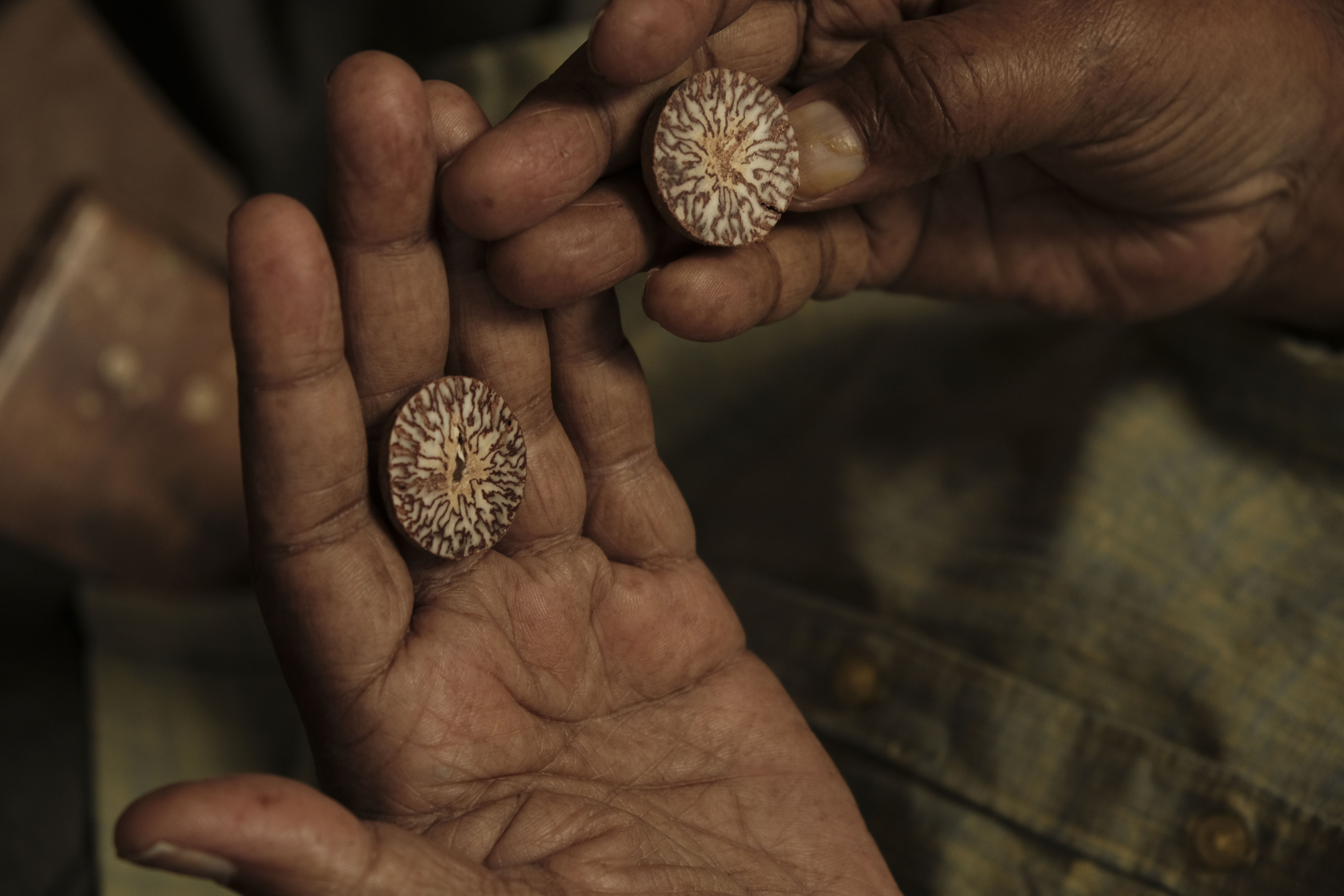
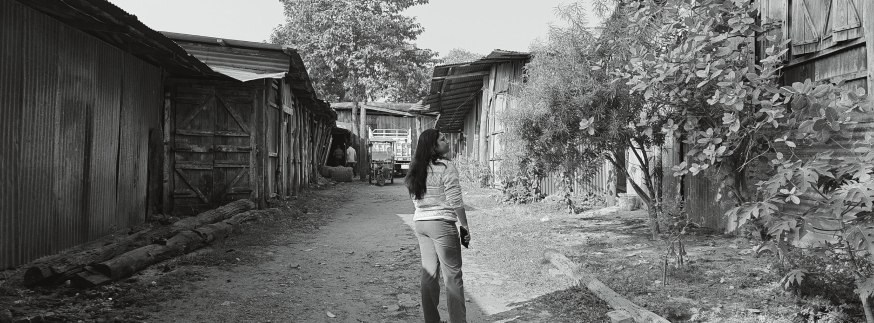
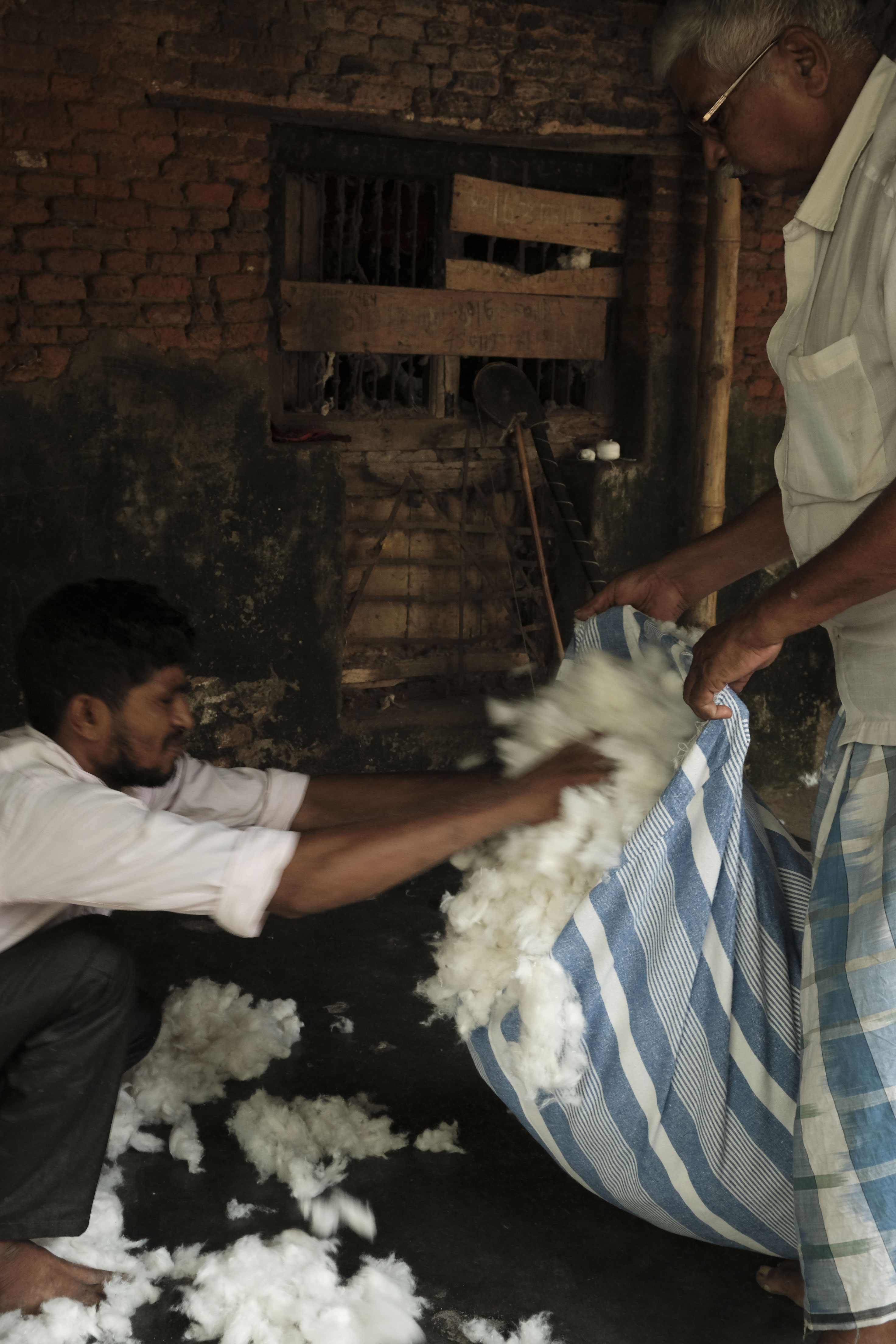
DS: Right now, what is interesting apart from wood-working, which is our core skill set is the craft clusters that we are working with. Few of these interesting craft clusters are in very remote parts of India and it is a very conscious decision to not uproot them and get them in-house is because the material sourcing is very local to that space and it only makes sense to practice in their habitation. For example, we are working with this cluster which is situated in this village near Bangladesh border and they do this cushions filled with cotton like ‘gadhas’. They use this cotton called ‘Shimul Tula’ (Red Silk Cotton / Kapok Fruit) which is these silk-cotton – soft, fluffy and beautiful, and it is only possible there because we know Bangladesh is the hub for good cotton.
It is so interesting because it started a conversation again for me and I started introducing it to my product lines and things like that. I inherited a mattress liner from my grandparent, something he was using and when I was shifting houses, my mother asked, “do you want one?” and I said ” okay, fine” and I was back in my hometown back then and one fellow came, he opened out the stitches, pulled out the whole cotton infill, fluffed it up, half of this was powder, which is very natural because it being a natural material. It was eighty years old or more, and he filled it with some new cotton and that piece was brand new and it was so beautiful and so poetic in that form because you are able to use a natural material, and whatever you are doing, you are completely wasting its certain life-span. It is not a wasteful thing and half of it is brand new.
DS: It is interesting how we have unlearnt it also. Just two generations back, everyone knew it, that was the norm and now, we absolutely do not. I was not even aware of something like that existed and the beauty of that material is that it is temperature positive, it is warmer in colder temperature and it is cooler in warmer temperature, it is natural so there is this moisture exchange that is continuously happening, and it is much more hugging to your body rather than foam which is just toxic. For the longest time in our line of products, we did not have anything upholstered or cushions because we could not resonate with just pasting a bunch of foam and using them. It is only after that visit to my hometown, we made our first sofa.
All of these clusters are a set of stories which is what opens up the possibility. As an organisation, this is something we can add to our team: the core team (ten) are in Bengaluru, three of us as designers but then we have about ten to twelve clusters that we work with and they are like an extended family for our organisation and they are often in remote areas.
DS: Initially, when we started with these craft visits, we did not have any plans but as we moved forward, we started documenting, interviews, and we were able to create this huge library of materials. They had enough work and this felt right to kind of be a medium to kind of bridge that and we started keeping few samples here, on our desk and started thinking and so many new possibilities happened…
AD: When a client would come, they would always want something which is more modern, then we would say, why don’t you give this also a try? Suddenly a lot of clients started picking up on it and that is what led to this very interesting deviation where the idea was that if it is not wood, then let us do some other practice where you are actually absorbing from the existing practices and existing knowledge. There is a signature of that person, there is a story of that person, it took time, you have provided to that person sustenance at the end of the day – that is an important thing.
DS: For the projects, we were collaborating with them and marrying other materials with wood, we started coincidently meeting and crossing path across with a few artists. It started with a few galleries; we were working with Aequo back then where they are trying to have this interesting collaboration between artists or designers who are international and having designers and expression mediums from local craftsmen.
When you are having conversations about these projects, what happens is, the artist comes with a vision which is open ended, yet it has some restriction. That is a very sweet spot, because they know what they want at the end of the day and we become their way of expression or giving a voice to their thought, so these kind of projects are often very interesting.
I think the examples that we cited, these open-ended projects which have these restrictions but it pushes us to think what can we do more, is what is exciting and that is something we are looking forward to, that is what we as a practice seek out to. It’s actually for the soul.
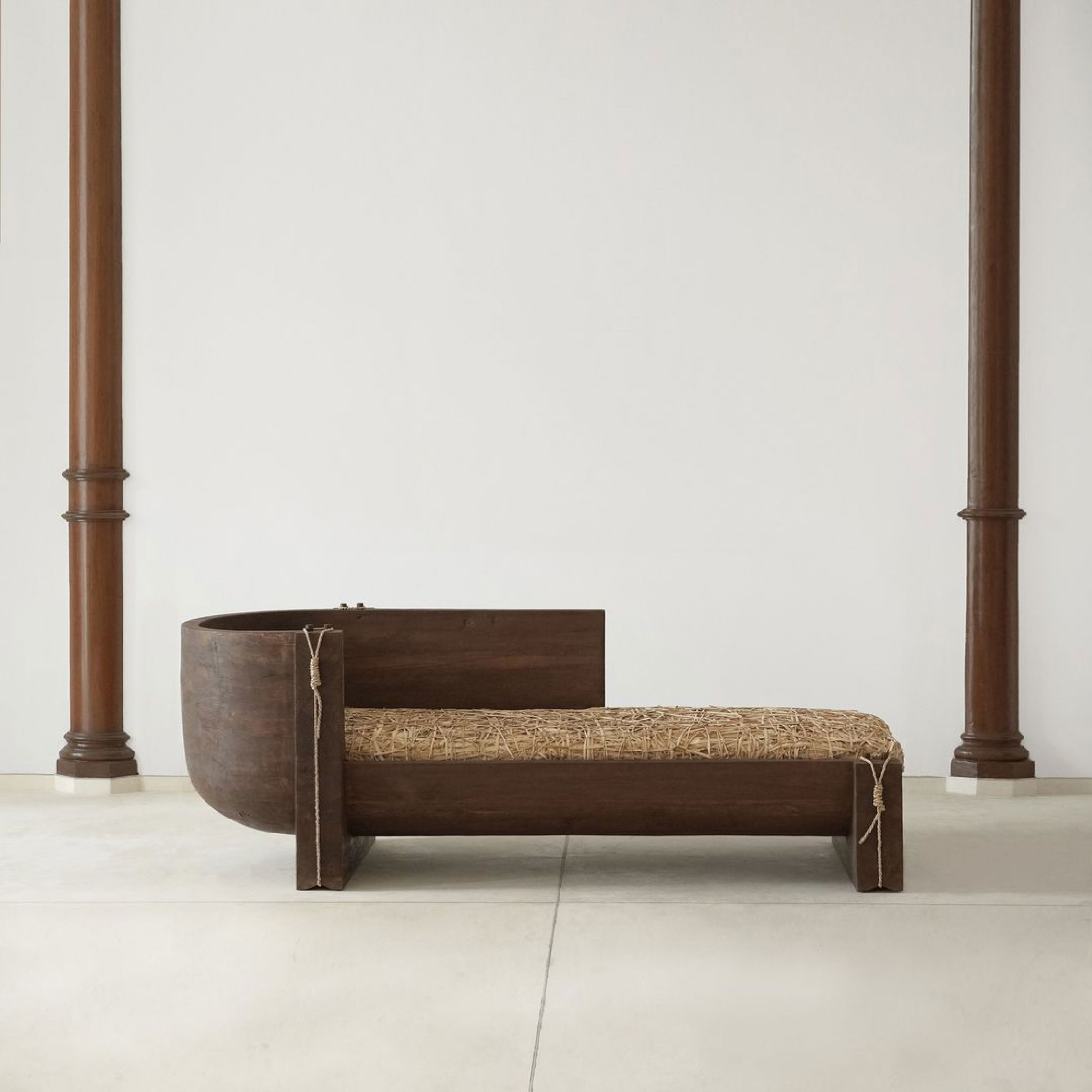
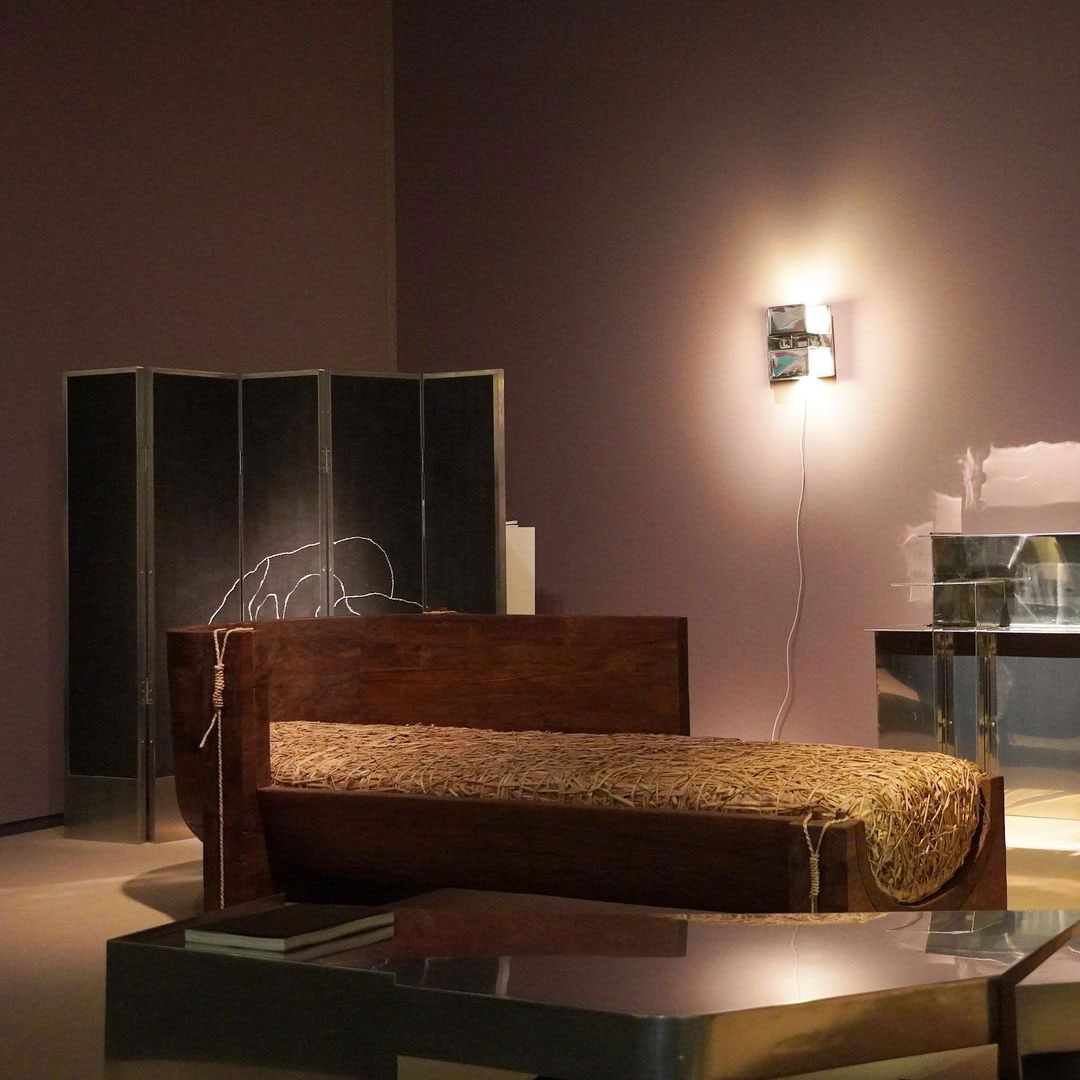
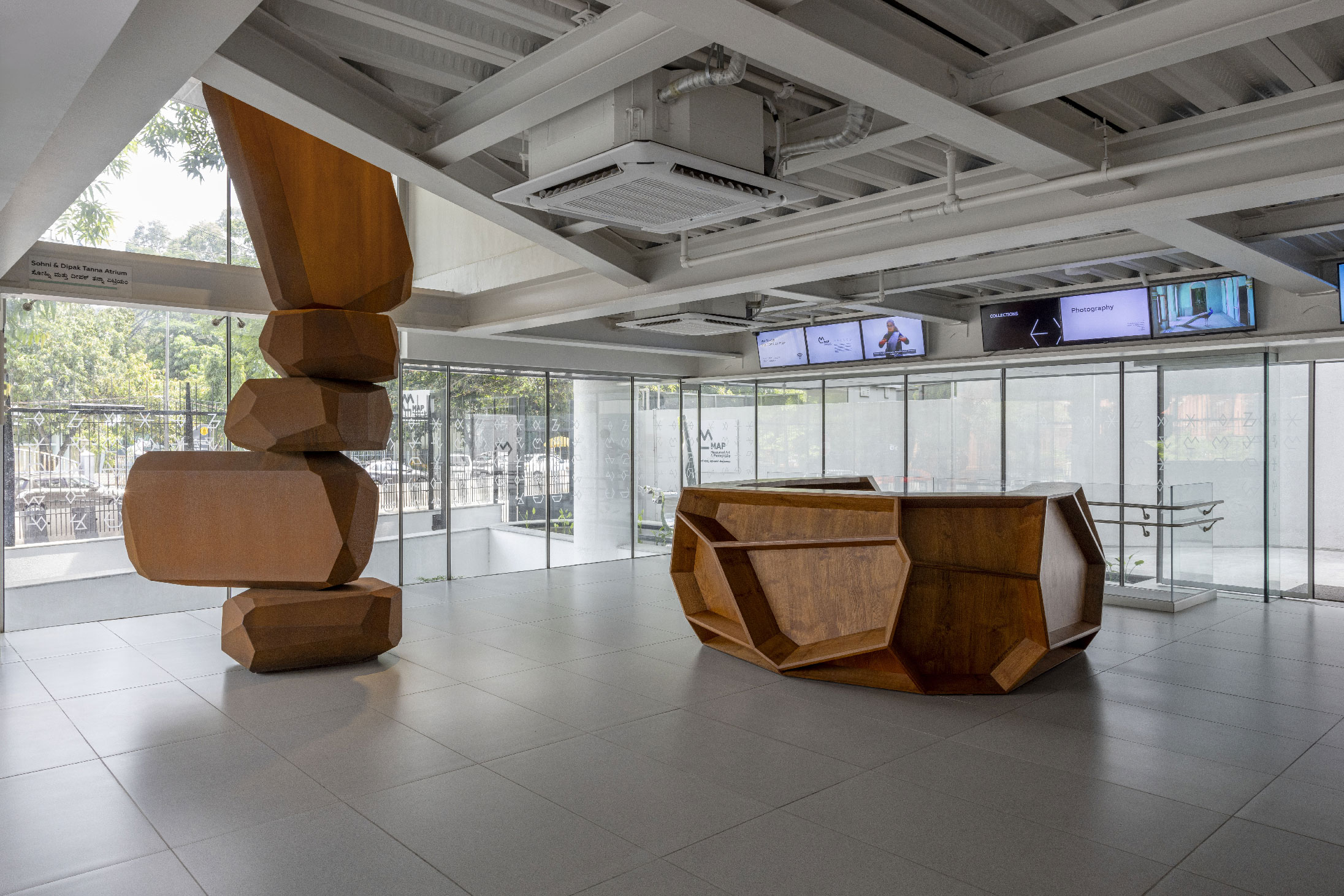
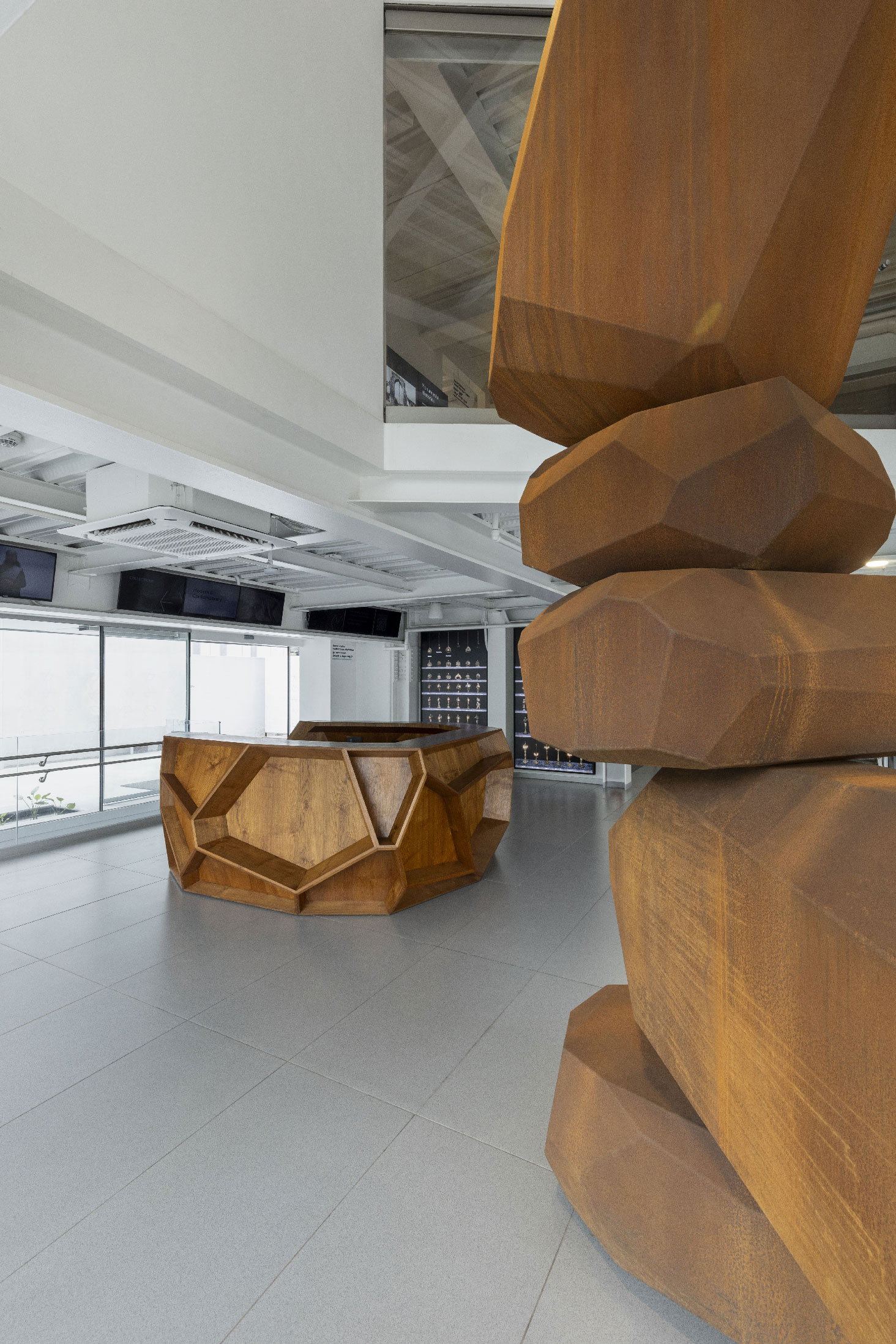
AD: If we look back at the entire way of working, we primarily work in three broad sectors: the first category is where we do these very limited collections on artist collections. For eg: what we did at the Milan Design Week 2024 with Made In Earth or what we are doing with MAP and what we are doing with Aequo. These are basically pieces that are numbered, and they have a significant amount of research and collaboration that goes into it.
The second way of working becomes where we are using our internal research and available resources to create something for the client which is a designer, architect, collector, etc. Something that is a part of their house or property or their project. These are not necessarily numbered or these are more like self-explanation. It is like a collaborative approach where you kind of create these pieces. You can do them again later and that is a very regular kind of a commission that happens. In that, we try to make sure that wherever we are able to put in some value we do so that it becomes a little bit more special than what it was intended to be.
Because we have been practising for a while now, the last way of working is where we subconsciously/ intentionally/unintentionally develop a line of thought or a collection of products. These are the pieces from our archives that are often re-editioned, so to make things simple for clients, sometimes we re-edition them with certain modifications and development, we re-edition them with newer thought processes and they become something that I can just pick and manually customise it and create.
Broadly projects would fall under any one of these three factors and that would define how we would work and how we would approach the project also because if we identify this early then we are able to kind of set the conversation in right manner and also understand how to go about the questions and also observe.
AD: I think mainly the idea is that when we work with the internal projects right, there is a layer of self-study and documentation that happens. It keeps evolving, sometimes these evolutions are something you have to push internally, because you might not always have a project where you can evolve it, you have to push it internally for you to be able to be ready when a project does come around, or you can execute it. These are done at a personal expense and a personal time but then it is something that allows us to be motivated that, you are in continuous touch with the sector that you are working with, you are in a continuous touch with the development of the process you are working with. These libraries and craft explorations also form a very large part of the daily research work.
DS: I will tell you exactly what the process is like; how an artist would sit in front of a blank canvas for a longest time before putting his first stroke, it is almost like that, at a very subconscious level. You know what you want to do but you are not really clear how to move or which way to move to do, what you want to do – it is almost like a trance.
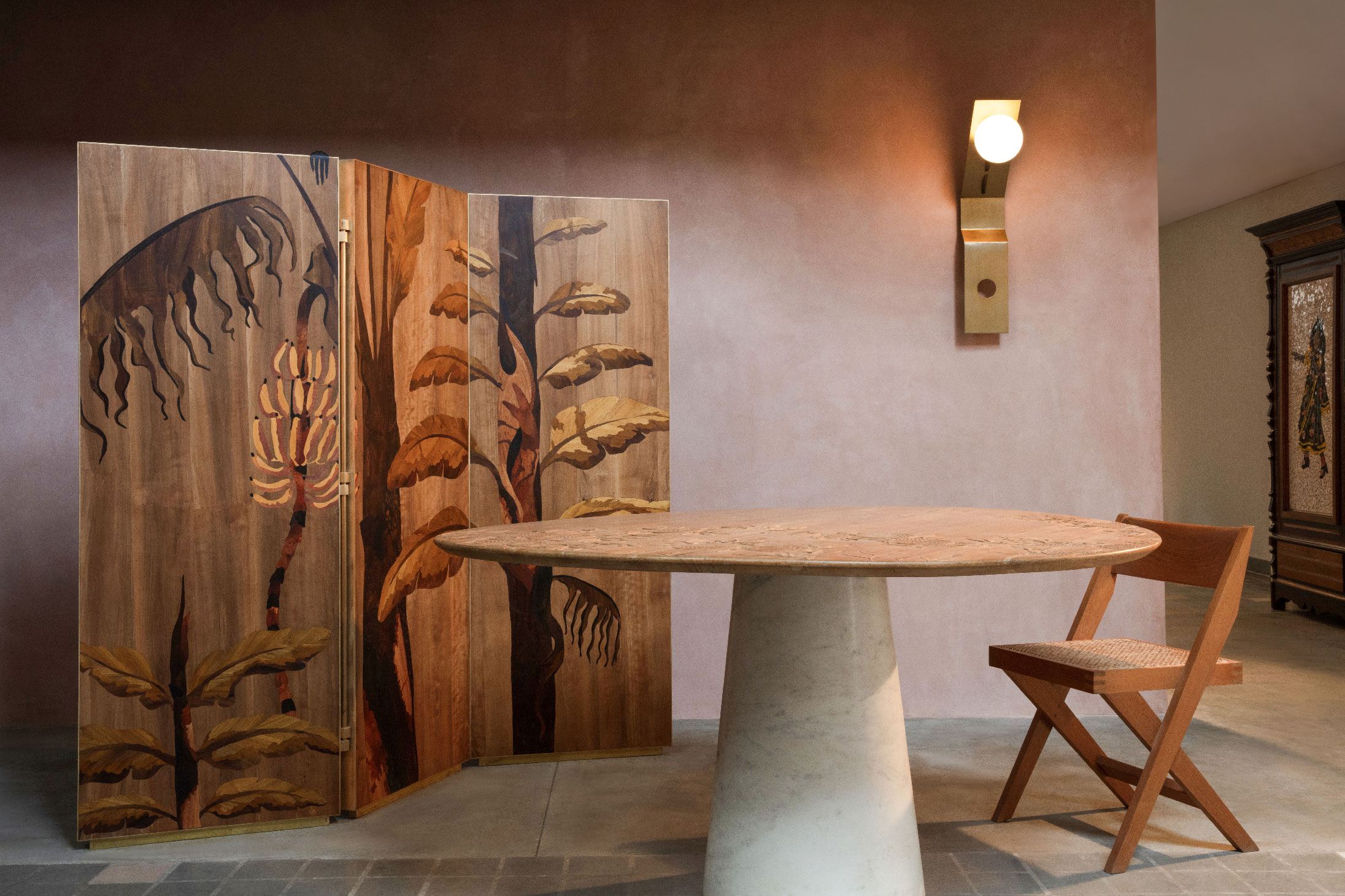
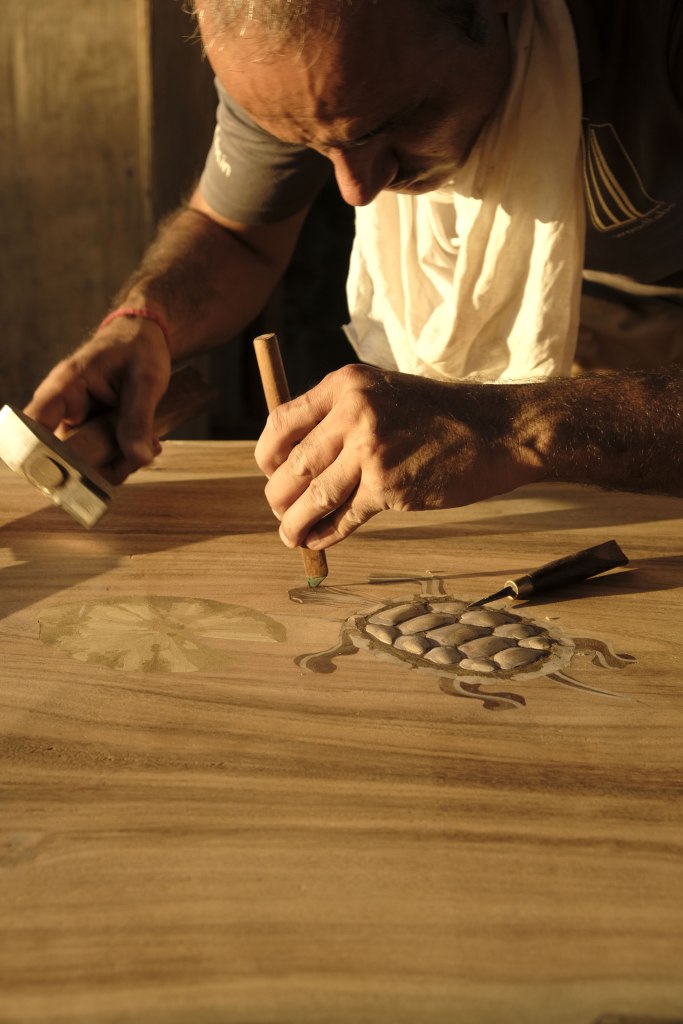
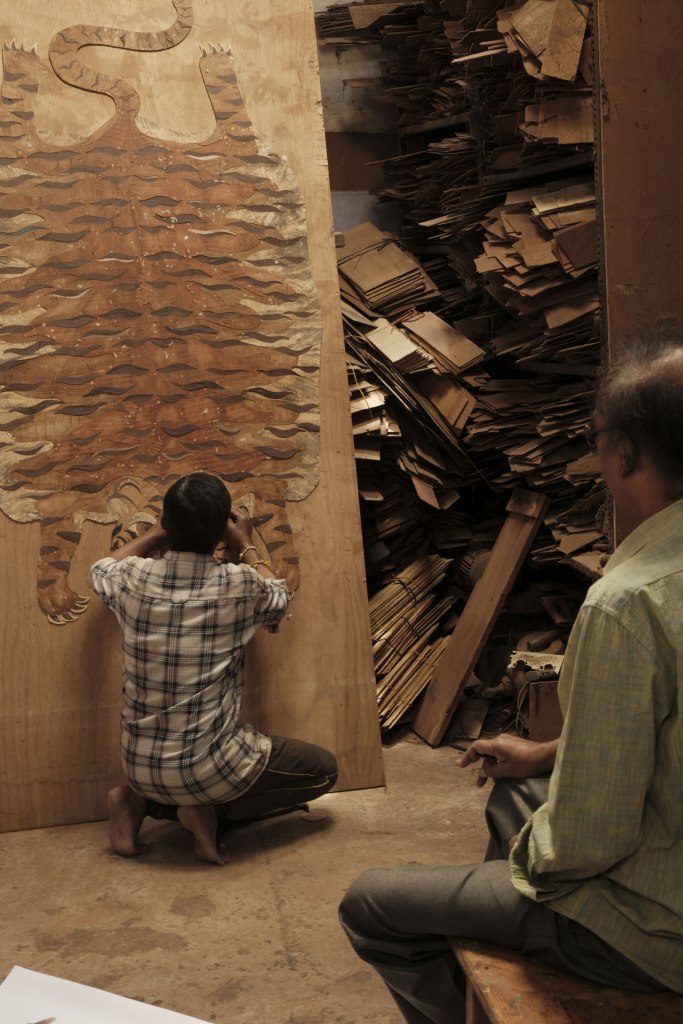
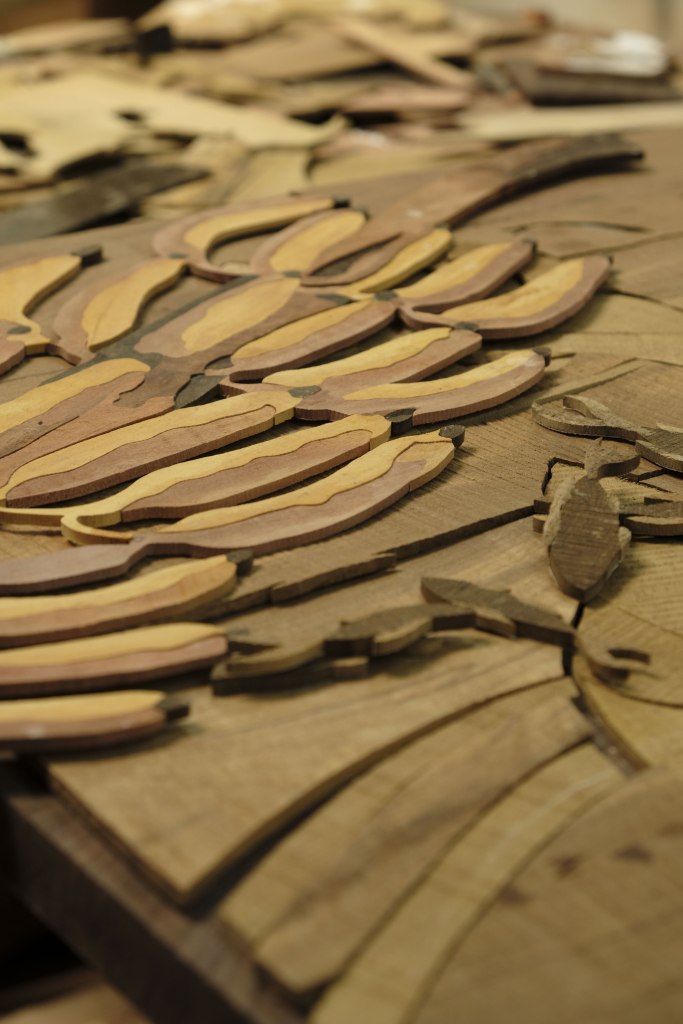
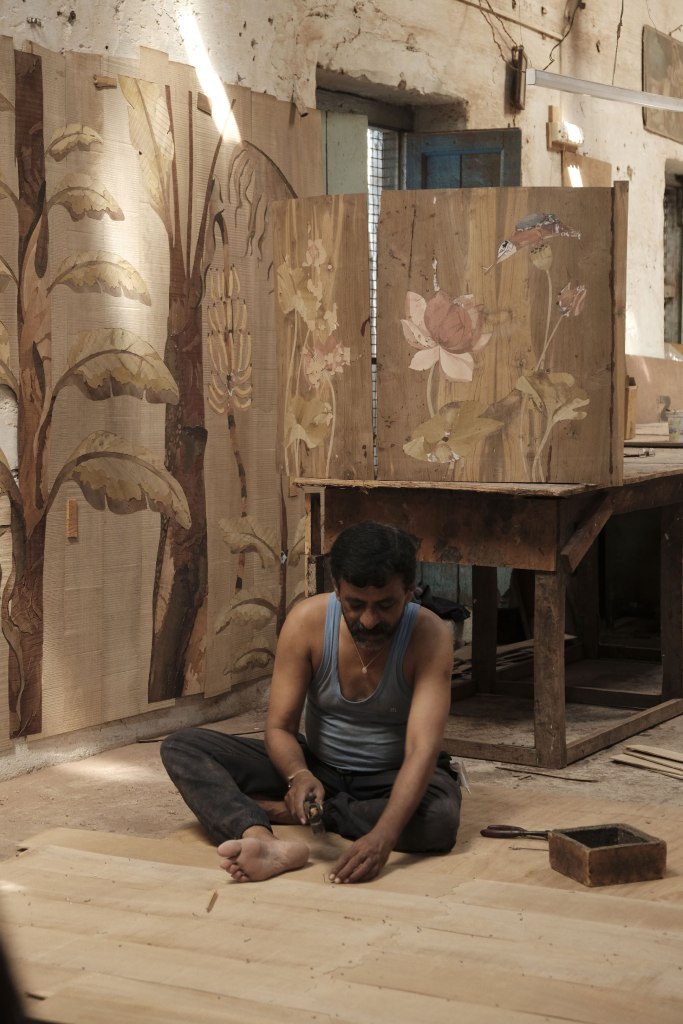
Abhirup Dutta: For instance, we somehow got a client on a page saying that, “Would you be interested if we put some inlay in your pieces?” The client was on board as long as it did not take too much time. It started with a witchhunt, in the city of Mysore, trying to track down an artist.
DS: I was just looking for a navigation back to Bengaluru and because I was researching, Google Maps just popped up a name and his body for work seemed very interesting because he is not someone who is just doing the Dussehra panels, which is celebratory of the craft. He was working more with light and shadow, there was a depth play, he has a contemporary take on things.
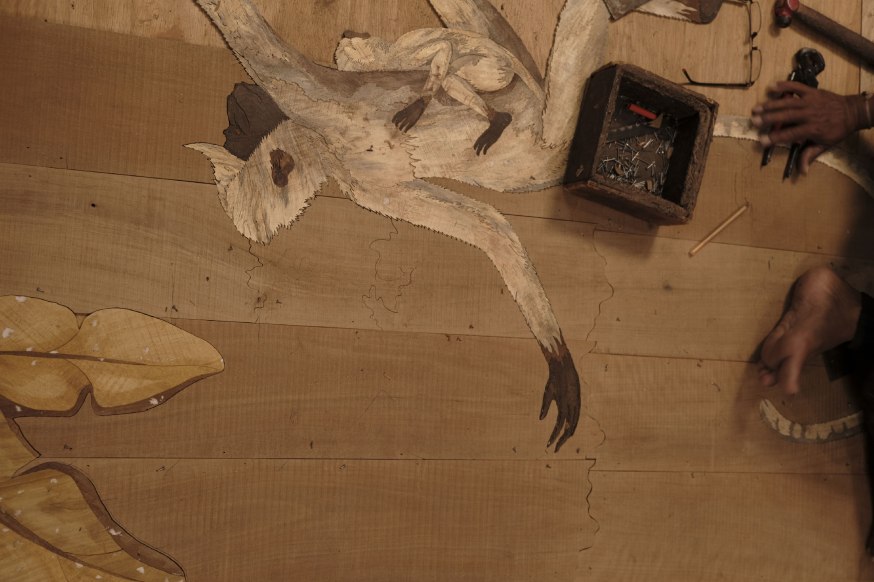
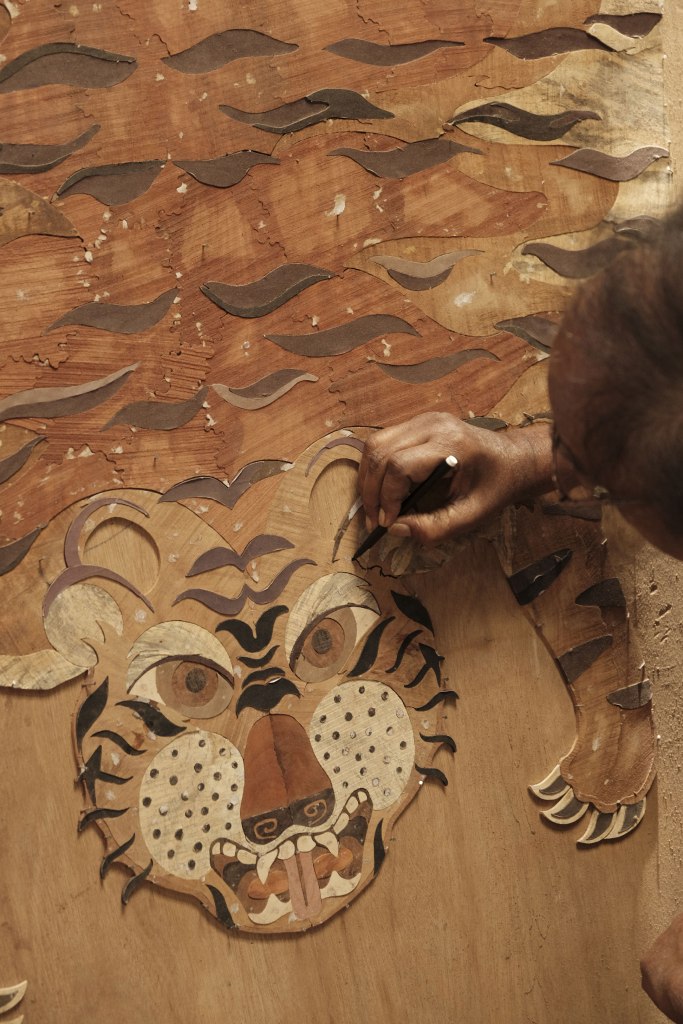
AD: It was almost like he treated it like water colour, but with wood, and every colour that he achieved was with species of wood, it was not tinted or painted.
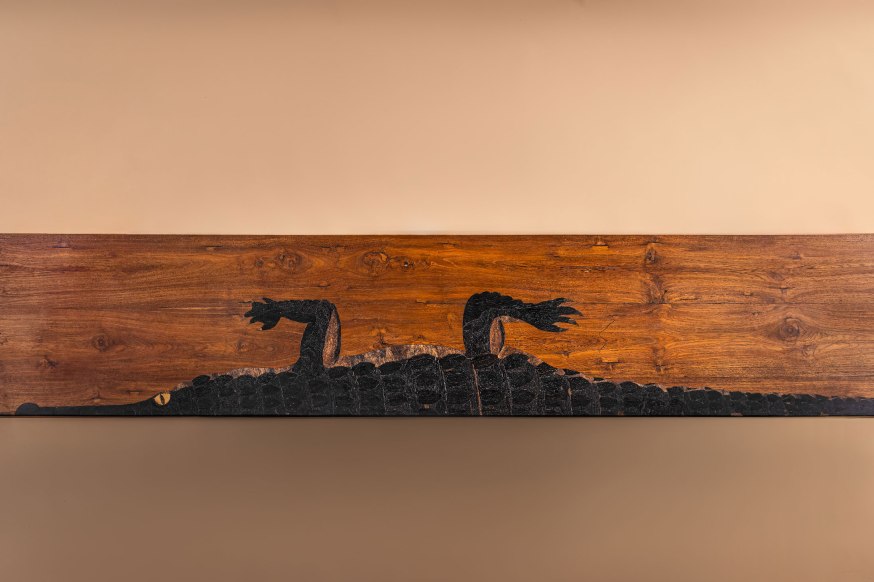
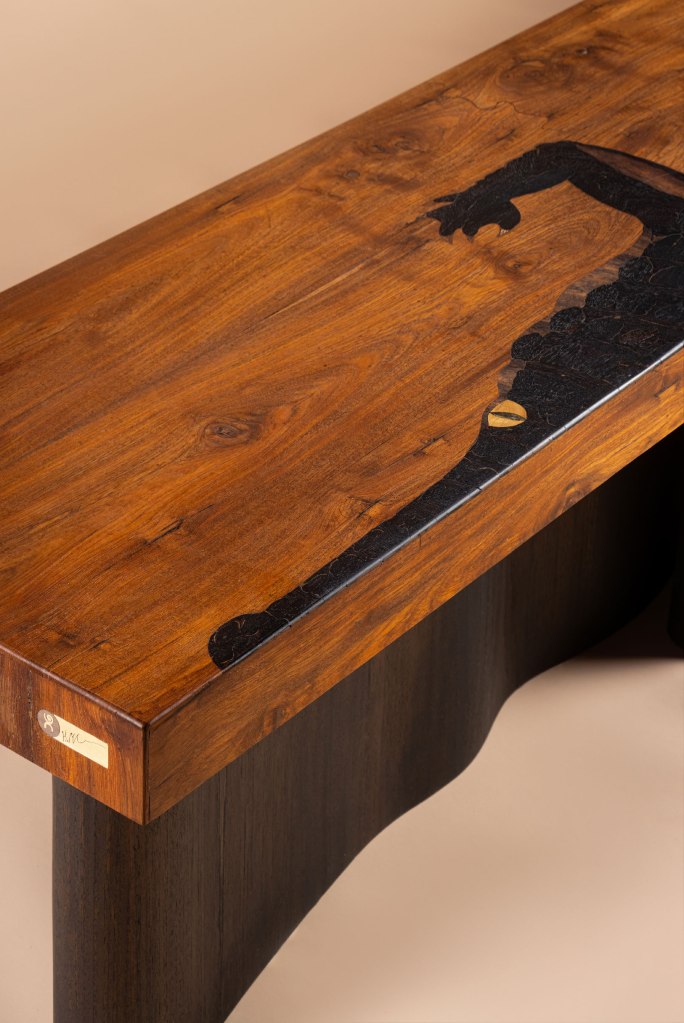
DS: It is so interesting when you are working with wood, there is no shade card. Because even in that particular slab of wood, there are grains, the inner section is going to be a different shade than the outer section, and this guy is able to not just cut wood and put them as blocks, he is documenting them by shade, by region of the wood, and by sub-species. In a Crocodile Bench (Ghariyal Pittikai) that we did, to achieve the scales, he would just cut wood from the mid-section of the internal and the edge bit of the wood, so it is that sweet spot where we are getting those very shaky grains and that kind of gives the illusion of scales.
AD: It was a very blind development and a conversation that led to some very primitive samples and when the clients saw the samples, they were kind of sold, but we were not, so then we took a little bit more time from the client and went back and forth between the artists and the brief. We went back and forth trying to understand the whole language and that suddenly opened up an avenue – a kind of a very interesting connection with the artisan where he was able to understand what was missing and we were able to explain what is missing. It was us observing an artist at work, but also trying to figure out how to make the story work at the end of the day, that simple thing when the sample was made, on our own time suddenly became a path to the client, to be able to be expressed somewhere, and once he was able to do that, he understood that, the fifteen subspecies is not doing justice to our conversation then that fifteen became thirty on the next meeting. He was able to break each species down into different grades and he was able to break it down into different options and then it became a little bit more mature, where we were discussing something more serious and then that started brewing for close to about five-six months and then we suddenly had this collector come in and she saw the initial samples, and said, ‘Why can’t we do this at a bigger scale?’ That led to this birth of these collection of very interesting panels that talk about, ‘nature vs man’ kind of a thing. To a point where it took everyone a while to figure out how to go about certain things and the drawings became complicated. Each panel had to be done from at least five to ten species of wood, now suddenly that thirty became fifty-one, so it continuously kept growing because of a dialogue.
DS: We do not work a lot on computer systems. There are 3D models but they are also at a very primitive level of design development. Especially in case of furniture, because you are experiencing in person, it is at a very personal level, so even the process and tools need to be very personal.
Because there is this scarcity of good skilled craftsmen, it is both a con or a challenge and it is something, like a motivation for us, because at the end of the day, your practice is growing and you would want more and more people to come in and that is definitely a challenge going forward, but then again, it also gives you a ray of hope in that sense because you see so many young kids coming in and trying to figure out how to work and how to pick up this craft.
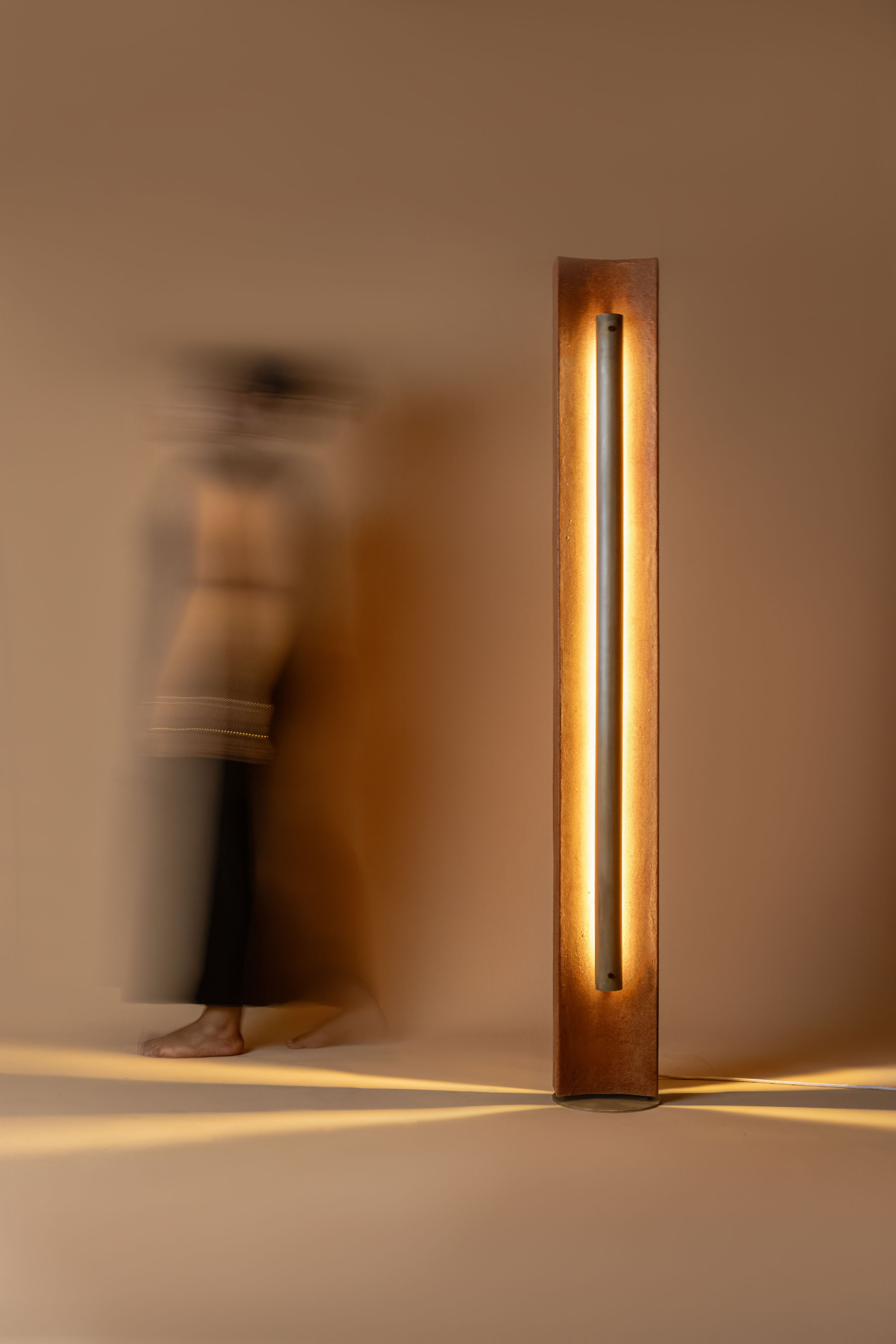
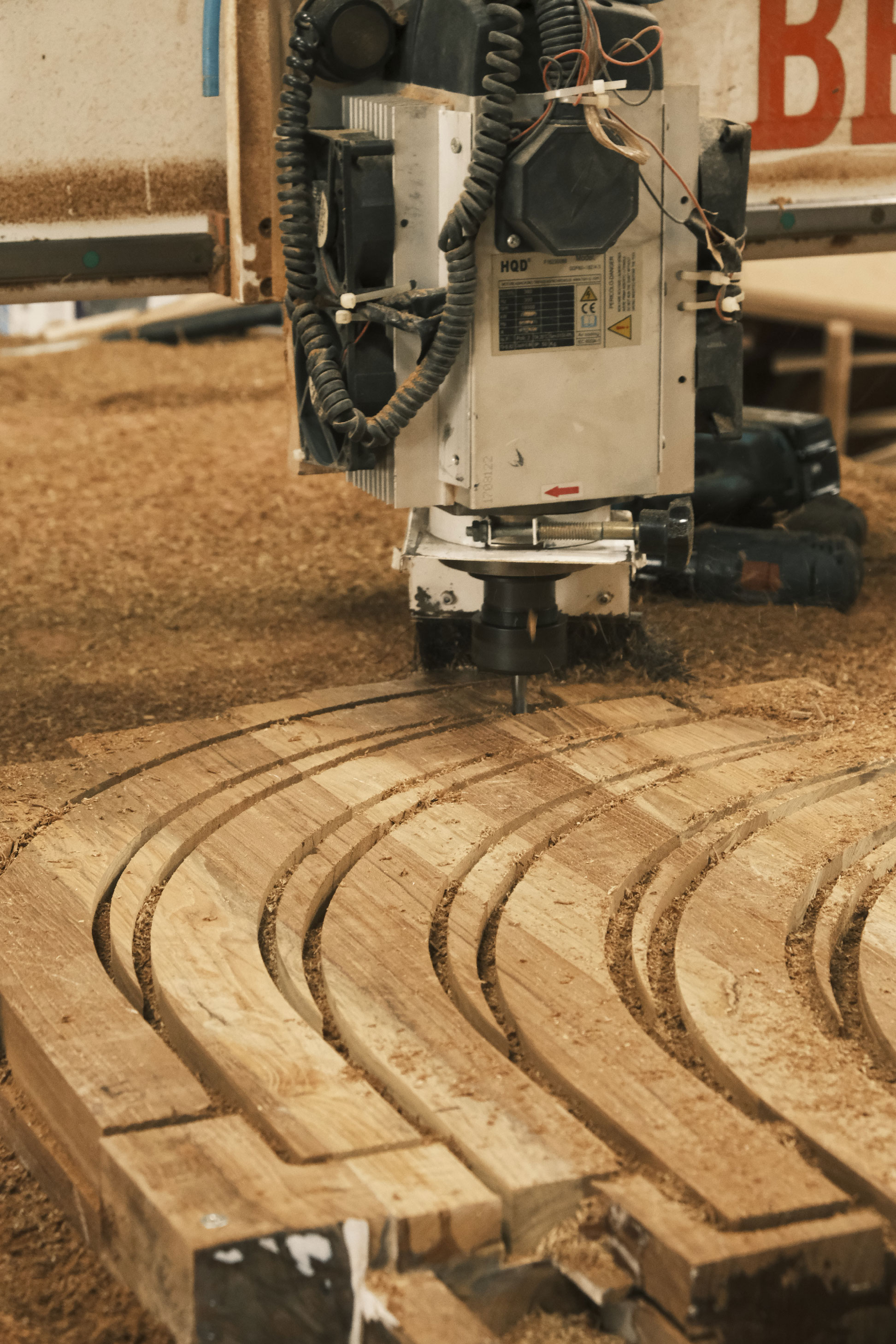
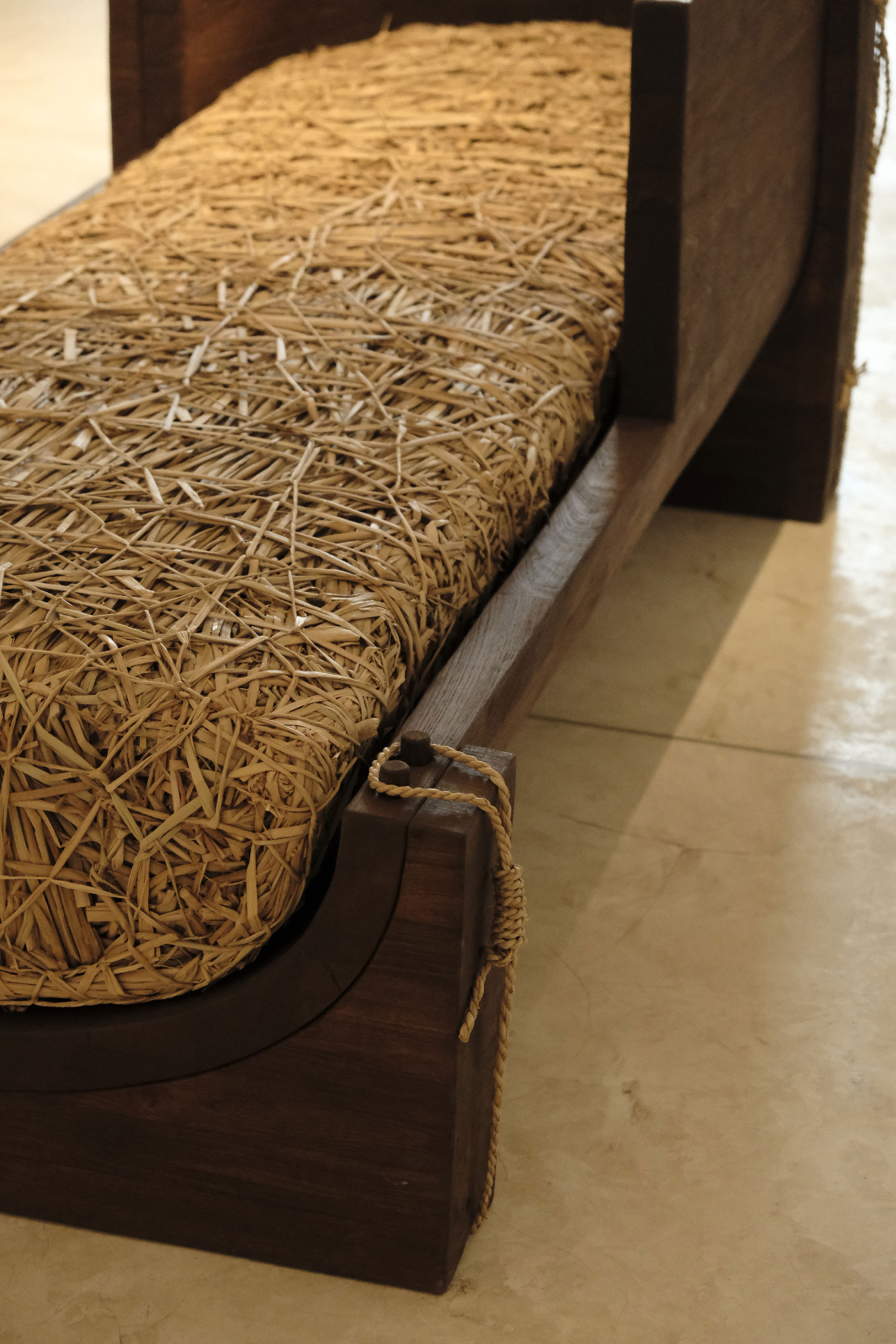
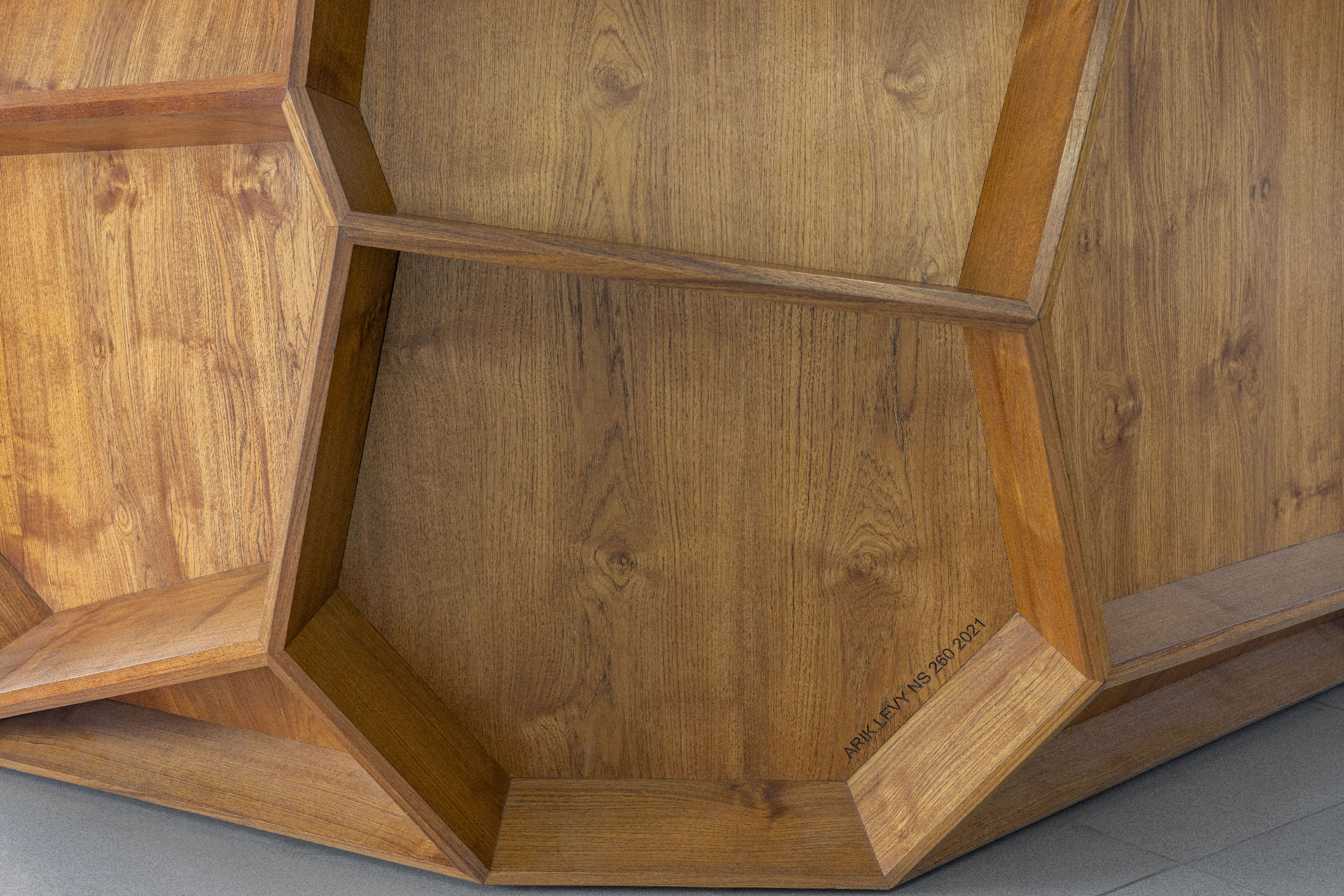
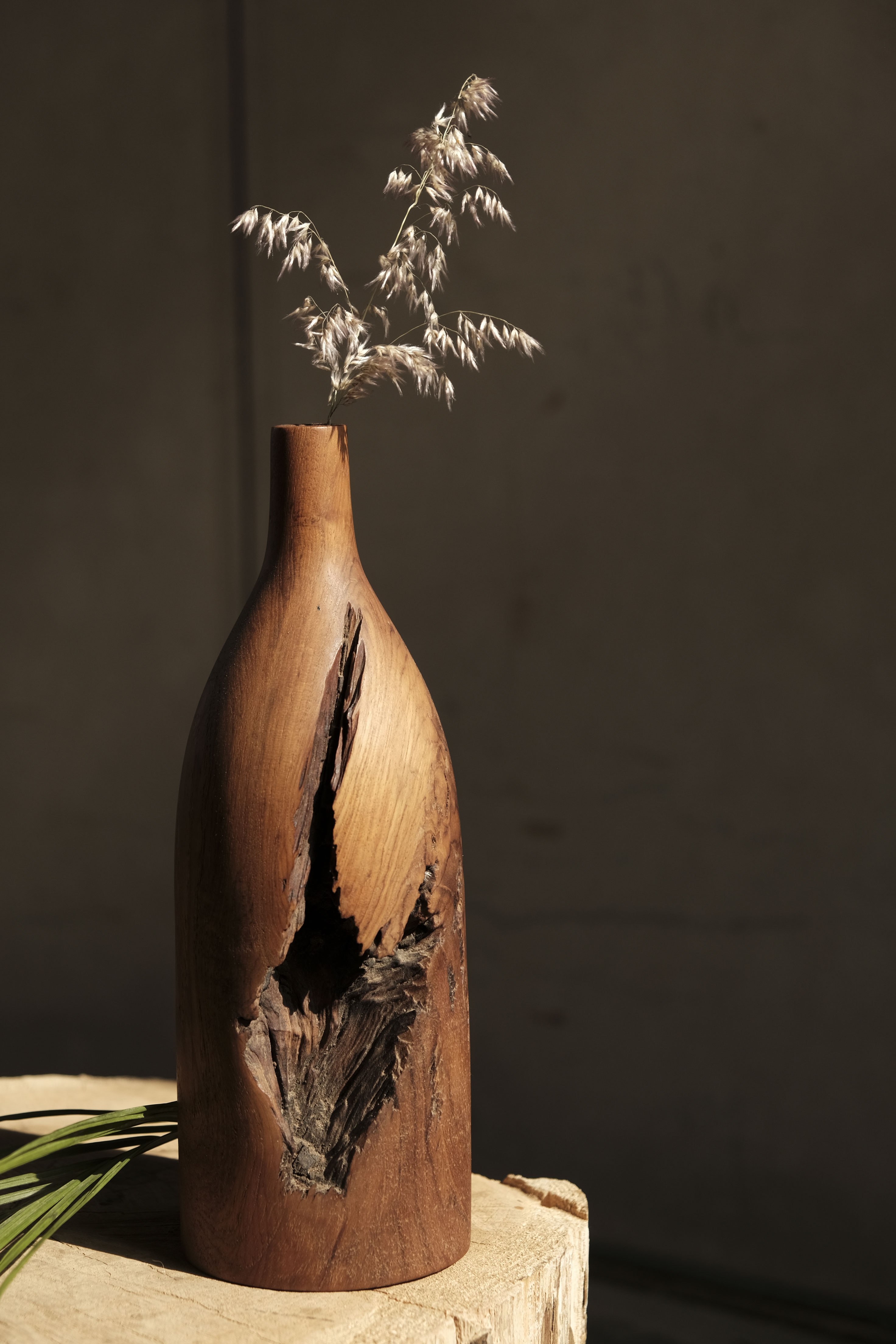
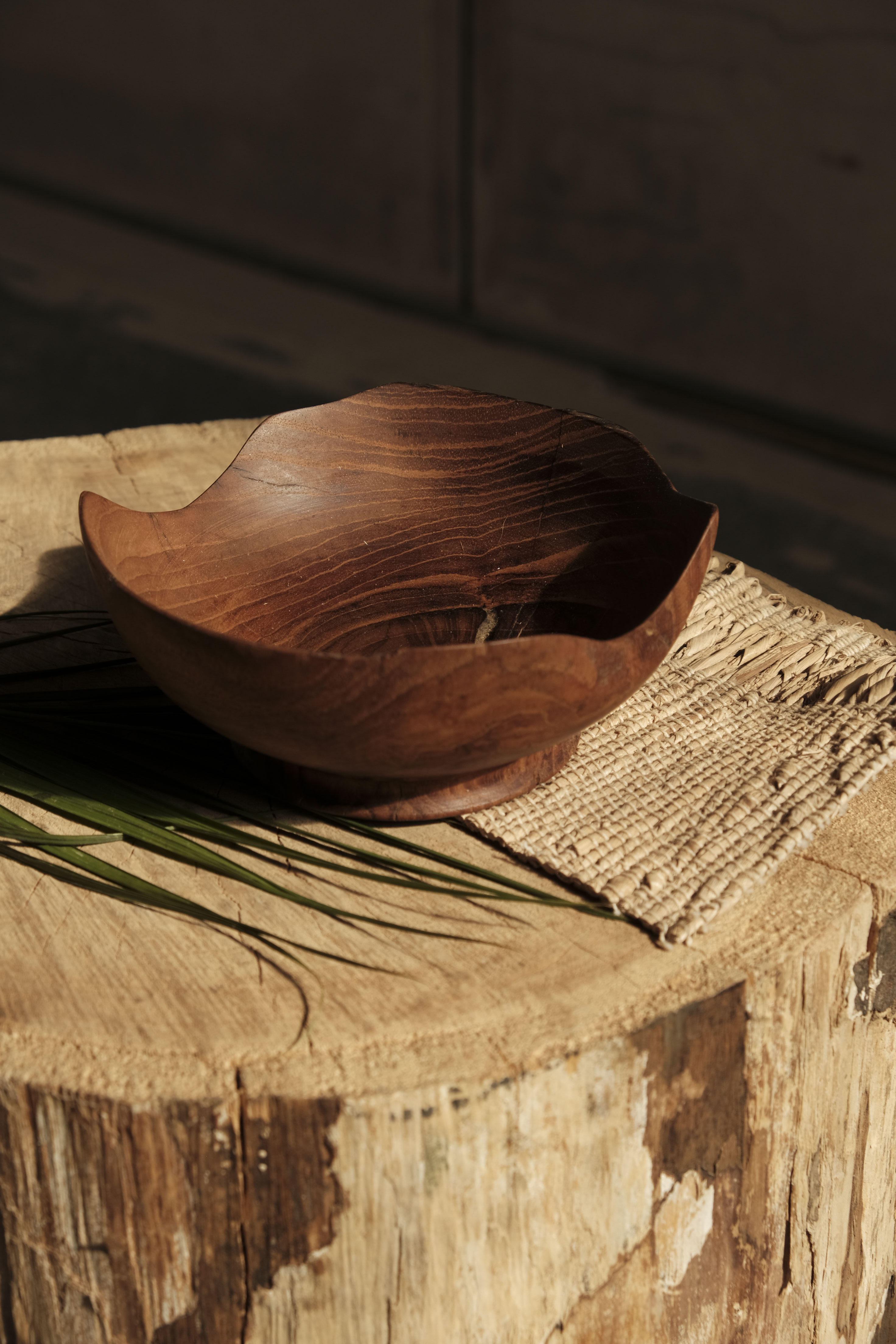
DS: As we said, it was like a journey for us; we were not very set on what we want to do. There were definitely some guiding factors, that is small as a personality those kind of factors what interests us or what not or what kind of aesthetics is personal to us and the way of expressing, but it was not very set. When it started in the Woodlabs as a carpentry set up and then it evolved into lot of different little things we were doing, one of them was Woodlabs Objects where we started because we only used reclaimed teak as a material for all our pieces and everything is reclaimed teak, they all are sourced from demolished houses and it is almost like giving them a second chance and it also controls material consumption and it is a more conscious material consumption in that sense, irrespective of the fact the wood is bound to go back to earth if at all it is left outside in nature but the challenge of using such material is that you are left with a lot of cuts which are a result of some decay that has happened over time because these timbers are 150-200 years old, that is how old the houses are and back in the days we used to get really good timber, so the wood must be much more older than that, so in their life, in the house there must be some nail somewhere, some decay must have happened because of splash of water, some knot, something of that sort. These are often parts which are not structurally strong enough to go into a furniture but they are beautiful, they have their own character, own crunch and for the longest time those off-cuts were a pile in a one small room, that room filled up so we moved into this new space over here.
AD: Thus, the off-cuts became the piece of inspiration for us.
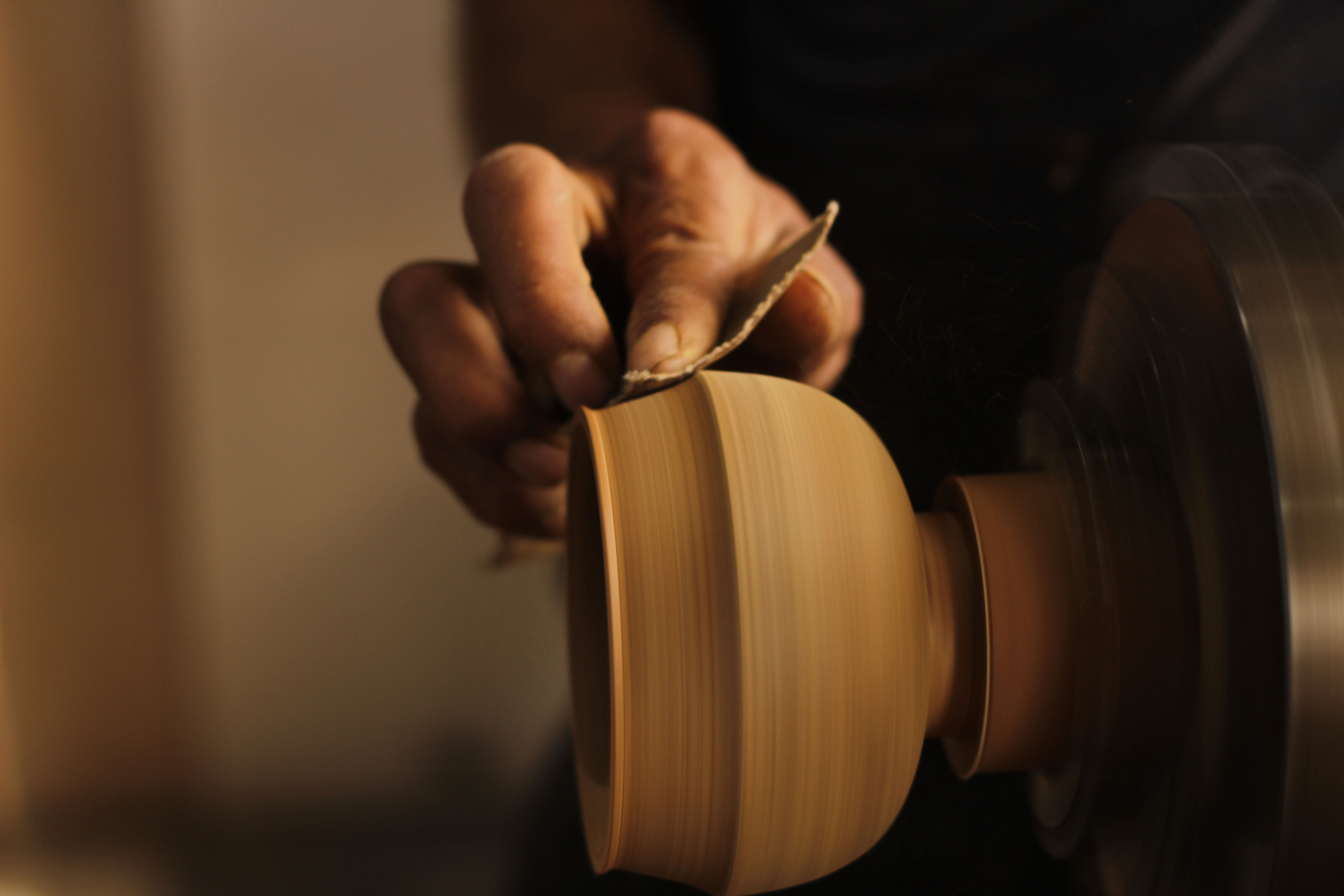
DS: For the longest time we actually held onto it and then there was a time when “should we do something with them” otherwise it is a “crime” because it is good wood at the end of the day and they becoming firewood is almost like criminal to the age and quality of wood that is there. One of our artisans started exploring and he started making these small little things with these off-cuts which turned into Woodlabs Objects actually as a branch – we have these beautiful vases, boxes, small little things which are part of the everyday life, so you are not specifically looking out to kind of have a very niche product but these are small little things that can become a part of a living, so to see, they would celebrate the defects.
DS: Each piece is unique and that was the beauty of it. While on this journey, another thing that we were very curious about was that for the longest time we were gifting these handmade toys to our friends who are having kids, so we ended up with these collection of toys…
AD: Very interesting little things that kids can play with and it was not something that we started because we wanted to make toys.
DS: Because this is something their siblings and them can play with; it is not going to break off, even if they are chewing, there is nothing harmful or plastic that is going inside there…it only makes sense to kind of have more well-crafted, strong pieces. It has a very tactile feel because it is wood at the end of the day, it does increase their sensory, so it was very engaging, after a while we realised, “Why not kind of have a collection?”.
Vernacular Modern was kind of born out of a “want to document, these crafts which are not wood, make sense out of it”, and then somehow the narrative itself became the factor where the narrative itself had to be re-looked at and that is where the transition from Woodlabs to Vernacular Modern happened.
DS: Where everything falls under this one big umbrella of what our extensions were.
AD: I think for us like when the process needs to be a true sense of collaboration. It is about understanding the brief and figuring out a reaction to it. These processes are very open ended. There is a guideline but it is not about very specific answers but it is more about how do you solve the situations as they come along and then you collaborate to create a product. This collaboration comes in a way where the problem becomes everybody’s own – right from the person making it, the person designing it, to the person thinking about it, to the person consuming it – everybody becomes a part of the process and only once they are completely involved is when they give the story.
I think it is a full-on involvement through us, for the artisans, with the consumer, with the client. It is an all-aspect collaboration.
AD: It is almost like when you are cooking with everybody who is going to eat in front of you and you are kind of taking a feedback of it. Everybody is involved in the process, and that is when you cannot decipher if the product could have existed without that specific client, could the product have existed without that specific designer?, could that product have existed without that specific context it was made under?. When you cannot answer those questions anymore is when you understand that you have created something really special and a product is actually complete because it has a narrative, it has a story, it has a context, it has a purpose, and that is what is interesting.
When we are doing these collections – and we do not term them necessarily as collections because they are more like a thought process – they are more like explorations which are not the final forms. It is more like an answer to a question at that little window that we had and we are trying to solve it to the best of the situation that we are in and only once that idea is picked up on, and then further worked out and added value and then suddenly becomes a story that can be narrated nicely. That is when it becomes a product.
CONTEXT
<56:26>
DS: I think the scene in India is definitely of a change but it is slow and it is almost like we have just woken up from a long sleep or a dream. It is high time that we start acting on it because there is consciousness, that also comes up with a fact how we grew up with a lot of stories as a culture, as a local narrative. It is high time if we can put these stories into explorations and have those design interventions. Because I also feel, as a nation in terms of design, somewhere we lack identity. We still do not know what is a coagulative or a accumulative expression of design is as a nation because each area geographically would have a certain design as a nation, but because of us having so many influences, the Western influence is because of the British era or a lot of this trade that has happened or things like that, so we have always been under this constant case of change and influence, so we have almost lost what we are or maybe we have so much more richer culture because of that, it can be both ways.
Either we are clinging on to what our history is or we are constantly trying to do what West is doing but we need to evolve what our story is.
DS: Most of our audience or most of our consumers are kind of unaware of what is a skilled piece. They are not even aware of certain craft that exists, which is often from the own locality or own state, at least to kind of talk about geographically, that is interesting because in this race we have almost unlearnt what we had, in this race of being western or so to say urban or whatever the quoted phrase which we are chasing towards, we have unlearnt it. Maybe there are some answers in those little villages or those little huts what they are practicing.
AD: That is the main bit because of the erosion of this knowledge a lot of things are lost.
DS: Then these consumers are not even aware of what they are looking at and then it is also the factor that “why should I pay for it,” but then you are not even appreciating the labour or the labour of love that is put into it but you are appreciating something which is quickly and half heartedly made by a machine and very blindly. I am not against it, I am totally for it and there is always a place and even, when you are living there is a balance of both the sizing of place, but there should be appreciation for both the sides as well.
AD: The knowledge and the data, so the education has become complicated, the education is missing. That does not allow them to take conscious decisions on what they are consuming, and then it becomes a battle from both the sides.
I think the identity is the main challenge, yes, there are a lot of design practices, some of them are doing pretty well but then there is always this very fast need, to be published or fast need to be awarded but the design sometimes happens where the process is more background, the narrative is something which will live longer. So when you have to focus and understand that how does it fit into the whole grammar is where it becomes more complicated.
PRAXIS is editorially positioned as a survey of contemporary practices in India, with a particular emphasis on the principles of practice, the structure of its processes, and the challenges it is rooted in. The focus is on firms whose span of work has committed to advancing specific alignments and has matured, over the course of the last decade. Through discussions on the different trajectories that the featured practices have adopted, the intent is to foreground a larger conversation on how the model of a studio is evolving in the context of India. It aims to unpack the contents, systems that organise the thinking in a practice.
The third phase of PRAXIS focuses on experimental vectors of practice and explorative models that support thought-provoking ideas and architectural processes.
With a corporate history spanning more than 85 years, Şişecam is currently one of the world’s leading glass producers with production operations located in 14 countries on four continents. Şişecam has introduced numerous innovations and driven development of the flat glass industry both in Turkey and the larger region, and is a leader in Europe and the world’s fifth largest flat glass producer in terms of production capacity. Şişecam conducts flat glass operations in three core business lines: architectural glass (e.g. flat glass, patterned glass, laminated glass and coated glass), energy glass and home appliance glass. Currently, Şişecam operates in flat glass with ten production facilities located in six countries, providing input to the construction, furniture, energy and home appliances industries with an ever-expanding range of products.














































 thinkMATTER